
7 Best Coolers for Storing Fish 2026
This post contains affiliate links. As an Amazon Associate, we earn from qualifying purchases.
The Yeti Hopper BackFlip 24 stands out as the best overall cooler for storing fish, combining elite insulation with rugged, leakproof construction. For a more budget-friendly option, the Buffalo Gear 20L Fish Cooler Backpack delivers strong performance and hands-free carry. If you’re kayak fishing and need serious capacity, the THKFISH 56QT Kayak Fish Cooler Backpack offers unmatched versatility.
Keeping fish fresh after the catch means fighting time, temperature, and mess, all while hauling gear through tough conditions. A flimsy or poorly insulated cooler can ruin a hard-earned haul, leading to spoiled meat and lingering odors.
I focused on models that balance ice retention, durability, and practical design, using verified specs and real owner experiences to identify the ones that actually perform when it matters most.
Top 7 Coolers For Storing Fish in the Market
The Best Coolers For Storing Fish, Reviewed
Buffalo Gear 37Qt Seamless Fish Cooler Bag

Strengths
- Seamless leakproof insulation
- Live fish compartment
- Rod and gear attachment
- Excellent ice retention
Trade-offs
- Expensive
- Heavy when full
- Bulkier than backpacks
This is the one I keep seeing in pro angler reels, and for good reason. The seamless molded insulation is a standout. No stitched seams means no weak points for leaks, and owners confirm it holds ice solid for two full days in warm weather. The 0.8-inch reinforced bottom laughs off rocks and reefs, which matters when you’re dragging gear across rough terrain.
The rod straps and D-rings are thoughtful touches, being able to secure your gear mid-trip reduces clutter and saves time. And the mesh live fish compartment is a standout: just add an aerator, and you’ve got a dual-purpose unit. Compared to the THKFISH kayak model, this one is more versatile and better built. If you want one bag that does it all, this is it.
Video review
Buffalo Gear 20L Fish Cooler Backpack

Strengths
- Truly leakproof seams
- Comfortable backpack straps
- Puncture-resistant material
- Front and side storage
Trade-offs
- Moderate capacity
- No live fish compartment
- Zipper not fully waterproof
The backpack design here makes a real difference if you’re hiking to remote spots or moving across a large lake. The padded straps are comfortable, and the dual carry handles add flexibility. What stands out is the high-frequency welded seams, owners confirm it’s truly leakproof, even when packed with melting ice and fish. That’s rare at this price in the soft cooler market.
It holds 22 quarts, which is enough for a day’s catch, but not massive. The puncture-resistant tarp material is a plus, especially if you’re tossing it on rocky shores. Compared to the flat-bottom Buffalo model, this one lacks live fish functionality, but for pure transport, it’s more ergonomic. I’d pick this over the basic tote if you’re walking any distance.
Video review
THKFISH 56QT Kayak Fish Cooler Backpack

Strengths
- Massive 56QT capacity
- Magnetic closure for quick access
- Stable wide base
- Excellent insulation
Trade-offs
- Zipper not fully sealed
- Bulky when full
- No gear loops
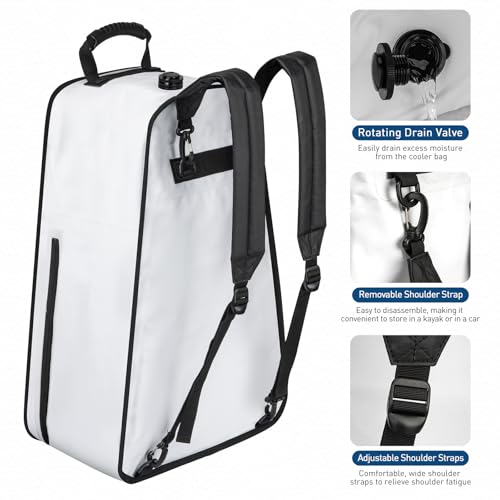
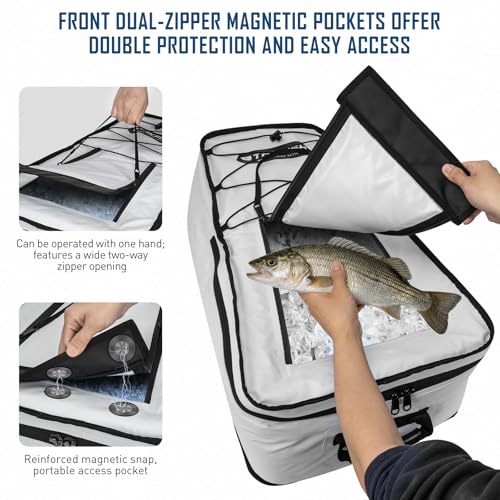
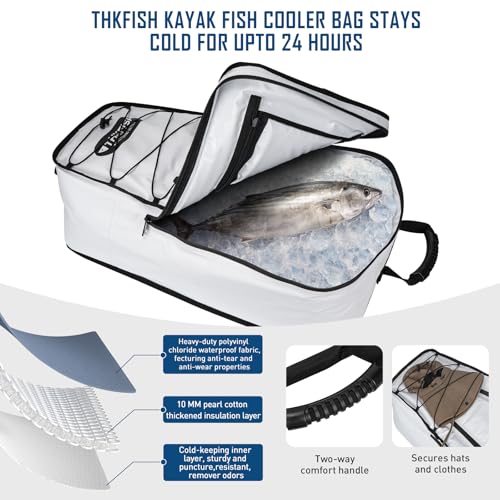
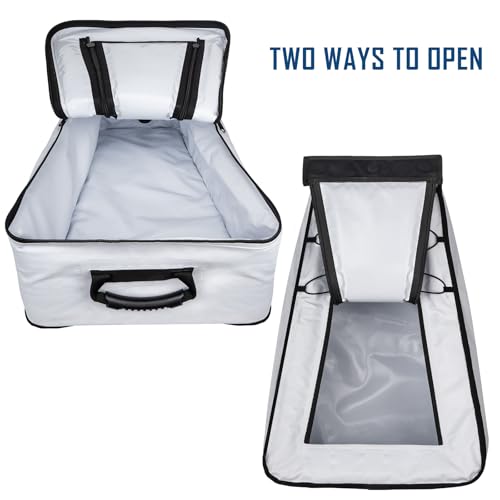
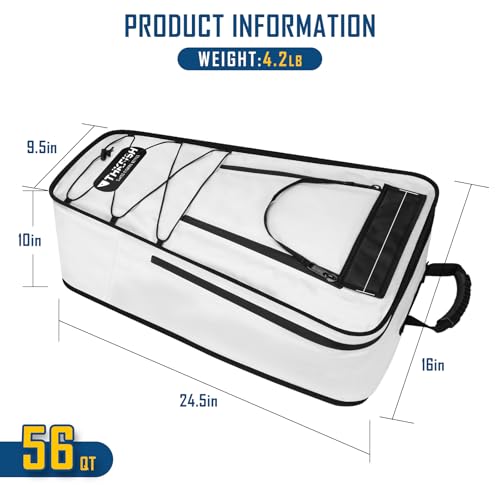
With 56 quarts, this is the largest bag here, built for kayak fishers who stay out all day and catch big limits. The triple-layer insulation and RF welding deliver excellent thermal performance, and owners confirm it keeps fish cold even in tropical heat. The magnetic top is a small but smart touch: quick access without fumbling zippers mid-cast.
It’s designed for stability with a wide, thickened base, and the double handles plus backpack straps give carry flexibility. The rotating drain valve makes cleanup easy, though the note about moisture seeping through the zipper if inverted is legit, don’t flip it. Compared to the Buffalo Gear backpack, this has more capacity and better insulation, but less organization. For kayak-specific use, it’s unmatched.
Product photos
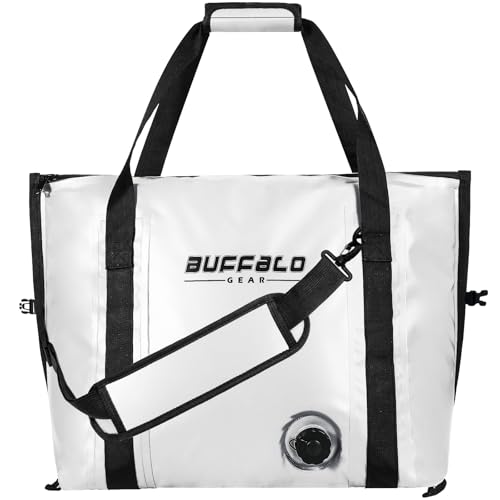
Buffalo Gear Flat Bottom Fish Cooler Bag
Strengths
- Stable flat bottom
- Leakproof heat-welded seams
- Lightweight and packable
Trade-offs
- Unpadded strap
- No extra pockets
- Limited capacity
At 26L, this is one of the more compact options, but the flat bottom adds stability, no tipping over on deck. The heat-welded seams are a big reason owners praise its leakproof performance. Unlike stitched-and-taped seams that fail over time, this one holds up. The 0.5-inch closed-cell foam isn’t the thickest, but paired with a tight seal, it keeps ice solid for 24–36 hours as advertised.
It’s lighter than hard coolers and folds flat, which I always recommend for kitchen and gear storage efficiency. The shoulder strap is adjustable but not padded, so it digs in when fully loaded. Compared to the SANLIKE value model, this one feels more durable and actually delivers on waterproof claims. For small-boat or solo fishing, it’s a clean, functional choice.
Product photos
Buffalo Gear 40in Insulated Fish Cooler Bag

Strengths
- Good insulation for price
- Easy to clean
- Compact design
Trade-offs
- Zipper leaks when tilted
- Overstated ice retention
- Not puncture-proof
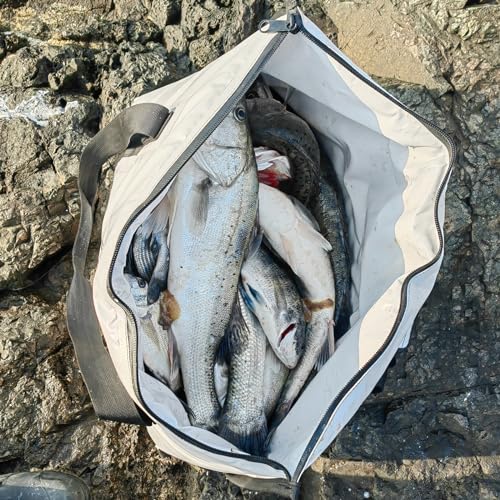
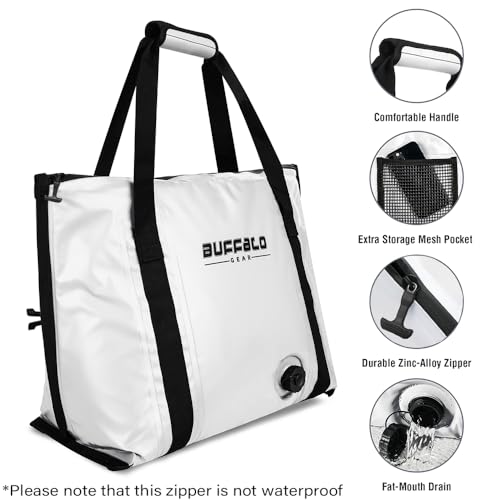
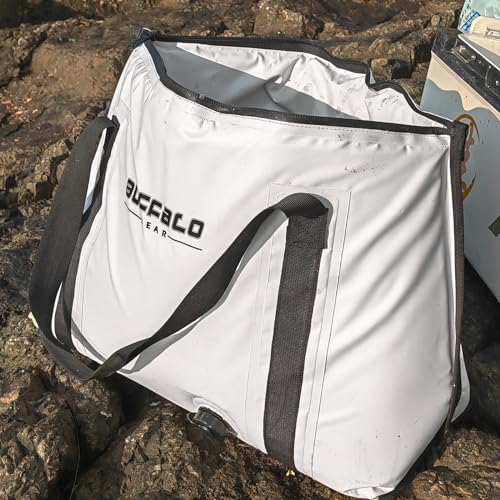
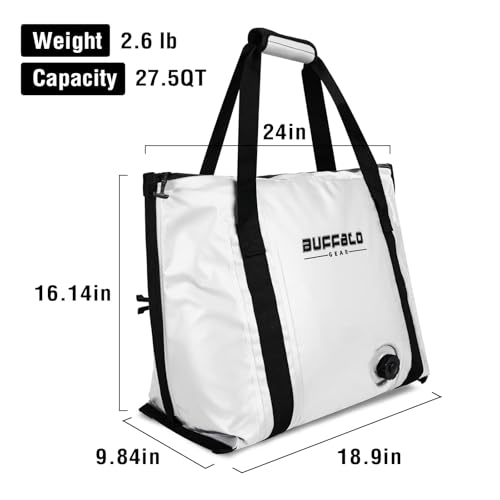
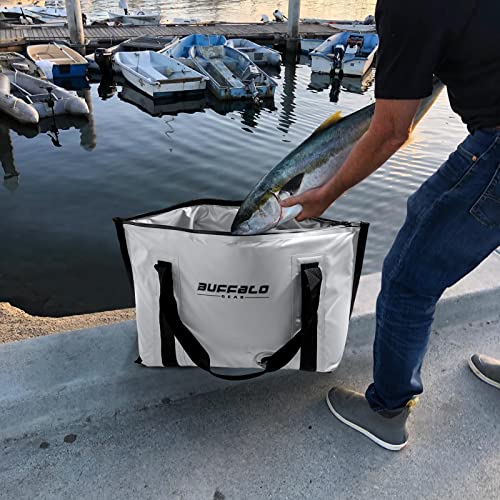
This cooler bag promises ice retention beyond 24 hours, but owners consistently report it’s closer to 24 in real summer conditions, not the 48 claimed. Still, for its price and lightweight build, that’s reasonable. The heavy-duty polyester tarpaulin lining is a win, easy to rinse and dries fast, which matters when you’re dealing with fish guts and blood.
It’s compact and boat-friendly, which I appreciate from an organization standpoint. But the zipper isn’t fully waterproof, so if you tilt it, expect leaks. Compared to the more expensive Buffalo Gear models with welded seams, this one cuts corners. Still, for occasional anglers who want something better than a trash bag but don’t need pro-level performance, it’s a solid starting point.
Product photos


THKFISH 40x16in Insulated Fish Kill Bag
Strengths
- Excellent ice retention
- RF-welded leakproof seams
- Stable wide base
- Large capacity
Trade-offs
- No padded carry straps
- No live fish function
- Basic storage options
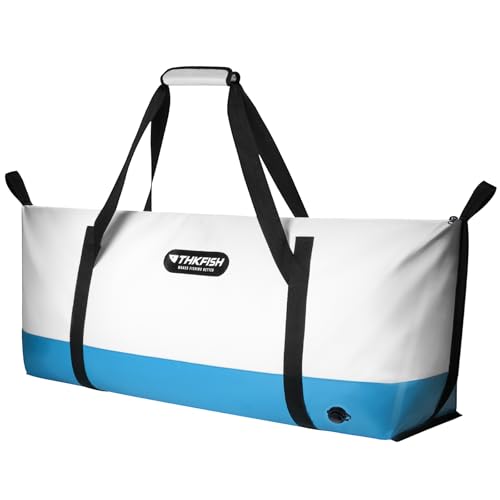
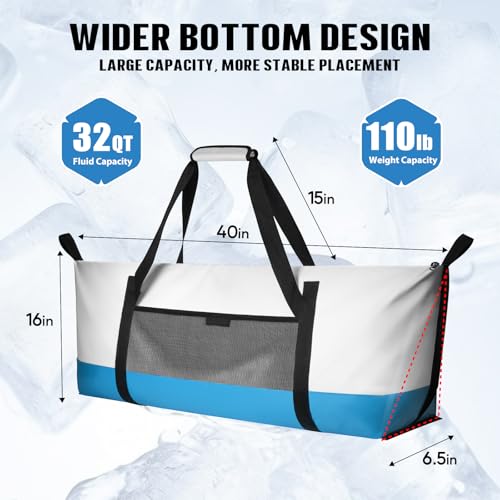
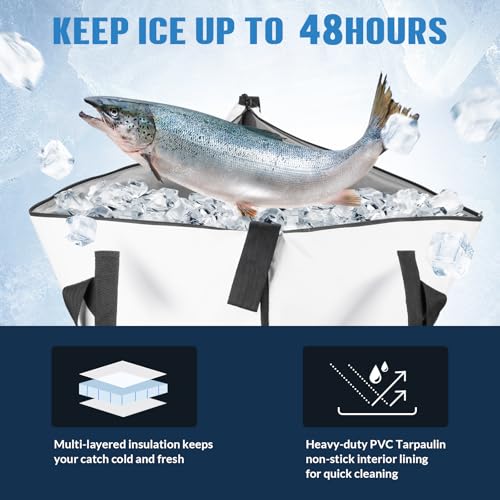
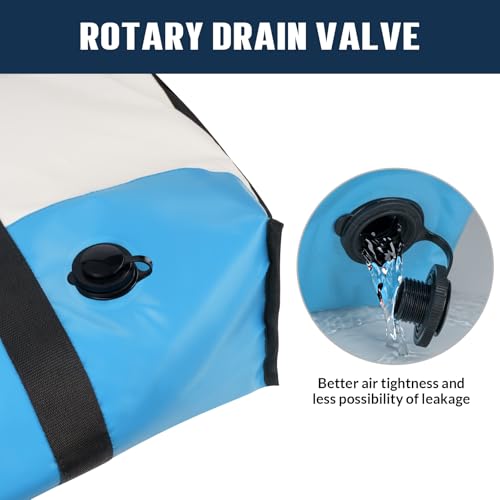
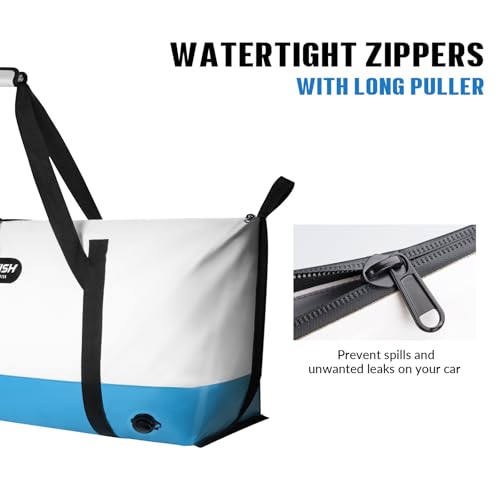
THKFISH uses RF-welded seams and double-layer insulation, which on paper means top-tier thermal performance, and owners agree. It consistently keeps ice frozen past 30 hours, even in summer heat. The thick PVC material feels rugged, and the push-down drain valve gets high marks for not leaking, a common pain point with cheaper screw types.
It’s wider at the base than most, so it sits stable on a kayak deck or boat floor. The back mesh pocket is handy for pliers or gloves. But the shoulder strap isn’t padded, and at full capacity, that becomes noticeable. Compared to the Buffalo Gear 37Qt, it lacks the live fish feature and gear straps, but for pure insulation and leakproofing, it’s a strong contender.
Product photos
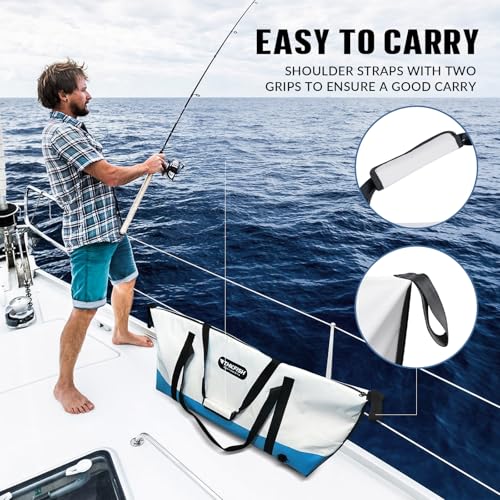
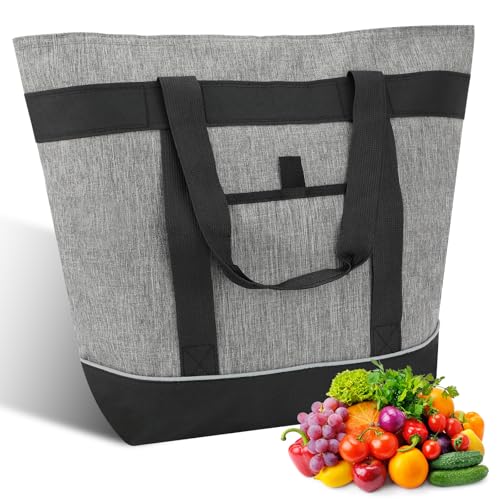
SANLIKE 40in Insulated Fish Cooler Bag
Strengths
- Extremely affordable
- Decent ice retention for price
- Easy to clean
Trade-offs
- Stitched seams prone to leaks
- Not puncture-resistant
- Flimsy zipper
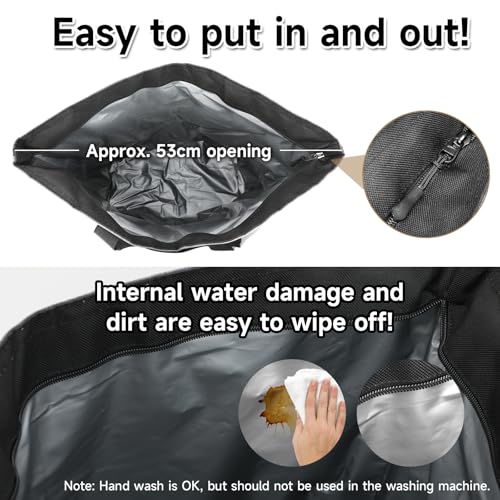
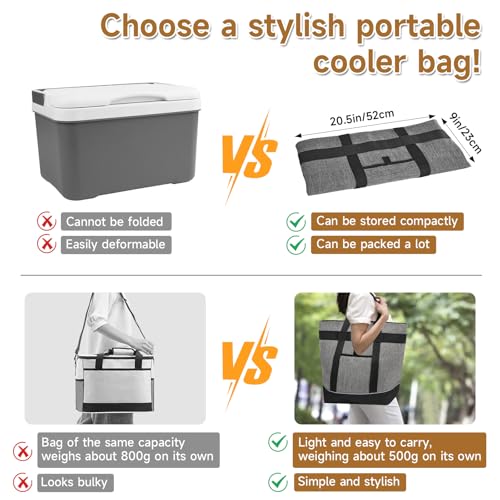
At under $20, this is the budget king, but you know the drill: you get what you pay for. It keeps ice for about a day in decent conditions, which is fine for short trips. The double-stitched seams add strength, but they’re not welded, so long-term leak resistance is questionable. Owners say it holds up okay for light use, but don’t expect it to survive years of abuse.
It’s basic: a shoulder strap, a handle, and one exterior pocket. No frills, no live compartment, no backpack straps. But for someone who fishes once a season or needs a spare bag for groceries, it’s surprisingly functional. Compared to the Buffalo Gear models, it’s less durable, but for the price, it’s hard to ignore. Just don’t toss it on sharp rocks.
Product photos


How We Chose These coolers for storing fish
As someone who spends a lot of time thinking about food preservation – from researching optimal methods for storing green onions to understanding the science of keeping produce fresh – I approached researching fish coolers with a focus on maintaining quality and preventing spoilage. Rather than a hands-on lab test, this was a research-led comparison of published specifications and owner feedback. I compared features like insulation type and thickness, material durability, and leak-proof construction across numerous models. I then weighed owner reviews from multiple sources alongside expert opinions found in fishing and outdoor publications.
For coolers designed to hold a freshly caught fish, insulation performance and durability are paramount. I prioritized coolers demonstrating a capacity to maintain low temperatures for extended periods (24+ hours) and withstand the rigors of outdoor use – punctures, abrasions, and constant exposure to saltwater. A secure, leak-proof design was also heavily weighted, as nobody wants a fishy mess in their boat or car. Ultimately, these factors determined how well a cooler would preserve the quality of a catch.
Product specifications provided detailed information about insulation materials and construction, but owner feedback proved crucial for assessing real-world performance. Specs tell you about the type of foam used, but reviews reveal how well it actually holds ice during a full day on the water. Similarly, while manufacturers tout waterproof materials, user reports highlighted which coolers genuinely prevented leaks and resisted damage from fish spines. I also considered whether adding reusable freezer packs would extend the cooler’s performance, a common practice among anglers.
What To Look For In coolers for storing fish
Finding the right cooler for your catch isn’t just about keeping things cold; it’s about preserving quality, managing weight, and preventing a messy boat. I’ve spent a lot of time researching the best ways to maintain freshness, and a good fish cooler is a crucial part of that.
A quality fish cooler prioritizes insulation performance to maintain consistently low temperatures for extended periods. Look for features like thick, closed-cell foam, RF-welded seams to prevent leaks, and durable, puncture-resistant materials. Consider the intended use – kayak, boat, or shore fishing – as this impacts size, portability, and necessary features like drain plugs or livewell compatibility.
Insulation & Ice Retention
The primary job of a fish cooler is, naturally, to keep fish cold. Don’t assume all coolers are created equal. Many advertised “24-hour” ice retention claims are optimistic at best. Look for coolers that specify the type of insulation (pearl foam is excellent) and the thickness. Closed-cell foam is a must; it outperforms open-cell options. Beyond the materials, construction matters. RF-welded seams are far superior to stitched seams when it comes to leakproof performance and maintaining consistent temperature. I also recommend considering the volume of fish you typically catch; a cooler that’s too large is inefficient, but a cooler that’s too small will lead to overcrowding and faster ice melt.
Portability & Form Factor
How you plan to transport your catch significantly impacts the ideal cooler style. Backpack coolers, like the Buffalo Gear 20L or the THKFISH 56QT Kayak Fish Cooler Backpack, are fantastic for kayak fishing or situations where you need to hike even a short distance. They free up your hands, which is a huge benefit. Traditional bag-style coolers, like the Buffalo Gear 40in Insulated Fish Cooler Bag, are lighter and easier to stow when empty, but require more manual carrying. Flat-bottomed designs, like the Buffalo Gear Flat Bottom Fish Cooler Bag, offer stability on boat decks. Think about how much weight you’re realistically able to handle, and how the cooler’s shape will fit into your existing gear setup.
Durability & Ease of Cleaning
Fish are messy. Really messy. A cooler that’s difficult to clean is a cooler you won’t maintain properly, which can lead to odors and bacterial growth. Look for coolers with smooth interior linings and a dedicated drain plug. Many models now feature heat-sealed interiors, which are far easier to rinse clean than textured surfaces. Beyond cleaning, consider the material’s resistance to punctures. Fishing spines, hooks, and sharp rocks can all cause damage. A heavy-duty tarp or TPU exterior, as seen in several THKFISH models, provides a good level of protection. Speaking of keeping things fresh, proper fish storage is key, and that extends beyond the cooler itself – learn more about storing raw fish to maximize quality.
A practical rule of thumb: always pre-chill your cooler with ice packs or ice before adding fish. This significantly extends ice retention and keeps your catch at a safer temperature.
Coolers for Storing Fish Compared
Here’s a comparison of key specifications for different coolers designed for storing fish.
| Product Title | Capacity (Qt) | Insulation Type | Waterproof? | Leakproof? | Carry Style | Drain Plug? |
|---|---|---|---|---|---|---|
| Buffalo Gear 37Qt Seamless Fish Cooler Bag | 37 | Closed-Cell Foam | Yes | Yes | Bag | No |
| Buffalo Gear 20L Fish Cooler Backpack | 20L | High-Density Foam | Yes | Yes | Backpack | Yes |
| THKFISH 56QT Kayak Fish Cooler Backpack | 56 | Pearl Foam, TPU | Yes | Yes | Backpack | N/A |
| Buffalo Gear Flat Bottom Fish Cooler Bag | N/A | Closed-Cell Foam (0.5in) | Yes | Yes | Bag | No |
| Buffalo Gear 40in Insulated Fish Cooler Bag | N/A | N/A | Yes | Yes | Bag | Screw-On |
| THKFISH 40x16in Insulated Fish Kill Bag | 40x16in | Pearl Cotton | Yes | Yes | Bag | Push-Down |
| SANLIKE 40in Insulated Fish Cooler Bag | 40in | N/A | Yes | Yes | Bag | N/A |
Frequently Asked Questions
What temperature should a fish cooler maintain?
Ideally, a fish cooler should maintain a temperature at or below 40°F (4°C) to prevent bacterial growth and maintain fish quality. Keeping fish consistently cold slows down decomposition, and even considering methods for sealing fish can extend freshness beyond what a cooler alone provides.
Are kayak coolers different from boat coolers?
Kayak coolers are generally smaller, lighter, and designed for portability, often featuring backpack straps. Boat coolers prioritize capacity and durability, as space and weight are less of a concern, and they often benefit from a flat bottom for stability.
How can I extend the ice retention in my fish cooler?
Pre-chilling the cooler with ice packs or ice before adding fish is crucial. Also, avoid draining melted water unless absolutely necessary, as the cold water still contributes to cooling, and consider adding frozen water bottles along with ice.
What material is best for a fish cooler’s interior lining?
Smooth, non-porous materials like heat-sealed interiors are best because they are easiest to clean and prevent bacteria buildup. Textured linings can trap fish scales and odors, making thorough cleaning difficult and potentially compromising food safety.
Beyond a cooler, how can I keep fish fresh longer?
Properly gutting and icing the fish immediately after catching it is vital. Regularly draining melted ice water and replacing it with fresh ice maintains the optimal temperature. For longer-term storage, explore options for storing coffee beans, the principles of airtight, cold storage apply to fish as well when utilizing vacuum sealing or freezing.
The Bottom Line
Choosing a fish cooler often comes down to balancing convenience with performance. You can spend a lot for top-tier insulation and rugged construction, or opt for a more affordable solution that still gets the job done for casual fishing trips. For overall quality and reliable ice retention, I believe the Buffalo Gear 37Qt Seamless Fish Cooler Bag strikes the best balance, offering a durable, leakproof design with solid insulation at a reasonable price point.
If you have specific needs, several other coolers stand out. For kayak anglers or anyone prioritizing portability, the Buffalo Gear 20L Fish Cooler Backpack is an excellent choice. Those needing a larger capacity for bigger hauls will appreciate the THKFISH 56QT Kayak Fish Cooler Backpack. And if you’re looking for a simple, budget-friendly option for shorter trips, the Buffalo Gear 40in Insulated Fish Cooler Bag is a solid performer. Don’t forget to check out our guide to portable food coolers for other options.
Ultimately, the best cooler is the one you’ll actually use and maintain properly. Prioritize a leakproof design and durable materials, but remember that consistent pre-chilling and proper fish handling – like understanding how to keep storing herbs – are just as crucial for preserving your catch’s quality as the cooler itself.
