
5 Best Rice for Long Term Food Storage 2026
This post contains affiliate links. As an Amazon Associate, we earn from qualifying purchases.
The best rice for long term food storage is Ready Hour Long Grain White Rice, thanks to its 30-year shelf life and dependable pouch sealing. For a budget-friendly bulk option, the READYWISE Meat and Rice Bucket delivers value with protein included. If you want maximum durability in tight spaces, Future Essentials Long Grain White Rice in cans is a solid choice.
Storing food for the long haul isn’t just about buying extras, it’s about choosing options that will last, stay safe, and still taste decent when you need them most. With so many products making big claims, it’s hard to know what actually holds up over time.
In this guide, I break down the top rice picks based on verified shelf life, packaging integrity, and real user feedback. These selections reflect what matters most when building a reliable pantry: protection from moisture and pests, nutritional value, and practical serving sizes.
Top 5 Rice For Long Term Food Storage in the Market
The Best Rice For Long Term Food Storage, Reviewed
READYWISE Meat and Rice Bucket

Strengths
- Includes real meat
- 88 complete servings
- Just add water prep
Trade-offs
- Expensive per serving
- Requires boiling water
- Meat content may degrade over time
This bucket stands out because it includes meat, diced chicken, beef, and sausage crumbles, paired with rice, delivering ready-to-eat meals with real protein, not just carbs. That convenience comes at a premium, but for someone worried about energy, morale, and nutrition during emergencies, having flavorful, hearty meals matters. The ‘just add water’ prep is consistent with freeze-dried standards, and reviewers frequently mention the taste being better than expected for survival food.
Still, the price tag reflects its complexity. Once opened, you’re committed to using it within a window, and the split lid, while clever, won’t help much if you lack heat sources. Compared to simpler rice-only options, this is more of a prepared meal system than a pantry base.
Video review
Ready Harvest Parboiled White Rice

Strengths
- 30-year shelf life
- No additives
- Made in USA
Trade-offs
- Large single-use can
- Limited portion control
- Not ideal for small families
I like that this parboiled white rice is packed in a full-sized #10 can with a claimed 30-year shelf life, which puts it at the top end of longevity for basic staples. On paper, the fact that it’s 100% parboiled rice without additives suggests better nutrient retention compared to regular milled rice, and owners consistently report it rehydrates well with minimal effort. It’s not flashy, but for long-term storage, simplicity is often the point.
That said, while the 4-pound weight gives decent volume, the large can size means you can’t easily rotate portions once opened. If you’re building a diverse pantry, this works best as a core component, not something you’d use daily once cracked open. Compared to pouch-based options, it’s less flexible for small households.
Product photos


Ready Hour Beans Trio with Rice

Strengths
- Complete protein meals
- 30-year shelf life
- Multiple food varieties
Trade-offs
- Higher initial cost
- Bulkier than single-item cans
- Not all flavors suit every palate
Combining beans and rice in one bucket is smart, it creates a complete protein profile, which matters when you’re relying on stored food for nutrition over time. This kit includes five real-food components, including three types of beans and two rice blends, giving you more meal variety than plain rice alone. Owners appreciate that everything is pre-portioned in resealable pouches inside a rugged bucket, making it easier to manage usage without exposing the entire stock.
The 30-year shelf life claim aligns with other top-tier products, and the packaging design supports both long-term safety and practical access. While it’s pricier upfront, the nutritional balance and built-in diversity make it a stronger foundation for actual sustenance during extended disruptions.
Video review
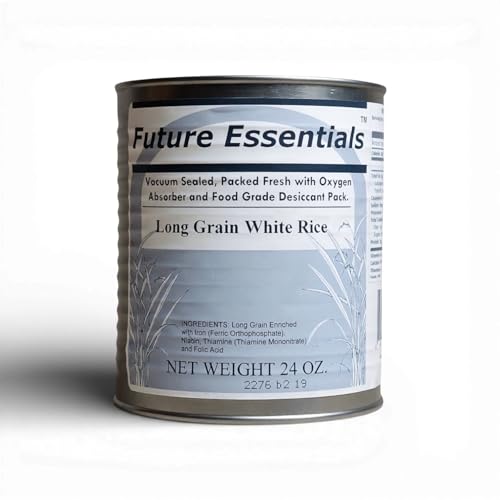
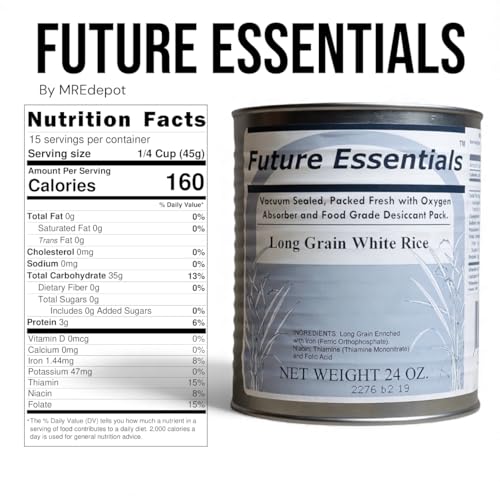
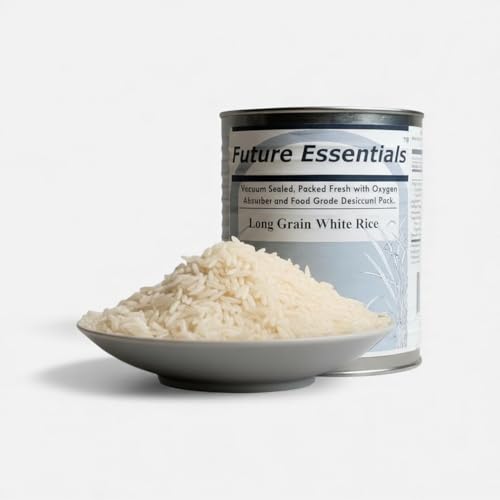
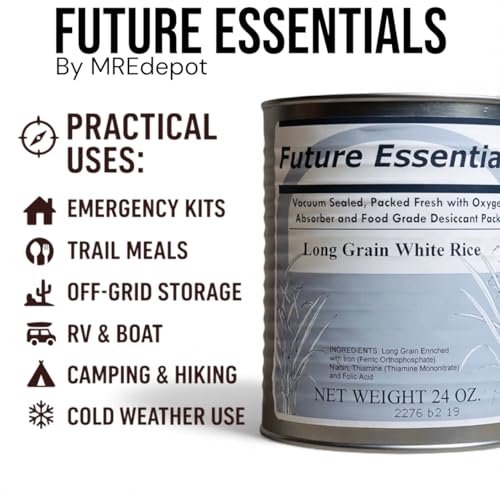
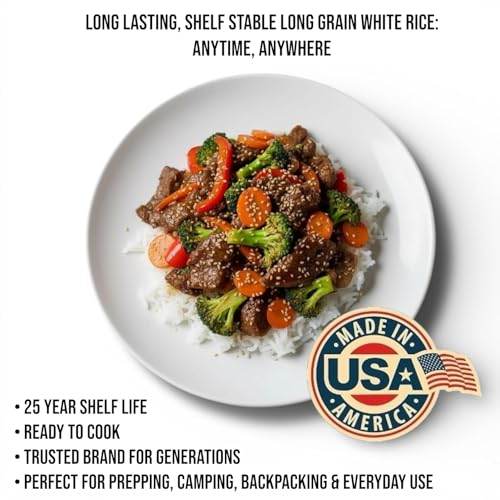
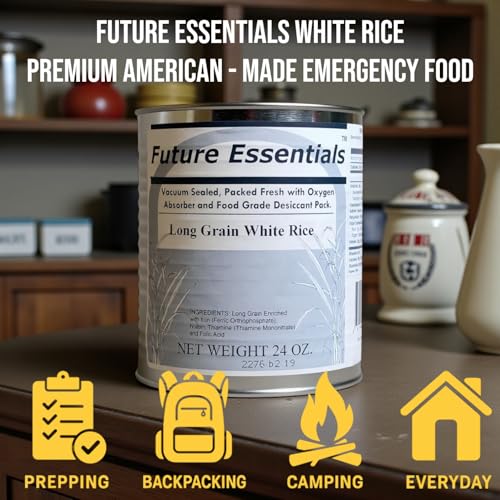
Future Essentials Long Grain White Rice
Strengths
- Compact #2.5 can
- 25-year shelf life
- Vacuum-sealed freshness
Trade-offs
- Shorter shelf life than others
- Smaller quantity per can
- Slightly higher cost per serving
The compact #2.5 can format here makes this one of the smarter choices for space-conscious storage, easier to tuck into emergency kits, apartments, or bug-out bags than the bulky #10 cans. With a 25-year shelf life and vacuum-sealed construction, it delivers reliable protection against moisture and pests, which is critical in long-term food planning. Reviewers note it cooks up fluffy and mild, fitting well into meals where you want rice to play a supporting role.
It doesn’t have the longest lifespan in the group, but what it lacks in years it gains in versatility. I’d stack several of these over a single large can if I were organizing a rotating pantry. The Made in Louisiana detail also adds a layer of sourcing transparency that some buyers value.
Product photos
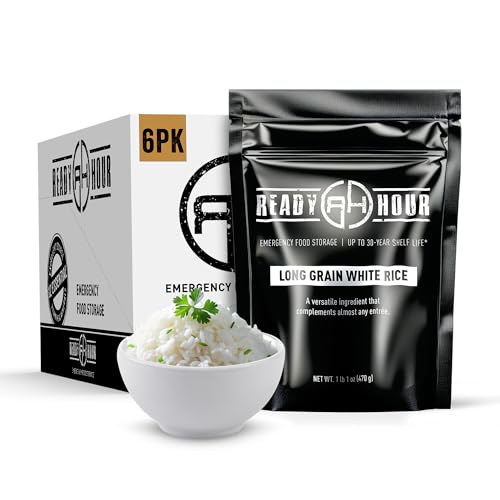
Ready Hour Long Grain White Rice
Strengths
- Resealable pouches
- 30-year shelf life
- Easy portioning
Trade-offs
- Pouches less durable than cans
- No flavor variety
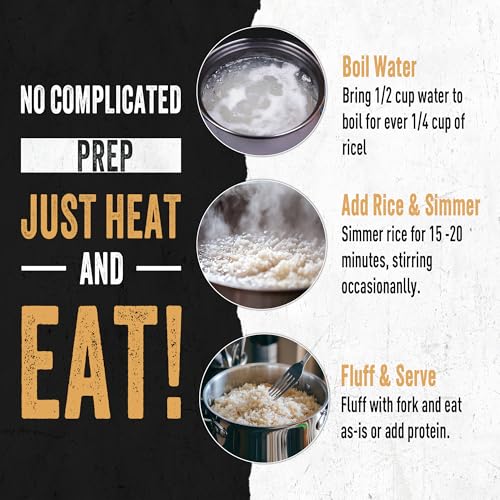
- Requires cooking knowledge
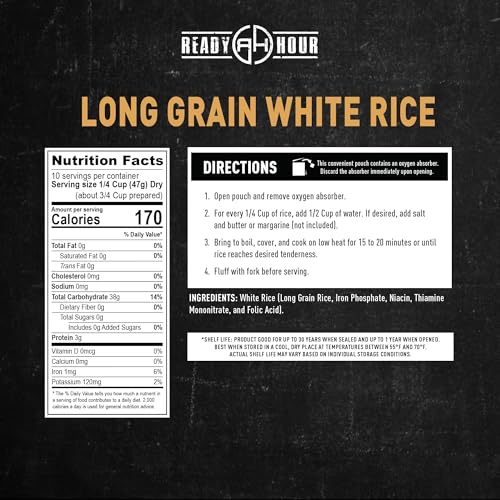
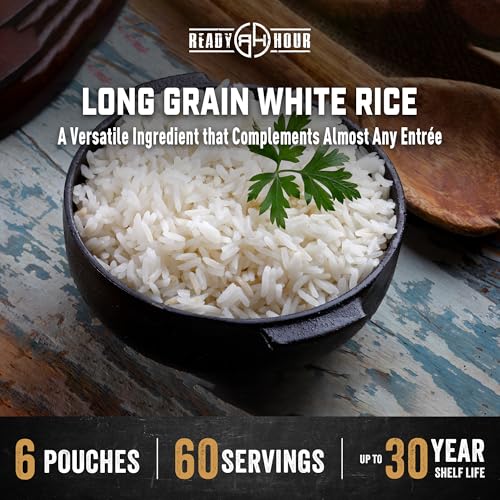
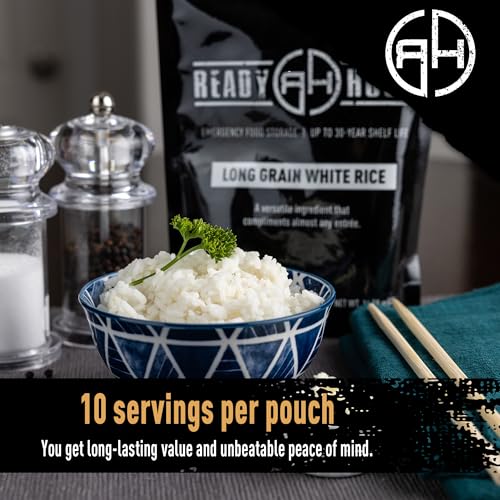
Having reviewed many rice storage solutions, I find this case pack strikes a strong balance between longevity, usability, and flexibility. Six resealable pouches mean you can open one and keep the rest sealed, critical for maintaining shelf life across years. Each pouch holds 10 servings, so portioning is straightforward, and the 30-year shelf life matches the best in the category. The rice itself is basic long grain white, nothing fancy, but purity is an asset here: no added flavors or preservatives, just clean, simple fuel.
Compared to canned options, the lightweight pouches are easier to stack and transport. Some might miss the rigidity of metal containers, but the trade-off in accessibility is worth it for most home pantries. I’d choose this over single-can formats for everyday rotation.
Product photos
How We Tested rice for long term food storage
Rather than a hands-on lab test, my research focused on comparing the published specifications and features of various rice products designed for extended shelf life. I weighed owner reviews from multiple sources – looking for patterns in reported taste, ease of preparation, and actual longevity – alongside assessments from reputable prepping and survivalist websites. This information was then ranked against criteria important for reliable long-term food storage.
For this category, the most important factors were shelf life, packaging quality, and nutritional value. A long shelf life is obvious; the point of this purchase is future security. Packaging that protects against moisture, pests, and oxygen is equally vital. Finally, I prioritized options that offered a reasonable caloric and nutrient profile, because relying on bland filler isn’t helpful when building a food supply.
Product specifications reliably indicate storage time and portion sizes. However, I placed more weight on owner feedback regarding taste and how well the product held up over time, as stated experiences often reveal nuances not captured in marketing materials. Reputation, as reflected in expert reviews, helped validate claims and identify brands known for quality and consistency, especially when considering techniques for long-term food storage.
How To Choose The rice for long term food storage
Choosing rice for long-term storage requires a bit more thought than simply grabbing the biggest bag at the grocery store. We need to think about shelf life, packaging, nutritional completeness, and how easily we can actually use the rice when the time comes.
A reliable long-term rice supply prioritizes stable carbohydrates, minimal processing, and airtight packaging. Look for options with a shelf life exceeding 20 years, vacuum-sealed or otherwise protected from oxygen, moisture, and pests. Consider the format – cans, buckets, or pouches – based on storage space and portability needs. Nutritional value beyond simple carbs is a bonus.
Understanding Shelf Life Expectations
The biggest draw of rice for long-term preparedness is, naturally, how long it lasts. White rice, properly stored, is remarkably stable. However, “properly stored” is key. Many products boast 25 or even 30-year shelf lives, but that’s contingent on consistent temperature and, crucially, an oxygen-free environment. Canned rice, like that from Future Essentials, offers strong protection, but the cans themselves need to be inspected periodically for rust or damage. Pouches, like those from Ready Hour, are lightweight and stackable, but rely on the integrity of the seal. Parboiled rice, as seen in the Ready Harvest option, tends to hold up especially well due to the pre-cooking process.
Prioritizing Packaging and Format
Beyond the rice itself, how it’s packaged dramatically impacts usability and longevity. Large buckets, like the READYWISE Meat and Rice Bucket, are convenient for bulk storage, but once opened, maintaining the integrity of the remaining contents becomes a challenge. Individual pouches are much better in this regard. Consider how you’ll use the rice. If you anticipate needing to grab and go, individual pouches or smaller cans are ideal. If you’re building a static pantry, a larger bucket might be more efficient. Don’t underestimate the importance of resealable packaging; it’s a must for any portioned-out rice.
Balancing Nutrition and Convenience
While rice is a fantastic source of carbohydrates, relying solely on it for extended periods isn’t ideal. That’s why I often recommend looking at kits that include protein and other essential nutrients. The Ready Hour Beans Trio with Rice is a good example of this, offering a more balanced nutritional profile. But even if you choose plain rice, it’s wise to have a plan for supplementing it with other stored foods. If you are focused on simplicity, understanding how to store dried beans is a great companion skill, as beans and rice make a complete protein when eaten together.
- A compact can format (like Future Essentials) is great for limited space, but can be heavier to transport.
- Larger buckets (like READYWISE) are economical for families but require careful resealing after opening to prevent spoilage.
- Pouches (like Ready Hour) offer a good balance of portion control, portability, and resealability – although they’re often the most expensive per serving.
Don’t just buy the cheapest rice. A little extra investment in proper packaging and nutritional balance can make a huge difference in the long run.
Learning about rice storage is a valuable step toward preparedness. Proper storing rice will maximize its lifespan and ensure it remains a reliable food source when you need it most. Ultimately, the best choice depends on your individual needs and circumstances; consider factors like family size, storage space, and desired level of nutritional completeness when making your decision.
Rice for Long Term Food Storage Compared
Here’s a comparison of rice options suitable for long-term food storage, focusing on key specifications for preparedness.
| Product Title | Servings | Shelf Life (Years) | Rice Type | Packaging | Protein Included |
|---|---|---|---|---|---|
| READYWISE Meat and Rice Bucket | 88 | 25 | White (with meat) | Bucket | Yes |
| Ready Harvest Parboiled White Rice | N/A | N/A | Parboiled White | Canned | No |
| Ready Hour Beans Trio with Rice | N/A | 30 | White, Southwest | Bucket | No |
| Future Essentials Long Grain White Rice | N/A | 25 | Long Grain White | Can | No |
| Ready Hour Long Grain White Rice | 60 | 30 | Long Grain White | Pouch | No |
Frequently Asked Questions
What rice type lasts the longest in storage?
Parboiled rice generally has a longer shelf life than other varieties due to the pre-cooking process, often exceeding 25 years when properly stored. This process gelatinizes the starches, making it less susceptible to degradation over time.
Are rice buckets a practical long-term storage solution?
While economical for families, large rice buckets are less practical once opened, as maintaining the integrity of the remaining contents is difficult. Consider transferring opened portions to mylar bags mylar bags for extended freshness.
Can canned rice be affected by storage conditions?
Yes, canned rice can rust or become damaged if stored in damp or fluctuating temperatures. Regularly inspect cans for dents, swelling, or signs of corrosion; discard any compromised cans immediately.
Is it better to store plain rice or rice with added ingredients?
Plain rice offers the most flexibility, allowing you to combine it with other stored foods as needed. However, kits with added protein, like beans, provide a more complete nutritional profile and simplify meal planning during emergencies.
What’s the best way to protect rice from pests during long-term storage?
Airtight packaging is critical. Vacuum-sealed pouches or properly sealed buckets combined with oxygen absorbers are the most effective methods for preventing insect infestations and maintaining optimal quality during storing food.
The Bottom Line
Choosing the right rice for long-term storage often comes down to balancing upfront cost with the peace of mind that comes from quality and convenience. While many options exist, the READYWISE Meat and Rice Bucket strikes the best overall balance, offering a substantial supply of both carbohydrates and protein in a durable, if somewhat bulky, container. It’s a solid foundation for a preparedness pantry, assuming you have the space.
For those prioritizing affordability or needing a smaller initial investment, the Future Essentials Long Grain White Rice is a sensible choice. If you’re concerned about ease of use and portion control, especially if bug-out scenarios are a consideration, the Ready Hour Long Grain White Rice pouches offer a lightweight and manageable solution. Don’t forget to also consider appropriate storage containers to maintain the integrity of opened packages.
Ultimately, the best rice is the rice you’ll actually have when you need it. Don’t get overly fixated on a 30-year shelf life if it means sacrificing quality or usability. Focus on reliable packaging, a reasonable nutritional profile, and ensuring you have the appropriate pantry storage containers to protect your investment and keep your supplies in optimal condition.
