How to Freeze Cherry Tomatoes for Long-Term Preservation
This post contains affiliate links. As an Amazon Associate, we earn from qualifying purchases.
Preserve cherry tomatoes by freezing using the flash-freeze method: wash, dry, arrange in a single layer on a tray, and freeze solid for about two hours before transferring to an airtight container. Skip blanching entirely, their thin skins make it unnecessary, and it damages texture. Thawed tomatoes will be soft and are best used only in cooked dishes like sauces, soups, or stews.
That soft texture is the whole game. Freezing ruptures plant cell walls with ice crystals, so a thawed cherry tomato will never snap like a fresh one. You trade crispness for extended shelf life and concentrated summer flavor in a winter pot.
What follows: the precise two-hour flash-freeze window, the one container mistake that causes freezer burn within weeks, and the cooked-only rule that every extension service agrees on. We’ll also cover green tomatoes and why your freezer’s temperature setting matters more than the bag you use.
Key Takeaways
- Flash-freeze cherry tomatoes on a tray for two hours before bagging to prevent a solid, unusable block.
- Never blanch cherry tomatoes. Their small size and thin skin mean boiling water damages cell structure faster than it helps.
- Use thawed tomatoes only in cooked applications like sauce, soup, or stew; their texture becomes soft and watery.
- Store frozen tomatoes at 0°F (-18°C) and use them within 8–12 months for best quality, checking for freezer burn.
- For frying, slice green tomatoes 1/4-inch thick, layer with freezer paper, and freeze, no blanching needed.
Why Freezing Changes Cherry Tomatoes (And Why That’s Okay)
Freezing works by turning the water inside food into ice. For a cherry tomato, that means the water inside each tiny cell expands as it freezes. The ice crystals puncture the cell walls. When you thaw it, the water leaks out and the structural integrity is gone.
The physical process is straightforward: ice crystal formation during freezing mechanically damages plant cell walls. Upon thawing, the loss of turgor pressure results in a soft, often watery, texture unsuitable for fresh eating.
This isn’t a flaw in your technique. It’s basic food science. The UCANR tomato preservation guide states plainly that thawed tomatoes are for “cooking or seasoning” only. They will not be solid.
So you’re not preserving a salad ingredient. You’re preserving a cooking ingredient, a burst of summer flavor for your pasta sauce, chili, or shakshuka. That’s a win.
The Two Ways to Freeze Cherry Tomatoes
You have two paths: freeze them whole or freeze them diced. The choice depends on what you’ll cook later. Whole tomatoes are versatile for soups and stews where they’ll break down anyway. Diced tomatoes save you a step for recipes where you want smaller pieces from the start, like a quick pan sauce.
The core method is identical: the flash freeze.
Method 1: Freezing Whole Cherry Tomatoes
This is the default for most home preserves. It’s fast and keeps options open.
Step 1: Wash and dry thoroughly. Rinse tomatoes in cool water. Pat them completely dry with a clean towel or paper towels. Any surface water will freeze into ice crystals that glue tomatoes together.
Step 2: Tray-freeze for two hours. Line a baking sheet with parchment paper. Spread the tomatoes in a single layer, ensuring they aren’t touching. Place the tray in the freezer for about two hours, or until the tomatoes are frozen solid. This is the flash-freeze step, it prevents the tomatoes from fusing into one giant lump.
Step 3: Bag and seal. Transfer the frozen tomatoes to an airtight freezer bag or a rigid freezing container. Squeeze out as much air as possible before sealing. Label the bag with the contents and date.
Step 4: Return to freezer. Store the bag in the coldest part of your freezer, ideally at 0°F (-18°C).
Method 2: Freezing Diced Cherry Tomatoes
If you know you’ll want tomato pieces for a specific recipe, dicing before freezing is efficient.
Step 1: Wash, dry, and dice. Halve or quarter your cleaned tomatoes. For a finer texture, you can give them a rough chop.
Step 2: Tray-freeze the pieces. Spread the diced tomatoes on a parchment-lined tray. Freeze for two hours, or until solid. The smaller pieces may freeze a bit faster.
Step 3: Package and store. Transfer the frozen dice to a sealed bag or container, remove air, label, and store.
| Freezing Method | Best For | Prep Time | End-Use Limitation |
|---|---|---|---|
| Whole | Soups, stews, recipes where tomatoes will cook down | Lower (wash, tray, freeze) | May need to thaw briefly to dice before cooking |
| Diced | Sauces, salsas, quick sautés | Higher (wash, dice, tray, freeze) | Pieces are locked in; cannot use whole |
The Critical Details Most Guides Gloss Over
Getting the tomatoes into the freezer is simple. Keeping them tasting good for months is where the specifics matter.
Container Choice and the Headspace Rule
The OSU Extension freezing guide is clear: use containers that are moisture and vapor resistant. For cherry tomatoes, a heavy-duty freezer bag with a zip seal works well. A rigid plastic container with a tight lid is also fine.
Leave about a half-inch of headspace in a rigid container. This gives the contents room to expand as they freeze. For bags, squeeze out the air, this isn’t just about space, it’s about preventing freezer burn. Air in the bag contains moisture that sublimates and re-ices on your food, creating those dry, grayish patches.
Common mistake: Stuffing a bag full of tray-frozen tomatoes and leaving air inside. Freezer burn sets in within weeks, giving the tomatoes a stale, cardboard-like flavor.
Why You Should Never Blanch Cherry Tomatoes
You’ll see blanching, a quick boil followed by an ice bath, recommended for peeling larger tomatoes. For cherry tomatoes, it’s actively bad advice.
Their skin is too thin. Dipping them in boiling water, even for 30 seconds, overcooks the outer flesh before the skin reliably splits. You end up with partially cooked, mushy tomatoes that freeze into a worse texture. The MU Extension vegetable freezing guide and other primary sources specify blanching for standard tomatoes to loosen skins, but the rule doesn’t scale down.
Skip it. To peel a frozen cherry tomato, just run it under warm water after thawing; the skin slips off easily.
How Long Do They Actually Last?
Under ideal conditions, constant 0°F storage in an airtight package, frozen cherry tomatoes maintain good quality for 8 to 12 months. The MSU Food Safety freezing article advises using all frozen tomatoes within eight months for best quality.
This is a quality guideline, not a safety one. Properly frozen food is safe indefinitely. But after a year, flavor and color degrade noticeably. Always label your bags with the date.
Using Your Frozen Cherry Tomatoes
This is the payoff. Remember the texture rule: thawed equals soft.
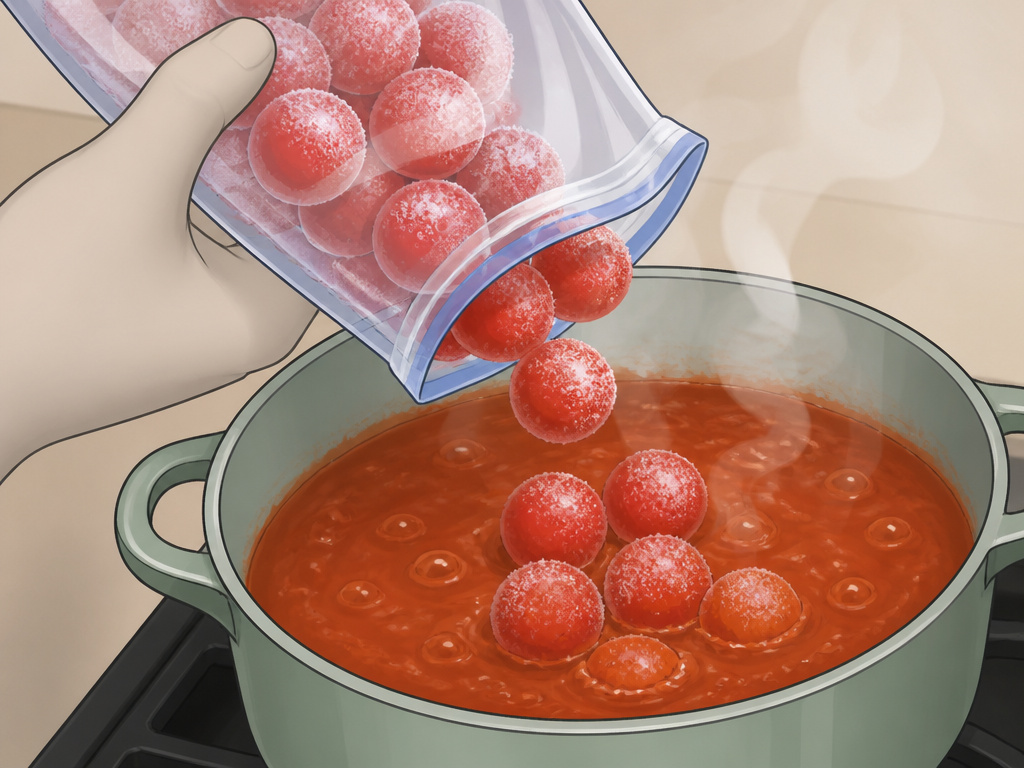
You do not always need to thaw. For most cooked dishes, add the frozen tomatoes directly to a hot pan, soup pot, or sauce. They’ll thaw and break down as they cook. This is perfect for a weeknight pasta sauce.
If a recipe requires draining or slicing, thaw them first. Place the needed amount in a colander in the refrigerator for a few hours or at room temperature for 10–15 minutes. They’ll release a lot of liquid, this is the water from those broken cell walls. Drain it off and use the tomato pulp.
Best uses: Toss whole frozen tomatoes into a simmering soup or stew. Sauté diced frozen tomatoes with garlic and olive oil for a quick pizza or pasta sauce. Blend thawed tomatoes into a smooth sauce or a gazpacho-style soup (the texture will be fine once blended).
A Quick Note on Freezing Green Tomatoes
Got unripe tomatoes at season’s end? Freeze them too. The process is different because you’re targeting a specific use: frying.
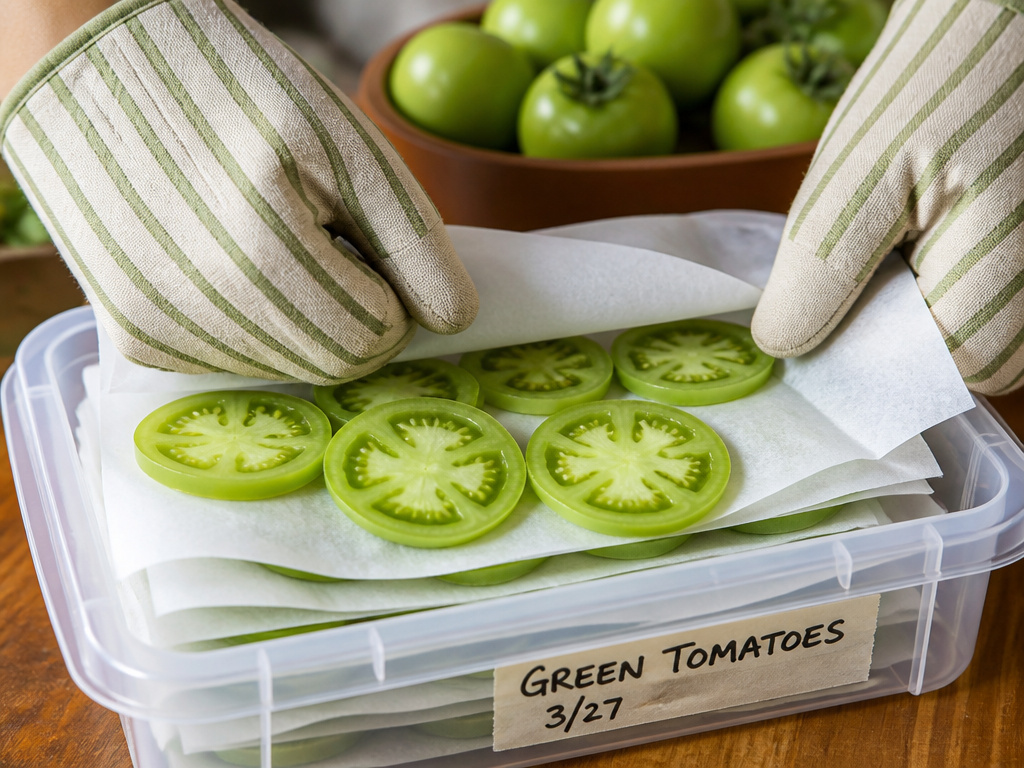
Select firm, sound green tomatoes. Wash, core, and slice them about 1/4-inch thick. This thickness holds up to frying after freezing. Do not blanch. Instead, layer the slices with freezer paper or parchment in a container to prevent sticking. Pack them in, leave a half-inch headspace, and freeze.
When you’re ready to fry, bread the slices while they’re still partially frozen, they’ll be firmer and easier to handle. This is a classic method for preserving vegetables like peppers and onions, which also don’t require blanching.
Troubleshooting: Freezer Burn, Ice Blocks, and Off-Flavors
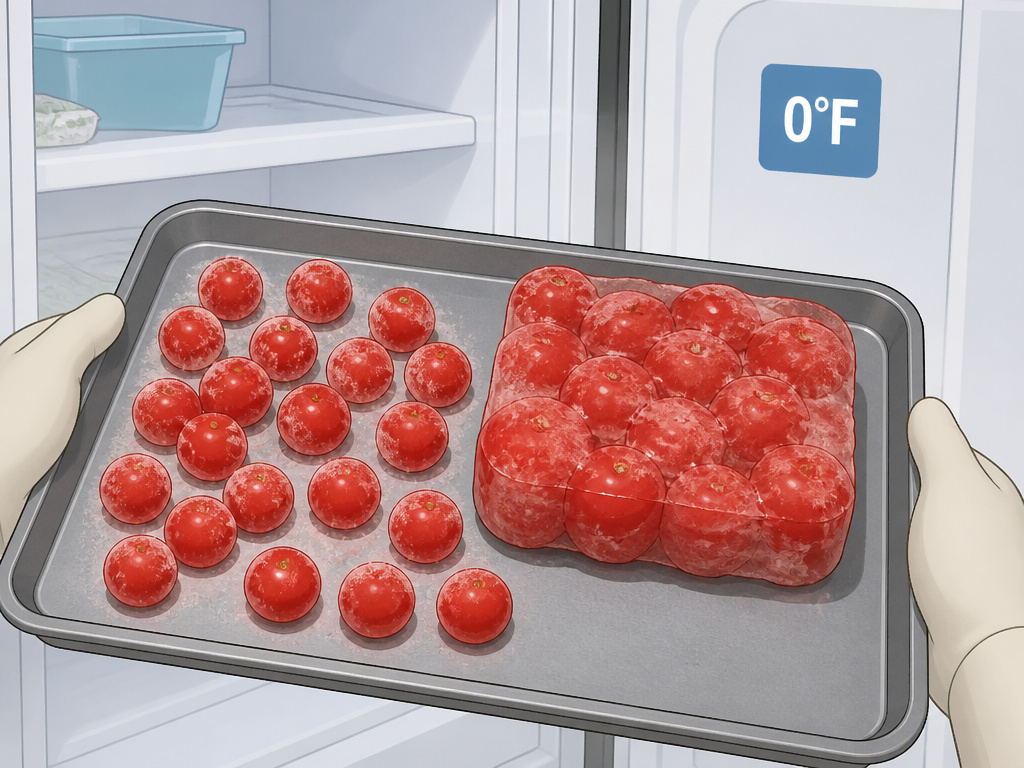
Problem: The tomatoes are fused into a solid block.
Cause: You skipped the tray-freezing step and poured them directly into a bag. They froze together.
Fix: Thaw the entire block, drain well, re-spread on a tray, re-freeze individually, and re-bag. Next time, don’t skip the two-hour tray freeze.
Problem: Grayish-white, dry patches on the tomatoes (freezer burn).
Cause: Air inside the packaging. The food’s moisture sublimates and re-freezes on the surface.
Fix: Cut away the affected areas; the rest is safe to eat but may have off-flavors. Prevent it by using airtight bags, squeezing out all air, or using a vacuum sealer.
Problem: Tomatoes taste “off” or stale after thawing.
Cause: Storage temperature too high (above 0°F), storage for over a year, or poor initial quality.
Fix: Use a freezer thermometer. Ensure your freezer is at 0°F. Only freeze ripe, peak-quality tomatoes and use them within 8–12 months.
Frequently Asked Questions
Can you freeze cherry tomatoes without blanching?
Yes, you must freeze cherry tomatoes without blanching. Their thin skin and small size mean blanching damages their texture and flavor. The flash-freeze method is designed specifically for un-blanched produce.
How do you prevent frozen cherry tomatoes from getting mushy?
You cannot prevent the texture change, freezing makes them mushy by design. The goal is to manage the mush: freeze them solid on a tray first to keep them separate, then use them only in cooked dishes where their soft texture is an asset, not a flaw.
What is the best container for freezing cherry tomatoes?
Heavy-duty, zip-top freezer bag with all air squeezed out is the best container for freezing cherry tomatoes. For rigid containers, choose a plastic freezer box with a tight lid, leaving a half-inch of headspace.
Can you freeze cherry tomatoes for sauce?
Freezing cherry tomatoes is an excellent method for preserving them specifically for sauce. Freeze them whole or diced. When ready to cook, add them directly from the freezer to your pot, they will break down into a rich, flavorful sauce as they simmer.
Before You Go
Freezing cherry tomatoes is a straightforward trade: you sacrifice their fresh, crisp texture for months of shelf life and concentrated summer flavor. The method is simple, wash, dry, tray-freeze for two hours, bag, and store at 0°F. Just remember the two non-negotiable rules. First, never blanch them. Second, use them only in cooked dishes where their softened texture melts right into a sauce, soup, or stew.
This technique slots right into a broader kitchen strategy for preserving fruit and preserving vegetables at their peak. It turns a seasonal glut into a year-round pantry staple.
