Can You Put Jello in the Freezer? Avoiding a Grainy Texture
This post contains affiliate links. As an Amazon Associate, we earn from qualifying purchases.
You can put Jello in the freezer, but it will not return to its smooth, wobbly state after thawing. The water inside forms ice crystals that shred the gelatin’s protein network, causing the dessert to become grainy, watery, and separated. Freezing is only useful for creating frozen treats like pops or speeding up initial setting by 20-30 minutes under close watch.
That shredded network is permanent. Once the gelatin’s structure is torn by ice expansion, it cannot re-form the same flexible bonds that give Jell-O its signature jiggle. The technical term for the liquid that leaks out is syneresis. You are left with a dessert that tastes fine but feels wrong.
What follows is the breakdown of that physical failure, the exact timetables for fridge versus freezer setting, and the specific scenarios where freezing Jello actually makes sense.
Key Takeaways
- Freezing prepared Jello for storage ruins its texture. Thawed Jello becomes grainy and watery because ice crystals destroy the gelatin network.
- The freezer can speed up initial setting by 20-45 minutes for small batches, but you must check every 10 minutes to prevent partial freezing.
- Alcohol in Jell-O shots prevents them from freezing solid, so they stay wobbly even when cold.
- For long-term preservation of the classic texture, the refrigerator is your only option, store plain Jello covered for 3-4 days.
- If you must freeze Jello, treat it as a new ingredient for blended slushies or frozen pops, not as a traditional dessert.
The Short Answer: Yes, But With a Catch
Can you put Jello in the freezer? The box won’t stop you, and the freezer door won’t lock. The real question is what you expect to retrieve.
Placing Jello in a standard freezer causes the water trapped in its gelatin network to form ice crystals. These crystals expand, physically tearing the protein strands. Upon thawing, the damaged structure releases liquid (syneresis), resulting in a grainy top layer, a rubbery middle, and a pool of watery syrup at the bottom.
This is a mechanical failure, not a safety one. Frozen-thawed Jello is safe to eat if it was prepared and stored cleanly. The issue is quality. That smooth, cohesive wobble is a delicate colloidal state. Freezing shatters it.
Common mistake: Using the freezer to “save” a large batch of leftover Jello. By the time it thaws, the texture is gone. You’ve traded three days of good fridge life for one serving of disappointing mush.
What Happens When You Freeze Jello?
Jello sets because dissolved gelatin proteins cool and tangle into a three-dimensional web. This web traps water, sugar, and flavor. It’s strong enough to hold shape but flexible enough to jiggle.
The freezer attacks that web. Water expands by about 9% when it freezes. Inside Jello’s microscopic pockets, that expansion has nowhere to go. The ice crystals act like tiny wedges, prying the protein strands apart. Once those bonds are broken, they don’t re-link in the same way upon thawing.
The damage is immediate and visible. You’ll see liquid separating from the solid within an hour of thawing. The surface loses its glossy sheen, turning dull and slightly crumbly. The mouthfeel shifts from smooth to granular.
This is why manufacturer guidance, like the note from Kraft Heinz found in our research, advises against freezing for optimal results. They define “optimal” as the texture on the box.
The Alcohol Exception: Jell-O Shots
This rule has a famous loophole: Jell-O shots. The alcohol in vodka or other spirits lowers the freezing point of the mixture substantially.
Where this goes sideways: Using too much alcohol. If you replace more than half the cold liquid with high-proof spirits, the gelatin may not set at all. The proteins can’t form a stable network.
A standard Jell-O shot recipe will get firm in the fridge. In the freezer, it becomes a very cold, spoonable gel, never a solid block. This is the one case where freezing doesn’t wreck the texture, because it never fully freezes. The alcohol keeps the water from forming large, destructive crystals.
Freezer vs. Fridge Setting Times
If your goal is a classic set, the refrigerator is the only reliable tool. The freezer is a risky shortcut with a strict timer.
| Container Size / Type | Refrigerator Setting Time (to firm) | Freezer Setting Time (speed-set only) | Risk of Freezer Method |
|---|---|---|---|
| Individual cup (4 oz) | 1.5 – 2 hours | 20 – 30 minutes | Edges freeze solid while center is liquid. |
| Standard bowl or 8×8 pan | 2 – 4 hours | 30 – 45 minutes | Ice crystals form on surface, creating grainy film. |
| Large mold (6+ cups) | 4 – 6 hours or overnight | Not recommended | Interior may not set before exterior is ruined. |
| Layered Jello (per layer) | 1 – 1.5 hours per layer | Not recommended | Layers may separate upon thawing. |
| Jell-O shots | 2 – 4 hours | 30 – 60 minutes (stays gelled) | Minimal; alcohol prevents solid freeze. |
The times above are for a standard batch prepared with boiling and cold water. Using the “speed-set” method, where you replace the cold water with ice, can cut fridge times by half. But that’s still a fridge process.
The freezer is a last-resort accelerator. If you use it, set a timer for 20 minutes. Check it. If not set, check every 10 minutes after that. The moment you see a frosty film or firm edges, move it to the fridge immediately. You’re racing against irreversible texture change.
Why Fridge Temperature Matters
Your refrigerator should be at or below 40°F (4°C). A colder fridge (closer to 34°F or 1°C) will set Jello faster. A packed fridge with poor air circulation can add an hour to these times. For the most predictable results, place your mold on an open shelf, not tucked in a corner behind leftovers. This is a core principle of proper Jell-O storage, consistent, cold air flow.
Long-Term Storage: Fridge is King, Freezer is for Pops
 For keeping Jello edible with its texture intact, the freezer fails. The refrigerator wins.
- Plain Jello in a covered dish: Lasts 3–4 days.
- Jello in an airtight container: Extends to 5–7 days.
- Jello with suspended fruit: Eat within 3–4 days. The fruit will start to break down and weep liquid sooner.
Freezing is not a long-term storing prepared Jell-O solution. If you freeze Jello cubes or pops, treat them as a one- to two-month product. After that, freezer burn from air exposure will degrade flavor and texture further, even in this already-compromised state. Using best freezer containers or freezer-safe containers can mitigate this, but it won’t save the gelatin structure.
When Freezing Jello Makes Sense
There are two scenarios where the freezer is useful:
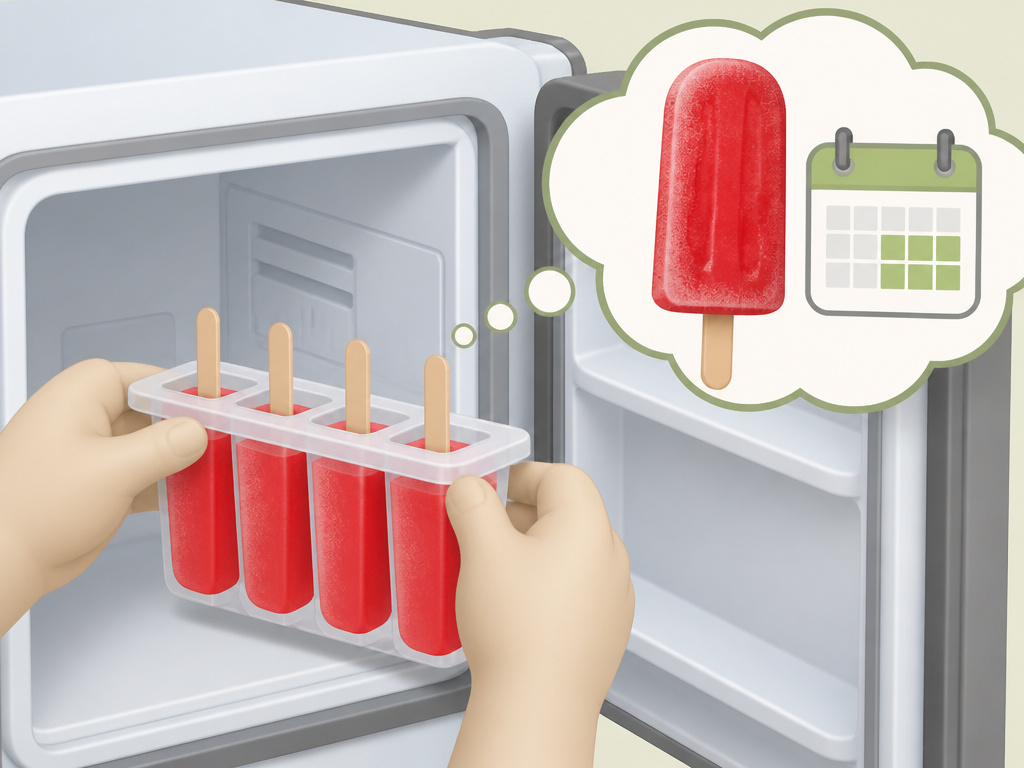
- Creating a novel frozen treat. Pour prepared Jello into popsicle molds. The frozen result is a chewy, icy pop, a different food entirely. It won’t thaw back into Jello, but it doesn’t need to.
- Making “Jello slush.” Freeze a batch solid, then break it into chunks and pulse in a blender. You get a Jello-flavored granita or slushie. This embraces the texture change.
Both are recipes for frozen Jello, not methods for preserving classic Jello.
The Science of What Prevents Setting (It’s Not Just Cold)
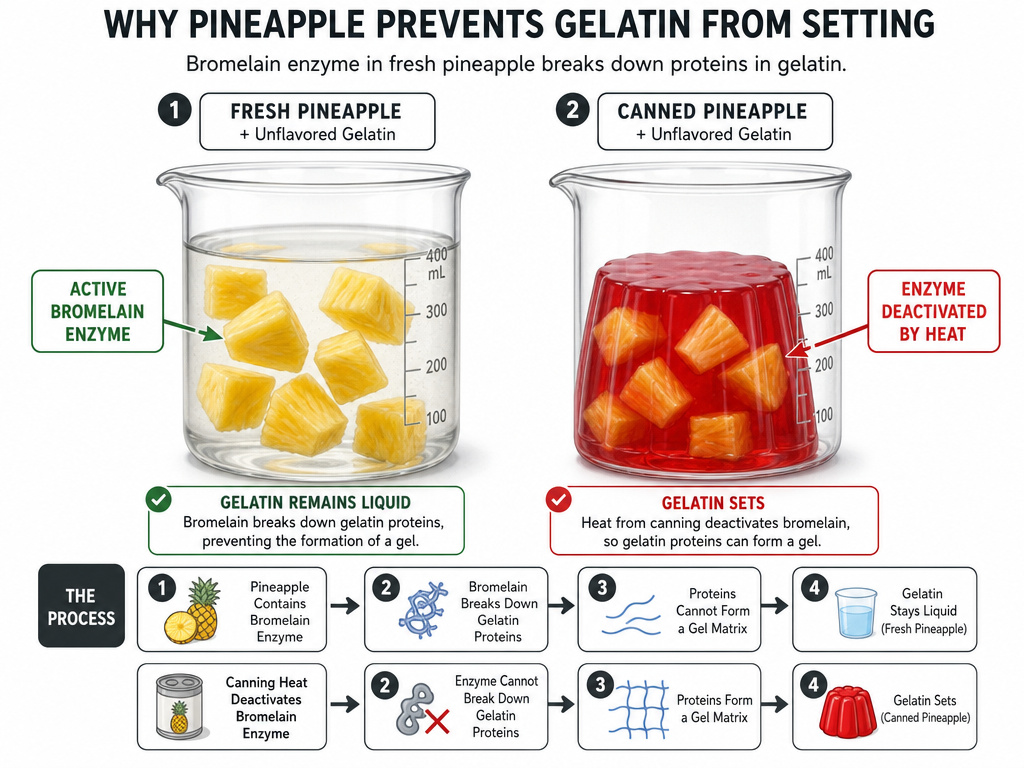 Freezing isn’t the only thing that stops gelatin. Certain fresh fruits contain proteolytic enzymes that chop the protein strands into pieces too small to form a network.
The part nobody mentions: The enzyme in fresh pineapple (bromelain) is so effective it’s used as a meat tenderizer. It works on gelatin with the same efficiency. One cup of fresh pineapple chunks will keep a whole batch liquid indefinitely.
The fix is heat. Canning, cooking, or boiling pineapple deactivates the enzyme. This is why canned pineapple works perfectly in Jello. The same rule applies to fresh papaya, kiwi, ginger, and figs.
This enzyme issue is a different beast than freezing. Freezing damages a set network. Enzymes prevent the network from forming at all. If your Jello didn’t set and you used fresh fruit, the freezer is not your problem.
What About Freeze-Drying Jello?
Our research turned up a niche, advanced method: freeze-drying. This is not home freezing. A freeze-drier removes nearly all moisture from frozen Jello in a vacuum, leaving behind a crunchy, intensely flavored solid that melts in your mouth.
It’s “too much work for the average Jello fan,” as one source noted, but it works. The process bypasses the thawing stage entirely, so the gelatin’s damaged state doesn’t matter. The result is a shelf-stable snack, not a wobbly dessert. It’s a testament to how alternative preserves storage methods can transform a food’s nature.
Frequently Asked Questions
Can you freeze Jello to make it last longer?
No. Freezing does not extend Jello’s shelf life in a useful way. While it pauses microbial growth, the severe texture degradation means the thawed product is undesirable. You gain months of frozen storage but lose the essential quality of the dessert. For longer life, focus on airtight refrigerator or freezer storage in the fridge.
How long can Jello sit out before it goes bad?
Prepared Jello can sit at room temperature for up to 4 hours for serving. After that, it enters the temperature “danger zone” (40°F–140°F) where bacteria can multiply rapidly. It also will start to soften and lose its shape. Always refrigerate leftovers promptly.
Why did my Jello get watery in the fridge?
This is likely syneresis, the natural release of liquid from a gel over time. It’s accelerated if the Jello was slightly over-whipped during mixing, if the gelatin-to-water ratio was off, or if it’s simply been stored for several days. It’s a sign of aging, not spoilage. Pouring off the liquid is your only fix.
Can I freeze Jello with fruit in it?
You can, but expect worse results. The fruit cells will also be damaged by ice crystals, releasing more water and accelerating the breakdown of the gelatin. The thawed mixture will be especially watery and the fruit mushy. It’s one of the least successful applications of freezing.
What’s the best way to store Jello?
For short-term storage of classic Jello, use an airtight container in the refrigerator. For exploring frozen forms, use dedicated popsicle molds. For absolute longest-term preservation of flavor, investigate freezer jam methods for fruit, but understand that gelatin-based desserts play by different, more fragile rules.
The Bottom Line
The freezer is a tool for making new things from Jello, not for preserving it. Use it to create icy pops or a blended slush. For the Jell-O you know from the box, the one that shimmies on the plate, the refrigerator is your only ally. Respect the gelatin network. Keep it cold, keep it covered, and eat it within a few days. That’s the only way to guarantee the wobble.
