The UC Extension Guide on How to Preserve Lemons Successfully
This post contains affiliate links. As an Amazon Associate, we earn from qualifying purchases.
Preserve lemons by packing quartered, un-waxed fruit with pickling salt in a sterilized jar, covering them with fresh lemon juice, and letting them cure in a dark, cool place for at least two weeks. The UC Master Food Preserver program specifies 1/2 cup of salt for 10 lemons, a brine that prevents mold and draws out moisture to soften the peel.
The two-week cure is the minimum from the UC Agriculture and Natural Resources guide. Their testing shows the peels soften enough to use by then, but the flavor continues to deepen for months in the fridge. The real variable is the salt-to-juice ratio. Too little juice and the top lemons oxidize; too little salt and lactobacillus takes over, turning the batch fizzy and sour.
What follows is the method that cuts through the folklore: sterilized jars, a measured salt weight, and why a sunny windowsill is a gamble with a $5 batch of lemons.
Key Takeaways
- Use pickling or canning salt, not table salt. The anti-caking agents in iodized salt make the brine cloudy.
- Sterilize the jar by boiling it for 10 minutes. This isn’t optional for a shelf-stable cure.
- The peels are the prize. Discard the pulp after curing and rinse the peel to remove excess salt before using.
- Refrigerate after curing. They keep for 6 months to a year, but they will darken over time.
- For a quick-use method, freeze lemon juice in ice cube trays or whole lemons in a vacuum-sealed bag.
The Non-Negotiables: Salt, Jar, and Lemon Type
Get these three things wrong and your preserved lemons will either grow mold, ferment uncontrollably, or never soften.
Pickling or canning salt is non-negotiable. Table salt contains iodine and anti-caking agents like calcium silicate. The iodine can impart a metallic taste, and the additives turn the brine murky. You want crystal-clear brine. Diamond Crystal Kosher Salt works in a pinch, but its flake volume differs from fine pickling salt, if you substitute, weigh it. A half-cup of fine pickling salt is about 145 grams.
The jar must be sterilized. Not just washed. Boil it for a full 10 minutes, or run it through a dishwasher’s sanitize cycle. Any residual microbes compete with the salt’s preservative effect. A wide-mouth canning jar is best for packing.
Common mistake: Using table salt for preserved lemons. The clouded brine isn’t harmful, but it looks wrong and can carry a faint chemical aftertaste into the peel after six months.
Lemon type matters more than you think. The standard, thick-skinned Eureka lemon from the grocery store is the workhorse. Its robust pith and peel hold up to the salt cure without disintegrating. Thin-skinned Meyer lemons are sweeter and more aromatic, but they break down faster and can turn mushy after a few months. The UC Master Food Preserver lemons page explicitly advises against Meyer lemons for their spiced recipe.
Eureka vs Meyer Lemons: Which One to Pick
This is a structural choice.
| Lemon Type | Best For | Risk If Substituted |
|---|---|---|
| Eureka (Common Grocery Store) | Traditional salt-pack preserving. | None. This is the default. |
| Meyer (Thinner Skin, Sweeter) | Immediate use (within 2-3 months). | The peel can dissolve into the brine after 4+ months, leaving you with lemon-flavored salt sludge. |
| Organic, Unwaxed | Any method. | Waxed lemons trap moisture and impurities against the skin, raising the mold risk during the initial cure. |
If you only have waxed Eureka lemons, scrub them under hot water with a drop of dish soap and a brush. Dry them completely. Any wax left is a barrier the salt can’t penetrate evenly.
The season does not matter if you’re buying from a store. If you’re harvesting from a backyard tree, the dead of winter, just before any hard freeze, yields the best fruit for preserving fruit in general.
The 7 Steps to Salt-Packed Lemons (UC ANR Method)
This is the University of California preservation methods blueprint. It works because every measurement is tested for safety and consistency.
1. Sterilize the Jar. Submerge a clean quart-sized canning jar and its lid in a pot of water. Bring to a boil and maintain the boil for 10 minutes. Use tongs to remove them, letting them air-dry on a clean towel. 2. Prep the Lemons. Wash 5 lemons. Cut a thin slice off the stem end of each. Stand the lemon upright and cut it into quarters, stopping about 3/4 inch from the bottom so the segments stay attached. 3. Juice the Remaining Fruit. Juice 5 more lemons to yield about 1.5 cups of fresh juice. Strain out the seeds. 4. Pack with Salt. Sprinkle 1 tablespoon of pickling salt in the bottom of the sterile jar. Over a bowl, pack 1 heaping tablespoon of salt into each quartered lemon, then place it in the jar stem-end up. 5. Add Spices. After packing 3 lemons, slide 4 bay leaves and 4 cinnamon sticks against the jar’s side. Add 1 teaspoon of black peppercorns if you want. 6. Cover with Juice. Once all lemons are packed, pour the fresh lemon juice over them until they are submerged by at least half an inch. 7. Cure and Store. Seal the jar fingertip-tight. Place it in a dark, cool cupboard (65–70°F is ideal). Shake the jar daily for 2 weeks to redistribute salt. After 2 weeks, refrigerate.
The UCANR preserved lemons guide states a 2-week curing period in a dark cupboard, shaking daily. This is the minimum safe timeline for the peels to soften. They are usable then, but their flavor mellows further over the next month in the fridge.
The daily shake is non-negotiable. It dissolves undissolved salt and ensures every surface is bathed in brine. Skip it, and the top lemon may develop a white film of harmless yeast, but it’s a sign of uneven curing.
Why the Salt-to-Juice Ratio Is Everything
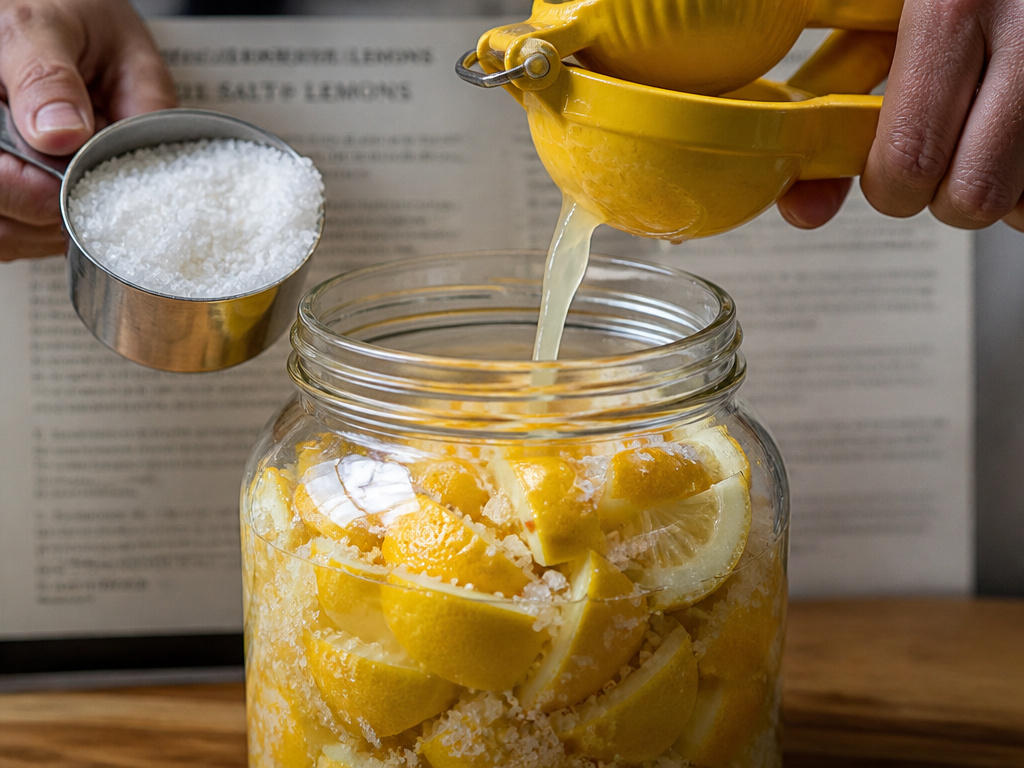
Preserving lemons is a salt-curing process. The goal is to draw enough moisture out of the lemon peels to create a hyper-saline environment where spoilage bacteria cannot survive.
The 1/2 cup salt to 1.5 cups juice ratio from the Preserving Citrus PDF report creates a brine with about a 15% salinity by weight when the lemons’ own juice is extracted. That’s high enough to inhibit mold and most microbes but low enough to avoid making the peels inedibly salty.
Where this goes sideways: Submerging the lemons in a weak brine. If your lemons aren’t releasing enough juice to cover themselves after a day, you must add more fresh lemon juice. Exposure to air leads to kahm yeast or mold within 48 hours.
If you see tiny bubbles forming in the first week, that’s normal residual fermentation. If you see a bulging lid, unscrew it gently over the sink to “burp” the jar. Better yet, use a fermentation lid with an airlock for the first two weeks.
How to Use Preserved Lemons
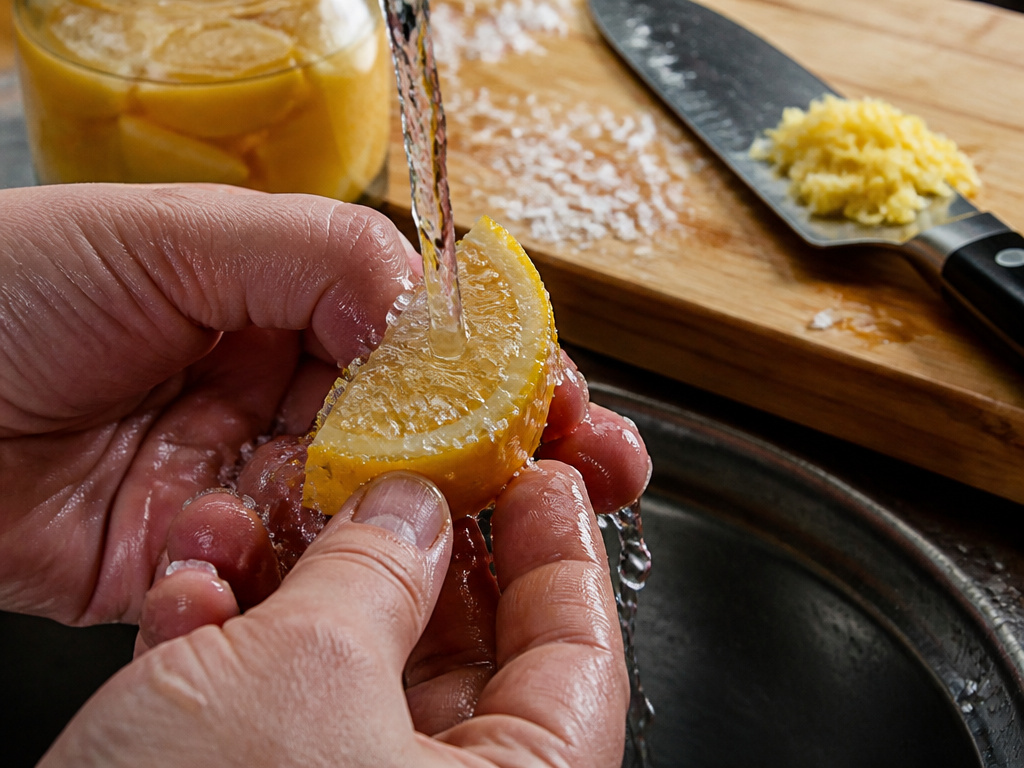
The pulp and pith are discarded. You rinse the peel under cool water to remove surface salt, then mince, slice, or blend it.
- Tagines and Stews: Add a quarter of a minced peel in the last 10 minutes of cooking.
- Salad Dressings: Finely mince a teaspoon and whisk with olive oil, vinegar, and mustard.
- Compound Butter: Blend a tablespoon of minced peel into softened butter for fish or chicken.
- Grain Salads: Toss a small dice into couscous, quinoa, or farro.
- Blended Puree: For a faster preserve lemon zest alternative, blend whole preserved lemon quarters (seeds removed) into a paste. Store this paste in the fridge for up to a month.
The saltiness is potent. Start with half a teaspoon of minced peel and taste. You will rarely need added salt in the final dish.
Alternative Methods: When Salt-Packing Isn’t Right
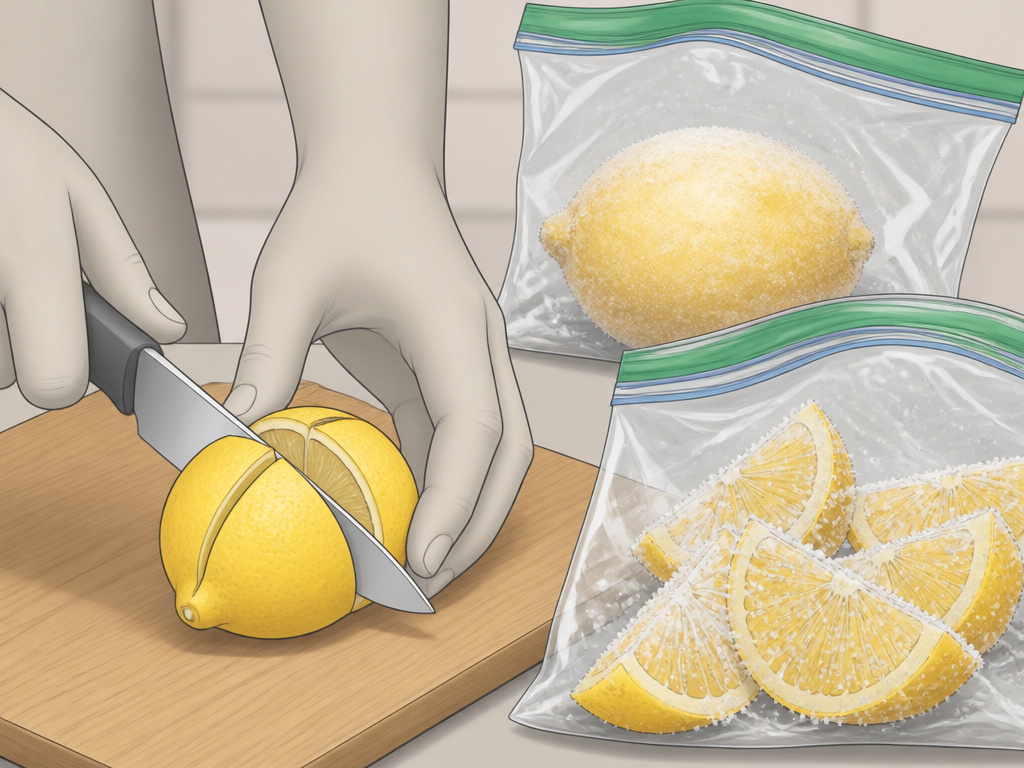
The salt-pack method is for the cook who plans weeks ahead. For a quicker pantry staple, you have two reliable shortcuts.
The Quick Salt-Sprinkle Freeze. This is a hybrid method from community cooks. Quarter lemons, toss the pieces in a bowl with 2 tablespoons of salt, and pack them into a freezer bag. The salt draws out juice, creating a slushy brine as it freezes. The texture is softer when thawed, but the flavor is bright and usable in cooked dishes within days.
Straight Freezing. Wash and dry whole lemons, seal them in a vacuum sealer bag, and freeze. The UCANR citrus preservation guide confirms thawed lemons hold their shape well for slicing, though the texture is softer. You can also juice lemons and freeze the juice in ice cube trays for cooking and drinks.
Easy to miss: Frozen whole lemons are easier to zest while still partially frozen. The cold firmness makes the grater bite more cleanly.
A third method, storing lemons in a jar of water in the fridge, only buys you an extra week or two. It’s a short-term keeping lemons fresh trick, not preservation.
Troubleshooting Your Preserved Lemons
You followed the steps, but something looks off. Here’s what it means.
| Issue | Likely Cause | Is It Safe? | What to Do |
|---|---|---|---|
| White, powdery film on top | Kahm yeast. Forms when there’s oxygen exposure. | Yes, harmless. | Skim it off with a clean spoon. Ensure lemons are fully submerged. |
| Fuzzy, colored mold | Contamination or insufficient brine coverage. | No. | Discard the entire batch. |
| Cloudy brine | Used iodized table salt. | Yes, safe but unattractive. | Use pickling salt next time. |
| Lemons floating above brine | Not enough juice or weight. | Risk of mold. | Add more fresh lemon juice to submerge, or use a fermentation weight. |
| Very fizzy, sour smell | Over-active fermentation (lactobacillus). | Usually safe, but taste is altered. | Refrigerate immediately to halt fermentation. Use within a month. |
If your lemons are too salty even after rinsing, soak the minced peel in cool water for 10 minutes, then pat dry. This is common with Meyer lemons, which absorb salt more readily.
Frequently Asked Questions
How long do preserved lemons last?
Once cured and refrigerated, they last 6 months to a year. The UC Master Food Preserver program notes they can last “a year or more” when fully submerged. They will darken from bright yellow to a deep gold or olive color, this is normal.
Do I have to use spices?
No. The bay leaf and cinnamon in the UC recipe are traditional but optional. Many North African recipes use only salt and lemon juice. Spices infuse the brine with flavor but are not required for preservation.
Can I use sea salt or kosher salt?
You can use pure sea salt or kosher salt without anti-caking agents. Do not use iodized table salt. If substituting kosher salt by volume, note that Diamond Crystal is less dense than Morton’s, weighing your salt (about 145 grams per 1/2 cup of fine salt) is the safest bet.
Why are my preserved lemons mushy?
You likely used Meyer lemons or very thin-skinned fruit. The pith breaks down over time. They are still usable in blended pastes or cooked dishes where texture doesn’t matter, but they won’t hold a dice. For firm peels, use thick-skinned Eureka lemons.
Can I preserve limes or other citrus?
Yes. The same salt-pack method works for limes, though their flavor is more intense. The Preserving Citrus PDF report from UC ANR confirms the method is interchangeable, but notes they have no data for oranges or mandarins.
Before You Go
The shelf life of preserved lemons comes down to three things: sterile jar, enough salt, and full submersion. The two-week cure is a minimum. After six months in the fridge, the peel turns silky and the harsh acidity mellows into something you can’t buy.
Skip the sunny windowsill cure. The temperature swings encourage fermentation over curing, and light degrades the peel’s quality. A dark cupboard at room temperature gives a consistent, predictable result every time. For most home kitchens, the UC ANR method is the one to follow, their 1/2 cup salt to 10 lemon ratio is the tested standard that prevents mold and delivers a soft, usable peel in the shortest time.
