Master How to Preserve Food with These Anti-Spoilage Rules
This post contains affiliate links. As an Amazon Associate, we earn from qualifying purchases.
Preserving food requires controlling three things: temperature, moisture, and microbial activity. Refrigeration and freezing lower temperature to slow bacteria; drying and salting remove moisture; canning and fermenting create environments that either kill harmful microbes or encourage beneficial ones. Match the method to the food’s acidity, water content, and your storage timeline.
That framework separates methods that just delay spoilage from those that stop it for months or years. A refrigerator buys you days by slowing growth. A freezer stops it cold. A properly sealed can stops it entirely.
What follows is the breakdown of each lever, temperature, moisture, and microbial control, and the five methods that pull them. You’ll see where the official storage charts are guides to quality, not safety, and where getting the spec wrong turns preservation into a hazard.
Key Takeaways
- Safety and quality have different clocks. A refrigerated casserole is safe until it smells off or grows mold, but its eating quality peaks at 3-4 days. Rely on your senses, not just a printed date.
- Freezer temperature is non-negotiable. Store food at 0°F or below. A freezer that cycles to 10°F will cause freezer burn within weeks, not months.
- Dried food isn’t shelf-stable without an airtight seal. Once dehydrated, moisture is the enemy. Store in airtight containers with oxygen absorbers, especially if your pantry humidity climbs above 60%.
- Canning low-acid foods demands a pressure canner. Tomatoes need a water bath; green beans and meat require a pressure canner to reach the temperature that kills botulism spores. Mixing these up is dangerous.
- Fermentation relies on the right salt ratio. For vegetable ferments like sauerkraut, a 2-3% salt-by-weight brine creates the environment where good lactobacillus thrives and bad bacteria cannot.
The Three Core Principles of Food Preservation
Every preservation method works by manipulating one or more of three variables: temperature, water availability, and microbial population. You are not just putting food away; you are changing its physical environment so that decay organisms cannot function.
Technical Snippet: Effective food preservation alters the conditions necessary for spoilage. This is achieved by reducing temperature (refrigeration, freezing), removing water (drying, curing), increasing acidity (fermentation, pickling), or applying heat to destroy microorganisms (canning). Each method targets the water activity, pH, or temperature range where bacteria, yeasts, and molds proliferate.
Temperature is the most common lever. Microbes have an optimal growth range, typically between 40°F and 140°F, the “danger zone.” Refrigeration (at or below 40°F) dramatically slows their reproduction. Freezing (at 0°F or below) stops it entirely by turning available water into ice crystals inaccessible to microbes.
Water Activity is a measure of how much moisture in the food is free for microbes to use. Fresh produce has high water activity. Drying removes this water. Salting and sugaring bind it up chemically. This is why a dried apricot lasts for months while a fresh one molds in a week.
Microbial Control means directly managing the organisms present. Canning uses heat to sterilize the food and its container. Fermentation encourages specific, safe bacteria (like lactobacillus) to out-compete dangerous ones, while also producing acids that further preserve the food.
Your goal is to match the food’s nature with the right principle. A cucumber, full of water, is a poor candidate for simple drying but perfect for fermentation into pickles or canning as relish. This matching is the core of proper food storage.
Cold Storage: Refrigeration & Freezing
This is daily preservation. It doesn’t make food shelf-stable, but it extends its usable life by days or months by hitting the pause button on biological processes.
Your refrigerator must hold 40°F or below. Use a standalone thermometer. The door shelves are the warmest spot, reserve them for condiments, not milk. The back of the bottom shelf is the coldest, ideal for raw meat.
Where this goes sideways: Treating refrigerator storage times as safety expiration dates. According to Oregon State University Extension, for most foods, “length of refrigeration is not a good index for judging safety.” A cooked stew is safe until it develops an off-odor, slime, or mold, which could be well past the “3-4 day” guideline. The guideline is for peak quality, not a safety cliff.
The exception is smoked fish and garlic/herbs in oil. These can harbor Clostridium botulinum bacteria that grow at refrigerator temperatures. Store smoked fish for no more than three weeks and flavored oils for no more than four days. Freeze them for long-term long-term storage.
| Food Category | Fridge (at 40°F) | Freezer (at 0°F) | Critical Note |
|---|---|---|---|
| Raw Chicken Breasts | 1-2 days | 9 months | Freeze in a single layer on a tray first, then bag to prevent clumping. |
| Cooked Leftovers (Stew, Casserole) | 3-4 days | 2-3 months | Quality degrades fastest; freeze portions you won’t eat in 72 hours. |
| Hard Cheese (Cheddar, Swiss) | 3-6 months (unopened) | 6 months (becomes crumbly) | If mold appears, cut off at least 1 inch around and below it. The rest is safe. |
| Fresh Berries | 3-5 days | 10-12 months | Do not wash before refrigerating. For freezing, spread on a tray, freeze solid, then bag. |
Freezing is a pause button, not a time capsule. To maintain quality, you must minimize exposure to air, which causes freezer burn.
- Use moisture-proof, vapor-proof wrap. Plastic freezer bags, not bread bags. Heavy-duty aluminum foil. Vacuum sealing is best.
- Remove as much air as possible. For bags, use the water displacement method: lower the bag into a bowl of water, letting the water pressure push air out before sealing.
- Label with contents and date. Frozen pork is best within 6 months; frozen beef within a year. After that, it’s safe but quality declines.
Your freezer must maintain 0°F. A self-defrosting freezer that cycles to 10°F will cause faster quality loss. If it can’t hold 0°F, don’t plan on maximum storage times. This is a foundational point in the USDA refrigeration safety guidelines.
Drying & Dehydration
This is one of the oldest methods: remove water so microbes cannot survive. It works for herbs, fruits, vegetables, and meats.
The target is a brittle, leathery, or snap-dry texture with no cool, moist spots in the center. A dehydrator gives you control; an oven on its lowest setting with the door propped open works in a pinch. Sun drying requires low humidity and high temperatures.
Easy to miss: The real work starts after drying. Dried food is hygroscopic, it will eagerly reabsorb moisture from the air. That regained moisture revives any surviving microbes or enzymes.
Conditioning and Storing Dried Food:
- After drying, cool the food completely.
- Condition: Place dried pieces in a single layer in a sealed jar for 7-10 days. Shake daily. If condensation forms, the food is not dry enough, return it to the dehydrator.
- Store: Transfer to an airtight container. Glass mason jars with tight lids, Mylar bags with oxygen absorbers, or vacuum-sealed bags. For storing dehydrated food, a cool, dark, dry pantry is ideal. Refrigeration extends shelf life further.
- Check periodically. If you see any moisture or smell anything off, discard it.
| Problem | Likely Cause | Fix & Prevention |
|---|---|---|
| Food feels damp or sticky after storage | Inadequate drying; high storage humidity. | Check dryness before storage (should snap, not bend). Use oxygen absorbers in sealed containers. |
| White crystalline spots on dried fruit | Natural sugars crystallizing (harmless). | No fix needed. It’s a sign of very low moisture content. |
| Off, musty, or rancid smell | Oxidation or residual moisture causing spoilage. | Discard. Next time, store in absolute darkness with oxygen absorbers, and ensure complete dryness. |
Canning: Heat Preservation
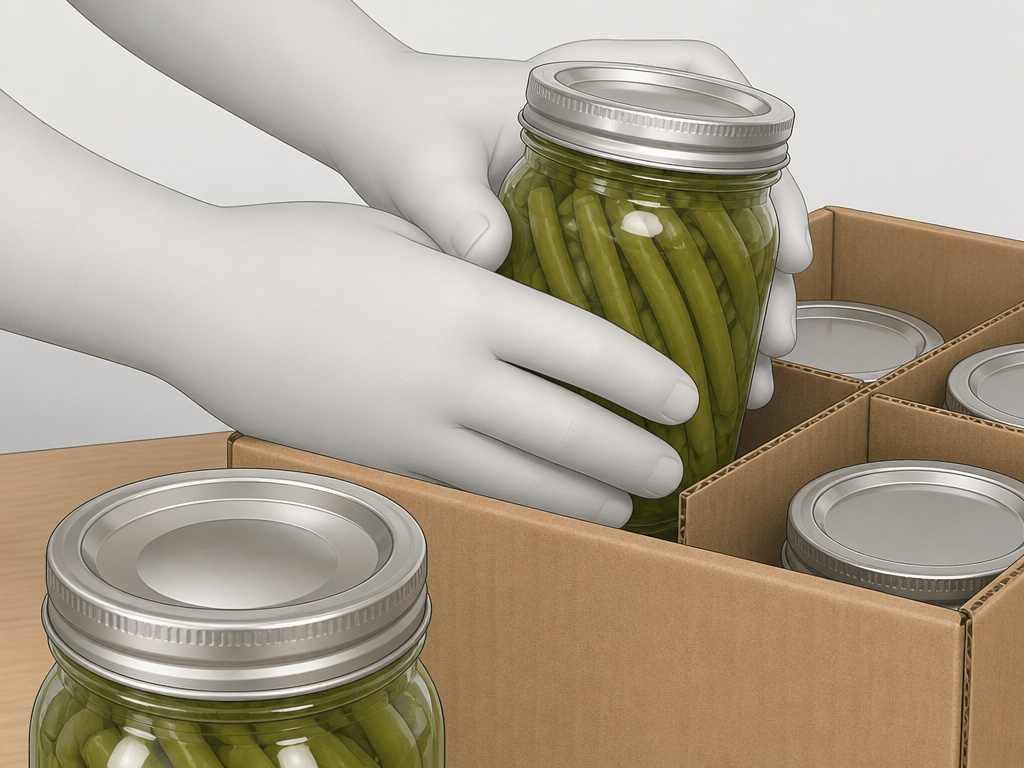
Canning uses heat to destroy microorganisms and creates a vacuum seal to prevent recontamination. The method you use is dictated by the food’s acidity.
- Water Bath Canning: For high-acid foods (pH below 4.6). This includes fruits, pickles, jams, and tomatoes with added acid (lemon juice or citric acid). The boiling water (212°F) is sufficient.
- Pressure Canning: For low-acid foods (pH above 4.6). This includes vegetables, meats, poultry, seafood, and soups. A pressure canner reaches 240°F, the temperature needed to destroy C. Botulinum spores.
Common mistake: Using a water bath for low-acid foods like green beans or corn. The botulism spores survive boiling water. They later germinate in the oxygen-free jar and produce a deadly toxin. This error is why using an approved, up-to-date recipe from a source like the Clemson extension food preservation guide is non-negotiable.
The non-negotiable rules for safe canning:
- Follow a tested recipe from a reliable source. Do not alter vegetable proportions or add extra starch.
- Use proper jars and new lids. Jars must be free of chips; lids must have fresh sealing compound.
- Adjust for altitude. Boiling point decreases as altitude increases. For water bath canning, add processing time. For pressure canning, increase pressure.
- Check seals after 24 hours. The lid should be concave and not flex when pressed. Reprocess or refrigerate any unsealed jars immediately.
- Store sealed jars in a cool, dark place. A consistent temperature between 50-70°F is ideal for canned food storage. Expect best quality within one year.
Fermentation & Curing
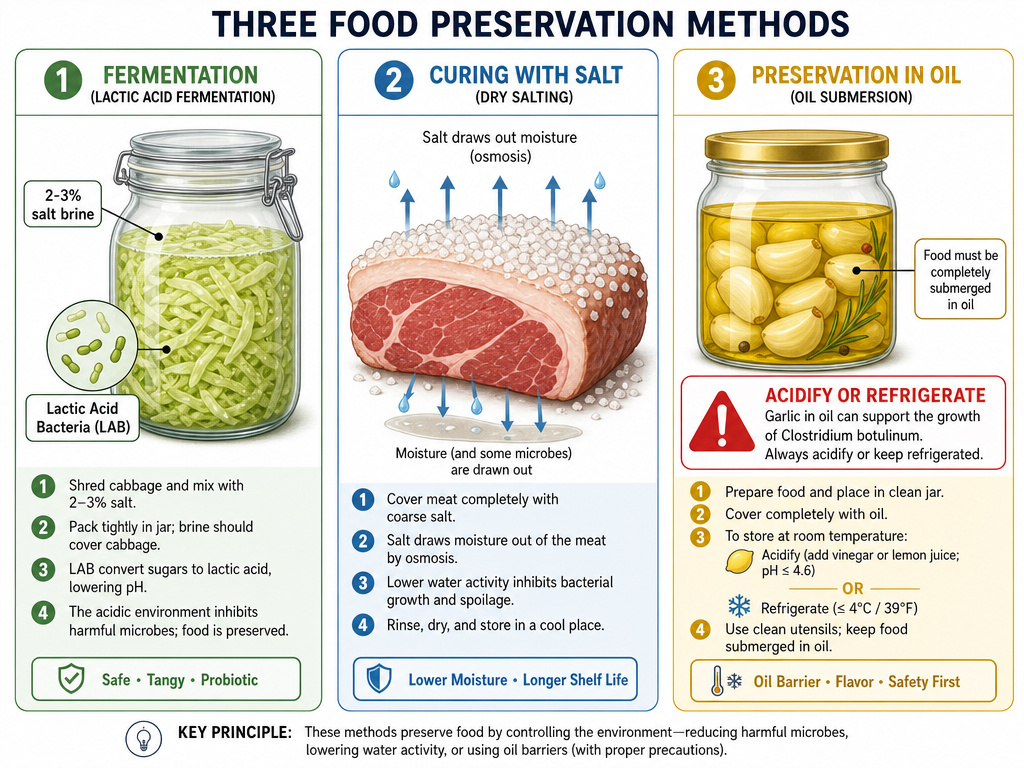
These methods use salt, beneficial microbes, or acids to preserve food, often enhancing flavor in the process.
Fermentation (like sauerkraut, kimchi, or fermented garlic) uses salt to draw out water and create a brine where lactic acid bacteria thrive. They produce lactic acid, which preserves the food and gives it tang.
The key is the salt ratio: 2-3% salt by weight of the vegetables. Too little salt and bad bacteria win; too much and the fermentation stalls. Everything must stay submerged under the brine to prevent mold. This hands-on approach is a cornerstone of home food preservation.
Salt Curing (for meats like pancetta or for preserving egg yolks) uses salt to dehydrate the food directly. The salt draws out moisture and penetrates the tissue, making it inhospitable to bacteria. This is the science behind preserving meat with salt.
Acid Pickling (like quick-pickled onions) uses vinegar to lower the pH. This is not fermentation; it’s a direct chemical preservation. The food must be stored in the refrigerator and has a shelf life of several weeks.
For oil-preserved foods like garlic or herbs, the risk is botulism. The oil creates an oxygen-free environment. If any botulism spores are present on the garlic, they can produce toxin. To make garlic in oil safely, you must acidify the garlic first with vinegar or citric acid, or store the prepared mixture in the refrigerator and use it within four days. Never store raw garlic in oil at room temperature.
Frequently Asked Questions
How long can you really keep leftovers in the refrigerator?
You can keep them until they show signs of spoilage: an off smell, slimy texture, or mold growth. For most cooked dishes, this will be between 3 to 7 days if they were refrigerated within two hours of cooking. The “3-4 day” rule is a quality guideline, not a safety expiration. Always use your senses.
Does freezing kill bacteria?
No. Freezing at 0°F inactivates bacteria, yeasts, and molds, but it does not kill them. Once the food is thawed, these microbes can become active again and multiply. This is why you should cook thawed food promptly and never refreeze thawed food without cooking it first.
What’s the difference between “sell-by,” “use-by,” and “best-by” dates?
These are manufacturer suggestions for peak quality, not safety dates. A “sell-by” date tells the store how long to display the product. A “best-by” or “use-by” date indicates when the product will be at its best flavor or quality. Many foods, especially dry goods and canned goods, are safe long after these dates if stored properly.
Why did my jam mold even though I canned it?
Mold on the surface of canned jam indicates an imperfect seal, allowing airborne mold spores to enter. This can happen if the jar rim wasn’t wiped clean, the lid was defective, or the seal was broken during storage. Do not eat moldy jam or any canned food where the lid is not firmly sealed. The mold can produce mycotoxins that penetrate the food.
Can I preserve food without special equipment?
Yes, for some methods. Refrigeration and freezing require appliances, but you can air-dry herbs, make quick refrigerator pickles, ferment vegetables in a simple jar, and even “can” high-acid jams using the water bath method with a large stockpot. The critical factor is following scientifically sound procedures for each method.
The Bottom Line
Preserving food is a series of deliberate choices, not a single trick. Start with the three principles, control temperature, remove moisture, or manage microbes, and pick the method that matches your food and your timeline.
For daily life, nail your refrigerator and freezer temperatures. For seasonal abundance, drying and canning turn surplus into pantry staples. For flavor and tradition, fermentation and curing are unmatched. Each has its rules, its failure modes, and its rewards. The goal isn’t just to prevent rot; it’s to safely capture taste and nutrition for the days when fresh isn’t an option. That’s the real payoff of knowing how to preserve food.
