
How to Preserve Dragon Fruit | Shelf Life Doubled at 4°C
This post contains affiliate links. As an Amazon Associate, we earn from qualifying purchases.
To preserve dragon fruit, store whole, uncut fruit at 10°C (50°F) in a high-humidity crisper drawer for up to two weeks. For a dramatic shelf-life extension to over 50 days, seal cut or whole fruit in a 12.5µm LDPE bag and store at 4°C (39°F). Freezing is best for long-term storage: cube the flesh, tray-freeze to prevent clumping, then bag for up to a year.
The 4°C + thin plastic bag spec is the result from a controlled study in Bangladesh, where researchers measured everything from weight loss to titratable acidity. The difference between a fruit that lasts a week and one that lasts nearly two months comes from matching three precise things: temperature, barrier, and timing.
What follows is a breakdown of the science-backed methods, from the simple fridge to the lab-proven extended storage. You’ll see the exact numbers for weight loss, the bag thickness that matters, and the one mistake that turns the flesh translucent and sour within days.
Key Takeaways
- Store whole, ripe dragon fruit at 10°C (50°F) with high humidity to avoid chilling injury and maximize shelf life (up to 2 weeks).
- For the longest documented shelf life (over 50 days), use the 4°C + 12.5µm LDPE bag method validated by peer-reviewed research.
- Always freeze dragon fruit using a tray-freeze method first to keep pieces separate and maintain texture for smoothies.
- Chilling injury occurs below 6°C (43°F), causing flesh translucency, wilting, and poor flavor, never store dragon fruit in the coldest part of a standard fridge.
- Red and white-fleshed varieties behave differently; red holds acidity better in cold storage, while white resists weight loss.
Why Dragon Fruit Spoils So Fast (And How to Slow It Down)
Dragon fruit has a short shelf-life of 5–7 days at room temperature. The clock starts ticking the moment it’s picked. The main culprits are moisture loss, which shrivels the bracts and softens the flesh, and enzymatic activity that breaks down its structure and dulls flavor.
Weight loss rates for Hylocereus undatus (white dragon fruit) are approximately 0.1% per day at 5°C, 0.3% per day at 10°C, and 2.6% per day at 20°C. A plastic barrier is non-negotiable for any storage beyond a couple of days.
The skin isn’t a perfect moisture barrier. In your fridge’s dry air, the fruit can lose over 2% of its weight in a week, leading to a rubbery texture. This is why basic food preservation principles, controlling temperature, humidity, and gas exchange, apply directly here. The goal is to slow respiration without shocking the fruit.
Where this goes sideways: Putting an uncut dragon fruit in the warmest part of your fridge, thinking it’s safe. Most refrigerator compartments hover around 3-5°C (37-41°F). That’s squarely in the chilling injury zone for this tropical fruit. Within a week, the flesh near the peel can turn translucent and develop an off, sour taste that won’t recover.
The Right Way to Store Whole, Uncut Dragon Fruit
First, determine ripeness. A ripe dragon fruit will give slightly under gentle pressure, similar to a ripe avocado. If it’s rock-hard, leave it on the counter for a day or two until it yields. Once ripe, move it to storage immediately.
Your best tool is the crisper drawer. Set it to high humidity if your fridge has controls. If not, place the fruit inside a loosely closed plastic bag or a container with a vented lid before putting it in the drawer. This creates a microclimate of higher humidity around the fruit, slowing moisture loss. The ideal temperature is 10°C (50°F). Since most home fridges are colder, store it in the door shelf or the top front of the main compartment, these are usually the warmest spots.
This method is a form of short-term preserving fruit that balances safety and quality. You’re buying time, usually 7-14 days, before you need to eat or process it.
| Storage Condition | Expected Shelf Life | Key Risk |
|---|---|---|
| Room Temperature (20°C/68°F) | 5–7 days | Rapid moisture loss, over-softening |
| Standard Fridge (4°C/39°F) | 10–14 days (with bag) | High risk of chilling injury |
| Ideal Fridge (10°C/50°F) with bag | Up to 2 weeks | Minimal quality loss |
| 4°C + 12.5µm LDPE bag (see below) | Over 50 days | Requires specific materials |
If you need to store it for a similar duration, the principles behind preserving avocados in freezer or preserving pears without canning rely on the same core idea: control the environment to halt decay.
The 4°C + LDPE Bag Method That Doubled Shelf Life
This is a laboratory result. A 2024 study published in the Bangladesh Journal of Nuclear Agriculture tested six postharvest treatments on red and white dragon fruit.The winning combination: storing fruit at 4°C (39°F) inside a 12.5µm thick Low-Density Polyethylene (LDPE) bag.
The numbers are stark. Treated fruit lasted 51.88 days (red) and 52.50 days (white). The control fruit, stored at ambient temperature, lasted about two weeks. The bag creates a modified atmosphere, slowing respiration and trapping moisture. The 4°C temperature is cold enough to dramatically slow microbial and enzymatic action but is carefully managed to skirt the worst of chilling injury when combined with the bag’s protection.
Common mistake: Using a thicker plastic bag or a sealed container for this cold storage. The 12.5µm thickness is critical, it allows for a slight, beneficial gas exchange (oxygen in, carbon dioxide out). A thicker bag or airtight container can lead to off-flavors from anaerobic respiration or condensation that promotes mold.
How to apply this at home: 1. Source 1-gallon zipper storage bags. While not precisely 12.5µm, standard “freezer” bags are typically in the 20-30µm range, close enough for a home approximation. Avoid heavy-duty “vacuum sealer” bags, which are too thick and impermeable. 2. Place whole or halved dragon fruit inside. Remove as much air as possible before sealing. 3. Place the bag in the coldest part of your refrigerator, usually the back of a bottom shelf. Monitor for any condensation inside the bag after 24 hours; if droplets form, briefly open the bag to vent, then reseal. 4. Expect shelf life of 4-6 weeks with excellent quality. This approach is a focused version of preserving fresh vegetables where barrier technology is key.
The study also noted performance differences between varieties. Red-fleshed fruit (V1T6) maintained better titratable acidity (0.37%) and total soluble solids (12.93% Brix), meaning it kept its tangy-sweet flavor profile. White-fleshed fruit (V2T6) excelled at minimizing weight loss (just 0.84% over the period). Choose your method based on what you value more: flavor retention or firm texture.
How to Freeze Dragon Fruit for Smoothies
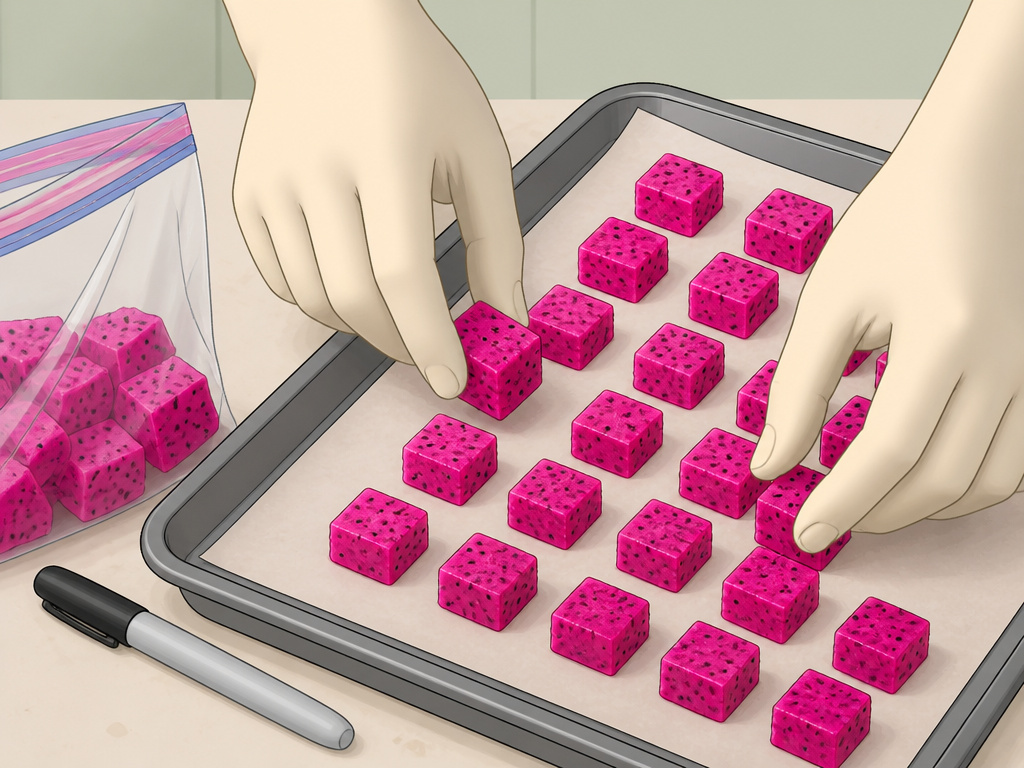 Freezing is the most practical long-term method for home use. It stops all biological activity, preserving nutrients and color for up to 12 months. The texture will become soft upon thawing, making frozen dragon fruit perfect for smoothies, purees, or baking, not for fresh eating.
The tray-freeze step is non-negotiable. If you toss cubes directly into a bag, they’ll freeze into a solid, unusable block. You’ll waste fruit trying to chip pieces apart.
Here is the definitive process: 1. Wash and dry the whole fruit thoroughly. Any bacteria on the skin can be transferred to the flesh by your knife. 2. Cut and cube. Slice off the ends, peel the skin, and cut the flesh into 1-inch cubes. Smaller pieces freeze faster and blend easier. 3. Tray-freeze. Line a baking sheet with parchment paper. Spread the cubes in a single layer, ensuring they aren’t touching. Freeze for 3-4 hours, or until rock-solid. 4. Bag and seal. Transfer the frozen cubes to a labeled freezer bag or airtight container. Squeeze out excess air and seal. This freezing fruit in freezer technique is identical for freezing cherry tomatoes and other soft produce.
I tried skipping the tray-freeze step once, packing fresh cubes directly into a container. The result was a dragon fruit iceberg. I had to thaw the entire block under running water, which turned the outer layer to mush before the center was usable. Now I never skip the parchment paper.
For an even easier approach, you can freeze peeled halves or quarters if you plan to blend them whole later. The technique mirrors that used for freezing avocado mash, where convenience trumps perfect cube form.
Understanding Chilling Injury and Modified Atmospheres
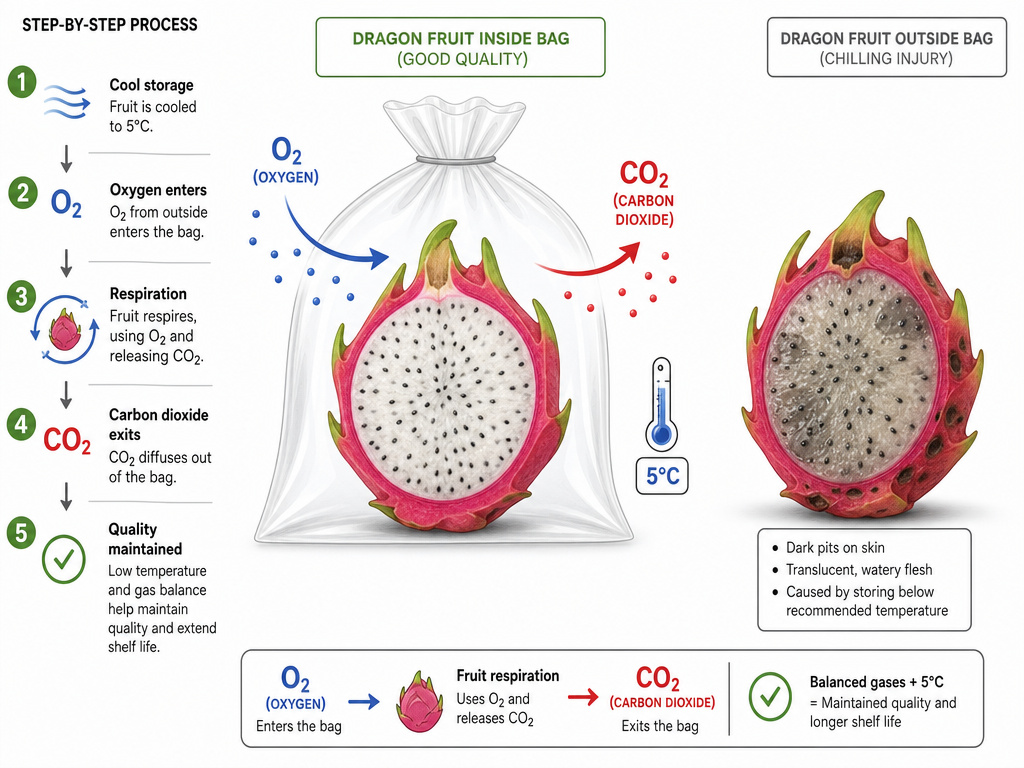 These terms sound technical, but they explain why some methods work and others fail. Chilling injury is damage caused to tropical fruit stored below their critical temperature threshold. For dragon fruit, that threshold is between 5°C and 6°C (41-43°F). Symptoms include pitting or darkening of the skin, watery, translucent flesh, loss of flavor, and failure to ripen normally.
This is why the 10°C recommendation exists, it’s safe. The 4°C method works despite this risk because the thin LDPE bag modifies the immediate atmosphere around the fruit, slightly raising the temperature and humidity at the fruit’s surface and providing a buffer.
A Modified Atmosphere (MA) is simply a change in the proportions of oxygen, carbon dioxide, and water vapor around the produce. A sealed plastic bag naturally creates one as the fruit breathes: oxygen drops, carbon dioxide rises. The right bag thickness (like 12.5µm LDPE) allows this to happen at a beneficial rate, slowing the fruit’s metabolism without suffocating it. This principle is behind commercial storing dehydrated fruit as well, where the goal is to keep moisture out and freshness in.
| Term | What It Means | Home Analogy |
|---|---|---|
| Chilling Injury | Cell damage from cold temps | Lettuce turning brown in the back of the fridge |
| Modified Atmosphere (MA) | Changed air mix around fruit | Sealing greens in a clamshell container |
| O2 Transmission Rate | How fast oxygen passes through a bag | “Breathable” produce bags vs. Thick freezer bags |
| Weight Loss Rate | Daily moisture loss percentage | A lemon shriveling on the counter |
Advanced methods used in research, like combining MA with 1-Methylcyclopropene (1-MCP), a gas that blocks ethylene receptors, are not feasible at home. They underscore a broader point: the future of preserving tropical fruit lies in precise environmental control.
Frequently Asked Questions
Can you freeze dragon fruit with the skin on?
No. The thick, waxy skin is difficult to peel once frozen, and it takes up valuable freezer space. Always peel and cut the fruit before freezing. The skin itself is not typically consumed.
How can you tell if stored dragon fruit has gone bad?
Signs of spoilage include an overly soft, mushy texture, a sour or fermented smell, and visible mold growth (often white or green fuzz). If the flesh has turned brown or unpleasantly slimy, it should be discarded.
Does red dragon fruit last longer than white?
The research shows a slight advantage for white-fleshed dragon fruit in terms of shelf life and weight loss resistance. However, red-fleshed fruit may better retain its acidic tang and sugar content (Brix) during extended cold storage. The difference is marginal for home storage purposes.
Can I use a vacuum sealer to store dragon fruit in the fridge?
For whole fruit intended for short-term storage (1-2 weeks), vacuum sealing is overkill and may crush the delicate flesh. For the 4°C + bag method, a vacuum sealer is not recommended because it removes all air, preventing the beneficial modified atmosphere from forming. Use a zipper bag with the air pressed out manually.
How long does cut dragon fruit last in the fridge?
Once cut, dragon fruit should be stored in an airtight container and consumed within 24 hours. The exposed flesh oxidizes and loses moisture rapidly, leading to texture degradation and flavor loss. For longer storage of cut fruit, freezing is the only reliable option.
Before You Go
Dragon fruit doesn’t have to be a race against time. The standard advice, “eat it quick”, misses the proven science that can extend its life by months.
If you buy in bulk or get a windfall from a garden, the 4°C + thin bag method is your best bet for keeping whole fruit in prime condition for over a month. For the home cook, freezing is the simplest, most effective long-term solution. Just remember the tray-freeze trick.
The one rule to never break: keep it out of the deep cold unprotected. Chilling injury is a silent spoiler that turns a beautiful fruit sour and watery before you even notice. Now you know how to stop it.
