The Real Difference Between Jam and Preserve Explained Here
This post contains affiliate links. As an Amazon Associate, we earn from qualifying purchases.
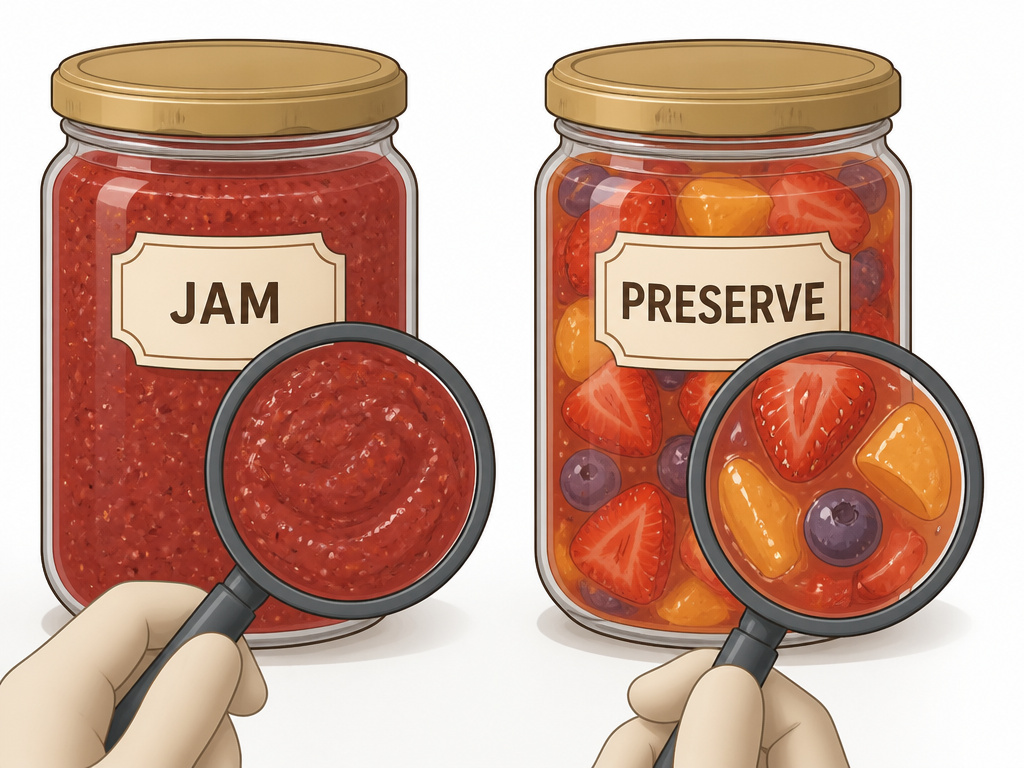
Jam is crushed or chopped fruit cooked with sugar until thickened. Preserves contain whole or large uniform pieces of fruit suspended in a gelled syrup. The international Codex standard draws a second, critical line: jam must have a soluble solids content between 60% and 65%, while a product labelled “preserve” can legally fall between 40% and 65%. That 20-point gap is where spoilage lives.
That sugar concentration is a preservation threshold, not just a label. Below 60% soluble solids, you cross from a shelf-stable canned good back into the territory of a refrigerated fruit compote.The difference between jam and preserve isn’t just visual texture; it’s a chemical recipe for safety.
What follows: the three ingredients that actually create the set, the international standards that define the labels, and the storage rules that change based on which one you’ve made. By the end, you’ll be able to read any jar’s ingredient list and know exactly what’s inside, and how long it will last.
Key Takeaways
- The visual rule is texture: jam is a thick, spreadable paste of crushed fruit; preserves showcase distinct pieces in syrup.
- The chemical rule is sugar: for safety and gel, finished jam needs a soluble solids content of 60-65%, a target many homemade “preserves” miss.
- Gel formation requires a precise balance of fruit pectin, acid (pH 2.8–3.3), and sugar. Missing one breaks the set.
- For best quality, use home-canned jam or preserves within one year. After opening, refrigerate and finish the jar within a month.
- “Conserves” and “marmalades” are specific subtypes: conserves add nuts or dried fruit, marmalade must include citrus peel.
The Texture Spectrum: From Smooth Jelly to Chunky Preserves
Think of fruit spreads on a scale from fine to coarse. At the finest end, you have jelly, clear, firm, and made strictly from strained fruit juice. Jam sits in the middle. It’s thicker than jelly and holds its shape, but it’s made from crushed or finely chopped fruit. You’ll see tiny fruit bits and seeds throughout, but no distinct pieces.
Preserves land on the coarse end. Here, the goal is to keep the fruit’s identity. You get small, whole berries (like blueberries) or uniform chunks (like peach slices) suspended in a clear, gelled syrup. The fruit pieces are the star.
Common mistake: Assuming “preserves” are just a fancier name for jam. The fruit preparation is fundamentally different, crushed versus intact, and that changes the entire cooking process and final product.
This texture scale is useful, but it’s only half the story. A product could have beautiful whole strawberries in syrup and still be unsafe at room temperature. The real guarantees come from the recipe’s chemistry.
The Sugar, Acid, and Pectin Triad
Jam and preserves are preserved fruit, not just cooked fruit. That preservation, and the signature gel, relies on a non-negotiable trio: sugar, acid, and pectin.Get one wrong, and the whole system fails.
Sugar does more than sweeten. In high concentrations, it binds with water molecules, making that water unavailable to spoilage microbes like yeast and mold. The Food and Agriculture Organization of the United Nations specifies that the final sugar concentration must be above 68% to prevent microbial growth, but below 72% to avoid sugar crystallization in the jar. This is why recipes are precise.
Acid, usually from the fruit itself or added lemon juice, is the setting agent’s trigger. Pectin, the natural gelling fiber in fruit, only forms a stable network in an acidic environment. The required pH range is narrow: between 2.8 and 3.3. If your fruit is too sweet (low acid), the jam will remain a runny syrup no matter how long you boil it.
Pectin is the structural scaffolding. Some fruits, like apples and citrus, are naturally high in pectin. Others, like strawberries and peaches, are low. Recipes for low-pectin fruits either require a very long boil to concentrate the little pectin present, or they mandate adding commercial pectin.
Pectin forms a gel network only in the presence of sufficient sugar and acid. The sugar dehydrates the pectin chains, allowing them to cross-link in the acidic environment, trapping liquid and fruit solids in a stable matrix.
This balance is the difference between a jar that seals on the shelf and one that ferments in the pantry.
Why Your Jam Didn’t Set (And Your Preserves Might Be Unsafe)
Gel failure has a short list of culprits. The most common is insufficient acid, which means the pH never dropped into the 2.8–3.3 window needed for pectin to set. Using fruit that’s overripe is another classic error, pectin levels degrade as fruit ripens. Finally, not following a tested recipe’s proportions, especially the sugar-to-fruit ratio, guarantees a loose product.
The risk isn’t just a runny sandwich spread. A soft set often indicates the soluble solids content is too low. If it’s below the 60% threshold, the product doesn’t have enough sugar to be shelf-stable. It must be refrigerated or frozen. This is a frequent outcome with homemade “preserve” recipes that proudly cut sugar for health reasons, not realizing they’re also cutting the preservative.
The Legal Definitions: What “Jam” and “Preserve” Mean on a Label
 Beyond your kitchen, the words on a jar are governed by international and national standards. These regulations exist to ensure consistency and safety for consumers.
The Codex Alimentarius, the global food standards body, publishes Codex STAN 296-2009. This standard is the benchmark. It defines jam as a product made from fruit pulp or puree, and it mandates a minimum soluble solids content of 60% to 65%. The term “preserve” (or “conserve”) is also covered by this standard, but it allows for a broader soluble solids range of 40% to 65%. This lower bound is why some preserves require refrigeration.
| Term | Fruit Form | Codex Min. Soluble Solids | Typical Texture |
|---|---|---|---|
| Jam | Crushed, chopped, or pulped fruit | 60–65% | Thick, spreadable, small fruit bits |
| Preserve / Conserve | Whole or large uniform fruit pieces | 40–65% | Gelled syrup with distinct fruit pieces |
| Jelly | Strained fruit juice only | 60–65% | Clear, firm gel, no solid fruit |
| Marmalade | Citrus fruit (must include peel) | 60–65% | Soft-set gel with shreds of peel |
University extensions translate these standards for home cooks. The South Dakota State jam canning guide clearly differentiates jam, preserves, and conserves based on fruit size and added ingredients. For reliable, safe recipes, these extension publications are the primary source you should use, not random blogs.
When you follow a researched basic method for freezer jam from a site like Food Keepy, you’re using a method designed to meet safety guidelines without traditional canning. The principles of sugar, acid, and pectin still apply.
Conserves and Marmalades: Where Do They Fit?
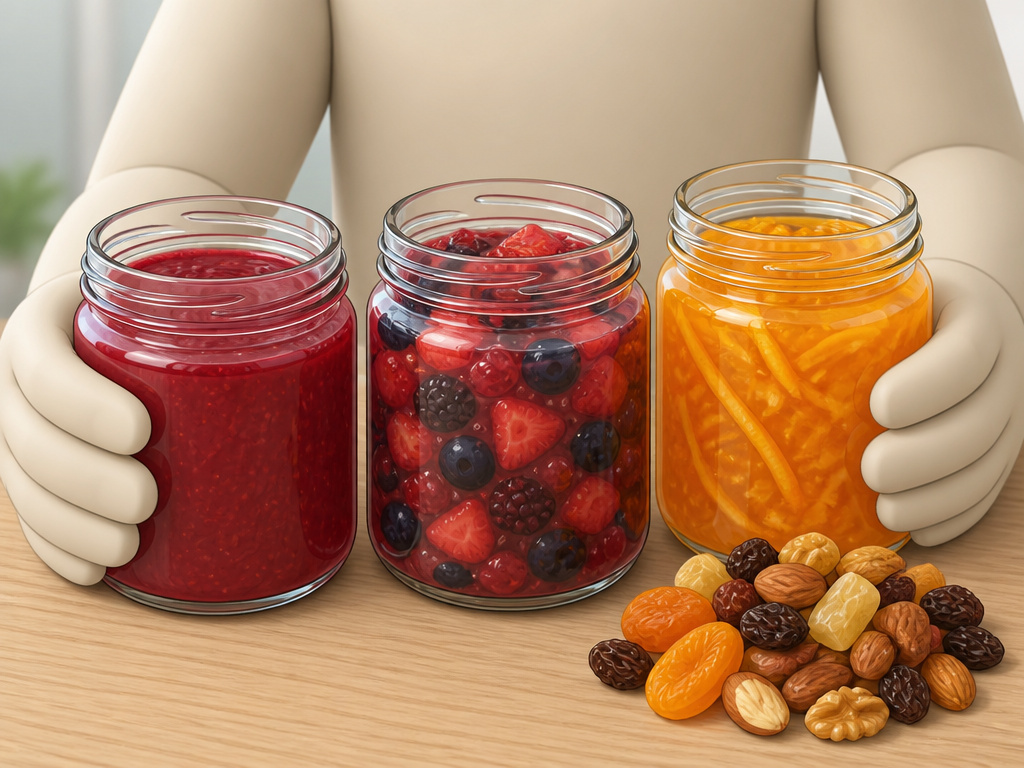 Once you understand jam and preserves, the related terms make sense. A conserve is essentially a fancy jam or preserve. It’s made from a mix of fruits and often includes add-ins like nuts, raisins, or coconut. The texture can be chunky (like preserves) or smoother (like jam), but the defining feature is the combination of ingredients.
A marmalade is a specific type of preserve with a strict identity crisis. By definition, it must be made from citrus fruit, oranges, lemons, grapefruits, and it must include the peel. The bitterness from the peel oils balances the sweet syrup, creating its distinctive flavor. The Penn State Extension jam vs. Jelly guide confirms that marmalade is the name given specifically to citrus preserves. The peel also contributes a massive amount of natural pectin, which is why marmalade often sets firmer than other spreads.
These are specific categories within the larger world of food preservation, not just marketing terms.Knowing them helps you choose the right spread for the job: marmalade for toast, conserve for cheese boards, jam for baking.
How to Store Jam and Preserves for Maximum Freshness
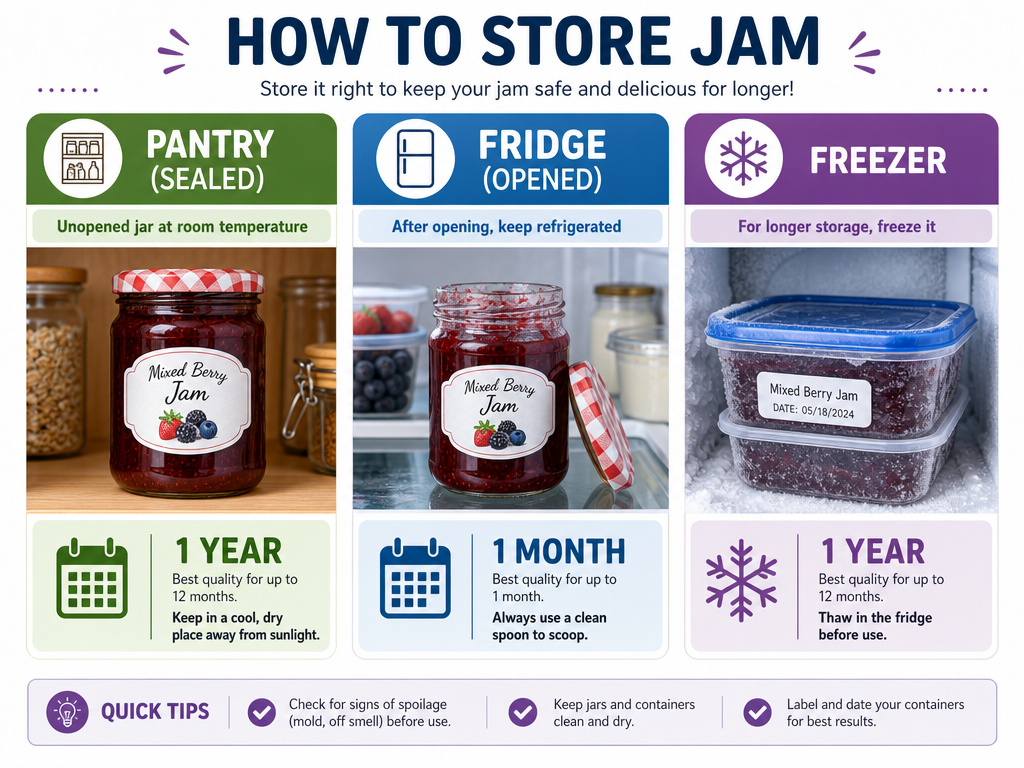 Storage isn’t one-size-fits-all. The method depends entirely on how the product was made and its sugar content.
For commercially canned or properly home-canned jam/preserves (processed in a water bath canner):
- Store sealed jars in a cool, dark, dry pantry.
- For best quality and flavor, use within one year.
- After opening, refrigerate the jar. The official jam and jelly definitions recommend using it within one month.
For freezer jam or low-sugar preserves:
- These products rely on freezing, not sugar, for preservation.
- Store in airtight freezer jam containers at 0°F or below.
- They can be kept for up to a year frozen. Once thawed, treat them as refrigerated and use within a few weeks.
What about that half-used jar sitting in the fridge?
A thin layer of white or bluish mold means the entire jar is contaminated. The mold filaments can penetrate the soft gel. Do not scoop it out. Discard the whole jar. This is less likely in high-sugar products, but it’s a constant risk with any refrigerated, opened spread.
The right storage is the final step in the preserving fruit process. It protects the quality and safety you worked to create.
Frequently Asked Questions
Can I use the terms “jam” and “preserve” interchangeably?
No, not accurately. While they are both sweet fruit spreads, “jam” specifically denotes a product made from crushed fruit, resulting in a thick, uniform texture. “Preserve” indicates the presence of recognizable whole or large pieces of fruit. The international jam and jelly regulations also allow for a lower sugar content in products labelled “preserve,” which can affect their shelf stability.
Why is my homemade jam so runny?
Runny jam typically points to an imbalance in the sugar-acid-pectin triad. The most common causes are: using overripe fruit (low pectin), not adding enough acid (pH too high), not using enough sugar, or not boiling the mixture long enough to concentrate the solids. It’s a science, not an art. Follow tested recipes from sources like university extensions.
What’s the difference between a preserve and a conserve?
Conserve is a type of preserve that includes additional ingredients. While a preserve focuses on fruit in syrup, a conserve incorporates a mixture of fruits and adds elements like nuts, dried fruit (raisins, currants), or coconut. Think of it as a preserve’s more complex cousin.
Does marmalade count as a preserve?
Yes, but it’s a very specific subtype. Marmalade is, by definition, a preserve made from citrus fruit that includes the peel. The peel provides bitterness and a high amount of natural pectin. So all marmalades are preserves, but not all preserves are marmalades.
How long does an open jar of jam last in the refrigerator?
An opened jar of commercially made or properly home-canned jam or preserve should be used within 3 to 4 weeks when refrigerated. For homemade freezer jam or low-sugar varieties, consume within 2 to 3 weeks after thawing and opening. Always look for signs of mold or fermentation (bubbles, off smells).
Before You Go
The difference between jam and preserve is a useful map, not a pedantic one. Jam gives you a consistent, spreadable texture for everyday use.Preserves offer a chunkier, fruit-forward experience, perfect for spooning over yogurt or ice cream.
But the real lesson is in the numbers. That 60% soluble solids target is your north star for shelf-stable safety. Whether you’re making a classic strawberry jam or experimenting with pear preserves, hitting that sugar concentration is what turns fresh fruit into a pantry staple. Ignore it, and you’re just making a very nice compote that needs to live in the fridge.
So pick your fruit, choose your texture, and measure your sugar. Then seal it in the right containers for jam. That’s the whole game.
