Is a Sandwich Bag a Quart Size Bag? TSA Rules Explained
This post contains affiliate links. As an Amazon Associate, we earn from qualifying purchases.
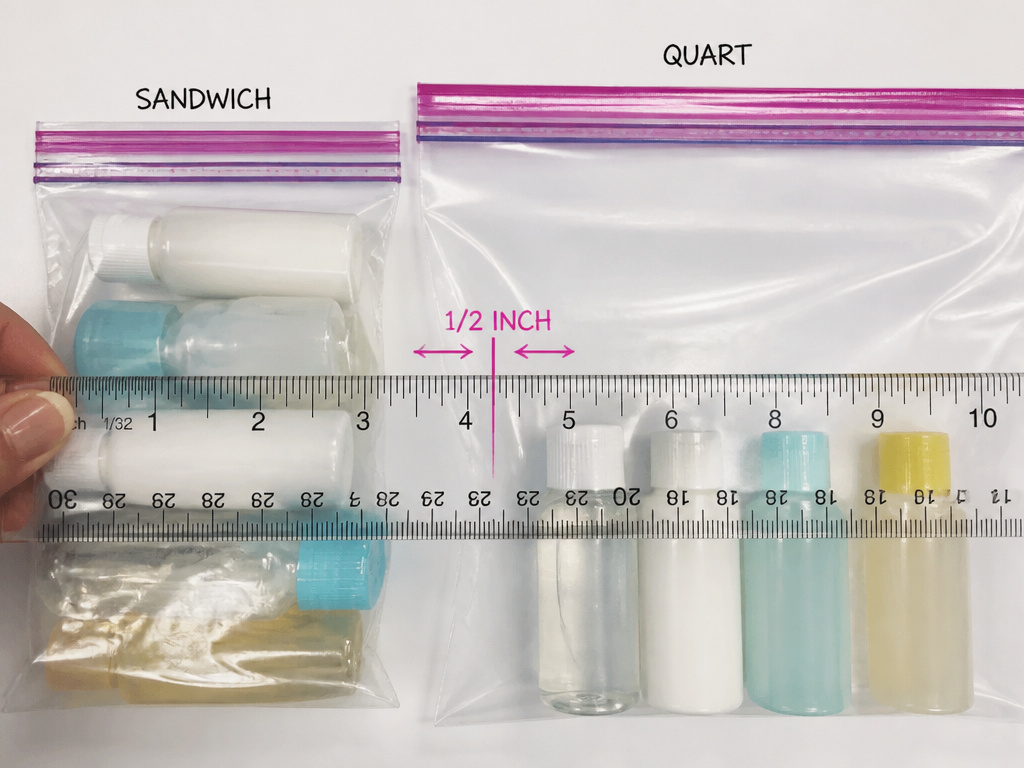
A sandwich bag is not a quart size bag. The difference is not a matter of opinion; it is a matter of printed dimensions, material thickness, and regulatory compliance. A standard Ziploc sandwich bag measures 6.5″ x 6″. A TSA-compliant quart bag must be approximately 7″ x 8″. Using a sandwich bag for TSA liquids risks a bag check, repacking, or discarded items because it holds about 40% less volume and its thinner plastic fails under pressure from travel-sized bottles.
That gap in size is where real travel friction happens. The TSA’s 3-1-1 rule specifies a quart-sized bag for a mechanical reason: containers must lay flat for the X-ray. A cramped sandwich bag creates blind spots in the scan. This concerns a system designed for a specific volume failing when you substitute a smaller one.
What follows: the exact numbers from manufacturer spec sheets, the two scenarios where a sandwich bag genuinely works, the three where it breaks, and the durable alternatives that replace both for good.
Key Takeaways
- A Ziploc sandwich bag is 6.5″ x 6″. A compliant quart bag is 7″ x 8″. That 1.5-inch difference is the line between a waved-through bin and a secondary screening.
- Sandwich bag plastic is about 1.2 mils thick. Quart bag plastic is 1.75 mils or thicker. The thinner film splits at the zipper track under the weight of five travel bottles.
- The TSA rule is volumetric. A “quart” is about 950 ml. A sandwich bag holds roughly 570 ml. You physically cannot fit the same number of 3.4-oz bottles.
- For freezer use, skip the sandwich bag. Standard sandwich bags are storage-grade, not freezer-grade. They become brittle and crack below 0°C.
- Invest in a dedicated reusable quart bag for travel. For food storage at home, quality reusable sandwich bags or proper freezer bags prevent leaks and waste.
The Quart vs. Sandwich Specs That Decide Everything
Look at the numbers first. This isn’t guesswork.
| Specification | Standard Sandwich Bag | TSA-Compliant Quart Bag |
|---|---|---|
| Typical Dimensions | 6.5″ x 5.8″ to 6.5″ x 6″ (Huayue Group) | 7″ x 8″ (TSA guideline) |
| Example (Ziploc) | 6.5″ x 6″ (Resealable Sandwich Bag) | 7″ x 7 7/16″ (Storage Quart Bag) |
| Plastic Thickness | ~1.2 mils (30 microns) | 1.75 mils+ (Minigrip ColorZip) |
| Primary Material | LDPE / LLDPE blend | LDPE (often freezer-grade) |
| Target Use Case | Short-term food storage, snacks | Liquid storage, TSA compliance, freezing |
A Ziploc® Brand sandwich bag is 6.5 inches by 6 inches with a 1.2 mil thickness and a Grip ‘n Seal double zipper. A Ziploc® Brand quart storage bag is 7 inches by 7 7/16 inches. The quart bag’s patented Stand-Up Bottom design is engineered for stability when filled, a feature absent from the sandwich bag format.
The “quart” in quart-size bag refers to volume, not just a name. One quart is 32 fluid ounces, or about 950 milliliters. The 7″ x 8″ dimensions approximate that volume when the bag is laid flat. A sandwich bag’s smaller footprint holds roughly 0.6 quarts (570 ml). You are bringing 40% less capacity to the security line.
Why does the TSA care about a half-inch here and there? The rule exists for throughput. Officers need to see all containers at a glance. In a properly sized quart bag, six 3.4-oz bottles can lie in a single layer. In an overstuffed sandwich bag, they stack. That stacking creates shadows on the X-ray, and shadows trigger a hand check. Your choice of bag directly changes the scanner’s output.
When a Sandwich Bag Actually Works (And When It Breaks)
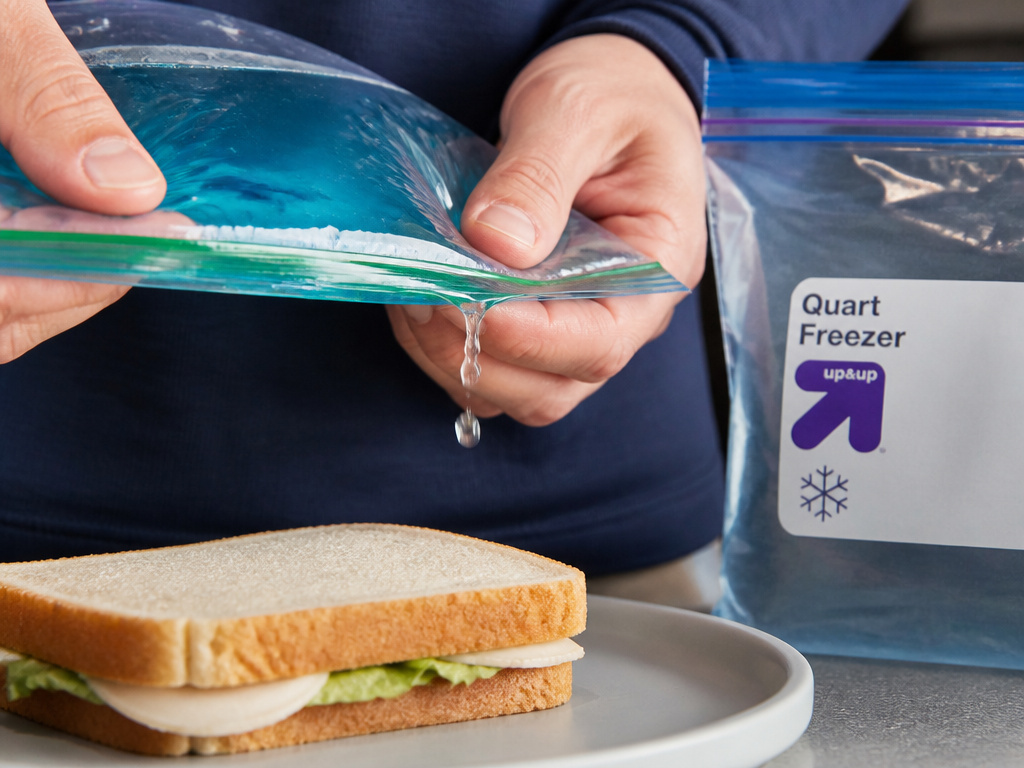
A sandwich bag has a specific job. It is designed for dry or semi-dry solid foods at ambient or refrigerator temperatures for a short period.
Use a sandwich bag for:
- A dry sandwich, chips, or cut fruit in a lunchbox.
- Organizing small hardware like screws or craft beads.
- Short-term fridge storage for a block of cheese or a few vegetables.
Its material is storage-grade, not freezer-grade. The plastic will stiffen and crack if frozen. The zipper track is a single seal, not the reinforced double track found on heavier bags. This is fine for a sandwich. It is not fine for liquids.
Where this goes sideways: Storing liquids in a sandwich bag. The brand itself advises against it. The internal pressure from a few travel bottles stresses the single zipper track. The seal fails along the weakest point, usually within two hours of being jostled in a carry-on.
For liquids or long-term freezing, you need a different tool. That’s where freezer bags enter the picture. Freezer-grade bags use a thicker film (45-70 microns) engineered to stay flexible at sub-zero temperatures. They have reinforced seams and often a double zipper. They are a category apart.
If you need a durable, reusable option for snacks, modern reusable sandwich bags made from silicone or thick PEVA are a sustainable upgrade. They wash and dry, and their clasp seals beat a plastic zipper for leak resistance.
The TSA’s 3-1-1 Rule: Why “Approximately” Isn’t a Loophole
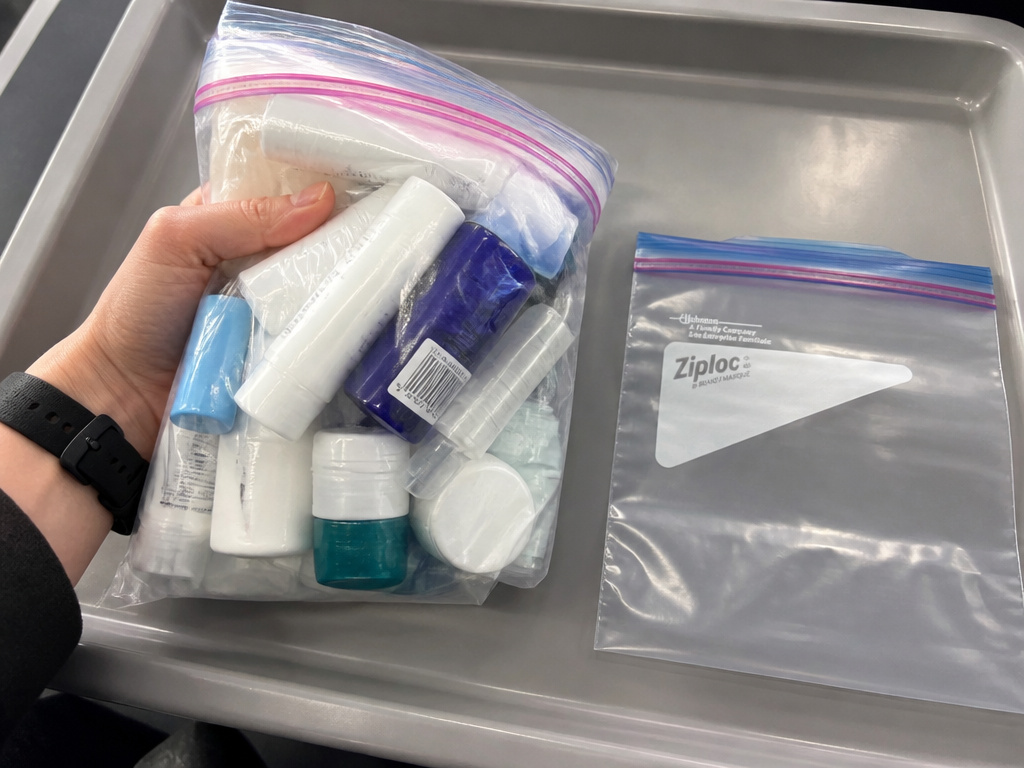
The rule is clear: 3.4-oz containers, in 1 quart-sized bag, 1 bag per passenger. The TSA website states the bag should be “approximately 1 quart (about 950 ml)” with “recommended dimensions of 7 x 8 inches.”
The word ‘approximately’ indicates a tolerance for manufacturing variance. A bag that is 6.9″ x 7.9″ might pass.A bag that is 6.5″ x 6″ belongs to a different category.
Officers have discretion. At 5 a.m. At a busy hub, an agent looking at an overstuffed, bulging sandwich bag has a choice: let it slide and risk a slow secondary screening down the line, or flag it now. They will flag it now. Every time. The visual cue is too strong.
Common mistake: Assuming a sandwich bag is “close enough.” The volume deficit means you cannot fit the full allowance of travel-sized containers. If you force them in, the bag bulges. A bulging bag cannot be inspected “at a glance,” which violates the rule’s core purpose. You will be asked to repack.
What about a “quart-sized” Ziploc brand bag? Even a Ziploc quart storage bag is slightly undersized at 7″ x 7 7/16″. It is, however, marketed and recognized as a quart bag. This is the minimum viable product for TSA compliance. A sandwich bag is not that product.
Material Science: Why Thicker Plastic Isn’t Just Marketing
The difference between 1.2 mils and 1.75 mils of Low-Density Polyethylene (LDPE) is a difference in polymer chains and cold-flex strength.
Standard sandwich bag film is thin and economical. It is designed to be cheap and effective for its core task. When you put a liquid with weight into it, the stress concentrates on the zipper teeth. The plastic stretches. The interlock fails.
Heavier quart bags and quality freezer bags use a higher-grade LDPE or blend. The material has a higher melt flow index and better resistance to stress cracking. The zipper track is often wider or dual-tracked, distributing the load.
For freezing, this is non-negotiable. Storage-grade plastic becomes brittle below freezing. Freezer-grade plastic includes additives that maintain flexibility. Storing soup in a sandwich bag and freezing it guarantees a leak upon thawing. The crack will form at a seam or the zipper.
This is also why compostable sandwich bags, often made from plant-based polymers, have strict temperature limits. These are a great eco-option for dry snacks and short-term fridge storage, but they are not designed for freezer use or hot liquids, so you must match the material to the task.
Your Practical Bag Guide: Matching the Bag to the Job
Stop trying to make one bag do everything. Choose the right container for the job. This saves money, prevents mess, and keeps you moving at security.
| Task | Recommended Bag Type | Reason | Product Example |
|---|---|---|---|
| TSA Liquids | Dedicated reusable TSA quart bag | Guaranteed compliance, durability, leak-proof | EzPacking-style clear toiletry cube |
| Home Liquid Storage | Name-brand quart freezer bag (e.g., Ziploc) | Thicker plastic, double zipper, freeze-capable | Ziploc Quart Freezer Bag |
| Snacks & Lunch | Reusable sandwich bag or compostable bag | Sustainable, washable, sufficient for dry goods | Stasher silicone bag or compostable brand |
| Freezing Meats/Soups | Freezer-grade gallon or quart bag | Prevents freezer burn, withstands freeze-thaw | Ziploc Freezer Bag |
| Organizing Small Items | Standard sandwich bag | Cheap, clear, disposable | Any sandwich bag |
For home food storage, moving from disposable bags to sandwich containers or reusable bags cuts long-term waste. For sealing those bags, a mini bag sealer creates an airtight closure stronger than any zipper.
If you travel more than twice a year, buy a dedicated TSA quart bag. It is a one-time purchase that pays for itself in avoided stress. For the occasional flyer with a Ziploc quart bag already in the cupboard, use that. Never reach for the sandwich bag box when packing toiletries.
Frequently Asked Questions
Can I use a sandwich bag for TSA liquids?
You can try. The TSA officer can reject it. The sandwich bag is smaller than the required dimensions and holds less volume. If your bottles fit without bulging the bag, you might pass. If the bag looks full or strained, you will likely be asked to repack. The risk is not worth the saved few cents.
What are the exact dimensions of a Ziploc sandwich bag?
According to product specifications, a Ziploc Resealable Sandwich Bag measures 6.5 inches wide by 6 inches tall. The plastic is approximately 1.2 mils (30 microns) thick. This is confirmed by reseller and manufacturer data.
Is a Ziploc quart bag TSA-approved?
Ziploc brand quart storage bag measures 7″ x 7 7/16″. This is slightly under the 7″ x 8″ guideline but is universally recognized as a quart-sized bag. It is considered compliant if not overstuffed and is a more reliable choice than a sandwich bag.
Can you freeze food in a sandwich bag?
Do not freeze food in a standard sandwich bag. The plastic is not freezer-grade. It will become brittle and is likely to crack or split along the seams or zipper when frozen, causing leaks and freezer burn. Always use bags explicitly labeled for freezer use.
What’s the best reusable alternative to plastic sandwich bags?
For snacks and lunches, silicone reusable sandwich bags like Stasher are top-tier. They are dishwasher-safe, leak-proof, and durable. For an eco-friendly disposable option, look for certified compostable sandwich bags made from plant-based materials.
Why are quart bags more leak-proof?
Quart bags are made from thicker plastic (1.75+ mils vs. 1.2 mils). This greater material strength better contains internal pressure. Many also feature a double zipper track, which creates a more redundant seal compared to the single track on most sandwich bags.
Before You Go
A sandwich bag is a specific tool for a specific job: holding dry, solid food for the short term. A quart-size bag is a different tool for liquids, freezing, and TSA compliance.
The confusion at the store aisle is real. The solution is in the specs printed on the box. Ignore the names and look at the inches and mils. For travel, invest in the right reusable quart bag. For home, choose freezer bags for freezing and reusable or compostable bags for snacks. Matching the bag to the task is the simplest way to avoid spills, waste, and security line headaches.
