How to Store Coconut Milk Correctly for Maximum Shelf Life
This post contains affiliate links. As an Amazon Associate, we earn from qualifying purchases.
Store coconut milk by first identifying its type: shelf-stable (UHT) or refrigerated. Unopened shelf-stable cartons or cans keep for months in a cool, dark pantry below 95°F (35°C). Once opened, transfer all coconut milk to an airtight container and refrigerate; use within 7–10 days. For long-term storage, freeze coconut milk in measured portions, like ice cube trays, to preserve its emulsion and prevent separation.
That 7–10 day window after opening isn’t a guess. It’s the outer limit before fungal growth becomes probable in pasteurized milk held at 4°C — a finding pulled from a refrigeration study that tracked spoilage week by week. The difference between a carton that sours quietly and one that stays fresh hinges on three specs most labels don’t print: pasteurization temperature, container fill level, and your fridge’s actual temperature.
What follows: the international standards that define “coconut milk,” the precise storage timelines backed by lab data, and the right way to freeze it so it doesn’t come out grainy. You’ll know exactly what to do with the half-can left from tonight’s curry.
Key Takeaways
- Shelf-stable (UHT) and refrigerated coconut milk are different products. Shelf-stable is sterilized for pantry storage; refrigerated is pasteurized and must stay cold from store to home.
- Once opened, all coconut milk becomes a refrigerated product. Move it to an airtight container and use it within 7–10 days to avoid spoilage.
- Freezing is the best long-term storage method. Freeze in small, usable portions (like ice cube trays) to minimize texture change and prevent waste.
- Spoilage follows a predictable sequence: smell turns sour, consistency becomes lumpy, and color may darken. Fungal growth is visible after two weeks in the fridge.
- Fat content dictates separation. Full-fat coconut milk and cream will separate when cold; shaking or stirring recombines it. This is normal, not a sign of spoilage.
The Difference Between Shelf-Stable and Refrigerated Coconut Milk
Don’t look at the carton shape. Look for the words “Keep Refrigerated” or “Shelf-Stable” / “UHT” on the label. That single line dictates every storage decision that follows.
Shelf-stable coconut milk undergoes Ultra-High Temperature (UHT) processing. It’s heated to a temperature that destroys all microorganisms, then packaged in sterile, sealed cartons or cans. This process, defined by international food standards, allows it to be stored at room temperature. The key is keeping that storage environment below 95°F (35°C). A hot pantry or a shelf next to the oven will quickly degrade the quality and shorten its shelf life.
Refrigerated coconut milk is typically pasteurized. The pasteurization of coconut milk is achieved by heating at 72 ± 1°C for 15 minutes, according to research in the Thai Journal of Agricultural Science. This kills pathogens but not all spoilage organisms, which is why it must remain cold. If you buy it chilled, you must keep it chilled. Letting it sit on the counter during a long grocery trip home can knock days off its usable life.
Common mistake: Treating all cartons the same. A shelf-stable carton can live in the pantry until opened. A refrigerated carton left out for two hours is already on the clock.
| Coconut Milk Type | Processing Method | Unopened Storage | Critical Storage Rule |
|---|---|---|---|
| Shelf-Stable (UHT) | Sterilized at ultra-high temperature | Cool, dark pantry (<95°F / 35°C) until best-by date | Once opened, it becomes a refrigerated product. |
| Refrigerated | Pasteurized (typically 72°C for 15 min) | Refrigerator at 4°C (40°F) or below | Must stay cold from point of purchase. Never store unopened at room temp. |
The fat content also plays a role. Under the Codex coconut milk standard (CODEX STAN 240-2003), “coconut milk” must contain at least 10% fat, while “light coconut milk” ranges from 5.0% to 12.6%. Higher fat content means more separation in the fridge, but it also contributes to a richer texture in soups and curries. This separation is a physical, not chemical, change—simply shake or stir to recombine.
How to Store Opened Coconut Milk in the Fridge
The clock starts ticking the moment you break the seal. Oxygen and ambient microbes introduce themselves immediately. Your job is to limit their party.
First, transfer the milk. Pour any leftover coconut milk from its original can or carton into a clean, airtight container. Glass jars or dedicated food storage containers with tight-sealing lids are ideal. This minimizes surface area exposure to air, which slows oxidation and spoilage.
Second, label it. Write the date you opened it directly on the container with a marker. Relying on memory leads to the sniff test of doubt.
Third, place it correctly. Store the container in the back of the refrigerator, where the temperature is most consistently cold (ideally at 4°C or 40°F). Avoid the door, where temperature fluctuates every time you open it.
Where this goes sideways: Using the original can. Once opened, the tin can impart a metallic taste over several days, and the lip is difficult to seal effectively. Always decant.
How long does it last after opening?
The consensus window is 7–10 days. This isn’t arbitrary. The Thai Journal of Agricultural Science study on pasteurized coconut milk found that while total microbial count remained acceptable for up to three weeks at 4°C, fungal growth was observed after two weeks. The “overall acceptability” of the milk dropped off around that 14-day mark. For safety and quality, the 7–10 day rule is a prudent, research-backed guideline.
This same principle of rapid refrigeration after opening applies to other dairy and dairy-like products. Just as you would promptly store opened sweetened condensed milk in the fridge, coconut milk needs the same care to prevent bacterial growth.
Can You Freeze Coconut Milk? (The Right Way)
Yes, absolutely. Freezing is the most effective method for long-term storage of coconut milk, especially for leftover portions you won’t use within a week. However, freezing disrupts its emulsion. The water and fat separate during freezing and thawing, which can result in a grainy or curdled texture if not handled correctly.
The goal is to manage this separation and minimize its impact on your final dish.
Step-by-Step Freezing Method:
- Choose Your Container. For flexibility, pour coconut milk into ice cube trays. Each cube is roughly one ounce, perfect for adding to smoothies or sauces. For larger portions, use freezer-safe bags or small containers, leaving ½ inch of headspace for expansion.
- Portion and Freeze. Fill your chosen containers and place them flat in the freezer. Ice cube trays will freeze solid in 3–5 hours. Once frozen, pop the cubes out and transfer them to a labeled freezer bag to save space.
- Thaw with Care. The best way to thaw frozen coconut milk is slowly in the refrigerator overnight. For quick-thawing, place the sealed bag or container in a bowl of cold water.
- Re-emulsify. After thawing, the coconut milk will look separated and possibly grainy. Vigorously whisk, shake, or blend it to restore a smoother consistency. A quick blitz in a blender is most effective.
The part nobody mentions: Freezing works better for coconut milk destined for cooked dishes. The heat from cooking will help re-emulsify any remaining graininess. For cold applications like smoothies, frozen cubes blended directly work perfectly.
This “freeze in portions” strategy is a kitchen workhorse for many ingredients. It’s as useful for storing leftover garlic or freezing flour for long-term preservation as it is for coconut milk, turning potential waste into convenient future ingredients.
Signs Your Coconut Milk Has Gone Bad
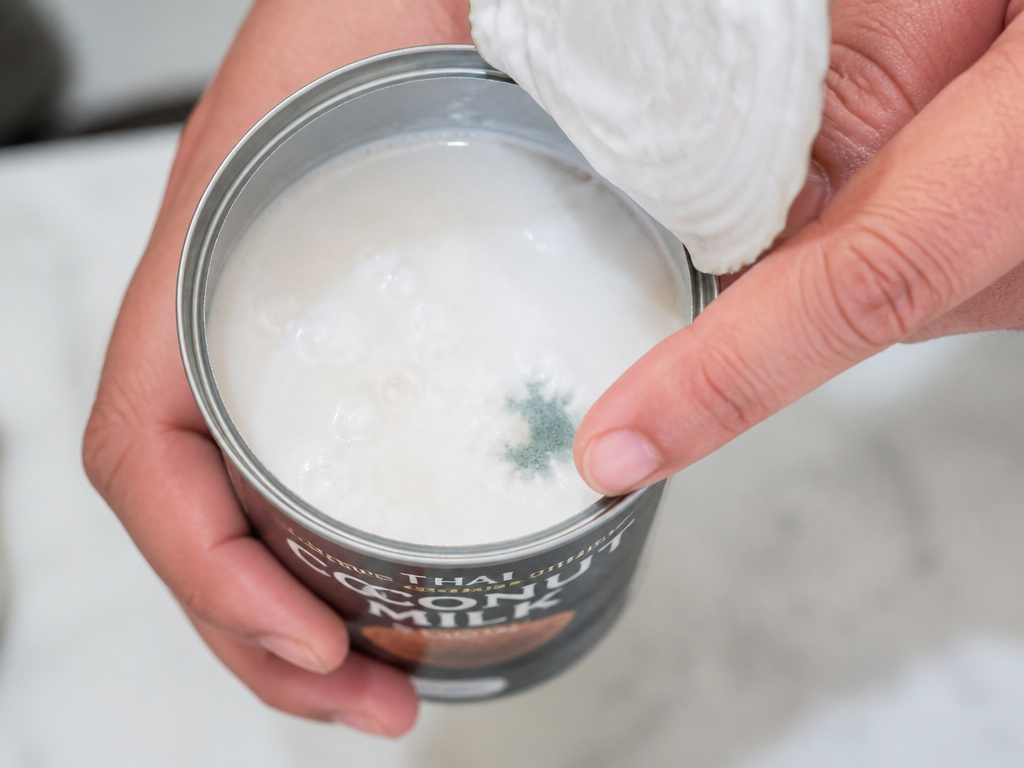 Your senses are the best tools. Spoilage follows a clear sequence, and recognizing the early signs prevents a ruined meal.
- Smell. Fresh coconut milk has a mild, slightly sweet, nutty aroma. The first sign of spoilage is a sour or tangy odor, similar to spoiled dairy. If it smells off, it is off.
- Sight. Look for mold, which can appear as fuzzy spots on the surface. Also note any unusual darkening of the white liquid. Some separation is normal, but persistent lumps or curds that don’t dissolve with stirring are a bad sign.
- Texture. Good coconut milk, when shaken, should be relatively smooth. A slimy or overly thick consistency indicates bacterial growth. If it feels wrong, don’t taste it.
- Taste. If it passes the smell and sight tests but you’re still unsure, dip a clean spoon in for a tiny taste. Sourness or bitterness means it’s spoiled. Spit it out immediately.
What happens if you use bad coconut milk?
Consuming a small amount of spoiled coconut milk might lead to stomach upset, cramps, or diarrhea—typical food poisoning symptoms. The risk is higher for the very young, elderly, or immunocompromised. When in doubt, apply the golden rule: throw it out.
Storing food safely means knowing these signs for a wide range of ingredients. It’s the same vigilance required for knowing when your cheese has gone beyond its prime or if your potatoes have started to turn.
How to Store Unopened Coconut Milk (Pantry vs. Fridge)
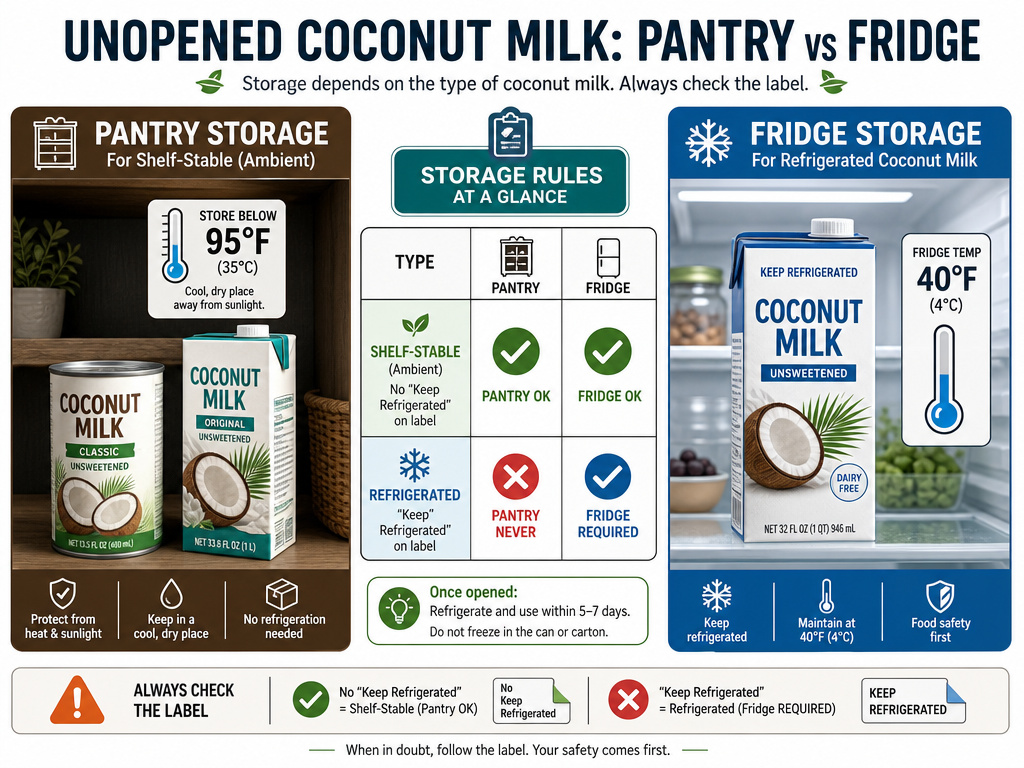 Your storage location is decided for you by the manufacturer. Ignoring their instructions is the fastest way to waste a product.
Shelf-Stable (Cans & UHT Cartons):
- Store in a cool, dark, dry pantry. A cupboard away from the stove, oven, or direct sunlight is ideal.
- Maintain temperature below 95°F (35°C). High heat accelerates chemical breakdown and can cause cans to swell.
- Observe the “best-by” date. Properly stored, unopened shelf-stable coconut milk can remain safe and of good quality for months past this date, but flavor and texture may gradually decline.
Refrigerated Cartons:
- Store in the refrigerator immediately. The “Keep Refrigerated” label is non-negotiable.
- Maintain a consistent fridge temperature of 4°C (40°F) or below. Use a refrigerator thermometer to verify.
- Do not freeze in its original carton. Cartons are not designed for expansion and may burst.
The Philippine Coconut Authority guide on coconut milk processing notes that canned products are sterilized and stable at ambient temperatures, while refrigerated products rely on the cold chain. This official guidance underscores why mixing up the two types is a fundamental storage error.
| Condition | Shelf-Stable | Refrigerated |
|---|---|---|
| Unopened, Pantry | OK until best-by date | NEVER |
| Unopened, Fridge | OK, but unnecessary | REQUIRED |
| After Opening | 7-10 days in fridge | 7-10 days in fridge |
Frequently Asked Questions
Can you store coconut milk at room temperature after opening?
No. Once opened, coconut milk must be refrigerated. The sterilization seal is broken, and room temperature allows rapid growth of spoilage bacteria and molds. Treat it like opened condensed milk—straight into the fridge.
Does coconut milk go bad if not refrigerated?
Yes, and relatively quickly. Unopened refrigerated coconut milk will spoil if left out. An opened container, whether originally shelf-stable or refrigerated, can develop spoilage signs in as little as two hours at warm room temperature. Always refrigerate after opening.
How long does homemade coconut milk last?
Homemade coconut milk, lacking commercial preservatives and precise pasteurization, has a much shorter shelf life. Store it in an airtight container in the refrigerator and use it within 2-3 days. For longer storage, freezing is recommended.
Why did my coconut milk separate in the fridge?
Separation is completely normal, especially for full-fat coconut milk and cream. The fat solidifies and rises, while the watery liquid sinks. This is a physical reaction to the cold, not spoilage. Simply shake the container vigorously or stir to recombine before use.
Can I freeze coconut milk in the can?
It is not recommended. Liquid expands when frozen, which can cause the can to warp, leak, or even burst. Always transfer leftover coconut milk to a freezer-safe container, leaving room for expansion, before freezing.
Before You Go
Storing coconut milk correctly boils down to respecting its type. Shelf-stable lives in the pantry until opened; refrigerated never leaves the cold. Once that seal is broken, the race is on—get it into an airtight container in the back of the fridge and plan to use it within a week. For leftovers you can’t use that quickly, freezing in ice cube trays is your best defense against waste. Listen to your senses: a sour smell, slimy texture, or any sign of mold means it’s time to let it go. Now you know what to do with that half-can after curry night.
