The Right Way to Store Garlic to Prevent Sprouting and Spoilage
This post contains affiliate links. As an Amazon Associate, we earn from qualifying purchases.
Store garlic at 32°F to 38°F with 60-70% humidity in a dark, ventilated place like a mesh bag. This stops sprouting and mold for 6-9 months. Never use a standard home refrigerator, its 40°F average triggers sprouting within weeks.
That temperature gap, just eight degrees, is where most home storage fails. The problem isn’t warmth or moisture alone. It’s the narrow band between 40°F and variously 60°F where the bulb’s biology shifts from dormancy to active growth. Get that wrong and the cloves sprout, shrivel, or mold long before you use them.
What follows: the exact specs from university extension services, why your fridge is the enemy, how to pick containers that breathe, and the one oil-preservation method with a four-day fridge limit before botulism risk climbs.
Key Takeaways
- The ideal garlic storage temperature is 32°F to 38°F at 60-70% relative humidity. A standard home refrigerator averages 40°F, which actively stimulates sprouting.
- Store bulbs in a ventilated container like a mesh bag, basket, or paper bag, never sealed plastic. They need airflow to prevent mold.
- Softneck garlic (common grocery store type) stores up to 9 months. Hardneck garlic (often from farmers markets) stores up to 6 months under the same conditions.
- Never store raw garlic cloves submerged in oil at room temperature. In the refrigerator, this mixture becomes unsafe after four days due to Clostridium botulinum risk.
- Cold storage below 50°F inhibits Eriophyid mite reproduction. Room-temperature storage allows populations to grow and damage bulbs.
The 32°F Rule vs. The 40°F Sprout Zone
Most kitchen advice says “keep it cool and dry.” That’s too vague. Commercial storage and university research land on a specific number: 32°F (0°C). The Global Cold Chain Alliance states this temperature with 60-70% humidity and ventilation allows for 6 to 7 months of storage if the garlic is properly cured. Oregon State University Extension narrows the ideal range to 32°F to 38°F.
Common mistake: Using the refrigerator’s crisper drawer. The home refrigerator typically holds at 40°F (4°C). The UC ANR garlic preservation PDF notes this temperature stimulates sprouting instead of preventing it.
Why does a few degrees matter? Garlic cloves sprout fastest between 40°F and 60°F. The bulb interprets that range as a cool spring, the signal to break dormancy and grow. At a true 32°F, the metabolism nearly stops. Your goal is to mimic a cold cellar, not a cool spring.
| Storage Environment | Temperature | Result & Timeline |
|---|---|---|
| Ideal long-term | 32°F–38°F (0°C–3°C) | Sprouting suppressed; stores 6–9 months |
| Home refrigerator | ~40°F (4°C) | Sprouting stimulated within 2–4 weeks |
| Warm room | 68°F–86°F (20°C–30°C) | Rapid moisture loss; stores only 1–2 months |
If you don’t have a root cellar or a dedicated 32°F cooler, the next best thing is the coolest, darkest spot in your home, a basement corner, an unheated garage (above freezing), or a pantry away from the oven. Monitor it with a thermometer. If it stays below 50°F, you’ve dodged the worst of the sprout zone.
How Humidity and Airflow Prevent Mold
Temperature is half the equation. Humidity is the other. Target 60% to 70% relative humidity. Below 60%, the cloves lose moisture and shrivel. Above 70%, and especially above 85%, you invite mold, particularly Fusarium bulb rot.
A University of Massachusetts trial on German hardneck garlic found that warm, humid storage conditions resulted in a high incidence of Fusarium. The fungus thrives when water has nowhere to go.
Where this goes sideways: Storing garlic in a sealed plastic bag or airtight container. Trapped moisture condenses, the skin softens, and black or blue mold appears on the cloves within ten days.
The fix is constant, gentle airflow. The GCCA recommends about 1 cubic foot per minute of air per cubic foot of garlic. At home, that translates to a container that breathes.
Your container options, best to worst:
- A mesh bag (the orange onion bags work perfectly).
- A woven basket or slatted wooden crate.
- A paper bag with the top folded over, not sealed.
- A cardboard box.
- Nothing, hanging braided garlic from a hook in a cool room.
Never use a plastic tub, a sealed glass jar, or a zip-top bag. Those are for peeled garlic or roasted garlic in the freezer, not whole bulbs.
Hardneck vs. Softneck: The Shelf-Life Difference
Not all garlic stores the same. The variety you buy decides your timeline before you even get home.
Softneck garlic (Allium sativum var. Sativum) is the common type at supermarkets. It has a flexible stem, often braided, with many small cloves wrapped in tight layers. According to the OSU Extension preserving garlic page, softneck can store for up to 9 months under ideal conditions.
Hardneck garlic (Allium sativum var. Ophioscorodon) is typically found at farmers markets in fall. It has a rigid central stem, fewer but larger cloves, and produces an edible scape. It has a shorter shelf life, up to 6 months under the same ideal storage.
Why the difference? The hardneck’s physiology is tuned for a colder growing cycle and it breaks dormancy more readily. If you grow your own or buy in bulk, label your bags. Eat the hardnecks by mid-winter and save the softnecks for spring.
This variety-specific logic applies to other staples, too. Just as you store onions and potatoes differently, garlic has its own rules.
The Right Way to Store Garlic in Oil (and the Botulism Deadline)
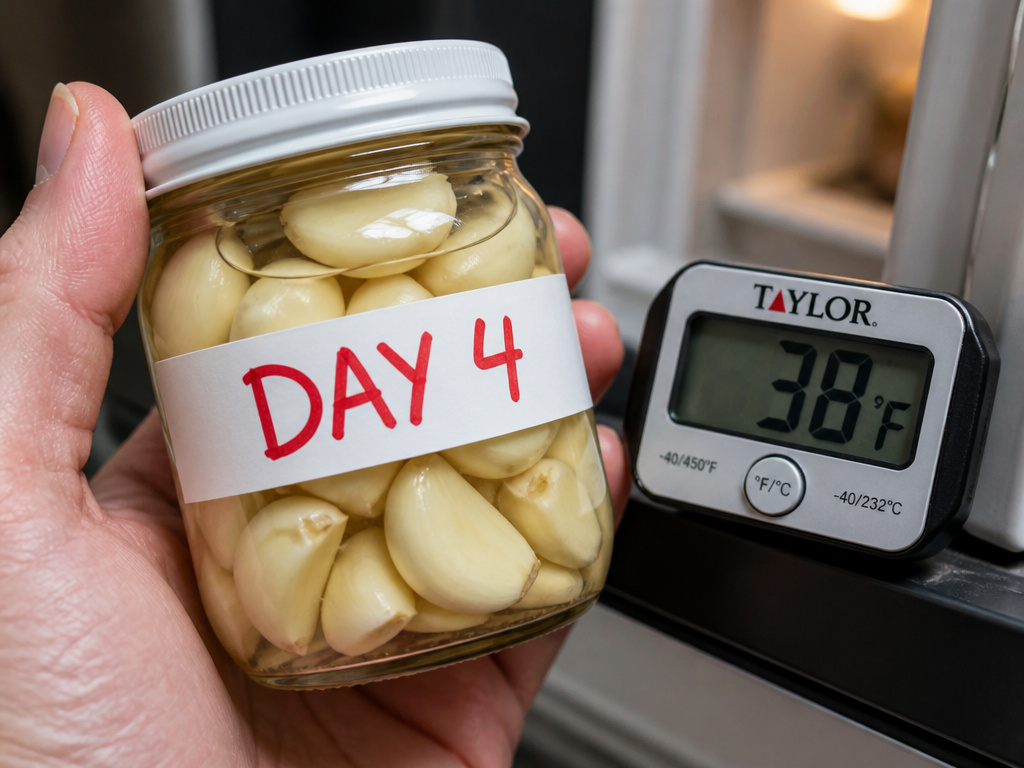
Preserving garlic in oil seems simple. It’s also the riskiest method in this guide if done wrong. Raw garlic is a low-acid vegetable. Submerging it in oil creates an anaerobic environment, the exact condition the Clostridium botulinum bacterium needs to produce its toxin.
Never store raw, peeled garlic cloves in oil at room temperature. The combination of low-acid garlic, exclusion of air, and room-temperature storage can support the growth of Clostridium botulinum.
The official preservation methods publication is blunt on this point: freeze the mixture immediately; do not hold it at room temperature.
For short-term storage, the Oregon State University guide gives a clear, short deadline: peeled cloves may be submerged in oil and stored in the refrigerator for up to 4 days. After four days, the risk begins to climb. For long-term safe storage, you must acidify the garlic first with vinegar or freeze the oil mixture solid.
If you want preserved garlic flavor without the risk, make garlic in oil using a tested, acidified recipe, or turn to freezing.
Step-by-Step: From Harvest to Storage (Even If You Bought It)
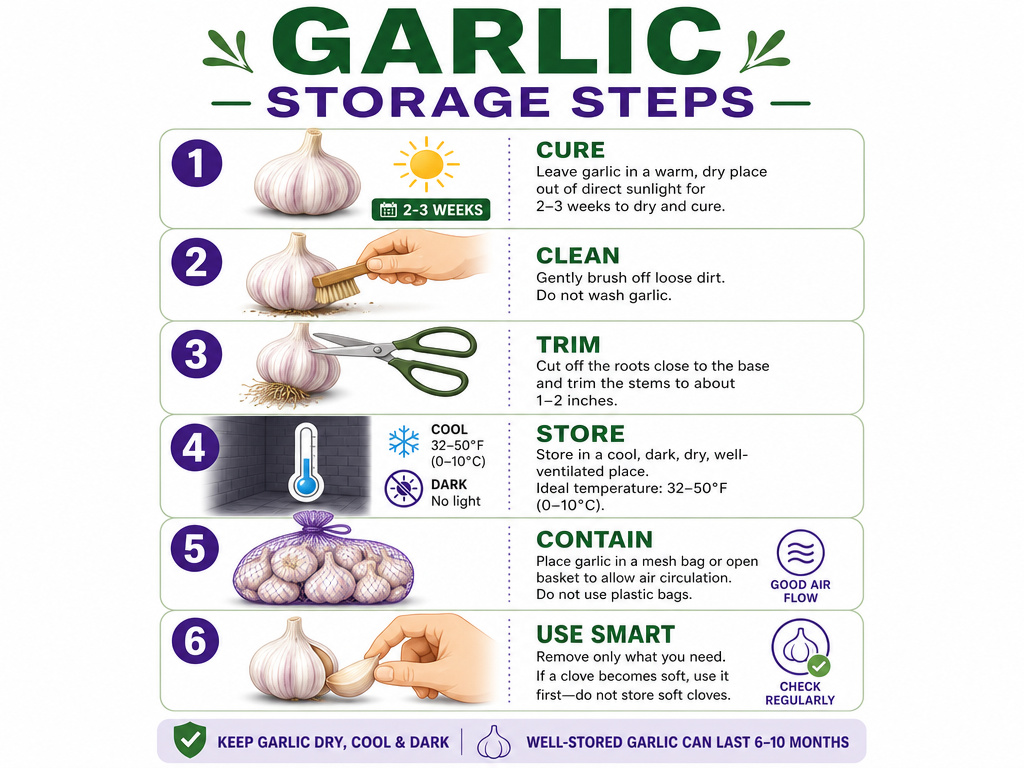
Whether you grew it or bought it, the path to long storage is the same: cure, clean, choose the right spot.
Step 1: Cure it if it’s fresh. Freshly harvested or very fresh market garlic needs to dry. Spread bulbs in a single layer in a shaded, well-ventilated spot for 2–3 weeks. The outer skin should become papery. Skipping this leads to neck rot in storage.
Step 2: Clean gently. Brush off dirt. Do not wash garlic unless it’s muddy, washing introduces moisture and drastically shortens storage life. If you must rinse, dry it thoroughly in front of a fan for a day before moving to storage.
Step 3: Trim roots and stems. Cut roots close to the bulb base. For storage, stems can be cut to 1–2 inches or left longer for braiding. Leaving long stems can slow curing but doesn’t increase disease risk per the UMass trials.
Step 4: Select storage location. Find that cool (32°F–50°F), dark, ventilated place. A basement shelf, a cold pantry, an unheated porch (above freezing). Verify with a thermometer.
Step 5: Containerize. Place bulbs in a mesh bag, basket, or cardboard box. Do not pack tightly. Leave space for air to circulate around each bulb.
Step 6: Monitor monthly. Check for any soft cloves, sprouting, or mold. Remove compromised bulbs immediately to prevent spread. A sprouted clove is still usable, cut the green shoot out, but it signals declining quality.
This process mirrors the care needed for other long-keeping produce like ginger root or fresh herbs. The principles of food storage are consistent: control temperature, control humidity, allow airflow.
Troubleshooting: Sprouts, Mold, and Mites
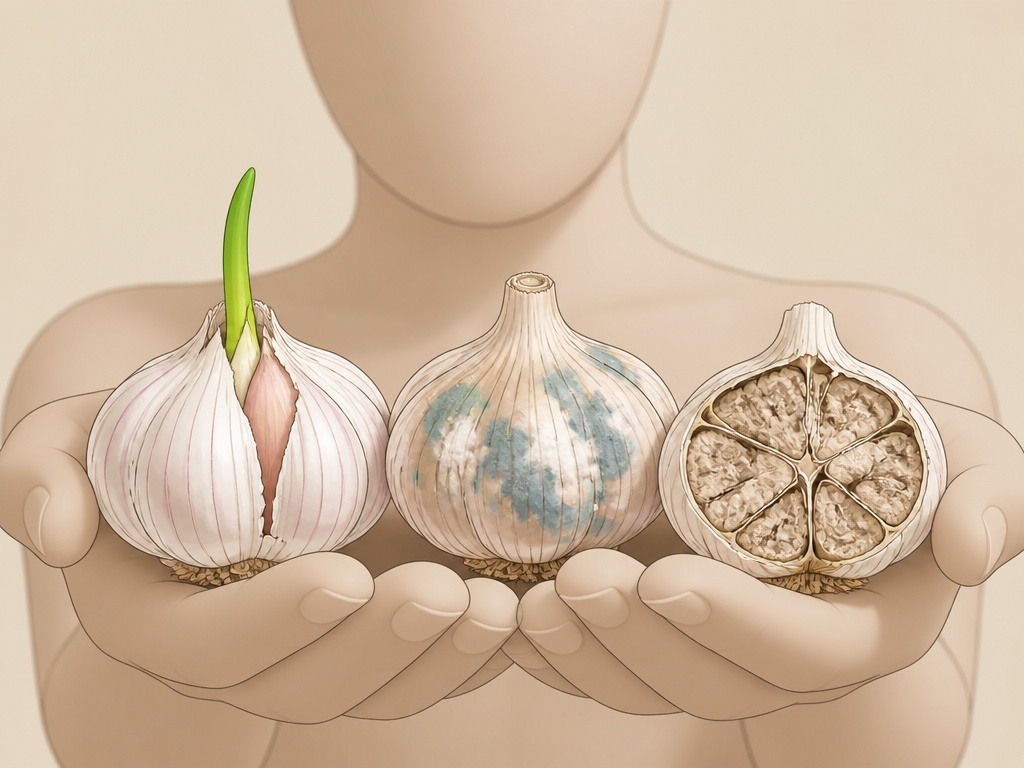
You’ll see one of three problems first. Each has a specific cause.
Sprouting green shoots from the clove.
Cause: Storage temperature between 40°F and 60°F. The bulb thinks it’s spring. Fix: Move remaining bulbs to a cooler location, below 38°F if possible. Use sprouted cloves soon; the green shoot tastes bitter, so cut it out before cooking.
White, blue, or black mold on the outer wrappers or clove surfaces.
Cause: Humidity above 70% combined with poor airflow. Often from a sealed container or a damp storage room. Fix: Discard visibly moldy bulbs. Improve ventilation for the rest, switch to a mesh bag, add a small fan, or move to a drier spot. Increase air space between bulbs.
Cloves that feel light, dry, and powdery inside.
Cause: Humidity too low (<60%) over many months. The cloves simply desiccated. Fix: Too late for those cloves. For future storage, aim for 60-70% humidity. A slightly damp (not wet) basement is better than a bone-dry attic.
A fourth, less visible issue is Eriophyid mites. These microscopic pests can infest stored bulbs. The UMass trial observed that cold storage reduced mite incidence because lower temperatures inhibit their reproduction. Room temperature storage allows populations to grow. If you’ve had mite problems before, store your garlic below 50°F as a preventive measure.
Frequently Asked Questions
Can you store garlic in the refrigerator?
You can, but you shouldn’t for whole bulbs. The average refrigerator temperature of 40°F falls squarely in the “sprout stimulation” range identified by multiple university extensions. It will cause garlic to sprout weeks or months sooner than if kept in a proper 32°F–38°F environment. The refrigerator is only suitable for very short-term holding of a few bulbs you’ll use within a week.
How long does garlic last at room temperature?
At typical room temperatures (68°F–86°F), whole garlic bulbs will store for only 1 to 2 months before significant shriveling occurs. The UC Davis Postharvest Center factsheet confirms this short ambient shelf life. It’s a last-resort option.
Is it safe to eat sprouted garlic?
Yes, it is safe. The sprout itself can taste bitter and harsh. Cut the clove in half lengthwise and remove the green shoot before using. The remaining clove flesh will be milder but may also have lost some of its pungency.
What’s the best container for storing garlic?
Mesh bag is the best container. It provides maximum ventilation, prevents moisture buildup, and allows you to see the bulbs. A paper bag or woven basket is a good second choice. Never use an airtight plastic container.
Can you store garlic and onions together?
Yes. Garlic and onions have similar ideal storage requirements (cool, dry, ventilated) and do not adversely affect each other. The garlic storage and onion storage processes are compatible. Store them in separate mesh bags within the same cool area.
Before You Go
Garlic storage isn’t about finding a dark corner. It’s about holding three numbers in your head: 32°F, 60% humidity, and 4 days (the oil deadline). Hit those and a single harvest or bulk buy lasts most of the year.
Skip the fridge entirely. Find a spot that stays between 32°F and 50°F, a basement, a cold closet, a garage that doesn’t freeze. Drop the bulbs into a mesh bag and hang it there. Check every month for softness.
When you see a green shoot, you’ll know the temperature crept above 40°F. That’s the signal to move the rest or use them up. It’s a simple system. It just requires ignoring the most common piece of kitchen advice you’ll hear.
