Properly Store Canned Food: Avoid Spoilage With This Guide
This post contains affiliate links. As an Amazon Associate, we earn from qualifying purchases.
To store canned food, keep unopened cans in a cool, dry, dark place between 50°F and 70°F. Never store them above 75°F for long periods, as quality degrades rapidly. Once opened, immediately transfer the contents to a clean glass or plastic container, cover, and refrigerate. Treat opened canned food like fresh food—it spoils quickly.
That temperature gap between 50°F and 75°F is the whole game. A pantry at 68°F gives you years. A garage that hits 85°F in summer cuts shelf life to months. The food won’t look spoiled, but vitamins fade and flavors turn.
What follows is the breakdown of those numbers: the exact temperatures that ruin texture, the timeline for vitamin loss after canning, and the one transfer rule that stops metallic tastes. By the end, you’ll know why a concrete floor rusts cans and how to read a date stamp without guessing.
Key Takeaways
- Store unopened cans between 50°F and 70°F. Temperatures above 75°F slash shelf life.
- Transfer opened food immediately to a glass or plastic container. Leaving it in the can risks metallic flavors and faster spoilage.
- Home-canned goods last about one year. Commercially canned low-acid foods (meats, vegetables) can last 2 to 5 years.
- Never store metal cans directly on bare concrete. Moisture wicks up and encourages rust.
- Practice FIFO (First In, First Out). Label cans with the month and year of purchase to use the oldest stock first.
The Ideal Storage Conditions (50°F to 70°F)
Look at your pantry’s thermometer. If it reads between 50°F and 70°F, you’ve hit the storage sweet spot. This range, cited by multiple university extensions, slows chemical reactions and microbial growth to a crawl.
Clemson University and Texas A&M AgriLife Extension specify that canned foods retain best quality stored between 50°F and 70°F. Storing above 75°F significantly decreases storage time, and temperatures above 95°F can cause spoilage or severe quality loss within weeks.
The enemy is heat. A shelf above the stove or next to a furnace pushes temperatures past 75°F. At that point, the clock speeds up. Vitamins A and C, which are already reduced by 30-50% during the canning process, degrade another 5 to 20 percent per year according to Texas A&M research. At 95°F, that annual loss can happen in a single season.
Your storage location choices directly enable a successful long-term food storage plan. A cool basement cupboard beats a sunlit garage shelf every time.
Where This Goes Sideways: Damp and Direct Sunlight
High humidity corrodes metal lids and can seams. A rusty seam is a failed seal. That’s why Utah State University Extension warns against placing cans directly on bare concrete floors—moisture wicks up. Use a wooden pallet or shelf liner.
Direct sunlight does two things. It heats the can well above ambient air temperature, and UV light can degrade vitamins through the glass of jarred goods. A dark cupboard or a storage room without windows is ideal.
Canned Food Shelf Life: High-Acid vs. Low-Acid
Not all cans are created equal. Their contents’ acidity dictates their longevity. This isn’t a marketing guess; it’s chemistry. The pH level determines how quickly microorganisms can potentially reactivate.
| Food Type | Examples | Recommended Shelf Life (Unopened) | Quality Risk After |
|---|---|---|---|
| High-Acid | Tomatoes, fruits, pickles | 12 to 18 months | Color darkens, texture softens |
| Low-Acid | Meats, vegetables, poultry, fish | 2 to 5 years | Nutrient loss, potential flavor fade |
| Home-Canned | Any home-preserved food | 1 year | Seal integrity, botulism risk |
| Dry Packaged Goods | Cereals, baking powder | 6-12 months (unopened) | Loss of potency, staleness |
High-acid foods (pH below 4.6) like tomatoes and fruits have a shorter shelf life of 12 to 18 months. The acid itself can slowly react with the can over many years, which is why for emergency foods with the longest shelf life, you’d look beyond tomato sauce.
Low-acid foods (pH above 4.6) like canned meats for storage and vegetables are where the long-term potential lies. Properly stored, they can remain safe and of good quality for 2 to 5 years. The low-acid environment, combined with the commercial sterilization process, creates a stable, dormant state.
Home-canned goods are a separate category. Even with perfect technique, the USDA and extension services uniformly recommend a one-year shelf life. The reason is control. Home kitchens can’t replicate the precision of commercial sterility testing, so the safety margin is tighter.
Common mistake: Judging a can’s safety by its “best-by” date alone. That date is about peak quality, not safety. A low-acid can years past its date might be safe if the seal is intact, but its vitamin content and texture are gone.
What Happens After You Open a Can?
The moment you break the vacuum seal, the clock resets. The food inside is now as perishable as its fresh counterpart. This is the single most violated rule in home kitchens.
The official guidance from Food Standards Australia New Zealand is blunt: “Opened canned food should be treated in the same way as fresh food, and should not be stored any longer than its uncanned version.” That means leftover canned corn has the same fridge life as cooked fresh corn.
Why the transfer? First, the exposed interior of the can can impart a metallic taste to acidic foods like tomatoes within hours. Second, once opened, new bacteria can be introduced. Storing the food in its own can makes it nearly impossible to seal airtight again.
The Refrigerator Timeline for Opened Cans
Once transferred to a clean airtight food container, follow these limits: * Baby food, meat, seafood, poultry: 2 days. * Vegetables: 3 days. * Tomato sauce, fruits: 5 to 7 days. * Pickles, olives: 1 to 2 months (their high acid and vinegar brine act as preservatives).
The “two-hour rule” from the NDSU Extension Q&A applies here: never let perishable food sit in the “danger zone” between 40°F and 140°F for more than two hours total. That includes cooling time after cooking.
Step-by-Step Guide to Organizing Your Canned Goods
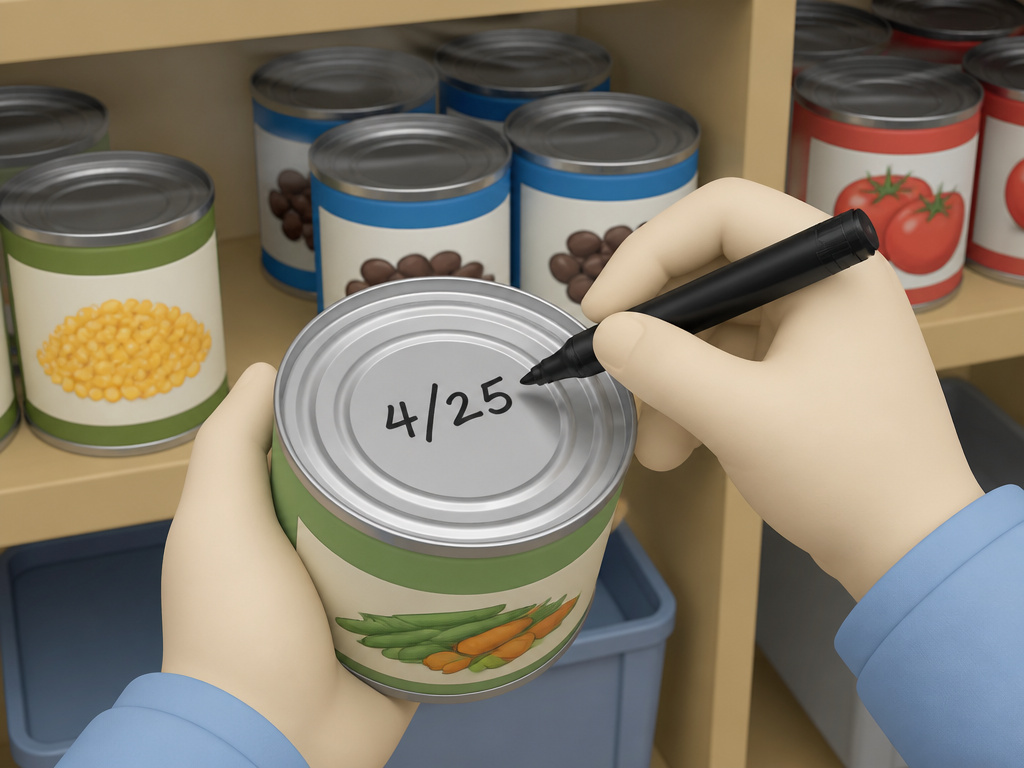
A systematic pantry prevents waste. It forces you to use older stock before it declines.
- Label Every Can. As soon as you buy it, use a marker to write the month and year on the lid. “4/25” is enough. This eliminates guesswork later.
- Inspect Before Storing. Check for deep dents on seams, rust, or bulging lids. Reject or return any damaged cans. This initial inspection is as important as your fundamental food preservation methods.
- Designate a “First-In” Zone. Place newly purchased cans behind the existing stock on your shelf. The oldest items should always be at the front, ready to use.
- Choose the Right Spot. Select a cupboard away from heat sources, pipes, and exterior walls. Ensure it’s dry and dark.
- Use Sturdy Shelving. Ensure shelves are strong enough to hold the weight and are not made of bare, moisture-wicking concrete.
- Rotate During Inventory. Every few months, do a quick sweep. Pull any cans approaching their shelf-life limit to the front for immediate use.
Where this goes sideways: Mixing home-canned and store-bought goods without clear labels. A year later, you can’t tell which jar is the commercial peach halves (good for years) and which is your home-canned relish (best within a year). Label clearly.
How to Spot a Bad Can Before You Open It
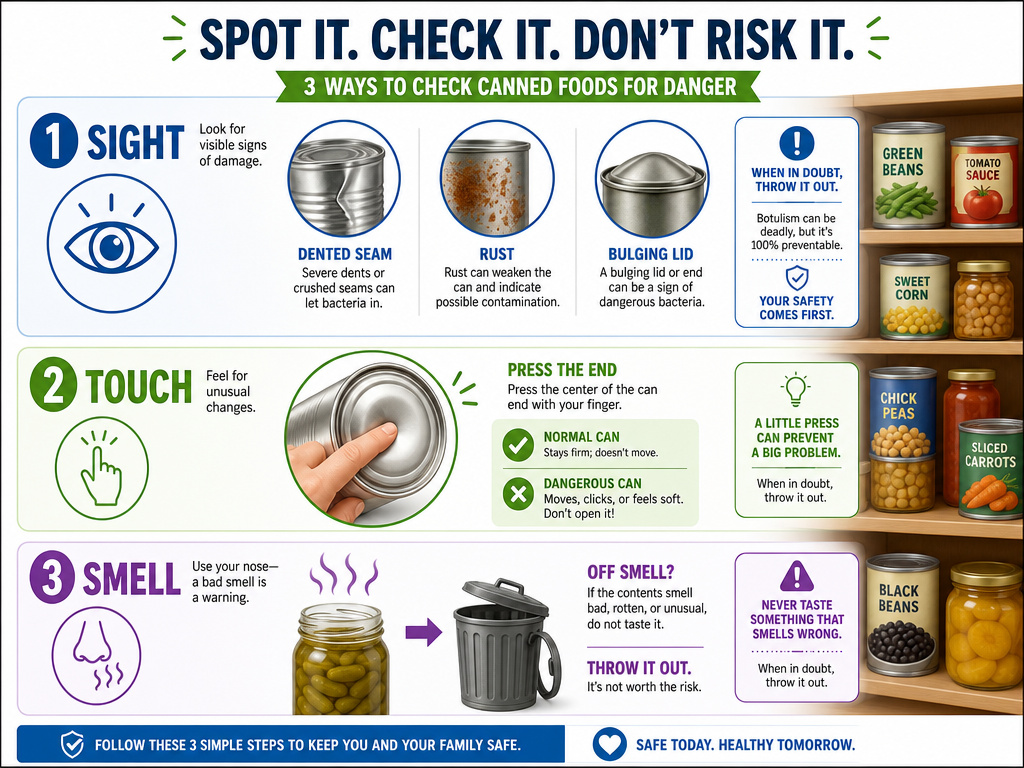
Your senses are the best tools. Never taste food to determine if it’s spoiled.
- Sight: Severe dents, especially on the seam. Rust. Bulging ends. A broken seal on a jar (the lid’s center button is up). When opened, look for mold, unnatural cloudiness, or spurting liquid.
- Touch: A bulging can feels tight and rounded under light pressure. A leaking can is damp.
- Smell: Upon opening, any off-odor—sour, rotten, or chemical—means instant disposal. Do not taste.
If you have an older, otherwise intact can of low-acid food and are concerned, the safety recommendation is to boil the contents for 10 minutes before tasting. This can destroy any potential heat-sensitive toxins.
Frequently Asked Questions
How long can you keep canned food after the expiration date?
For commercially canned low-acid foods (vegetables, meats) stored in ideal conditions, the “best-by” date is a quality guideline, not a safety expiration. The food may be safe for years beyond, but its nutritional value, texture, and color will decline. High-acid foods and home-canned goods should be adhered to more strictly. When in doubt, apply the inspection rules above.
Is it safe to store food in the opened can in the fridge?
No. Transfer the contents to a food-safe plastic or glass container. The metal can corrode and transfer flavors, and you cannot create an airtight seal. Treat it like fresh food from that moment on.
Can canned food freeze?
Accidental freezing won’t cause spoilage if the seal remains intact. However, freezing can soften food texture dramatically and may cause cans to rust or burst. If jars freeze, the liquid expansion can break the seal. Thaw in the refrigerator and use immediately, inspecting the seal closely.
What’s the difference between “use-by” and “best-by” dates?
Use-by” date is the manufacturer’s last recommendation for peak quality. A “best-by” (or “best if used by”) date is about optimal flavor and texture, not safety. As the NDSU Extension Q&A clarifies, you should buy before a “sell-by” date, but food can remain safe after both “use-by” and “best-by” dates if handled properly.
Where is the worst place to store canned food?
Any location with temperature extremes or high humidity: a hot garage, an uninsulated attic, under the sink, next to the stove or furnace, or directly on a damp basement or garage concrete floor.
Before You Go
Store cans between 50°F and 70°F. Label them with the date. Put the oldest in front. Never, ever leave food in an opened can. That’s the short version.
The long version is that canning is a brilliant preservation method, but it’s not indefinite. Heat is the arch-nemesis, silently degrading quality long before any spoilage is visible. Your pantry isn’t just a storage space; it’s a controlled environment. Manage the temperature, control the humidity, and rotate the stock. Your canned vegetables and meats will repay you with years of reliable meals. Ignore those rules, and you’re just collecting future compost.
