Understanding Freezer Burn: The Science Behind Icy, Dry Spots
This post contains affiliate links. As an Amazon Associate, we earn from qualifying purchases.
Freezer burn is the dry, discolored patches and ice crystals that form on frozen food when air reaches its surface, causing moisture to sublimate away. It’s a quality issue, the food is still safe to eat, but the texture and flavor degrade, often making it unappetizing.
That moisture loss is the core of the problem. The process isn’t a simple thaw; it’s a direct shift from solid ice to water vapor, skipping the liquid phase entirely. This leaves the food’s outer layers parched and leathery, while oxygen bleaches the color and alters fats.
What follows: the exact science of how sublimation works, the visual and textural signs that scream “freezer burn,” and the packaging and temperature rules that stop it before your next batch of chicken or berries goes in.
Key Takeaways
- Freezer burn is caused by sublimation: ice crystals on the food’s surface evaporate into vapor, drying it out and letting oxygen in.
- It’s a quality defect, not a safety hazard. Food stored at 0°F is safe indefinitely, but freezer-burned portions taste dry, tough, and off.
- You spot it by looking for grayish-brown leathery patches, a frosted coating of ice crystals, or a dry, grainy texture.
- Prevention hinges on two things: airtight packaging and a steady 0°F freezer temperature. Vacuum sealers and freezer-grade wraps win.
- High-water-content foods (berries, fish, leafy greens) are most vulnerable. They lose structural integrity fastest when moisture escapes.
The Science Behind Freezer Burn (Sublimation)
Most people see the frost and think “water got in.” It’s the opposite. Water got out.
The official term is sublimation. It’s the process where solid ice crystals on the food’s surface transition directly into water vapor, bypassing the liquid stage. This is why a freezer-burned steak looks dehydrated, not wet. The Iowa State University Extension blog describes it as moisture loss leaving the surface layers dried out and discolored.
This 50–60 word, third-person blockquote targets the featured snippet: Freezer burn occurs through sublimation, where ice crystals evaporate directly into vapor from the food’s surface. This dehydration leads to dry, grayish-brown patches and a tough texture. Oxygen exposure during this process further bleaches colors and oxidizes fats, degrading flavor and aroma while the food remains microbiologically safe to consume.
The chain is simple. If your packaging has a tiny gap or isn’t moisture-proof, air gets in. That air is relatively dry compared to the frozen food’s surface. Ice crystals sublimate into the air, leaving a tiny void. That void lets more air, and specifically oxygen, contact the food. Oxygen bleaches the bright red of beef to a dull gray-brown and turns fats rancid. The result is a dry, fibrous, discolored layer that feels like leather.
Why does this matter for prevention? You’re not just keeping water in; you’re keeping air out. The enemy isn’t liquid, it’s gas.
How to Spot Freezer Burn Before You Cook
You can usually tell before you thaw. The signs are visual and textural.
Grayish-brown or white leathery patches are the classic sign, especially on meat and poultry. It’s not dirt or spoilage; it’s oxidation and dehydration. A frosted, snowy coating of ice crystals on the food or the inside of the package is another giveaway. Those are ice crystals that re-froze from sublimated vapor. Finally, a dry, grainy, or spongy texture is a tactile clue. Berries turn into shriveled pebbles. Fish flakes become chalky.
Your nose can help, too. Severely freezer-burned food, especially fatty items like nuts or sausage, may have a faint off smell reminiscent of cardboard or old paint. This is oxidized fat. If it smells strongly rancid after thawing, that’s a different issue, spoilage, and you should discard it.
Where this goes sideways: Assuming “no frost means no burn.” You can have severe dehydration and oxidation without visible ice crystals, especially in a frost-free freezer that cycles humidity. Always check texture and color.
Is Freezer-Burned Food Safe to Eat?
Yes, with a major caveat. Freezer burn is a quality problem, not a food safety problem.
The Texas A&M AgriLife Extension PDF states it directly: food that has freezer burn is safe to eat. Pathogenic bacteria cannot grow at 0°F. The food was safe when it went in; freezing keeps it safe. The “burn” refers only to texture, color, and taste damage.
When to cut your losses: If the affected area is small, you can trim it away before or after cooking. For a large roast with one bad patch, cut that section off. For something like frozen peas where the burn is widespread, the entire batch will have a tough, stale quality. You can eat it, but you probably won’t enjoy it.
Skip this if: The food has been frozen for years beyond recommended storage times. While still technically safe, the cumulative quality loss from freezer burn and flavor degradation makes it unpalatable. Refer to a freezer storage chart for best-quality timelines.
What Makes Freezer Burn More Likely? (The Vulnerabilities)
Not all foods freeze equally. Some are almost asking for it.
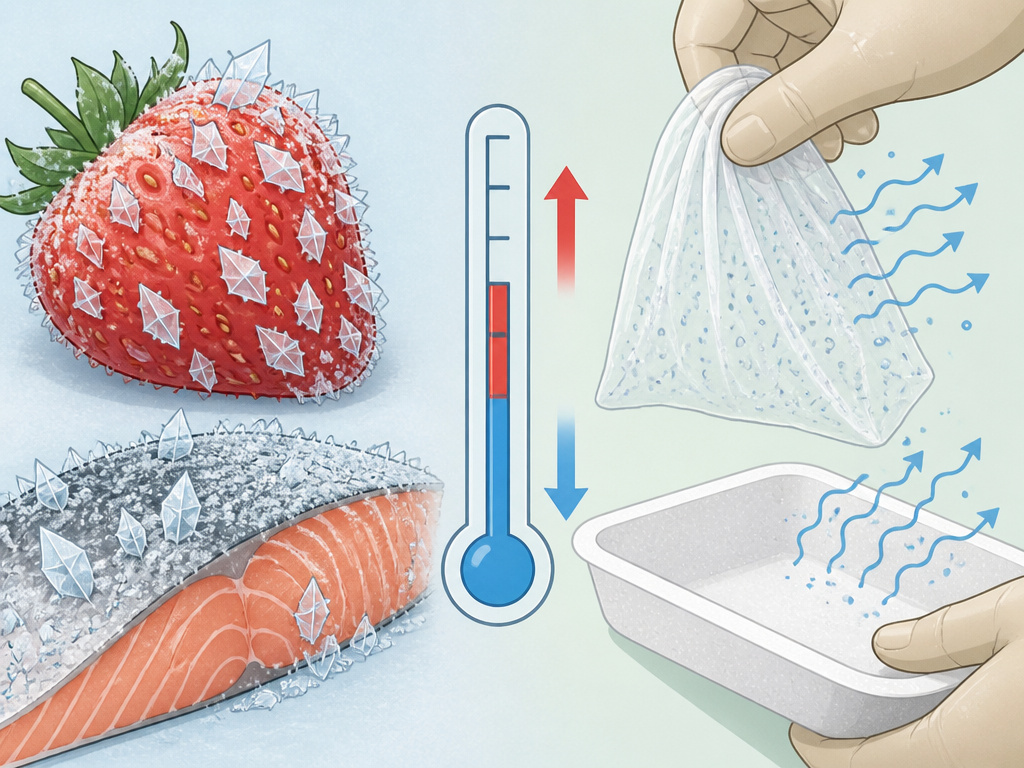
High-water-content foods are the most susceptible. Strawberries, zucchini, shrimp, and leafy greens have more water to lose. When that water sublimes, the structure collapses, leaving a mushy or shriveled mess. This is a key cause of freezer burn that many guides overlook.
Poor packaging is the primary culprit. Standard grocery store wrap, bread bags, and thin plastic containers are not moisture-vapor-proof. Air seeps in. Loose packaging also creates space for air to circulate, accelerating sublimation.
Temperature fluctuations are a silent accelerator. Every time your freezer door opens or the defrost cycle runs, the temperature rises slightly. Ice crystals melt a tiny bit, then re-freeze into larger, more damaging crystals. This cycle promotes both freezer burn and in-package frosting. A freezer that can’t hold a steady 0°F or lower is part of the problem.
| Factor | Why It Increases Risk | Typical Victim Foods |
|---|---|---|
| High Water Content | More available moisture to sublimate away. | Berries, fish fillets, broccoli, melon. |
| Thin or Porous Packaging | Allows air and moisture vapor to pass through. | Meat in store foam trays, baked goods in plastic bags. |
| Temperature Fluctuations | Causes ice crystal growth and moisture migration. | Anything in a frequently opened door or an older freezer. |
| Slow Freezing | Forms large ice crystals that damage cell walls, releasing moisture. | Large cuts of meat, dense casseroles overloaded in the freezer. |
Your Prevention Plan: Packaging and Temperature Are Everything
Stopping freezer burn is a straightforward engineering problem. You need a barrier against air and a cold, stable environment.
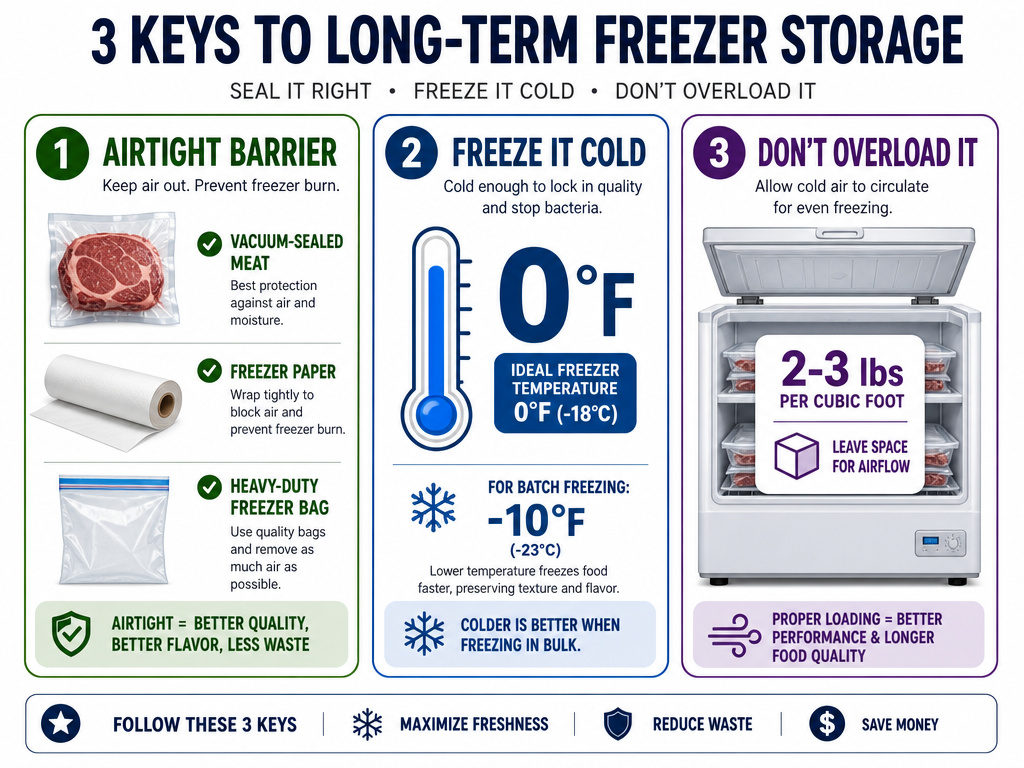
First, the barrier. Your goal is to create an airtight seal with a material that blocks moisture vapor. * Vacuum sealing is the gold standard. It removes almost all air and creates a tight seal against the food. A basic vacuum sealer pays for itself if you freeze meat regularly. * Freezer paper is a heavyweight paper with a plastic or wax coating on one side. Wrap the plastic side against the food, then fold and tape the paper side outward. It’s excellent for irregular shapes like roasts. * Heavy-duty freezer bags are your next best option. Press out all the air before sealing, the straw trick works, or use a vacuum sealer with bag attachments. * Double-wrapping is an old pro move. For long-term storage, wrap meat first in plastic cling wrap, then in foil or a freezer bag.
Second, the environment. Your freezer must be 0°F or lower. Use a standalone freezer thermometer to verify, as the appliance’s dial is often inaccurate. For a big batch freezing session, the North Dakota State University guide suggests setting your freezer to -10°F about 24 hours in advance to freeze food rapidly, forming smaller, less damaging ice crystals.
Third, the loading rules. Don’t overwhelm your freezer. Add only 2 or 3 pounds of food per cubic foot of freezer space within a 24-hour period. Overloading slows the freezing rate, leading to large ice crystals and worse texture.
This combination of proper packaging techniques and maintaining freezer temperature is the complete solution. It turns your freezer from a food graveyard into a long-term preservation vault.
Freezer Burn vs. Other Freezer Issues
Freezer burn has cousins. Knowing the difference saves good food.
Freezer burn is dryness and discoloration from air exposure. The food feels tough and leathery. In-package frost is a layer of ice on the package interior or food surface. It comes from sublimated moisture re-freezing. It often accompanies freezer burn but can happen alone, making food soggy upon thawing. Freezer odor is a pervasive smell that transfers between foods. It’s caused by storing strong-smelling items (fish, onions) unwrapped, not by freezer burn itself. Texture loss from slow freezing results in a mushy, watery product (like frozen zucchini). This is from large ice crystals rupturing cell walls, not dehydration.
Common mistake: Throwing away frost-covered food thinking it’s freezer burned. Scrape the frost off. If the food underneath looks and smells normal, it’s fine. The frost just means your packaging wasn’t airtight.
Frequently Asked Questions
Can you fix freezer burn?
No. The cellular damage and moisture loss are permanent. You can improve the eating experience by trimming away affected areas, using freezer-burned meat in heavily seasoned dishes like stews or chili, or blending freezer-burned fruit into smoothies. The goal is to mask the compromised texture and flavor.
Does freezer burn mean the food is bad?
“Bad” in terms of safety, no. “Bad” in terms of quality, yes. It is spoiled for its original purpose, a freezer-burned steak will never be a juicy, tender steak. It is not spoiled by bacterial growth. Understanding this distinction prevents unnecessary food waste.
How long does it take for freezer burn to happen?
It depends on packaging and temperature. In flimsy store packaging, ground beef can show signs in a month. In a vacuum-sealed bag at a steady 0°F, the same cut can look perfect for over a year. The process is gradual, not sudden.
Are some freezer bags better than others?
Absolutely. Look for bags labeled “freezer” or “heavy-duty.” They are made from thicker plastic with a better moisture-vapor barrier. Standard sandwich bags are too thin and permeable. The best freezer bags often have a double zipper or a textured sealing area for a tighter close.
Is it okay to refreeze food that had freezer burn?
Yes, but it’s pointless. Refreezing won’t restore lost moisture or reverse oxidation. It will only worsen the texture through another freeze-thaw cycle. It’s better to cook the trimmed, usable portions and then freeze the cooked dish if needed.
Before You Go
Freezer burn isn’t mysterious. It’s physics and chemistry you can see in your bag of peas. Sublimation steals moisture, oxygen ruins color and flavor, and the result is safe but sad food.
The fix is equally direct. Invest in a roll of freezer paper and a box of heavy-duty freezer bags. Know your freezer’s true temperature. Respect the 2-3 pounds per cubic foot loading rule. This isn’t about buying a new appliance; it’s about using the one you have correctly.
Your freezer should be a tool, not a penalty box. Wrap it tight, keep it cold, and you’ll never see those gray patches again.
