What Causes Freezer Burn & The Science of Dehydrated Food
This post contains affiliate links. As an Amazon Associate, we earn from qualifying purchases.
Freezer burn is caused by dehydration and oxidation. Water molecules inside frozen food sublimate, turn directly from ice into vapor, and migrate to the coldest surface in your freezer. This leaves the food dry and porous. Oxygen then seeps into those spaces, dulling colors and creating off-flavors. Poor packaging, temperature swings, and overly long storage all accelerate the process.
That dehydration is a physical fact, not a failure of your appliance. Your freezer is a dry, cold box designed to halt bacterial growth, not to coddle your food. The air inside is so cold it can’t hold much moisture, which creates a powerful gradient that pulls water out of anything exposed.
What follows breaks down that gradient into three specific failure points: packaging gaps, temperature instability, and time. We’ll cover the visual and textural signs that distinguish true freezer burn from harmless frost, the one standard that defines proper frozen storage, and a shortlist of wraps and containers that actually work.
Key Takeaways
- Freezer burn is safe to eat but ruins texture and flavor; it’s a quality failure, not a safety one.
- The core cause is sublimation, water ice turning directly to vapor and leaving the food, followed by oxidation.
- Temperature swings above 0°F (-18°C) are a major accelerator, even if your freezer’s average reading is correct.
- Overly cold freezers (below -10°F) can increase frost buildup, which is linked to the same dehydration process.
- Prevention is almost entirely about packaging: you need a moisture-proof, airtight barrier.
What Causes Freezer Burn? The Science in 50 Words
Freezer burn results from sublimation: ice crystals within food convert directly to water vapor and migrate to colder freezer surfaces, causing dehydration. Concurrently, oxygen infiltrates the desiccated tissue, oxidizing fats and pigments. This process is driven by inadequate vapor barriers, temperature fluctuations above -18°C (0°F), and prolonged storage duration.
The Library of Congress freezer burn explainer uses that same sequence, water out, oxygen in, as the textbook definition. It’s not rot. It’s fossilization.
Your freezer is constantly trying to dry your food out. The only thing standing in its way is the wrapper.
The Three Culprits That Accelerate Damage
Freezer burn doesn’t happen instantly. It needs a pathway for moisture to escape and time for oxygen to work. These three factors hold the door open.
1. Inadequate Packaging (The Biggest Offender)
A loose wrap is an invitation. Plastic grocery bags, thin produce bags, and deli containers with cracked lids might as well be screen doors.
The problem is water vapor. It’s a gas, and it moves through microscopic gaps you can’t even see. Freezer bags are better than storage bags because they’re made from thicker, less permeable plastic. But the gold standard is a material that blocks vapor and oxygen.
Freezer paper is a classic for a reason. The plastic coating on one side provides the vapor barrier; the paper side is easy to label and wrap tightly. For a more modern approach, a vacuum sealer removes the air that holds the moisture, creating a tight seal against the food’s surface. Glass locking containers like those from Pyrex work too, provided you leave minimal headspace.
Common mistake: Using regular plastic wrap or aluminum foil alone. Neither is a sufficient long-term vapor barrier by itself. Foil tears, and plastic wrap is too thin. Use them as part of a double-wrap system.
2. Temperature Fluctuations
Your freezer works hardest to stay cold when you open the door. That blast of warm, humid air doesn’t just make the compressor kick on. It raises the temperature of the food near the door by a few degrees.
Those few degrees are enough to cause small ice crystals on the food’s surface to sublimate faster. When the door shuts and the temperature plummets again, the water vapor refreezes, but not on your steak. It lands on the coils or walls as frost. Your steak is now a little drier.
This cycle is why a proper freezer temperature setting matters. The international standard for frozen food storage is -18°C (0°F). This isn’t arbitrary. It’s the point identified in the NOAA frozen food code of practice where biological activity is effectively paused and sublimation rates are manageable. A freezer that drifts up to 10°F every time the door opens is a dehydration machine.
| Temperature Event | Effect on Food | Timeline for Visible Damage |
|---|---|---|
| Door open for 30 seconds | Surface temp rises 2-3°F | Contributes to long-term moisture loss |
| Power outage (full thaw) | Large ice crystals form, cell walls rupture | Texture damage immediate, burn appears within weeks of re-freezing |
| Faulty thermostat cycling | Constant minor freeze-thaw cycles | Noticeable burn on items near door in 1-2 months |
3. Prolonged Storage Time
Time is the silent partner. Even perfectly wrapped food in a perfectly stable freezer will eventually experience freezer burn. The water molecules will find a way out.
Every food has a practical freezer lifespan. It’s not about safety but quality. The clock starts ticking the moment you press “seal.”
| Food Type | Practical Quality Window (at 0°F) | First Signs of Burn Usually Appear |
|---|---|---|
| Raw Red Meat (Steaks, Roasts) | 6-12 months | 9+ months, as grey-brown leathery patches |
| Raw Poultry | 9-12 months | 6+ months, darkening near bones |
| Fatty Fish (Salmon) | 2-3 months | As early as 6 weeks, opaque white spots |
| Blanched Vegetables | 12 months | 8+ months, as dry, shriveled surfaces |
| Ice Cream | 2-3 months | 4+ weeks, as large, gritty ice crystals |
The solution isn’t to never freeze anything. It’s to organize your freezer. Implement a first-in, first-out system. Date every package with a bold marker. That forgotten container of chili from five months ago? It’s not a surprise anymore; it’s a planned ingredient.
Freezer Burn vs. Ice Crystals: Know the Difference
Seeing frost on your frozen broccoli doesn’t mean it’s trash. You need to know what you’re looking at.
Ice crystals are a surface phenomenon. They form when moisture in the air inside the package condenses and freezes on the surface of the food. You can often brush them off or rinse them away after thawing. The food underneath might be perfectly intact.
Freezer burn is a subsurface transformation. The moisture came from inside the food itself. The damage is done to the tissue. You’ll see: – Discoloration: Greyish-brown patches on meat, white chalky spots on fish, dulled colors on vegetables. – Texture Change: Dry, tough, leathery feel. Peas will be wrinkled and chewy, not plump. – Odor: A faint, stale, or “off” smell upon thawing, sometimes described as cardboard-like.
If you identify freezer burn that’s limited to a small area, you can often trim it off and use the rest. A steak with a leathery edge can be salvaged. A pint of ice cream that’s uniformly crystallized is a lost cause.
How to Prevent Freezer Burn: A Practical Checklist
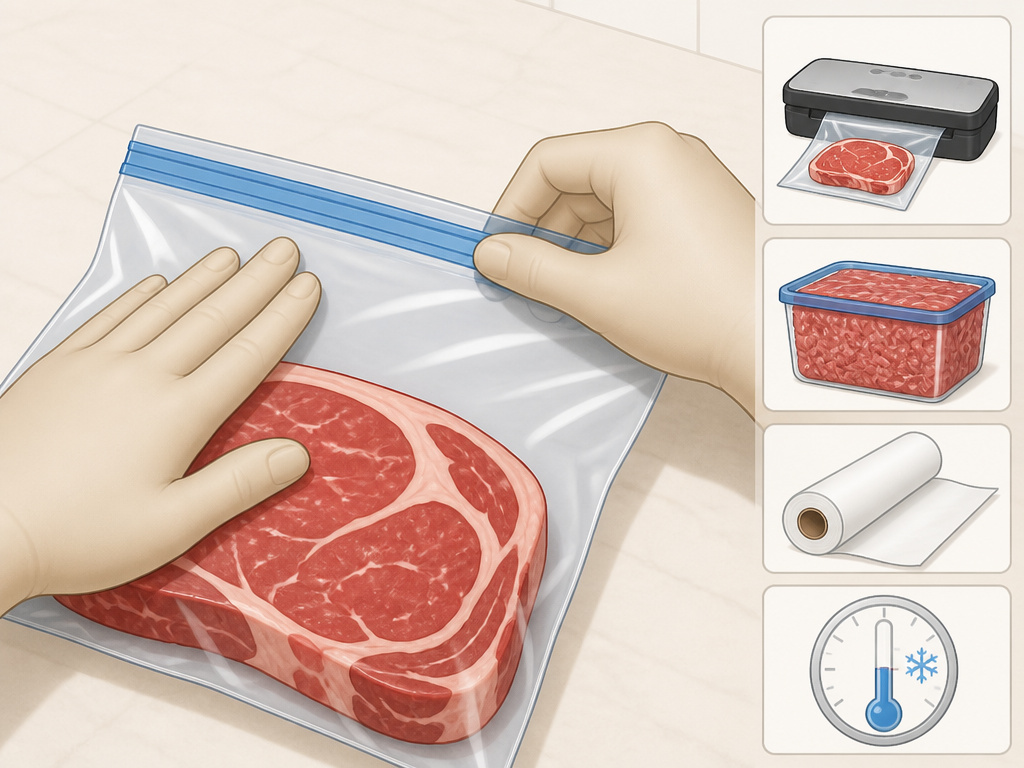
Prevention is straightforward but requires a shift from passive storage to active packaging. Follow this list, in order of importance.
-
Seal the Deal. Use packaging designed for the freezer. This means:
- Vacuum sealers for meats and bulk items.
- Heavy-duty freezer bags, pressed to remove as much air as possible before sealing.
- Freezer paper for irregularly shaped items.
- Rigid, airtight containers filled to the brim to eliminate airspace.
-
Chill First, Freeze Fast. Never put warm food in the freezer. It raises the overall temperature and promotes large ice crystal formation. Let soups, stews, and cooked meats cool completely in the fridge first. The faster food freezes, the smaller the ice crystals, and the less damage to cell structure.
-
Set It and Verify It. Dial your freezer to 0°F (-18°C). Buy a cheap standalone freezer thermometer and place it in the center. Check it weekly. Your fridge’s built-in display is often inaccurate.
-
Master the Double-Wrap. For long-term storage (over 3 months), use two barriers. Wrap meat tightly in plastic wrap, pressing out air, then place it in a freezer bag or wrap it in foil. For ice cream, press a sheet of parchment paper directly onto the surface before putting the lid on.
-
Practice Smart Freezer Management. Keep it well-stocked but not jammed. Solid frozen items help maintain temperature, but overcrowding blocks airflow. Open the door less often, and close it quickly. Know your inventory so nothing languishes.
If you follow these steps, you’ll prevent freezer burn on the vast majority of your food. The exceptions will be items stored for years, not months.
Is Freezer-Burned Food Safe to Eat?
Yes, with one critical condition.
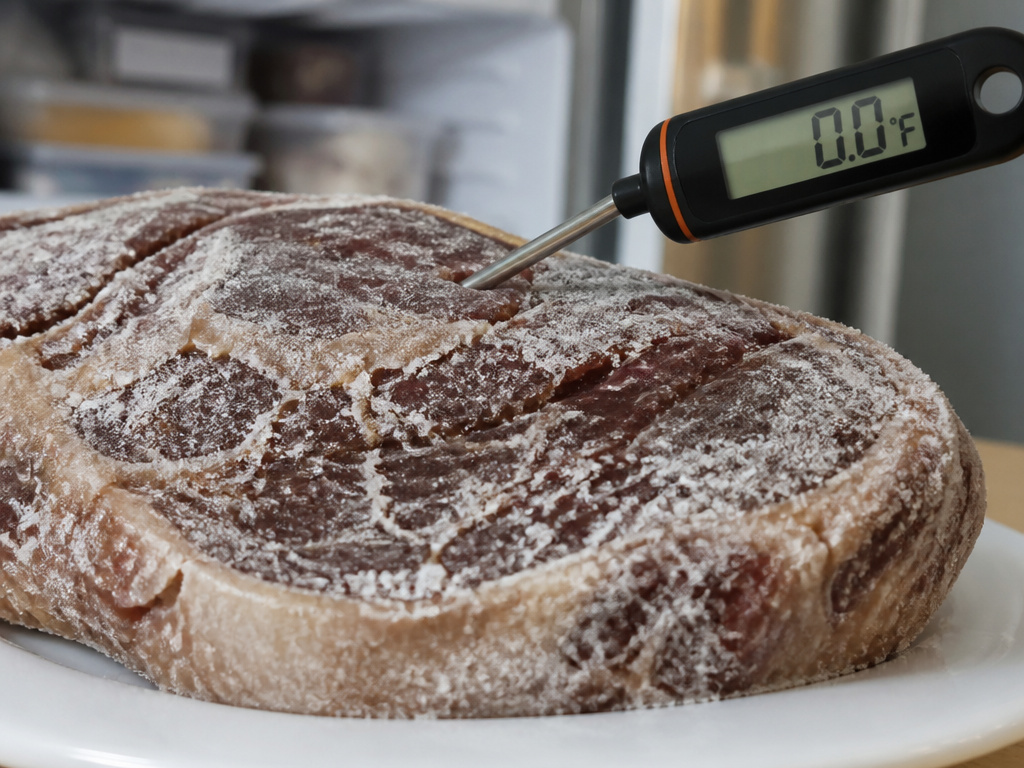
Freezer burn does not make food unsafe. The temperature required for frozen storage (0°F) also prevents pathogen growth. The dehydration itself creates an environment hostile to bacteria. The Library of Congress freezer burn explainer states this clearly: “Food that has freezer burn is safe to eat.”
The condition? The food must have remained solidly frozen. If a power outage thawed the item completely and it sat at room temperature for hours, standard food safety rules apply. Freezer burn is a quality issue on safely frozen food, not a pardon for temperature abuse.
That said, would you want to eat freezer burned meat at a dinner party? Probably not. The texture is often tough and grainy, and flavors can be stale or rancid due to oxidized fats. It’s best used in applications where moisture and texture can be reintroduced: stews, braises, soups, or casseroles.
Frequently Asked Questions
Can you fix freezer burn?
No. The chemical and physical changes are permanent. You cannot rehydrate the tissue back to its original state. You can trim away affected areas and use the remainder, or mask the texture in a slow-cooked dish.
Does freezer burn mean the food is bad?
“Bad” implies spoiled or unsafe. It is not. It means the quality has degraded significantly. It’s “bad” in the same way stale bread is bad, edible but unpleasant.
Why does my new freezer have frost inside?
Some frost on the walls is normal, caused by humidity entering when the door opens. Excessive frost, especially heavy buildup on shelves, can point to a faulty door seal, a drain line issue, or storing food without proper coverage. In commercial settings, the Zero-Zone troubleshooting guide notes that store humidity above 55% can cause this even with a good seal.
How long does it take for freezer burn to happen?
It depends entirely on packaging and temperature stability. Poorly wrapped items like a loosely covered casserole dish can show signs in as little as a few weeks. Well-wrapped items in a stable freezer can last many months without issue.
Are frost-free freezers better at preventing freezer burn?
Not directly. Frost-free freezers use a cycle to melt frost from the coils, which reduces overall humidity inside the cabinet. This can slightly slow the rate of sublimation from your food, but it’s a minor effect. Your packaging choice is still 95% of the battle.
The Bottom Line
Freezer burn is a war of attrition between your food’s moisture and your freezer’s dry, cold environment. You win it at the wrapping station, not with a fancy appliance.
The sequence never changes: water escapes, oxygen enters, quality drops. Your job is to interrupt that sequence with a physical barrier, a tight seal. Use the right bags, wrap twice for the long haul, keep the temperature rock-steady at zero, and rotate your stock.
Do that, and the only thing you’ll find in the back of your freezer is a meal you planned, not a science experiment.
