How to Store Salt Long Term | The 75% Humidity Rule Guide
This post contains affiliate links. As an Amazon Associate, we earn from qualifying purchases.
Store salt long term by controlling humidity below 75% relative humidity, using airtight, non-metallic containers, and keeping it in a cool, dark place. Salt itself does not spoil, but it will cake and become unusable if it absorbs moisture. The critical threshold is 75% RH at 20°C; above this, salt begins to dissolve.
That 75% figure is not a guess. It’s the point where the chemical bond between sodium chloride and water vapor shifts from stable to unstable. Industrial storage manuals treat it as a hard line because crossing it turns a dry, free-flowing crystal into a wet, monolithic block.
What follows breaks down that humidity rule into practical steps. We’ll cover the three container types that work, the one location mistake everyone makes, and why a bag of rice beats a commercial desiccant packet for home storage.
Key Takeaways
- Salt’s only real enemy is humidity above 75% relative humidity. Below that, it’s stable for decades.
- Never store salt in its original cardboard box or a metal container. Moisture seeps in, and metal corrodes.
- Adding a moisture absorber like dry rice is mandatory for long-term storage in humid climates, not optional.
- The best location is a dark, interior closet, not a garage, basement, or anywhere near a heat source.
- Label everything with the date. Rotation isn’t about spoilage; it’s about catching a failed container before the salt inside turns to brick.
The 75% Humidity Threshold
This is the whole game. Get this wrong and no container, no location, no trick will save your salt.
At up to 74% relative humidity and 20°C, sodium chloride does not absorb appreciable water vapor. The Salt Institute’s storage handbook and transport guides treat this as a fixed chemical property. Cross the 75% RH line, and the salt’s crystal structure starts to pull water molecules directly from the air. It becomes hygroscopic.
The critical water content of sodium chloride is 0.5% at 74% relative humidity. At 75% relative humidity, the salt dissolves. This is not a gradual clumping, it’s the onset of a phase change from solid to brine.
Why does this matter in a pantry? Because average indoor humidity often sits between 40% and 60%. That’s safe. But kitchens, basements, and garages spike. A boiling pot, a damp basement wall, a hot garage in summer, these can push local humidity past the 75% mark for hours. That’s long enough for the outer layer of your salt to grab moisture and start the caking chain reaction.
How Caking Actually Works (It’s Recrystallization)
Caking isn’t just wet salt sticking together. It’s a two-step process of dissolution and recrystallization. When humidity exceeds 75%, a microscopic film of brine forms on each crystal. If the humidity then drops, that water evaporates. But the dissolved salt doesn’t vanish; it re-solidifies, forming hard crystalline bridges between the granules. You’re left with a solid block.
Additives like Yellow Prussiate of Soda (YPS) in products like Cargill Top-Flo work by coating the crystals and interfering with this bridge-forming process. They buy you time, but they don’t change the fundamental 75% rule. In storage conditions above 75% RH, even YPS-treated salt will cake within its stated 9- to 12-month resistance window.
Choosing the Right Container
The container’s job is to maintain a microclimate below 75% RH. It is a physical barrier, not a magic shield. Your choice determines how long that barrier holds.
| Container Type | Best For | Failure Mode |
|---|---|---|
| Glass Jar (Mason-type) | Small quantities, frequent use, visibility. | Clear glass allows light, which can heat the contents and create minor temperature swings that encourage condensation on the inner walls. The metal lid can corrode. |
| Food-Grade Plastic Bucket (with gasket lid) | Bulk storage (25+ lbs), multi-decade storage. | Plastic is slightly permeable to water vapor over very long periods (years). The gasket can degrade if not inspected. |
| Mylar Bag (heat-sealed) | Absolute longest-term storage, portability, blocking all light and gas exchange. | Punctures ruin the seal. You cannot visually inspect the contents without breaking the seal. |
Metal is banned. Salt is corrosive in the presence of moisture. A stainless steel canister might seem safe, but the constant salt-air interface at the lid’s threads will eventually corrode. You’ll find reddish-brown rust flakes in your salt long before you see external damage.
Your goal is an airtight seal. The “click” of a mason jar lid or the solid thump of a bucket lid snapping onto its gasket is the sound of security. For buckets, many preppers use Gamma Seal lids for easier access, but the standard gasket lid that comes with a food-grade bucket is actually more reliable if you’re not opening it weekly.
The Ideal Storage Location
Forget the garage. Forget the basement. The perfect spot is cool, dark, and has stable humidity.
A dark, interior closet on the main floor of your house is ideal. The temperature fluctuates less than an exterior wall closet, and humidity is more stable. Avoid places near plumbing (under sinks), heat sources (water heaters, furnaces), or exterior doors.
Why not the kitchen cabinet? It’s convenient, but it’s often the most humid room in the house. Cooking, dishwashing, and kettle boiling all pump water vapor into the air. If you must store salt in the kitchen, make it a small, working jar and keep your bulk supply elsewhere.
Common mistake: Storing salt in a basement to keep it cool. Basements are almost always more humid than the rest of the house, especially in summer. That ambient humidity is constantly testing the seal of your container. You’re fighting an uphill battle.
A simple hygrometer, the kind used for cigar humidors, costs under $15. Toss one on the shelf where you plan to store your salt. If it reads above 60% RH for more than a day at a time, that’s a warning. You need a better container, a better location, or both.
Step-by-Step Storage Methods
Follow one of these three paths. Each is a complete system, from container to location to moisture control.
Method 1: The Food-Grade Bucket (For 25+ Lbs)
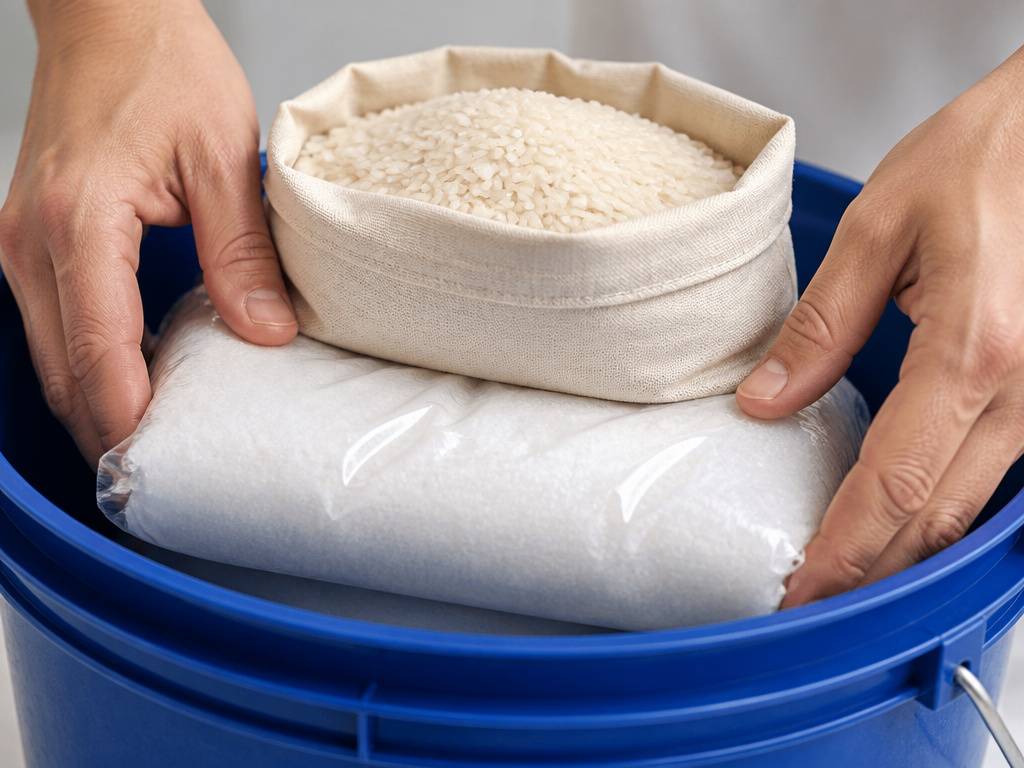
This is the standard for serious long-term storage. It leverages multiple barriers. 1. Keep salt in its original, sealed plastic bags inside the bucket. This gives you a primary moisture barrier and allows for easy rotation. Do not dump loose salt into the bucket. 2. Add a moisture absorber. Place a cloth bag of dry, uncooked rice or a silica gel pack on top of the bags. The rice acts as a sacrificial buffer, it will absorb ambient moisture first. 3. Seal the bucket. Press the lid down firmly until all sides click into place. You should hear a distinct thump. 4. Label it. Write “SALT” and the date on the side with a permanent marker. Store it in your chosen cool, dark location.
Skip the rice, and you’re relying solely on the plastic bag and bucket seal. Both can fail over years. The rice is cheap insurance.
Method (2): Mylar Bags & Oxygen Absorbers
This is for ultra-long-term storage where you “set and forget” for a decade or more. 1. Fill a Mylar bag about two-thirds full with salt. Do not use an oxygen absorber, salt does not need it, and the chemical reaction in some absorbers requires moisture, which could backfire. 2. Heat-seal the bag 90% of the way closed, leaving a small gap. 3. Squeeze out excess air manually, then finish the seal with the iron. The bag should be tight and firm. 4. Place the sealed Mylar bags inside a food-grade bucket for physical protection. Label and store.
Mylar is a metalized plastic that blocks all light, oxygen, and moisture vapor. It’s the gold standard. But remember: once you open it, you’ve broken the permanent barrier. Resealing is not as reliable.
Method 3: Glass Jars for Everyday & Rotation
This is for your working supply and for those storing smaller quantities. 1. Use clean, dry mason jars. Wide-mouth jars are easiest to fill and scoop from. 2. Fill the jar to within an inch of the top. This minimizes the air pocket inside. 3. Wipe the rim clean, place a new lid, and screw on the ring until fingertip-tight. 4. Store jars in a dark cupboard. For added security, you can add a tablespoon of dry rice to a small cloth bag and place it in the jar before sealing.
Glass is impermeable, but the metal lid is the weak point. Check the underside of the lid for rust every six months. If you see any, replace the lid and transfer the salt to a new jar.
Why Rice Works Better Than You Think
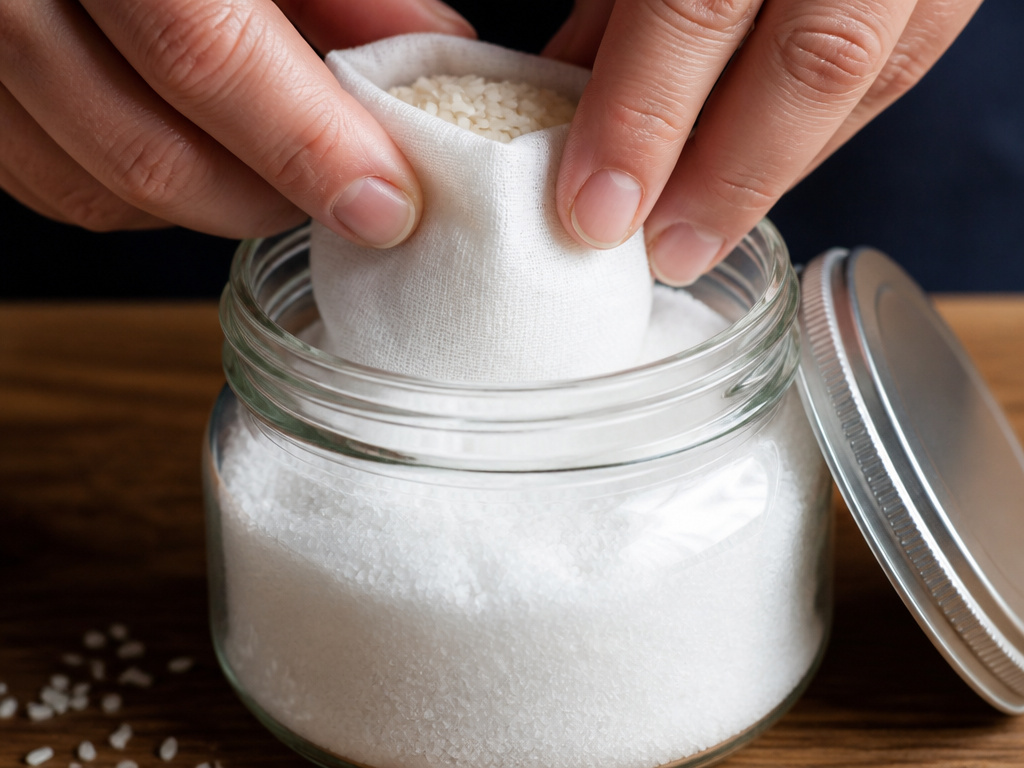
Silica gel packets are great, but they have a finite capacity and can be hard to source food-safe versions of. Dry, uncooked rice is a readily available, food-safe desiccant.
Rice is hygroscopic, it absorbs moisture from the air around it. In a sealed container, the rice will pull moisture from the trapped air, lowering the overall relative humidity inside the container. It acts as a buffer, protecting the salt. The rice will eventually become too moist to be effective, but it typically takes years in a properly sealed container.
A simple trick: place a half-cup of rice in a small, breathable cloth bag or a tea bag. This keeps the rice contained and makes it easy to remove and refresh if needed. Poke a few holes in the bag if using non-breathable material to let the moisture in.
Salt Types and Their Storage Nuances
All salt is sodium chloride, but additives and crystal structure change the storage calculus.
Table Salt & Iodized Salt: Contains anti-caking agents and iodine. These additives don’t shorten shelf life, but they can settle or change texture over many years. Store the same way as plain salt, the 75% rule still applies.
Kosher Salt & Sea Salt: These often lack anti-caking agents. They are more prone to caking in high humidity. They benefit more from rigorous container and humidity control. Consider them the “canary in the coal mine” for your storage system.
Pickling & Canning Salt: Pure sodium chloride with no additives. It is the most susceptible to caking. For long-term food storage projects like salt-curing, its purity is essential, so perfect storage is critical. It’s the one type where a Mylar bag inside a bucket is non-negotiable.
The principles of storing sugar are similar, control humidity, use an airtight barrier, but sugar has different critical humidity points and can actually support microbial life if wet. Salt is simpler. It just turns into a rock.
Frequently Asked Questions
Does salt ever go bad?
Salt does not spoil, support bacteria, or become toxic with age. Its chemical composition is stable. “Going bad” for salt means absorbing water, caking into an unusable block, or becoming contaminated by rust or other materials from a poor container.
Can I store salt in the original cardboard container?
No. Cardboard is porous and absorbs ambient humidity. It offers zero protection against the 75% humidity threshold. The salt inside will begin to cake from the outside in. Transfer it to an airtight container immediately.
How long will salt last in a sealed bucket?
Under stable, cool, dry conditions (below 75% RH), salt in a sealed food-grade bucket can remain free-flowing for decades. Industry product sheets for salts like Cargill Top-Flo cite an “indefinite” shelf life, with caking resistance of 9-12 months. In a bucket with a gasket seal, you extend that resistance period essentially indefinitely.
Is it safe to add oxygen absorbers to salt?
Do not add oxygen absorbers to salt. Salt does not react with oxygen, and the absorbers are unnecessary. More importantly, some oxygen absorbers contain iron powder and require a small amount of moisture to activate. Introducing them into a dry environment meant for salt could theoretically backfire. For dry goods like white rice or dried beans, they’re key. For salt, they’re a potential risk with no benefit.
What’s the best way to store salt for prepping?
The tiered system is best. Keep a large, bulk supply (50+ lbs) in sealed Mylar bags inside food-grade buckets in a prime location. Maintain a smaller, rotating supply (5-10 lbs) in glass jars or a smaller bucket for regular use. This way, you’re not constantly breaking into your long-term stash.
Before You Go
The rule is 75%. Memorize it. Everything else, the bucket, the rice, the dark closet, is in service of defending that line.
Start with a food-grade bucket for bulk storage. It’s the most forgiving container for beginners. Add rice as your moisture buffer. Choose a closet, not a basement. Label it with the date.
Salt is the simplest long-term storage item you’ll deal with. It doesn’t need rotation for safety, it doesn’t need special gases, and it doesn’t degrade. It just needs to be kept dry. Get that right, and you’ve mastered the foundational principle that applies to storing almost every other dry good in your pantry.
