The Best Ways to Store Peeled Boiled Eggs | Keep Them Fresh
This post contains affiliate links. As an Amazon Associate, we earn from qualifying purchases.
Store peeled boiled eggs in a single layer inside an airtight container in the coldest part of your refrigerator, and eat them within 7 days. The container must be sealed to block odors and prevent drying. A peeled egg left at room temperature for more than two hours enters the bacterial danger zone and should be discarded.
That 7-day window is the ceiling, not a guarantee. Peeled eggs lose their protective shell, exposing the porous egg white directly to air, moisture, and every scent in your fridge. The clock starts the moment you crack the shell.
What follows is the mechanics behind that countdown, the four non-negotiable storage steps, and the specific mistakes that turn a perfectly good batch into a rubbery, smelly science project within 48 hours.
Key Takeaways
- Peeled hard-boiled eggs last a maximum of 7 days in the fridge, but their quality declines noticeably after day 4 or 5.
- Soft-boiled eggs with runny yolks are a different category—use them within 2 days because the undercooked center supports faster bacterial growth.
- Never freeze peeled boiled eggs. The ice crystals rupture the egg white’s protein matrix, creating a crumbly, watery, and rubbery texture that most people find inedible.
- The single biggest shelf-life killer is temperature fluctuation. Storing eggs in the fridge door, where the temperature swings every time you open it, can cut their safe storage time in half.
Why Peeled Eggs Are Different
An unpeeled hard-boiled egg has a built-in barrier. The shell, while porous, still slows moisture loss and blocks direct contact with contaminants. Peel that shell away and the egg white becomes the front line.
Where this goes sideways: Storing a peeled egg next to strong-smelling foods like onions or blue cheese. The egg white will absorb those odors within 24 hours, and the egg will taste like your fridge’s leftovers.
The egg white is mostly water and protein, and its structure is a network of proteins that tightened during boiling. This network is now exposed. It can dry out, it can soak up ambient smells, and it presents a moist, protein-rich surface where any lingering bacteria can thrive if the temperature isn’t consistently cold. This is why general food storage principles about airtight containers and consistent temperatures apply directly here.
The official guidance is clear. Organizations like the European Food Information Council state peeled eggs should be used within a week. The 7-day rule isn’t arbitrary; it’s the outer limit before quality and safety intersect on the wrong side of the graph.
The 4-Step Storage Process (And the One Step Nobody Skips)
This isn’t complicated, but the order matters. Rush the cooling or use a loose container and you’ve wasted the effort.
Step 1: Cool Completely, Inside the Shell
After boiling, immediately transfer the eggs to a bowl of ice water. Let them sit for at least 15 minutes, until the shell feels cold to the touch. This rapid cooling stops the residual cooking and creates a gap between the white and the shell, making peeling cleaner. Skipping this causes the white to stick and tear, creating more surface area for bacteria and making the eggs ugly.
Step 2: Peel Under Cool, Running Water
Peel the eggs under a gentle stream of cool tap water. The water helps loosen shell fragments and washes away any debris. Be gentle to minimize damage to the smooth surface of the egg white. Damaged eggs are still safe but deteriorate faster.
Step 3: Dry Gently and Select the Right Container
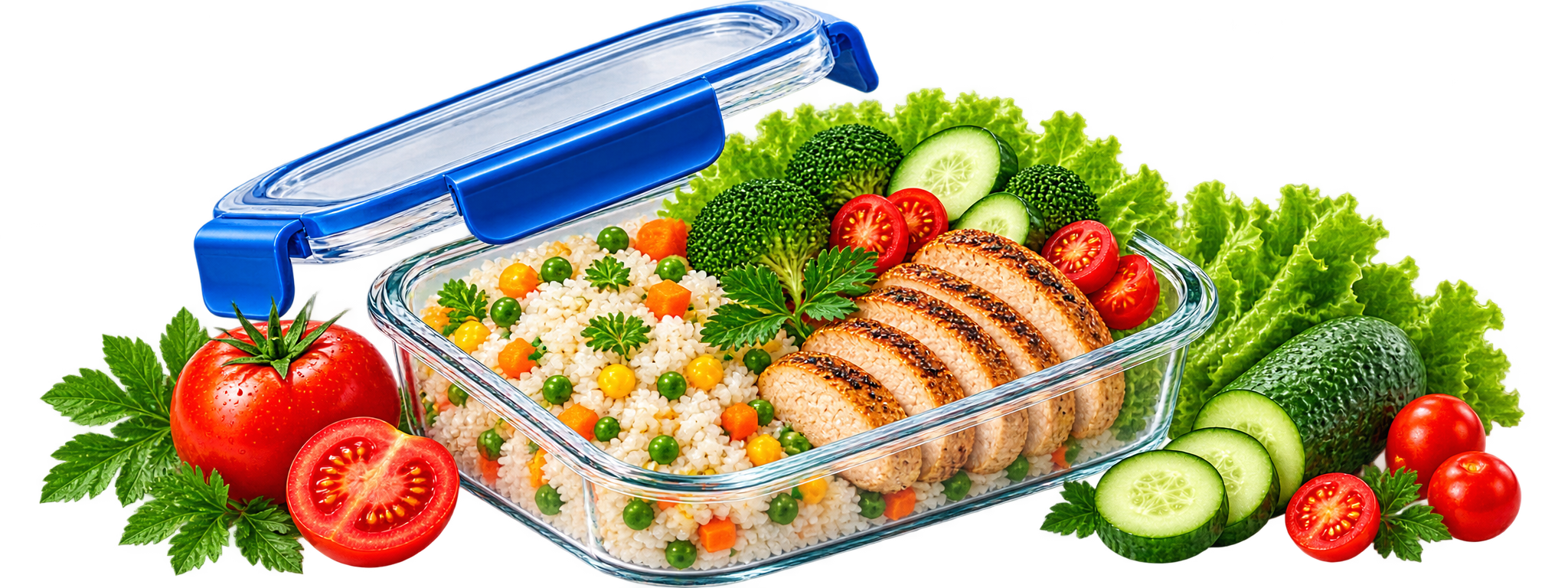
Pat the peeled eggs dry with a clean paper towel. Any surface moisture promotes bacterial slime. Place them in a single layer in a clean, airtight container. Glass or hard plastic is best. Do not stack them—the pressure points become mushy.
Step 4: Add a Humidity Guard and Refrigerate Immediately
Place a lightly dampened (not wet) paper towel in the container with the eggs before sealing the lid. This micro-environment prevents the eggs from drying out and becoming rubbery. Label the container with the date. Put it in the main body of your refrigerator, where the temperature is most stable, not in the door.
Store peeled hard-boiled eggs in a single layer within a sealed container in the refrigerator at 40°F (4°C) or below. Use within 7 days for optimal safety and quality. Do not store at room temperature for more than 2 hours total.
Peeled vs. Unpeeled: A Shelf Life Showdown
The shell changes everything. It’s the difference between a sealed vault and an open window.
| Storage Factor | Peeled Hard-Boiled Egg | Unpeeled Hard-Boiled Egg |
|---|---|---|
| Max Fridge Life | 5–7 days | 7–10 days |
| Primary Risk | Moisture loss, odor absorption, surface contamination | Shell contamination, internal spoilage if cracked |
| Best Container | Airtight, with humidity guard (damp paper towel) | Original egg carton or any sealed container |
| Quality Decline | Becomes rubbery and dry faster; may develop off-flavors | Shell protects moisture; yolk may develop a green-gray layer but remains edible |
| Freezing | Not recommended (texture destroyed) | Not recommended (texture destroyed) |
The unpeeled egg’s longer life is a buffer. It’s the same logic behind preserving fresh eggs in their original carton. Once you peel, you commit to the shorter timeline. This is also why methods for extending egg shelf life focus on maintaining that protective barrier as long as possible.
Can You Freeze Peeled Boiled Eggs?
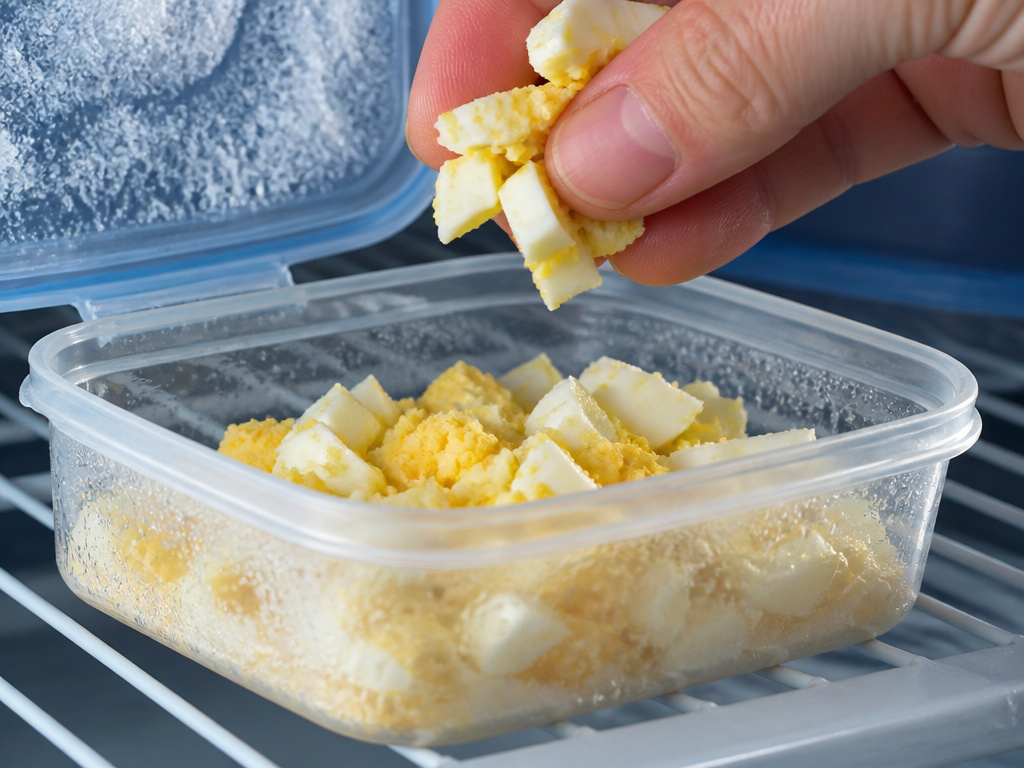 Technically, yes. Practically, don’t bother unless you’re planning to use them exclusively for egg salad or mashed filling.
The problem is physics, not safety. When the egg white freezes, the water inside forms ice crystals. These crystals act like tiny knives, slicing through the delicate protein network that gives the egg its structure. Thawing turns this damaged matrix into a crumbly, watery, and rubbery mess.
A peer-reviewed study on egg quality quantified this. It found freezing caused “substantial impact” on hardness, gumminess, and chewiness, with microscopic images confirming permanent structural damage. The eggs were safe, but their texture was destroyed.
If you must freeze them, chop or slice the eggs first, pack them tightly in an airtight container with as little air as possible, and freeze for up to 3 months. Expect a significant texture loss. This is a last-resort tactic, far less reliable than proper refrigerating boiled eggs for the short term.
The Science of Spoilage: Time, Temperature, and Texture
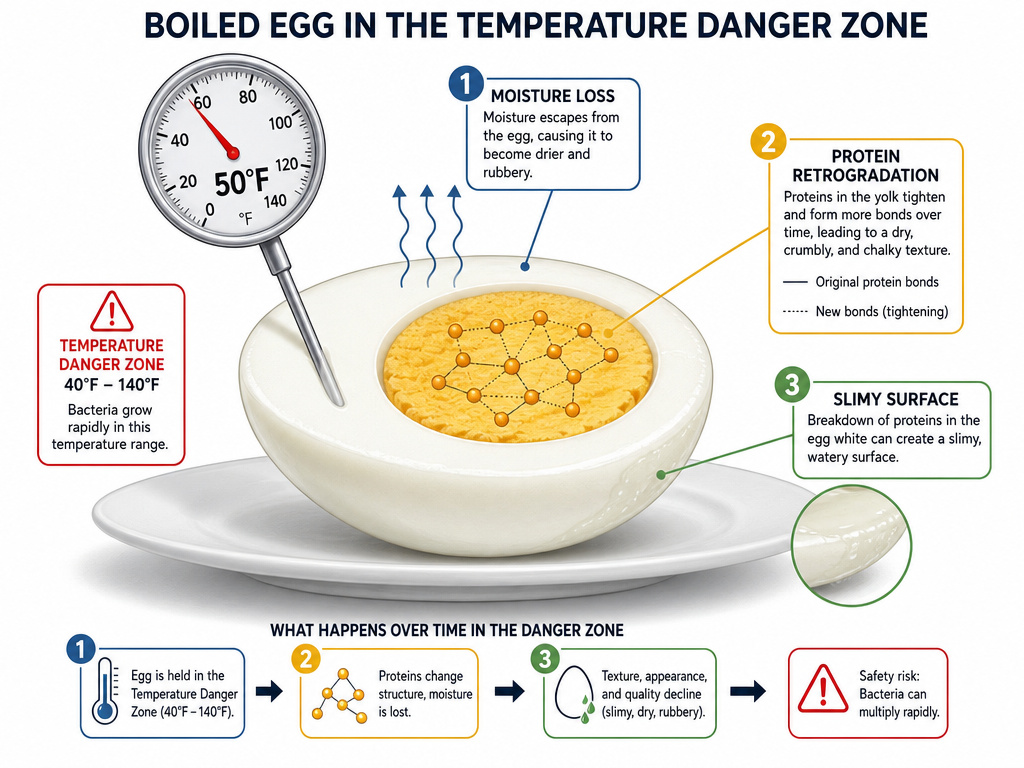 Food safety isn’t magic. It’s predictable biology driven by two factors: time and temperature. The “temperature danger zone” is 40°F to 140°F (4°C to 60°C). In this range, bacteria like Salmonella can double in number every 20 minutes.
A peeled egg left on the counter for two hours has spent 120 minutes in the prime growth zone. That’s enough time for a few bacteria to become a problematic colony. This is why the USDA FSIS egg safety guide is adamant about the two-hour rule.
But spoilage isn’t just about pathogens. It’s also about quality decay. As the egg sits in the fridge, even at a safe temperature, it slowly loses moisture to the dry refrigerator air. The proteins continue to bond tightly, a process called retrogradation. This is what causes that rubbery, bouncy texture after 5 or 6 days. The damp paper towel trick fights this by localizing the humidity.
Common mistake: Assuming a foul smell is the only sign of trouble. A peeled egg can develop a slimy, tacky surface layer from bacterial growth before any strong odor is noticeable. If it feels slick, toss it.
This quality fade is a gentle reminder that the 7-day rule is a safety maximum. For the best texture and flavor, treat days 4 and 5 as your real deadline. This principle of quality-first timing applies to other cooked staples, like storing rice or keeping egg bites fresh.
Troubleshooting: Signs Your Eggs Have Gone Bad
Trust your senses. Your eyes, nose, and fingers are better detection tools than any calendar.
Visual Cues:
- Slimy Sheen: A glossy, slippery coating on the egg white.
- Pink, Green, or Blue Patches: Colored spots indicate fungal or bacterial growth.
- Excessive Moisture: A pool of cloudy liquid in the container that wasn’t there before.
Olfactory Cues:
- Sour, Sulfuric, or Putrid Smell: The classic “rotten egg” smell is hydrogen sulfide from bacterial breakdown.
- “Gassy” Odor: A faint, sulfurous smell upon opening the container is often harmless and dissipates quickly—this is different from a persistent, offensive odor.
Tactile Cues:
- Mushy or Slime-Textured: The egg white yields too easily and feels unpleasant.
If you see pink or green, smell anything foul, or feel slime, discard the egg and the container immediately. Do not taste it. When in doubt, throw it out. This strict approach is part of basic egg storage basics for both raw and cooked products.
Frequently Asked Questions
Can I store peeled soft-boiled eggs the same way?
No. Treat them as a higher-risk item. A soft-boiled egg has a yolk that is not fully set, providing a more hospitable environment for bacteria. Refrigerate them in an airtight container and consume them within 2 days.
Do peeled eggs last longer in water?
Submerging peeled eggs in clean, cold water inside a sealed container can help prevent drying and may extend the quality by a day, but it does not extend the safety window beyond 7 days. Change the water daily to keep it fresh.
Why do my peeled eggs smell weird but look okay?
Hard-boiled eggs stored in the fridge can release a harmless “gassy” odor from sulfur compounds, which usually disappears after a few minutes of airing out. If the smell is strong, sour, or persists, the egg is likely spoiling.
Can I freeze eggs for deviled eggs?
Freeze the yolks and whites separately. Mash the yolks with your filling ingredients (mayo, mustard) and freeze that mixture in an airtight container. Chop the whites and freeze them separately. Thaw in the fridge overnight and reassemble. The texture of the whites will still suffer.
The Bottom Line
Your goal is simple: keep peeled boiled eggs cold, sealed, and dry on the surface. Use a proper container, label it, and place it in the back of the fridge. Eat them within a week, but aim for the first 4-5 days for the best experience.
Remember the trade-off. Peeling gives you convenience but costs you shelf life. Plan your meals accordingly, and never let a peeled egg loiter on the counter. That’s how a perfect batch becomes a science experiment nobody wants to eat.
