
7 Best Refrigerator Thermometers of 2026
This post contains affiliate links. As an Amazon Associate, we earn from qualifying purchases.
The TempPro TempAir Digital Refrigerator Thermometer is our top pick for its accuracy, clear backlit display, and versatile mounting options. For a budget-friendly and reliable choice, the Taylor Precision Large Dial Thermometer stands out with its large analog face and NSF certification. If you need to monitor multiple units, the Fridge Refrigerator Freezer Thermometer 3pack offers solid value.
Keeping your fridge at the right temperature isn’t just about avoiding spoiled milk, it’s a key part of food safety and cutting down on waste. Many people assume their refrigerator’s built-in dial is accurate, but without a dedicated thermometer, you’re guessing.
This guide cuts through the clutter by focusing on what matters: real-world accuracy, readability, and durability. I compared specs and analyzed owner feedback to find thermometers that deliver consistent performance over time, because a tool you can’t trust won’t help you keep food fresh longer.
Top 7 Refrigerator Thermometers in the Market
The Best Refrigerator Thermometers, Reviewed
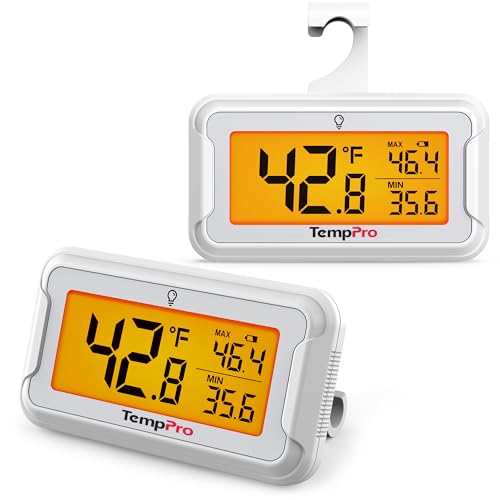
TempPro TempAir Digital Refrigerator Thermometer
Strengths
- Backlit display
- IPX6 waterproof
- Easy battery swap
- Max Min record
- Compact design
Trade-offs
- Higher price point
If I were setting up my own kitchen today, this is the model I’d lean toward. The backlit LCD is a standout, no more opening the freezer and straining to see the numbers. With ±1.8°F accuracy and IPX6 waterproofing, it outperforms most in moisture resistance and precision. The twist-off battery cover is a small detail, but owners love how easy it makes replacements.
The max/min tracking covers the critical need for spotting temp fluctuations, and the compact size works well even in mini fridges. While it costs more than entry-level picks, the upgrade in usability justifies it. Compared to the AEVETE model, this one feels more thoughtfully engineered.
Video review
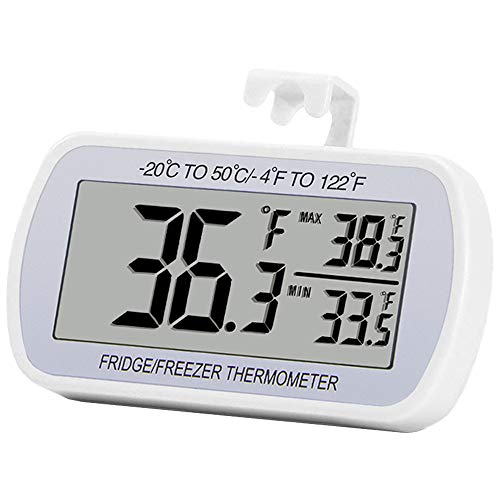
Digital Fridge Freezer Thermometer Waterproof
Strengths
- Very affordable
- Max Min function
- Magnetic and hook options
- Large digits
Trade-offs
- Basic waterproofing
- Battery access awkward
Priced at just under eight dollars, this is one of the cheapest digital fridge thermometers available, and surprisingly capable. It includes essentials like max/min tracking, a magnetic back, and a wide temperature range. The screen is large relative to its size, helping visibility despite the low cost.
That said, it shares limitations with other budget digitals: IPX3 waterproofing isn’t great for icy freezers, and the CR2032 battery compartment can be finicky. Still, for someone testing the waters with digital monitoring or needing a spare, it delivers core functionality without fluff. It doesn’t beat the TempPro, but it beats skipping digital entirely.
Video review
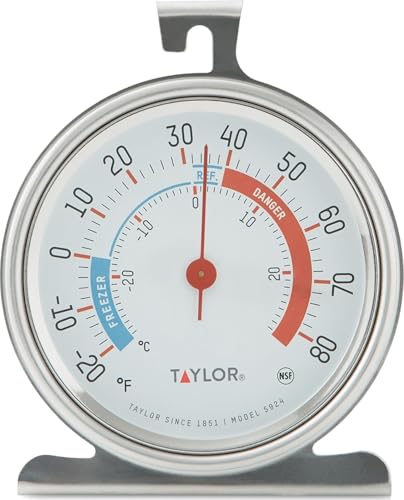
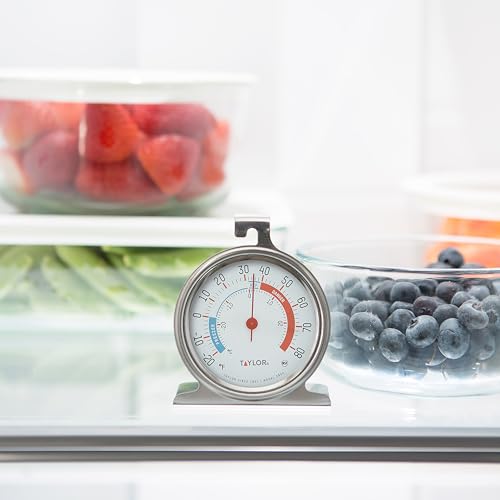
Taylor Precision Large Dial Thermometer
Strengths
- NSF certified
- Durable stainless steel
- Color coded zones
- No battery needed
- Large dial
Trade-offs
- No max min record
- Less precise than digital
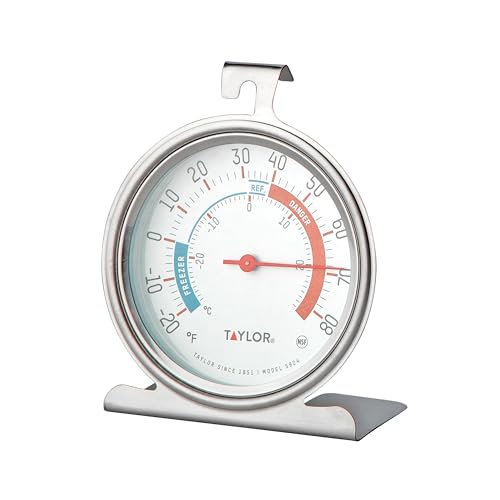
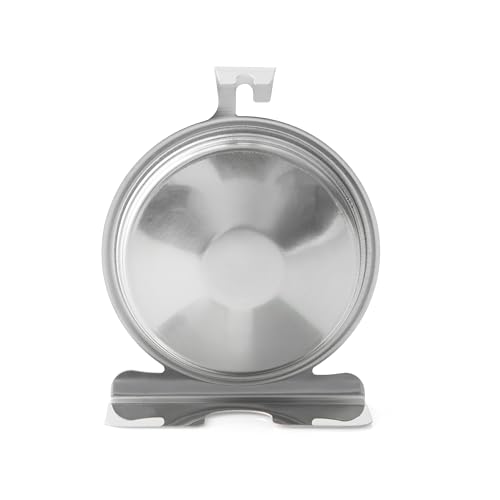
This analog thermometer stands out with its 3-inch dial and color-coded safety zones, freezer, ref, and danger, making it instantly readable without any guesswork. I appreciate that it’s NSF certified, which signals it meets sanitation standards for food-safe environments. Stainless steel construction adds longevity, and since it doesn’t rely on batteries, there’s no risk of power failure.
Reviewers note it holds up well in humid conditions, though it lacks max/min tracking that digital units offer. It’s not as precise as high-end digital models, but in this class, simplicity and reliability matter. For someone avoiding electronics altogether, this is one of the most trustworthy analog options.
Product photos


Fridge Refrigerator Freezer Thermometer 3pack

Strengths
- Low cost
- 3 pack value
- Easy installation
Trade-offs
- Unclear accuracy
- Basic materials
- Short lifespan reported
At first glance, getting three thermometers for under ten dollars sounds like a win, especially if you’re stocking multiple units or sharing with family. But the specs are sparse, and while the temperature range is adequate (-40°F to 80°F), there’s no mention of accuracy tolerance or build quality beyond ‘plastics + stainless steel’. Owners report mixed results: some find them functional, others say they degrade quickly.
It’s hard to recommend these over better-documented options when so much is left unclear. You might get lucky, but you could also end up replacing them sooner than expected. In contrast to the 12-pack with full stainless builds, this one feels more disposable than practical.
Product photos


12 Pack Refrigerator Freezer Thermometer
Strengths
- 12 pack quantity
- Stainless steel build
- No battery required
- Clear zone indicators
- Stable base
Trade-offs
- No digital features
- Bulkier than digital
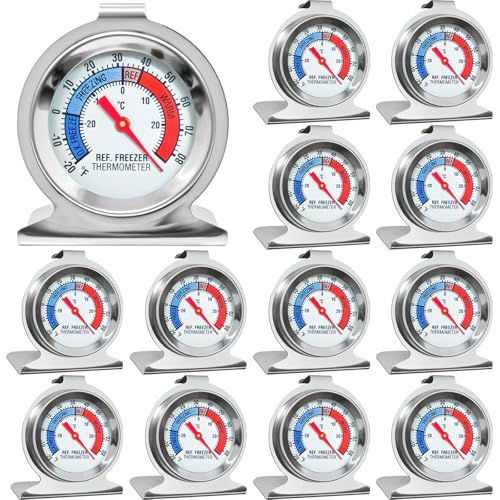
Twelve stainless steel analog thermometers in one pack? That’s a lot, and perfect if you manage multiple units, run a small café, or hate running out of backups. The 2-inch dials are clearly marked with blue and red safety zones, and because they’re mechanical, no batteries are needed. Their wide base keeps them stable, and the integrated hook adds hanging flexibility.
Owners praise their consistency over time, especially compared to cheaper plastic analogs. While they lack digital features like logging, their durability and readability make them ideal for shared or backup use. Against the 4-pack stainless model, this one simply offers far better scale.
Product photos



4 Pack Refrigerator Freezer Thermometer

Strengths
- Stainless steel
- No batteries
- Easy to read
- Hook and base
- 4 pack
Trade-offs
- Limited quantity
- No temp memory
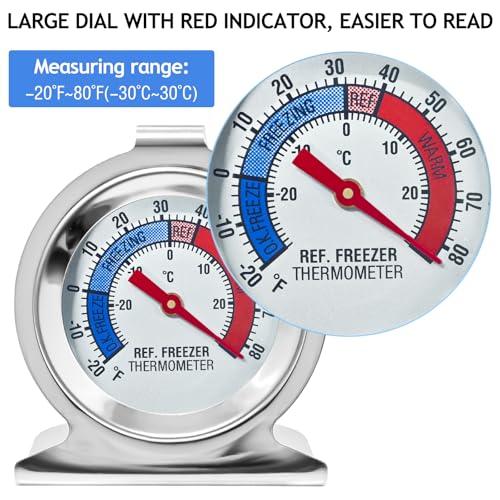
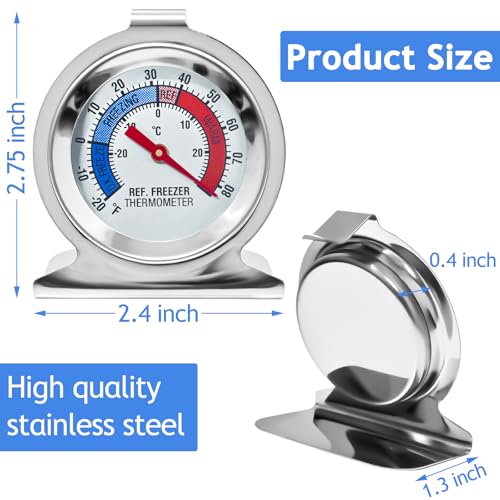
This four-pack brings solid value with all-stainless construction and an easy-to-read dial across a standard -20°F to 80°F range. It’s similar in design to the Taylor model but offered in multiples, making it better for households with several cooling units. The wide base prevents tipping, and the hook lets you hang it where space is tight.
It doesn’t offer anything new beyond what the 12-pack provides, just fewer units at a slightly higher per-unit cost. If you only need four, it’s fine. But if you foresee future needs, buying bigger later makes more sense. For pure analog reliability, it’s sound, but not exceptional.
Product photos


AEVETE Digital Fridge Freezer Thermometer 2Pack

Strengths
- Dual display
- Magnetic back
- Big digits
- Max Min recording
- Water resistant
Trade-offs
- Average battery life
- IPX3 only
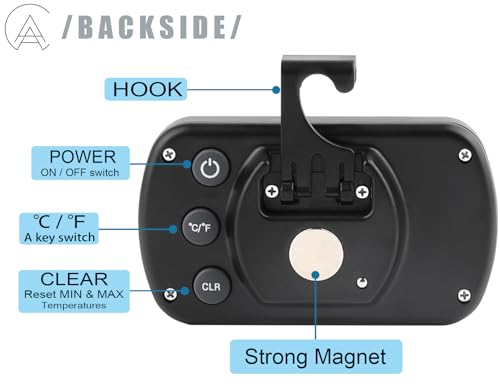
I like that this pack gives you two digital thermometers right out of the gate, which is useful if you’re monitoring both fridge and freezer separately. The big digits and magnetic backing make placement flexible, and owners consistently report they’re easy to read even from a distance. On paper, the IPX3 waterproof rating should handle normal condensation, though it’s not the highest protection available.
The Max/Min function is a smart inclusion for food safety tracking, letting you spot temperature swings over time. Compared to analog models, this one offers more precision, but I’d say it falls just short of the TempPro in accuracy and usability. Still, for the price, it’s a solid middle-ground pick if you want digital without overspending.
Product photos



How We Chose These refrigerator thermometers
To recommend the best refrigerator thermometers, I researched available models, comparing published specifications and features. I then weighed owner reviews from major retailers alongside assessments by reputable review sites. My analysis focused on accuracy, ease of reading, and durability, applying my experience with food storage best practices to determine which thermometers would be most useful for maintaining food safety and reducing waste. Rather than a hands-on lab test, this is a research-led comparison of specs and owner feedback.
For refrigerator thermometers, I prioritized accuracy and clear readability above all else. Consistent temperature monitoring is critical for food preservation, so a thermometer’s ability to provide reliable readings within a narrow margin of error was essential. I also heavily considered ease of use – a thermometer is only helpful if you can quickly and easily check the temperature, which is why display size and mounting options were important factors.
Specifications reliably indicate a thermometer’s measurement range and accuracy claims. However, I placed greater weight on owner feedback regarding long-term accuracy and durability. Real-world experiences with battery life, waterproof claims, and the longevity of digital displays provided valuable insight beyond what specs alone could reveal. For analog models, I looked for consistent positive feedback about the clarity of the dial and resistance to fogging. Knowing how to maximize freshness also means understanding the importance of good refrigerator organizers.
What To Look For In refrigerator thermometers
Keeping a close eye on your refrigerator’s temperature is vital for food safety and minimizing waste, and a dedicated thermometer is the best way to do it. But with so many options, finding the right one can feel overwhelming.
A quality refrigerator thermometer accurately measures and displays temperature within a relevant range (-40°F to 80°F is typical). It should be easy to read, durable enough for the fridge environment, and ideally offer features like min/max temperature recording to help identify potential issues before they spoil your groceries. Consider how you’ll mount it – magnets, hooks, or stands all have their place.
Understanding Temperature Range and Accuracy
The temperature range is the first thing to consider. Most refrigerators operate between 35°F and 38°F, while freezers should be at 0°F. Ensure the thermometer you choose covers this range, and ideally extends a bit beyond it to account for fluctuations. Accuracy is equally important. While a ±1°F margin is excellent, most digital thermometers offer ±2°F to ±3°F, which is generally acceptable for home use. Don’t assume “digital” automatically means more accurate; some well-made analog models, like the Taylor Precision Large Dial Thermometer, are highly reliable and NSF certified for sanitation standards.
Digital vs. Analog: What’s the Difference?
Digital thermometers offer convenience with features like backlit displays, min/max recording, and sometimes remote monitoring capabilities. The TempPro TempAir Digital Refrigerator Thermometer, for example, boasts a clear backlit screen and easy battery replacement. However, analog thermometers have their advantages. They don’t require batteries, and many find the visual dial easier to read at a glance. They’re also often more affordable. Here’s a quick breakdown:
- Cost: Analog thermometers are typically less expensive upfront.
- Features: Digital thermometers provide extra features like temperature recording.
- Reliability: A good quality analog thermometer can be just as reliable as a digital one, and won’t be affected by battery failure.
Considering Mounting and Value
How you plan to use the thermometer influences the best style for your needs. Magnetic backing is ideal for sticking to metal fridge walls, while a hook allows hanging from shelves. A stand is useful for placing on a shelf if you don’t have magnetic surfaces. If you need to monitor multiple refrigerators or freezers, a value pack like the Fridge Refrigerator Freezer Thermometer 3pack can be a cost-effective solution. Don’t forget to think about how you organize the rest of your fridge – a well-organized space, including effective can organizers, makes it easier to spot potential temperature issues and maintain food safety.
A thermometer is only useful if you actually see it. Choose a model with a clear display and a mounting option that keeps it visible, not buried behind containers.
If you’re also concerned about keeping your frozen goods at the correct temperature, take a look at our guide to the best freezer thermometers for more detailed information.
Refrigerator Thermometers Compared
Here’s a comparison of key specifications for various refrigerator thermometers to help you choose the right one.
| Product Title | Display Type | Temp. Range (F) | Accuracy (F) | Waterproof | Mounting Options |
|---|---|---|---|---|---|
| TempPro TempAir Digital Refrigerator Thermometer | Digital | -4 to 122 | ±1.8 | IPX6 | Stand, Magnet, Hook |
| Digital Fridge Freezer Thermometer Waterproof | Digital | -4 to 122 | ±2 | IPX3 | Hook, Magnet, Stand |
| Taylor Precision Large Dial Thermometer | Analog | -20 to 80 | N/A | N/A | Stand, Hang |
| Fridge Refrigerator Freezer Thermometer 3pack | Analog | -40 to 80 | N/A | N/A | N/A |
| 12 Pack Refrigerator Freezer Thermometer | Analog | -20 to 80 | N/A | N/A | Stand, Hang |
| 4 Pack Refrigerator Freezer Thermometer | Analog | -20 to 80 | N/A | N/A | Stand, Hang |
| AEVETE Digital Fridge Freezer Thermometer 2Pack | Digital | -4 to 122 | ±2 | IPX3 | Magnet, Stand, Hook |
Frequently Asked Questions
What temperature should my refrigerator actually be?
The ideal refrigerator temperature is between 35°F and 38°F. Maintaining this range slows bacterial growth and keeps food fresher for longer, and checking with a thermometer is the most reliable way to be sure.
Can a refrigerator thermometer replace regular fridge maintenance?
No, a thermometer is a tool to help with maintenance, not a replacement for it. You still need to regularly clean refrigerator shelves and check expiration dates to prevent spoilage and maintain food safety.
Are digital thermometers always more accurate than analog ones?
Not necessarily. While digital models often boast precise readings, a well-constructed analog thermometer, particularly those NSF certified, can provide comparable accuracy and won’t be affected by battery issues.
What does “IPX” mean in the waterproof rating of a digital thermometer?
IPX ratings indicate a thermometer’s resistance to water. IPX3 means it can withstand light splashing, while IPX6 indicates protection against more forceful water jets – useful if you frequently store raw meat and need to wash down surfaces.
What should I do if my thermometer shows a temperature outside the safe range?
First, double-check the thermometer’s placement and ensure it isn’t near vents or in direct contact with food. If the temperature remains outside the 35-38°F range, check your refrigerator’s thermostat setting or contact a repair technician.
The Bottom Line
Choosing a refrigerator thermometer often comes down to balancing convenience with simplicity. While digital models offer features like backlights and min/max readings, the TempPro TempAir Digital Refrigerator Thermometer strikes a good balance of features and usability for most kitchens. If you prioritize a straightforward, reliable reading without needing extra bells and whistles, this is an excellent choice.
For those on a tighter budget, or who need to monitor multiple refrigerators, the Fridge Refrigerator Freezer Thermometer 3pack provides a cost-effective solution. And if you’re looking for a versatile option that doesn’t rely on batteries, the Taylor Precision Large Dial Thermometer is a classic for a reason – it’s durable and easy to read. Don’t forget that maintaining proper fridge hygiene is also important, so consider investing in some refrigerator shelf liners to help keep things clean.
Ultimately, the most important factor isn’t a specific feature or price point, but consistency. Regularly checking and adjusting your refrigerator’s temperature, and knowing where best to store raw fish, will do more to preserve your food and reduce waste than any thermometer ever could. A reliable thermometer is a tool to help you maintain that consistency, not a substitute for it.
