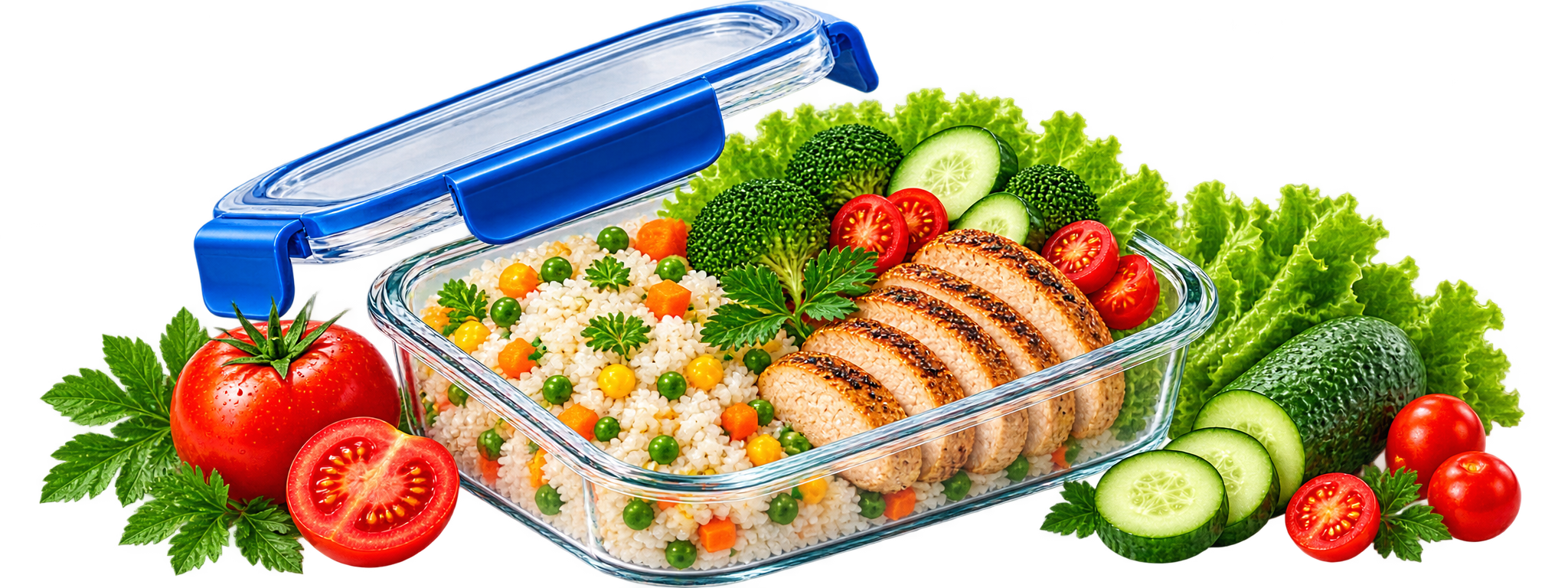
Can You Put Glass in the Freezer Safely? A Complete Guide
This post contains affiliate links. As an Amazon Associate, we earn from qualifying purchases.
You can put glass in the freezer, but only if it’s designed for the cold and you avoid sudden temperature changes. Tempered glass shelves inside modern freezers are rated for sub-zero temperatures. They shatter when you wash them with warm water straight from the freezer, a 60°C+ temperature swing the manufacturer manuals explicitly warn against.
That warning lives in the fine print. It’s the reason a glass shelf can survive years at -18°C and then explode in your sink on cleaning day. The glass isn’t failing. You’re breaking it by ignoring the one rule printed in every owner’s guide.
What follows: the OEM specs that prove tempered glass is freezer-rated, the exact thermal shock threshold that breaks it, and the two jar shapes that determine whether your soup freezes safely or leaves a mess of glass and ice on the shelf.
Key Takeaways
- Tempered glass shelves are designed for freezer temperatures but will shatter if washed with warm water while still cold, a sudden change of 60°C or more.
- Straight-sided mason jars freeze liquids safely; jars with curved shoulders trap expanding ice and crack.
- Allow any glass item to reach room temperature before cleaning, and cool hot foods before freezing them in glass.
- Never use glass that is chipped, cracked, or not explicitly labeled as tempered or freezer-safe.
- The real risk isn’t the cold. It’s the temperature swing you create by moving glass between extremes too quickly.
What Kind of Glass Is Actually Freezer-Safe?
Not all glass is created equal. Your average drinking glass is annealed glass. It’s relatively soft and prone to cracking under uneven stress. The glass in your freezer shelves is tempered.
Tempered glass undergoes a heat-treating process that puts its surface under compression. This makes it about four times stronger than annealed glass. It’s also designed to fail safely. When it breaks, it crumbles into small, pebble-like pieces instead of sharp shards. That’s not an accident. It’s a requirement of safety glazing standards like ANSI Z97.1.
Manufacturers use it because it can handle the thermal stress of a freezer’s constant chill. The Electrolux owner’s manual for models like the FUF21 states plainly: “Tempered glass is designed to shatter into many small pieces if it breaks.” They put it in there because it’s strong enough for the job, but they need you to know how it fails.
Before you start: The refrigerant in many modern freezers is R600a (isobutane), a flammable gas. If a broken glass shelf damages a refrigerant line, you’re dealing with a fire hazard, not just a cleanup. Unplug the freezer before removing any interior components for cleaning or inspection.
The Hidden Spec: Climate Class and Ambient Temperature
Your freezer’s glass isn’t just fighting the cold inside. It’s battling the heat outside. Appliance manuals specify a “climate class” that defines the ambient room temperature range the unit is rated for.
Siemens manuals break these classes down clearly: | Climate Class | Permitted Ambient Temperature | |——————-|———————————–| | SN | +10°C to 32°C | | N | +16°C to 32°C | | ST | +16°C to 38°C | | T | +16°C to 43°C |
A freezer with a “T” class rating is certified to operate in a sweltering 43°C garage. Its glass components are engineered for that brutal 60+ degree differential between the blazing exterior and the -18°C interior. This engineering margin is why tempered glass shelves don’t just crack when you shut the door.
Why Tempered Glass Shelves Can Shatter
The strength has a limit. Tempered glass is vulnerable to thermal shock, a rapid, uneven temperature change across its surface.
Think of the glass as a network of locked-in stresses. Heating one part faster than another makes that part expand slightly before its neighbor can. The resulting strain can exceed the glass’s compressive strength. When that happens, the entire tension network unlocks at once. The shelf doesn’t just crack. It disintegrates.
Tempered glass shelves may break if exposed to sudden temperature changes or impact, such as bumping or dropping. Do not clean glass shelves with warm water when they are cold. . Electrolux Owner’s Manual (FUF21DLRWW)
Every manual shouts and most articles whisper. The danger isn’t putting cold glass in the freezer. It’s pulling that same freezer-safe glass out and hitting it with warm tap water. A shelf at -18°C introduced to 50°C water experiences a 68°C shock in seconds. That’s the trigger.
The Real-World Failure Mode
You decide to deep-clean the freezer. You pull the glass shelves out and place them in a sink filled with warm, soapy water. There’s a sharp ping sound, like a small stone hitting a window. Then the shelf collapses into a pile of granules before your eyes. It’s not a defect. It’s physics you orchestrated.
The manual’s solution is simple: “Allow glass to warm to room temperature before immersing in warm water.” Let the shelf sit on the counter for an hour. The thermal shock window closes. Now you can wash it.
This principle extends to all glass containers you put in the freezer. The glass must be tempered or specifically designed for thermal cycling. And you must manage the temperature gradient.
How to Freeze Liquids in Glass Safely
Freezing liquids is where glass fails most dramatically. Water expands by about 9% when it freezes. That expansion generates tremendous pressure.
A sealed, full glass bottle has zero room for that expansion. The ice pushes against the rigid walls until something gives. Usually, it’s the glass. This is why a forgotten bottle of beer or soda can explode in the freezer, it’s a hydraulic press made of ice.
Jar Shape Is Everything
The YouTube transcript context gets one thing right: jar shape dictates success. Compare a classic shouldered mason jar to a straight-sided one. – Shouldered Jars: The curved neck creates a natural weak point. Expanding ice pushes upward, meets the shoulder, and concentrates stress. The jar cracks at the shoulder. – Straight-Sided Jars: The uniform walls allow pressure to distribute evenly. The entire volume can expand upward without a structural pinch point.
Rule: Only use straight-sided jars for freezing liquids. Leave generous headspace, at least an inch for soups or broths, more for pure water. Never fill to the brim.
The Cooling Step Everyone Skips
Pouring hot soup directly into a cold glass jar and placing it in the freezer is a double thermal shock. You shock the glass when the hot liquid hits it. You shock it again when the outside meets the freezer air.
Cool the soup to room temperature first. Better yet, chill it in the refrigerator for a few hours. This slows everything down and lets the glass adjust gradually. It’s the single most effective step to prevent breakage when using glass containers for freezing.
Step-by-Step Guide to Freezing in Glass
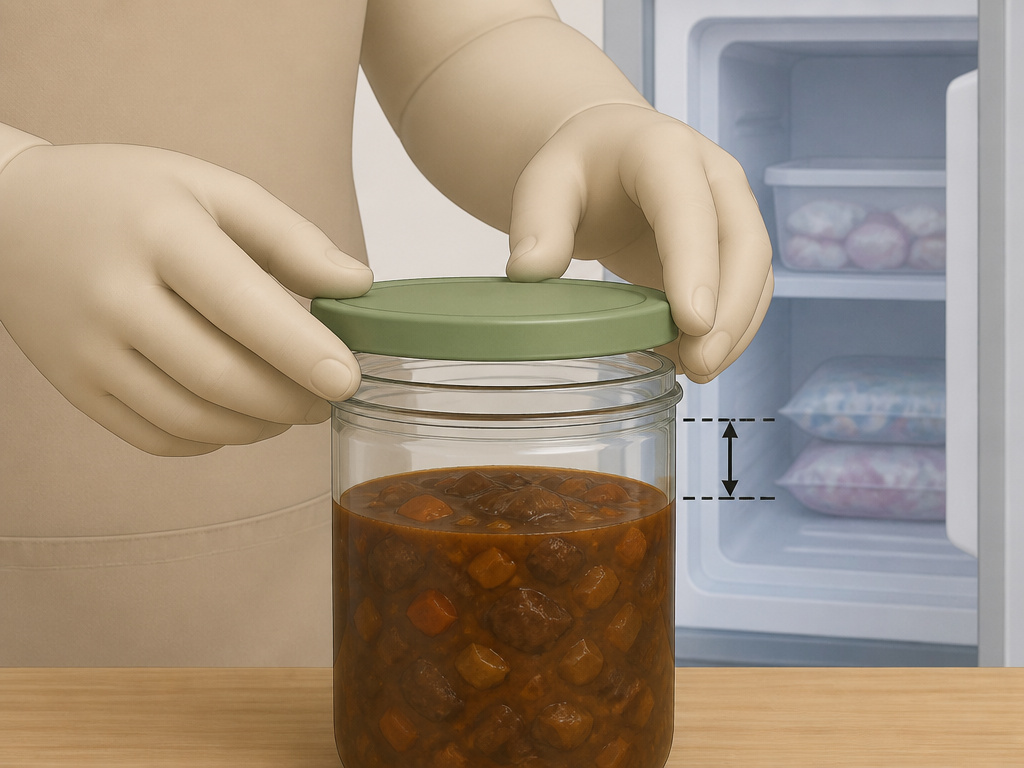
Follow this sequence to avoid creating the conditions that break glass.
- Select the right container. Use only straight-sided jars or containers explicitly labeled as freezer-safe. Inspect for chips or cracks. A tiny flaw becomes a fracture line under pressure.
- Cool contents completely. Let cooked foods like stews or sauces reach room temperature. For faster cooling, use a wide, shallow dish in the fridge. Skipping this step is the leading cause of cracked soup containers.
- Leave ample headspace. Fill containers only ¾ full. Liquids expand; this empty space is your pressure relief valve.
- Seal loosely at first. If using a lid, place it on top but don’t tighten it. This allows expanding air to escape during the initial freeze. After 24 hours, you can seal it tightly to prevent freezer burn.
- Place in the coldest part of the freezer. But ensure the container isn’t touching the back wall or cooling coils. Direct contact can create an extreme local temperature difference.
- Thaw slowly in the fridge. Reverse the process. Move the frozen glass container to the refrigerator for 12-24 hours. Let it warm gradually. Never run hot water over a frozen glass jar to speed up thawing.
Common mistake: Filling a jar with hot liquid and putting it directly in the freezer. The jar will often crack within the first hour as the outside wall cools hundreds of degrees faster than the inside.
Glass vs. Plastic: A Freezer Storage Showdown
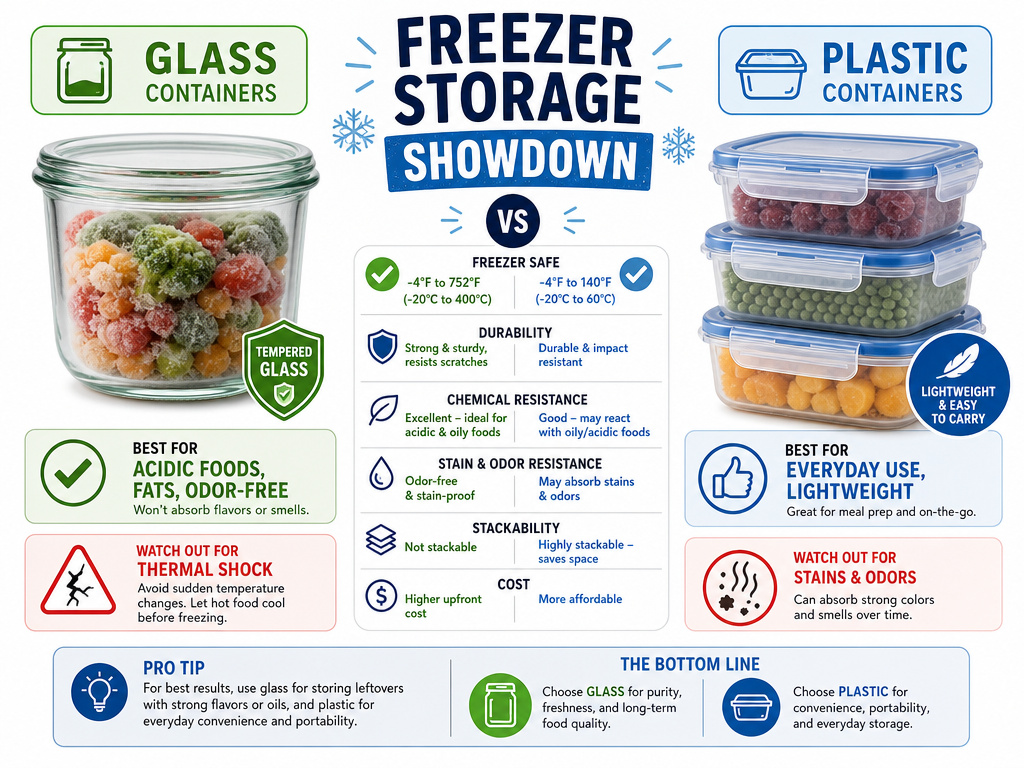
You have two mainstream choices for freezer storage: glass and plastic. Each has a specific job.
| Material | Best For | Risk If You Choose Wrong |
|---|---|---|
| Tempered Glass | Long-term storage of acidic foods (tomato sauce, berries), fats, and aromatic items. Doesn’t absorb odors or stains. | Thermal shock breakage. Significantly heavier. |
| Freezer-Safe Plastic (PP, HDPE) | Everyday use, stacking, and freezing items quickly. Lightweight and less prone to breakage from dropping. | Can stain and absorb odors over time. Some plastics become brittle at very low temps. |
For freezing soup, glass wins on purity of taste over months of storage. For freezing Jell-O or a batch of stock you’ll use next week, a freezer bag is faster and takes less space.
The best glass containers for most people are straight-sided mason jars (like Ball or Kerr wide-mouth pints and quarts) and dedicated glass freezer containers with straight sides and robust lids, such as those from Pyrex or Anchor Hocking.
Frequently Asked Questions
Can you put a glass baking dish in the freezer?
Yes, but with major caveats. Most glass bakeware, like Pyrex, is tempered soda-lime glass. It’s designed for oven-to-table temperature swings, but moving it directly from a hot oven to a freezer will break it. Always let the dish cool to room temperature on a trivet first, never on a cold counter. Transferring a room-temperature dish to the freezer is generally safe.
Does glass break in the freezer if it’s empty?
An empty, intact tempered glass shelf or container will not break simply from being in a freezer. The failure requires a trigger: a rapid temperature change (thermal shock) or a physical impact. An empty jar is under no internal pressure. The cold alone isn’t enough.
How can you tell if glass is freezer-safe?
Look for explicit labeling: “freezer-safe,” “tempered,” or “thermal shock resistant.” Visually, tempered glass often has subtle distortions or a slight green or blue tint at the edges. When in doubt, assume it’s not safe. Start with a less-critical item and do a test freeze.
Can you refreeze food in glass?
Yes, from a safety perspective. The quality risk is from the freeze-thaw cycle, not the glass. Repeated freezing degrades food texture. Ensure the glass survived the first freeze without cracking and that the food was thawed safely in the refrigerator. Never refreeze food that has been sitting at room temperature for more than two hours.
Why did my glass container break even though I followed the rules?
Check for hidden damage. A microscopic chip on the rim or a hairline scratch from utensil contact creates a stress concentrator. Also, verify your freezer’s temperature stability. A faulty thermostat causing rapid cycling between -10°C and -25°C could, over thousands of cycles, fatigue the glass. This is rare, but it happens.
The Bottom Line
Glass belongs in your freezer, but on your terms. Use tempered, straight-sided containers. Manage the temperature gradient, cool foods before freezing, warm glass before washing. The manuals have been screaming the rule about sudden temperature changes for decades. Most people break their glass by not reading them.
Your default pick for most home freezing: wide-mouth, straight-sided mason jars. They’re cheap, durable, and don’t hold smells. For anything oily or acidic destined for long-term storage, they beat plastic every time.
The goal isn’t to avoid glass. It’s to understand its language. It tells you when it’s stressed with a sharp ping before it gives way. Listen for it.
