Can Meat Go Bad in the Freezer? Preserving Quality & Safety
This post contains affiliate links. As an Amazon Associate, we earn from qualifying purchases.
Meat stored continuously at 0°F (-18°C) or below in a properly functioning freezer does not spoil in a way that causes foodborne illness. The bacteria and pathogens that make you sick are dormant at that temperature. However, the meat’s quality, its texture, flavor, color, and juiciness, degrades over months due to chemical changes and moisture loss, a process known as freezer burn. After a year or more, heavily freezer-burned meat can become so dry, tough, and flavorless that it’s inedible.
That 0°F mark is the line between safety and palatability. Every degree above it accelerates the chemical reactions that ruin quality, and a faulty freezer that cycles above freezing can indeed allow spoilage.
What follows: the exact storage timelines from government sources, the science behind freezer burn and oxidation, the packaging that actually works, and how to tell if that forgotten roast is still good for dinner or belongs in the compost.
Key Takeaways
- Frozen meat is safe indefinitely at 0°F, but recommended storage times (3-12 months) are for quality only.
- Freezer burn is dehydration and oxidation, not bacterial spoilage; it makes meat dry and tasteless but not inherently unsafe.
- Temperature fluctuation is the enemy. A freezer at 10°F causes the same quality loss in three months that 0°F causes in a full year.
- Vacuum sealing is the best defense for long-term storage; for shorter periods, a double wrap with freezer paper and a quality freezer bag works.
- Trust your senses. Spoiled frozen meat often shows signs after thawing: sour smell, slimy texture, or extreme discoloration.
How Long Is Frozen Meat Safe to Eat?
The safety answer is straightforward, but the quality answer depends on the cut and how you pack it. Government and university extensions provide specific timelines.
According to the UMN Extension storage times guide, frozen meat remains safe to eat indefinitely if held at 0°F or below. The published storage times, like 4-12 months for steaks, are solely for maintaining optimum flavor and texture.
The FoodSafety.gov cold storage chart and other primary sources repeat this core principle. Illness-causing microbes like Salmonella or E. Coli do not grow at freezer temperatures. They enter a state of suspended animation. The risk comes later, if you thaw improperly and allow those microbes to wake up and multiply in the Danger Zone between 40°F and 140°F.
| Meat Type | Recommended Freezer Storage (for best quality) | Key Consideration |
|---|---|---|
| Beef Steaks/Roasts | 4 to 12 months | Larger, leaner cuts like sirloin last longer. |
| Ground Beef | 3 to 4 months | More surface area means faster oxidation and quality loss. |
| Pork Chops/Roasts | 4 to 12 months | Lean pork is more prone to dryness than fatty cuts. |
| Whole Chicken/Turkey | 1 year | The bird’s own packaging is rarely sufficient for long-term storage. |
| Chicken Pieces | 9 months | Wings, thighs, and breasts all fall within this range. |
| Lean Fish (Cod) | 6 months | Fish fats oxidize quickly, leading to “fishy” off-flavors. |
These timelines assume your freezer holds a steady 0°F. They also assume standard plastic-wrapped retail packaging. If you repackage meat using a vacuum sealer immediately after purchase, you can often push toward the upper limit of these ranges.
What Actually Causes “Bad” Meat in the Freezer?
Freezer burn is the usual culprit, but it’s not the only one. Understanding the mechanism explains why packaging matters so much.
Freezer Burn: Dehydration, Not Decay
Freezer burn occurs when water molecules sublimate, jump directly from ice to vapor, out of the meat’s surface and deposit as frost on the inside of your packaging or freezer walls. This leaves the meat’s surface dry, porous, and grayish-white. The exposed muscle fibers then oxidize, taking on a stale, cardboard-like flavor.
Where this goes sideways: Using flimsy, non-moisture-proof packaging like a standard Ziploc baggie. Over three months, enough moisture escapes to turn the surface of a steak into a leathery patch that won’t tenderize, no matter how you cook it.
The process accelerates with temperature swings. Every time your freezer door opens, warm, moist air rushes in. That air cools, the moisture condenses as frost on your packages, and the cycle of sublimation kicks into higher gear. This is why meat tucked in the back of a deep freeze often fares better than items near the door.
Oxidation and Rancidity
Fat, especially in richer meats like pork sausage or ground beef, goes rancid over time. This is a chemical reaction with oxygen, not a bacterial process. It produces off-flavors and odors described as “painty,” “bitter,” or simply “stale.” Vacuum sealing is the most effective way to combat this, as it removes the oxygen that drives the reaction. For shorter storage, pressing all air out of a high-quality freezer bag before sealing is the next best thing.
The Real Spoilage Risk: Thawing and Refreezing
This is the only way frozen meat can become unsafe while still technically “frozen.” If a power outage or a faulty freezer allows the meat to thaw completely and warm above 40°F, bacteria can multiply. If you then refreeze it, you’re locking in that higher bacterial load. While cooking later will kill the bacteria, it won’t destroy any toxins they may have already produced, which can still cause illness.
The USDA temperature effects guide is clear: never leave food in the Danger Zone for over two hours. If your freezer fails and meat is soft and warm, discard it.
The Critical Role of Packaging and Temperature
You cannot control time, but you have absolute control over these two factors. They determine whether your steak tastes great at month 10 or is trash at month 4.
Your Packaging Hierarchy
Forget the flimsy foam and plastic wrap from the grocery store. Treat that as transit packaging only.
- Vacuum Sealing: The gold standard. It removes air, preventing oxidation and creating a tight seal that minimizes moisture loss. It’s essential for hitting the 12-month mark on roasts or for long-term storage of bulk purchases. A vacuum-sealed package also protects against freezer burn more effectively than any other method.
- Freezer Paper + Bag Combo: A strong second for storage under 6 months. Wrap the meat tightly in freezer paper (the waxed side inward), squeezing out air pockets. This paper is a moisture barrier. Then, place the wrapped bundle inside a dedicated freezer bag, press out the air, and seal. The bag adds a second moisture barrier and protects the paper from tears.
- Freezer Bags Alone: Use only high-quality, thick bags designed for freezing. Press out as much air as possible before sealing. Suitable for ground meat or chicken pieces you plan to use within 2-3 months.
- Freezer-Safe Containers: Rigid freezer-safe containers are excellent for liquids, stocks, or pre-made meals. For raw meat, ensure the container is filled to minimize headspace, or press a piece of plastic wrap directly onto the meat’s surface before sealing the lid to limit air contact.
The 0°F Non-Negotiable and the Fluctuation Problem
Your freezer’s thermostat setting is not the actual temperature. Buy an inexpensive standalone freezer thermometer and place it in the center. Verify it reads 0°F or lower.
The part nobody mentions: A freezer that cycles between 0°F and 10°F is far more damaging than one holding a steady 5°F. The freeze-thaw cycle on a microscopic level promotes larger, more destructive ice crystals.
The NDSU food freezing guide provides a stark illustration: the quality loss that occurs in frozen green beans stored at 0°F for one year happens in just three months at 10°F, three weeks at 20°F, and five days at 30°F. If your freezer can’t maintain a deep freeze, treat all storage timelines as halved.
How to Tell If Frozen Meat Has Gone Bad
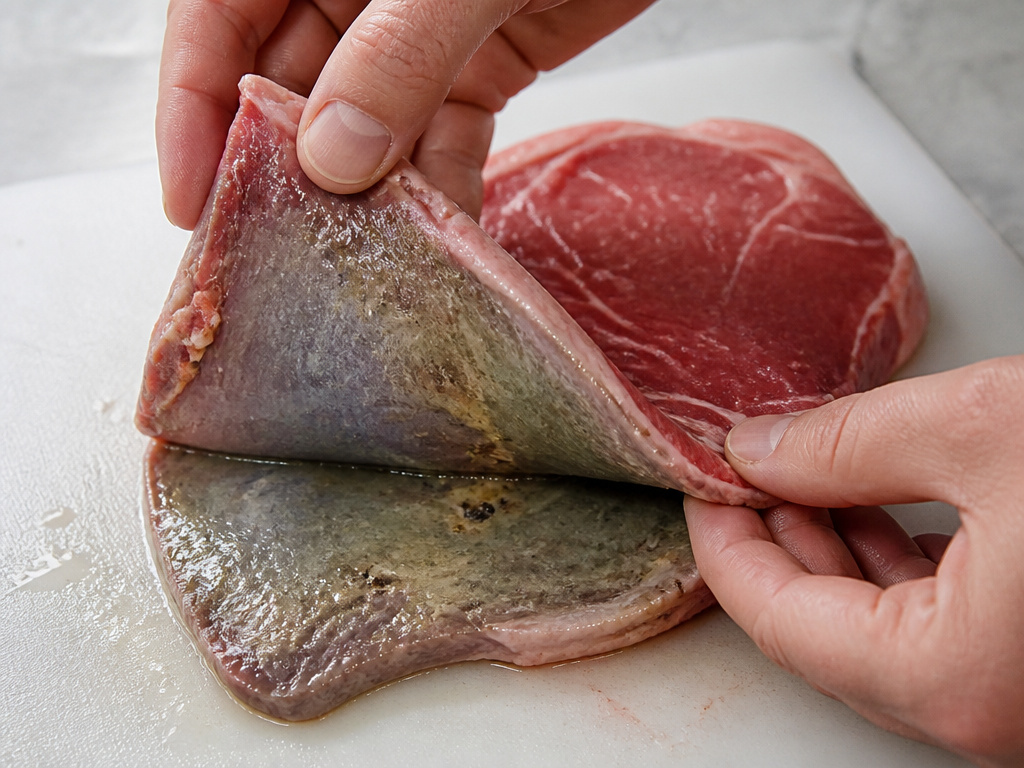
Sometimes, despite your best efforts, a package gets lost in the abyss for years. Here’s how to assess it after thawing in the refrigerator. Never judge frozen meat while it’s still solid.
- Smell: This is the most reliable test. Fresh thawed meat has a mild, metallic scent. Spoiled meat smells sour, ammonia-like, or downright putrid. If it makes you recoil, toss it.
- Texture: Good meat is firm or slightly yielding. A slimy, sticky, or tacky film on the surface is a sign of bacterial growth. Excessive mushiness is another red flag.
- Color: Some color change is normal (beef turning dark brown, for instance). But look for large patches of green, gray, or iridescent sheen, these indicate spoilage. Note: a rainbow sheen on sliced roast beef is often just light refracting through fat and is harmless.
- Ice Crystals & Dryness: If the meat is covered in thick, frosty ice crystals and looks shrunken, it’s severely freezer-burned. It’s safe to eat, but the quality will be poor. You can trim away the worst parts before cooking.
If you suspect a thawing issue, like finding meat soft after a power outage, do not perform a taste test. When in doubt, throw it out. The cost of a replacement steak is trivial compared to a bout of food poisoning.
Frequently Asked Questions
Can you get food poisoning from frozen meat?
You cannot get food poisoning from meat that has been continuously frozen at 0°F. The risk occurs if the meat thawed improperly (left in the Danger Zone above 40°F for over two hours) before you cooked it, allowing bacteria to multiply to dangerous levels.
Does vacuum-sealed meat last longer in the freezer?
Yes, dramatically. By removing air, vacuum sealing drastically slows oxidation and prevents moisture loss. Vacuum-sealed meat can often remain at peak quality for 2-3 times longer than the same meat in standard packaging, easily reaching the upper limits of recommended storage times.
Why does my freezer have frost but my meat is still freezer-burned?
The frost on your freezer walls is moisture that escaped from your food. That frost buildup is direct evidence of sublimation, the same process that causes freezer burn. It signals that your packaging isn’t airtight or that you’re opening the door too frequently, allowing humid air inside.
Can mold grow on meat in the freezer?
No. Mold spores require moisture and warmth to grow. At 0°F, they are completely dormant. Any mold you see on frozen meat developed before it was frozen. If you find mold on frozen food, the item was likely already spoiled when it went in.
Is it safe to refreeze meat that has thawed?
It is safe to refreeze meat that has thawed in the refrigerator and still feels cold (40°F or below). The quality may suffer due to moisture loss. Never refreeze meat that has thawed at room temperature or feels warm, as bacterial growth may have already occurred.
The Bottom Line
Your freezer is a pause button, not a time machine. At a rock-solid 0°F, it keeps meat safe from pathogens forever. But the clock is always ticking on taste and texture.
Invest in a thermometer to verify your freezer’s true temperature. Repackage retail meat immediately, using a vacuum sealer for long-term projects or a tight freezer paper technique for everyday use. Follow the first-in, first-out rule to rotate your stock.
And if you discover a mystery package from a bygone era, thaw it in the fridge and let your nose make the final call. A sour smell means the compost bin. Dry, leathery patches mean trim and braise. A clean, cold scent means dinner is back on the menu.
