How to Use Freezer Paper Correctly to Prevent Freezer Burn
This post contains affiliate links. As an Amazon Associate, we earn from qualifying purchases.
To use freezer paper, wrap food with the plastic-coated side facing inward, seal all edges tightly to eliminate air, label with contents and date using a freezer-safe marker, and freeze at 0°F (-18°C) or lower. The plastic coating is a polyethylene barrier that blocks air and moisture; the paper side is for labeling and structure only. Placing the paper side against wet or fatty food degrades the barrier within weeks.
That 0°F number is the threshold where bacterial activity stops and ice crystals form small enough to preserve cell structure. Go above it and you get freezer burn faster, regardless of your wrap job.
What follows: the three things that actually matter (coating direction, seal tightness, freeze speed), the mistake that ruins beef within a month, and the one upgrade that doubles protection time without changing your routine.
Key Takeaways
- Freezer paper is a one-way barrier. The plastic-coated side faces the food to lock in moisture; the paper side is for labeling and must stay dry.
- Not all freezer paper is equal. Basic kraft paper protects for 3-6 months; premium grades like Graphic Packaging’s Super Loxol™ guard for 12-15 months.
- Freezer tape is mandatory for sealing. Regular tape adhesive fails below freezing, breaking the seal and inviting freezer burn.
- Set your freezer to -10°F (-23°C) for 24 hours before adding a large batch of unfrozen food. Slow freezing creates large ice crystals that puncture cell walls.
- Never use freezer paper in an oven or microwave. The polyethylene coating melts at high temperatures and can release fumes.
What Freezer Paper Actually Is (And Isn’t)
[Freezer paper](https://foodkeepy.Freezer paper is a laminate, a sheet of long-fiber kraft paper coated on one side with a thin layer of polyethylene plastic. The paper provides structure and a surface you can write on.The plastic is the moisture-vapor barrier. That division of labor dictates every correct use.
Graphic Packaging’s freezer paper brochure confirms the laminate construction: “Freezer paper uses long coarse fibers, creating paper with good durability, and moisture and barrier performance protection.” The polyethylene coating is FDA-compliant for direct food contact.
This is why it fails as an all-purpose wrap. It’s not parchment paper for baking, not wax paper for room-temperature candy, and not butcher paper for smoking. Its single job is to create a sealed micro-environment around food in sub-zero temperatures.
If you treat it like deli paper, you’ll see the failure fast. The paper side absorbs juices from a steak, wicks moisture through to the plastic layer, and compromises the seal. Two weeks later, that spot is gray and dry — early-stage freezer burn.
Why the Plastic Side Faces the Food
The plastic coating is a polyethylene barrier. Its molecules are tight enough to block water vapor and oxygen from passing through, but flexible enough at cold temperatures to stay sealed. When you place it against the food, it forms a direct shield.
The paper side is porous. Putting it against wet, fatty, or acidic food is like placing a sponge between your steak and its protection. Moisture migrates through the paper, saturating the fibers and stressing the bond between paper and plastic. Eventually, the barrier delaminates.
Common mistake: Wrapping a roast with the paper side in. The absorbed juices weaken the bond at the fold lines. By the fourth week, you’ll see a dry, discolored patch along the seam, even if the rest looks fine.
The rule is absolute. Shiny side in, matte side out. Every time. For everything. The only thing that touches the paper side is your marker and freezer tape.
Freezer Paper Grades and Timelines
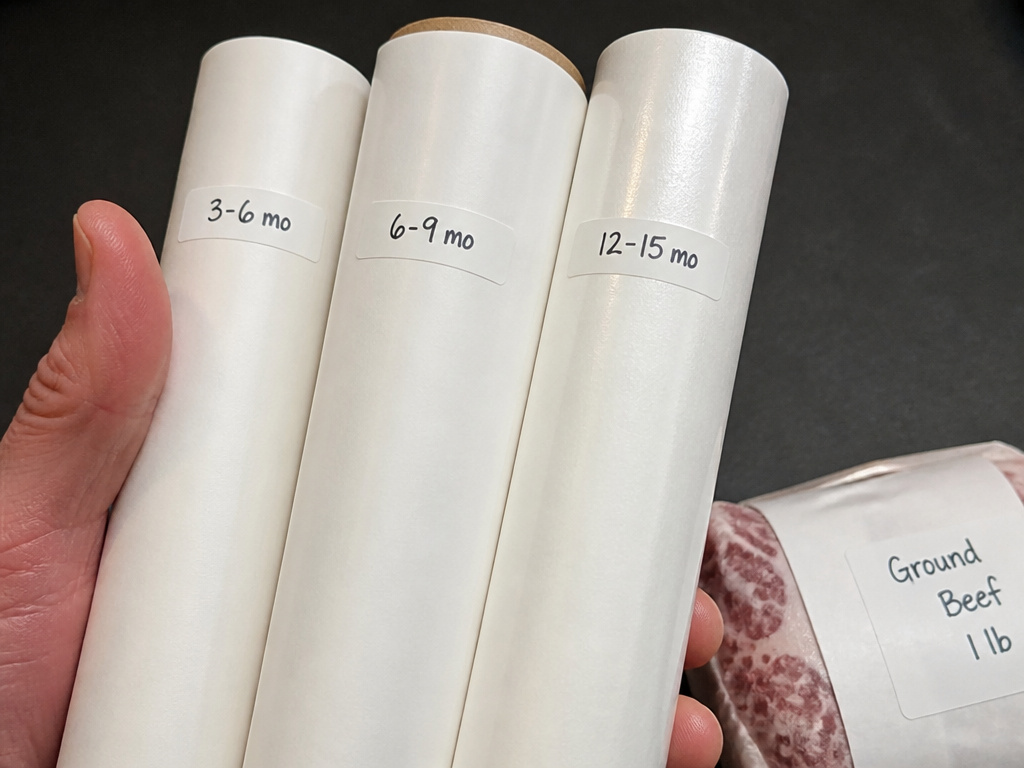 “Freezer paper” is a category, not a standard. Protection duration depends on the barrier coating’s thickness and formulation. A major manufacturer like Graphic Packaging sells three tiers, each with a different job.
| Grade Name | Protection Timeline | Best For |
|---|---|---|
| Natural Kraft / Kold Lok™ | 3–6 months | Short-term storage, leftovers, meats you’ll eat within a season. |
| Freshgard™ | 6–9 months | Bulk meat purchases, garden vegetable batches, meal preps for a half-year. |
| Super Loxol™ | 12–15 months | Long-term security, investment cuts (whole tenderloin, holiday turkey), power-outage preparedness. |
These timelines assume correct wrapping and a steady 0°F (-18°C) freezer temperature. Fluctuating temperatures cut any timeline in half. The upgrade from basic kraft to a premium grade often costs less than the meat it protects from a single freezer-burn loss.
Your choice should match your freezer’s reliability and your household’s rotation speed. A packed, frost-free freezer that cycles more often needs the stronger barrier.
Step-by-Step Wrapping for a Perfect Seal
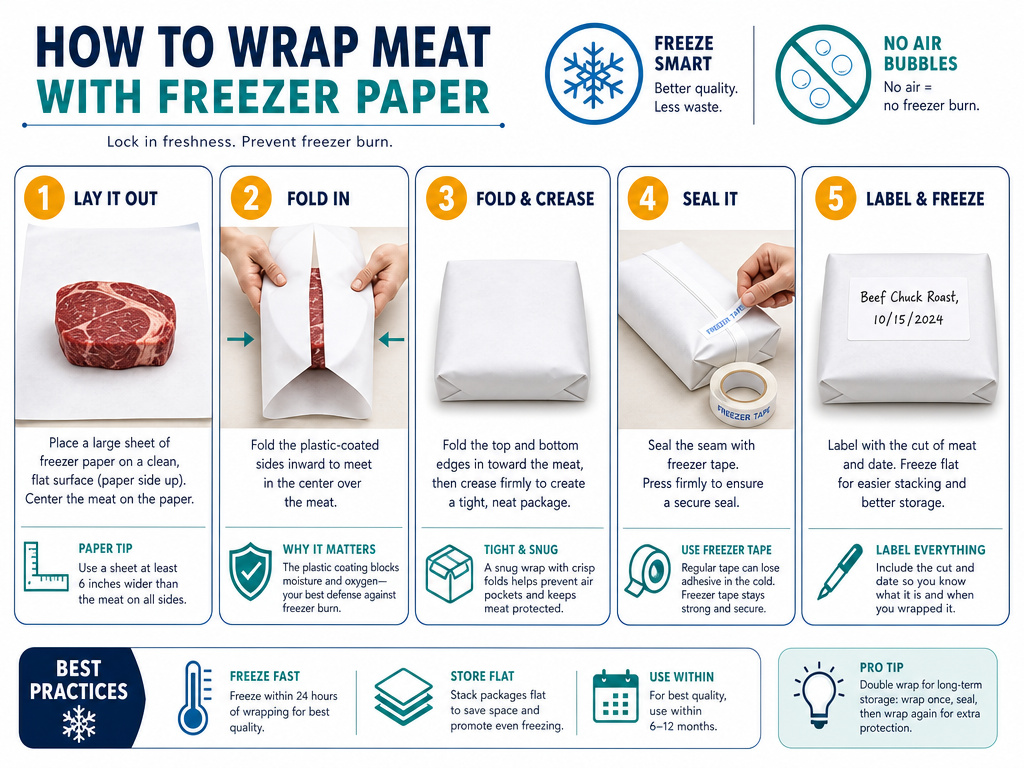 This process is about eliminating air pockets. Every tiny pocket is a chamber where sublimation happens — ice turns directly to vapor, drying out the food surface.
Before you start: Clear a clean, dry workspace. Have freezer tape and a permanent marker ready. Ensure your food is dry (pat meat dry with a paper towel). Warm food must cool to room temperature first.
- Cut a sufficiently large sheet. Place your food item in the center of the paper side. Leave enough margin to fully envelop the item with at least 2 inches of overlap on all sides.
- Fold the plastic side inward. Bring the long sides up and over the food so the plastic-coated surfaces face each other. Press the seam together firmly.
- Fold the ends like a package. Tuck the open ends inward, creating tight, flat folds. The goal is a rectangular parcel with no loose flaps.
- Seal with freezer tape. Apply tape along all seams. Do not use masking tape, painter’s tape, or cellophane tape — their adhesives become brittle and let go. Freezer tape is formulated to stay sticky at sub-zero temperatures.
- Label immediately. Write the contents and date on the paper side with a freezer-safe marker. Add weight or cut if it helps. “Beef Chuck Roast, 3.5lb, 10/15/2024.”
The package should feel taut, not loose. If you can pinch an air bubble, re-wrap it. That bubble will be a frost pocket in a month.
What You Must Never Do With Freezer Paper
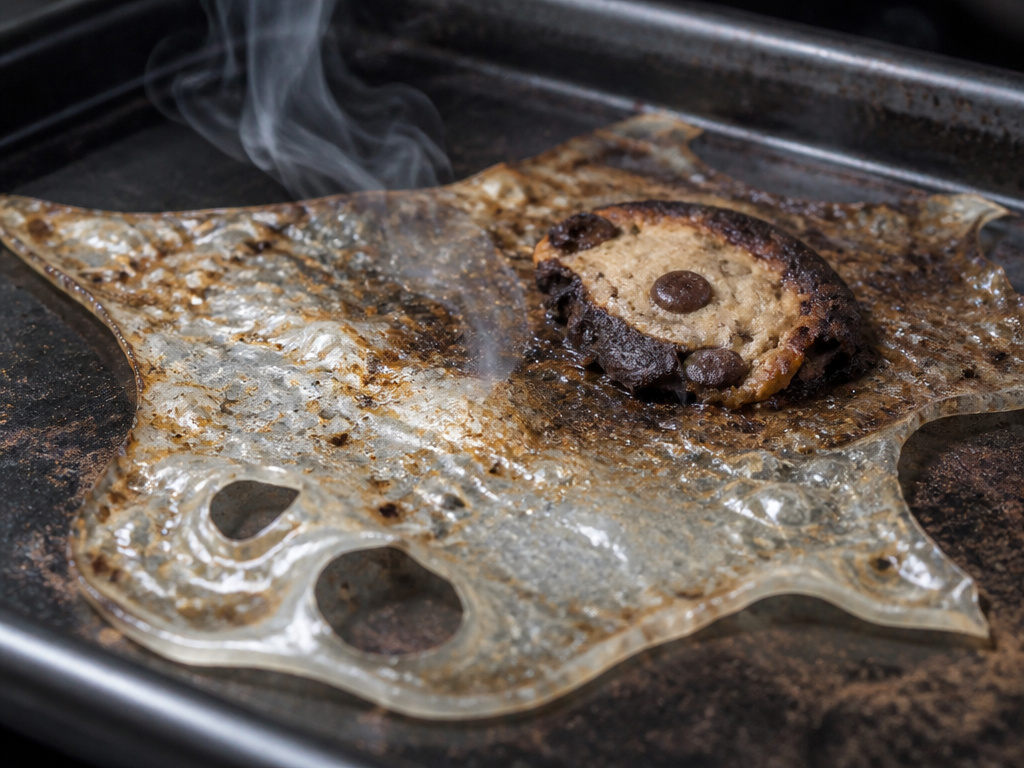 The material has hard limits. Cross them and you risk food safety or chemical exposure.
- Do not use it in the oven or microwave. The polyethylene coating melts at high temperatures. In an oven, it can smoke, burn, and transfer melted plastic to your food. In a microwave, it can warp and potentially release compounds into your food.
- Do not wrap hot foods directly. Let soups, stews, or cooked meats cool to room temperature first. The sudden temperature differential can stress the plastic layer and cause premature failure.
- Do not let the paper side contact acidic foods. Tomatoes, citrus, vinegar-based marinades. The acid can break down paper fibers over prolonged contact, speeding up barrier failure. For these, use a glass container or a freezer bag as a primary barrier, then overwrap with freezer paper for labeling if needed.
- Do not use it for non-freezing storage. At room temperature, the barrier does nothing special. It’s not a substitute for wax paper or airtight containers in the pantry.
Where this goes sideways: Using freezer paper to line a baking sheet for cookies. The coating melts onto the pan and smokes at 350°F. You’ll smell it before you see the ruined batch.
These bans come from the material’s physical design. It’s a cold-storage specialist.
Labels, Tape, and Freezer Management
Your organizational tools must be as cold-hardy as the paper. Standard office supplies fail.
Freezer tape is a specific product. Its adhesive is rubber-based or acrylic-based and designed for plastic, paper, and foil surfaces at temperatures down to -40°F. Regular tape uses water-based adhesives that crystallize and lose grip below freezing.
Freezer markers are oil-based or pigment-based inks that won’t smear from condensation. A water-based pen will blur the first time the package sweats during thawing.
For labeling thermal paper in deep freezers, you need top-coated thermal label paper. Standard thermal paper turns black and smudges from freezer humidity. The UC ANR food freezing PDF notes that proper labeling is part of the packaging specification for safe long-term storage.
Freezer loading has a speed limit. The NDSU food freezing basics guide states you should add only 2-3 pounds of unfrozen food per cubic foot of freezer space per 24-hour period. Overloading raises the temperature, causing slow freezing and large, damaging ice crystals.
Set your freezer to -10°F (-23°C) about a day before you add a large batch. This gives you a thermal buffer so the new load freezes rapidly. Rapid freezing creates tiny ice crystals, which do less damage to cell walls and preserve texture.
Freezer Paper vs. Other Wraps
Freezer paper has a niche. Knowing when to use it and when to reach for something else prevents waste and confusion.
| Wrap Type | Primary Barrier | Best Use Case | Fails At |
|---|---|---|---|
| Freezer Paper | Polyethylene coating | Long-term freezer storage of solid, low-acid foods (meats, poultry, baked goods). | Heat, moisture on paper side, acidic foods. |
| Freezer Bags | Polyethylene plastic | Liquids, soups, berries, irregular shapes. Excellent for freezer bag storage. | Can puncture, less structured for stacking. |
| Vacuum Sealer Bags | Multi-layer plastic, no air | Maximum long-term protection, especially for vacuum sealing food. | Requires equipment, not reusable for liquids. |
| Aluminum Foil | Metal | Short-term freezer (1-2 months), overwrap for extra barrier. | Can tear, not airtight at folds over time. |
| Parchment Paper | Silicone coating | Baking, not freezing. Provides a non-stick surface. | Zero moisture barrier for freezer use. |
Freezer paper wins on structure and label-ability for primal cuts and roasts. A vacuum sealer is superior for absolute air removal. Use them as a team: vacuum-seal first for protection, then wrap in labeled freezer paper for organization and to guard against punctures.
Troubleshooting: Why Your Freezer Paper Failed
If your food shows freezer burn despite using freezer paper, one of these four things happened.
- The paper side touched the food. Look for a spot where the package is discolored or the paper feels stiff. Moisture transfer broke the barrier.
- The seal wasn’t airtight. You used regular tape, or the folds were loose. Frost forms in the air pocket inside.
- The freezer temperature fluctuated. A frost-free freezer’s defrost cycle can spike the temperature a few degrees. This causes ice crystals to grow and shrink, pulling moisture from the food surface. Premium freezer paper grades resist this better.
- You stored it too long. You used a 3-6 month paper for a 12-month storage. Check the best freezer paper grades to match your intended timeline.
The fix is always the same: trim away the freezer-burned portion (it’s safe but tough and flavorless), re-wrap correctly, and use it soon.
Before You Go
Freezer paper is a tool, not a magic sheet. Its job is to buy you time in the deep cold. Use the plastic side as the shield, the paper side as the chalkboard. Seal it with the right tape, freeze it fast, and match the paper’s grade to your calendar.
For a deep cut you won’t touch for a year, pair a vacuum sealer with a Super Loxol™ overwrap. For tomorrow’s leftovers, basic kraft is fine. The difference is in the barrier, and the barrier only works if you point it in the right direction.
Frequently Asked Questions
Can you put freezer paper in the microwave?
No. The plastic coating can melt, warp, or release compounds when microwaved. Always transfer food to a microwave-safe dish first.
Is freezer paper the same as parchment paper?
No. They are different products for different jobs. Parchment paper has a silicone coating for non-stick baking and provides no meaningful moisture barrier for freezing.
How long does food last in freezer paper?
It depends on the paper grade. Basic paper: 3-6 months at 0°F. Premium papers like Freshgard™ protect for 6-9 months, and Super Loxol™ for 12-15 months. These timelines assume perfect wrapping and stable temperature.
What’s the difference between freezer paper and wax paper?
The coating. Wax paper is coated with paraffin wax, which can melt and transfer flavor in the freezer. Freezer paper’s polyethylene coating is a more stable, FDA-approved barrier for direct food contact in freezing temperatures.
Can freezer paper prevent freezer burn?
Yes, when used correctly. It is specifically designed to prevent freezer burn by blocking air and moisture transfer. The key is the airtight seal with the plastic side facing the food. For more techniques, see our guide on preventing freezer burn.
