Can You Put Jelly in the Freezer? | The Texture Trade-Off
This post contains affiliate links. As an Amazon Associate, we earn from qualifying purchases.
You can freeze jelly. It will stay safe to eat for 6 to 12 months, but the texture will change, it often becomes softer, more watery, or grainy upon thawing. The high water content forms ice crystals that break the gel structure. For the best results, use an airtight container, leave 1/2 inch of headspace, and plan to use it within six months.
The texture change is the whole story. It’s not about safety; frozen jelly won’t make you sick. It’s about whether you’re okay with a spread that might weep liquid or lose its firm set. That’s the trade-off every home preserver faces when the strawberry season yields more jam than the pantry can hold.
What follows: the step-by-step method that minimizes texture damage, the exact shelf life numbers from extension services, the one common mistake that ruins the batch, and what to do with jelly that’s already separated.
Key Takeaways
- Freezing extends jelly’s shelf life to 6–12 months, but thawed texture is often softer and may separate.
- Always leave 1/2 inch of headspace in the container to prevent breakage from expansion.
- Thaw frozen jelly slowly in the refrigerator overnight; rapid thawing worsens texture breakdown.
- Do not refreeze jelly after it has thawed; this multiplies ice crystal damage.
- For long-term storage without texture loss, proper canning in a water bath is the superior method.
The Science of Freezing Jelly: Why Texture Fails
Jelly is a gel, a network of pectin strands that traps water and sugar. Freezing attacks that network twice. First, the water expands as it turns to ice, physically pushing the pectin strands apart. Second, large ice crystals puncture the gel’s structure. When the jelly thaws, the water doesn’t fully re-enter the broken network. It pools.
This separation isn’t a sign of spoilage. It’s simple physics. The water has escaped the gel matrix.
That’s why a food scientist quoted in our research states freezing is “never a good idea” for jelly, while a university extension food science publication provides specific instructions for doing it. The scientist prioritizes perfect texture; the extension service prioritizes safe preservation when canning isn’t an option. Your goal decides which advice you follow.
The Freezing Process, Step-by-Step
 This method minimizes ice crystal size and container risk. The goal is a slow, even freeze.
- Cool Completely. Let your jelly cool to room temperature before packing. Pouring warm jelly into a cold container creates condensation, which adds extra water and leads to larger ice crystals.
- Choose the Right Container. Use rigid, airtight containers. Plastic freezer-safe containers designed for freezing are best. You can use freezer-safe glass, but ensure it’s tempered and leave ample headspace.
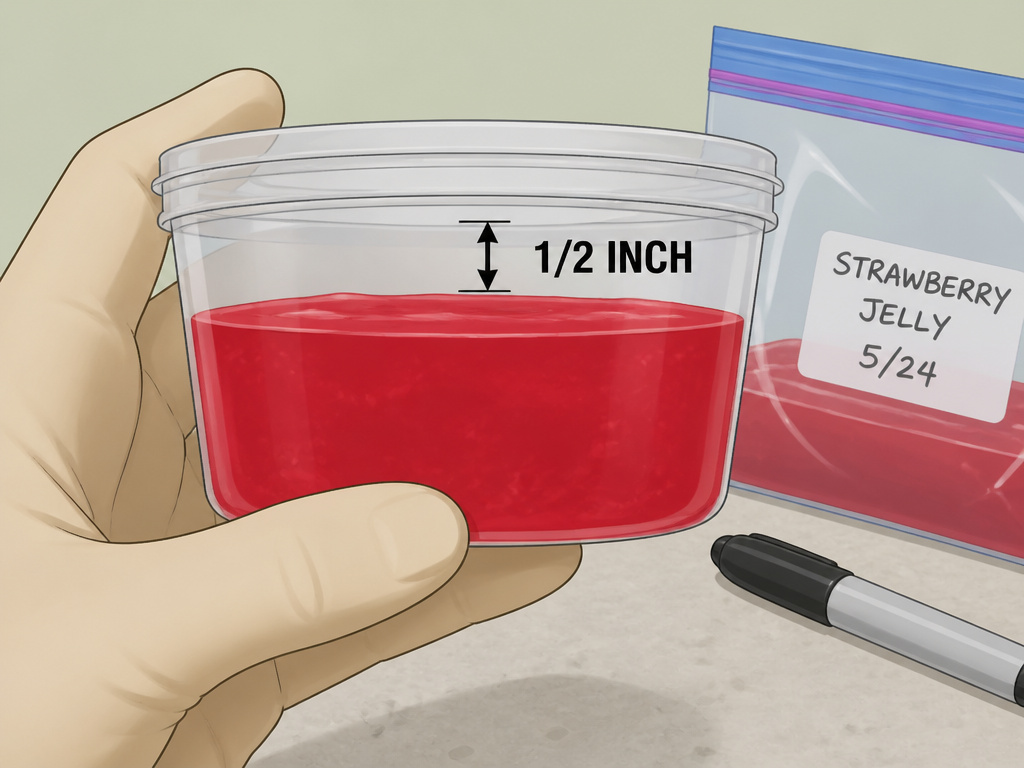
- Pack with Headspace. Fill your container, leaving 1/2 inch of space at the top. This critical gap allows for expansion as the jelly freezes. Overfilling a glass jar guarantees it will crack.
- Seal and Label. Press out any excess air from freezer bags or ensure container lids are tight. Label with the contents and date. Your memory will fail you in six months.
- Freeze Flat and Fast. Place containers in the coldest part of your freezer, spaced apart so cold air can circulate. A faster initial freeze creates smaller ice crystals, which does less damage to the gel.
Skipping the headspace step is the most common error. That extra half-inch of air is your insurance policy against a freezer full of broken glass and sticky syrup.
How Long Does Frozen Jelly Last?
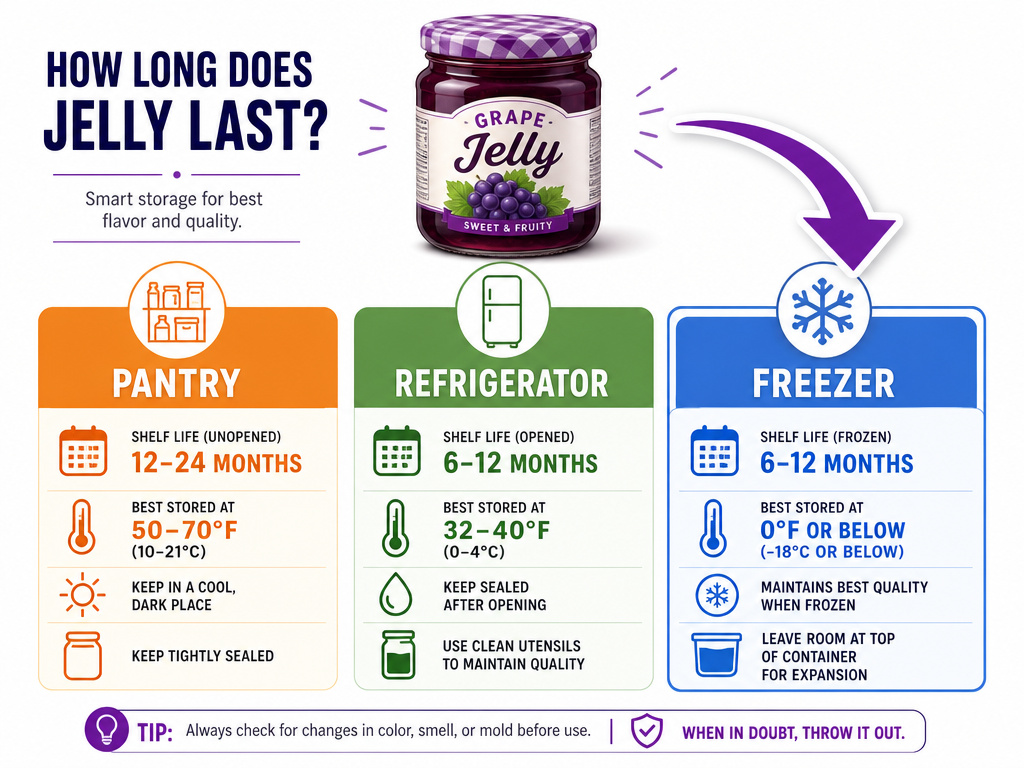 Follow these timelines. The “use-by” date is about quality, not safety.
| Storage Method | Unopened | Opened | Key Quality Marker |
|---|---|---|---|
| Pantry (Cool & Dark) | Up to 12 months | Not recommended | Sugar acts as preservative; may ferment |
| Refrigerator | N/A | About 6 months (USDA) | Watch for mold, off-odors, separation |
| Freezer | 6–12 months | 6–12 months | Texture softens; flavor fades after a year |
Frozen jelly remains safe indefinitely, but its quality declines. The NDSU Extension guide notes frozen uncooked jellies keep for up to six months. Most other sources, like the UCANR jams and jellies guide, agree that flavor and texture are best within a year. After that, it’s edible but unremarkable.
The one-week rule for opened, unrefrigerated jars is non-negotiable. Once the seal is broken, yeasts and mold spores in the air have access. At room temperature, they can ferment the sugars or grow visible mold in days.
Thawing and Using Previously Frozen Jelly
 You cannot rush this. Thaw the sealed container in the refrigerator for 12 to 24 hours. If you’re in a pinch, place the jar in a bowl of cool water, changing the water every 30 minutes. Never use hot water or the microwave, the outside will become soup while the core is still solid ice.
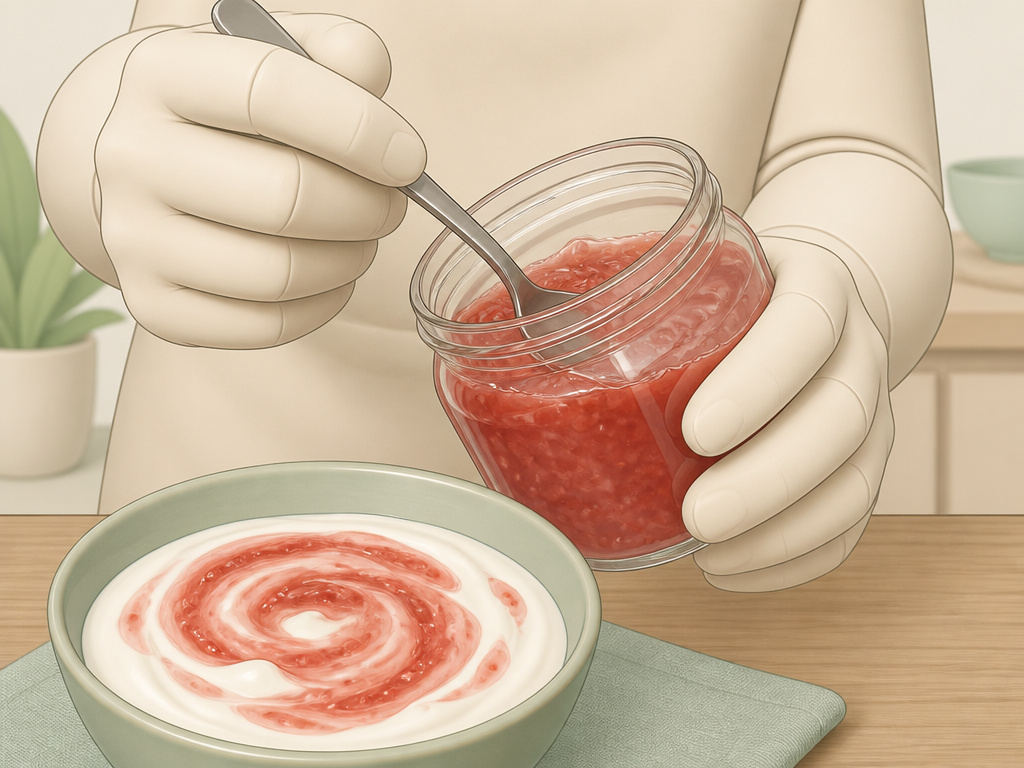
When it thaws, you’ll likely see a separated, weepy texture. You can stir it back together. The jelly won’t re-set to its original firmness, but it will be cohesive. Use it anywhere texture isn’t paramount: stirred into yogurt, as a pancake syrup, swirled into oatmeal, or as a glaze for meats.
Where this goes sideways: Refreezing thawed jelly. The second freeze-thaw cycle creates even larger ice crystals. You’ll get a fully broken, syrupy mess.
If the thawed jelly has an off odor, alcoholic smell, or visible mold, discard it. Fermentation produces alcohol and carbon dioxide, a sign it was stored too warm or for too long before freezing.
Freezing vs. Canning: Which Preservation Method Wins?
For jelly, canning is the superior long-term method. A properly processed jar maintains texture and flavor in the pantry for a year. Freezing is a useful plan B for batches that didn’t set correctly, for recipes you’re unsure about, or when you lack canning equipment.
| Aspect | Freezing | Water-Bath Canning |
|---|---|---|
| Texture | Often compromised; soft, watery, may separate | Preserved perfectly |
| Flavor | May fade after 6–12 months | Stable for 12+ months |
| Shelf Life | 6–12 months (quality) | 12+ months (pantry stable) |
| Equipment | Freezer containers, bags | Canning jars, large pot, jar lifter |
| Best For | Short-term storage, failed gels, experimental batches | Long-term storage, gifts, pantry stock |
The K-State jams and jellies FAQ clarifies a related point: if your jam or jelly didn’t set and is syrupy, that’s a pectin or cooking issue, not a storage one. Freezing that syrup won’t turn it into jelly.
Troubleshooting Common Jelly Issues
Some problems start before the jelly even hits the freezer.
Grainy Texture in Grape Jelly: This is often tartrate crystals, not a freezing flaw. Tartaric acid in grapes forms crystals as the juice cools. To prevent it, let extracted grape juice settle in the fridge for 2–5 days, then decant the clear liquid off the top for making jelly.
Weak Gel or Syrup: If your jelly never set, freezing won’t fix it. This batch is best used as a dessert topping or syrup. Next time, ensure you’re using fresh pectin, the correct fruit-to-pectin ratio, and cooking to the exact temperature specified.
Freezer Burn: This appears as dry, leathery patches or ice crystals on the surface. It’s caused by air exposure. Prevent it by using a proper seal and preventing freezer burn with techniques like pressing air out of bags. If only the surface is affected, you can scrape it off and use the rest.
Bubbles or Separation in Thawed Jelly: This is the expected texture change. Stir vigorously to recombine. If bubbles are moving in a stored, thawed jar, it indicates fermentation, toss it.
Frequently Asked Questions
Does freezing kill bacteria in jelly?
No. Freezing puts bacteria and molds into a dormant state; it does not kill them. Once thawed, any existing microbes can become active again. Always start with a clean, freshly made product for freezing.
Can you freeze jelly in the original glass jar?
You can, but it’s risky. The jar must be designed for freezing (check the bottom for a freezer-safe symbol). Leave a full 1/2 inch of headspace. For wider-mouth plastic containers made for freezing soup are a safer, more reliable choice.
How do you fix separated, watery jelly after thawing?
Stir it thoroughly. If it’s too runny for your liking, repurpose it. Simmer it gently to reduce and thicken it into a syrup, or use it as a liquid sweetener in baking and marinades.
Is it better to freeze jelly or jam?
Both react similarly due to their high water content. Jam, with its fruit pieces, may hide texture breakdown slightly better than a clear jelly, but the same softening and separation principles apply.
What’s the difference between freezer jam and frozen regular jam?
Freezer jam is a specific no-cook recipe made with special pectin and meant to be stored frozen from the start. It’s designed to retain a fresh fruit flavor and typically has a softer set. Freezing a traditionally cooked jam is an adaptation of a recipe meant for the pantry.
The Bottom Line
Freezing jelly works as a short-term salvage operation. It keeps your homemade spread safe for up to a year, but you sacrifice the perfect gel texture. For a handful of jars you’ll use within six months, it’s a practical solution. For putting up the entire summer harvest, investing in a water-bath canner is the only way to preserve both the safety and the satisfying spreadability you worked for. When in doubt, remember the trade: freezer for convenience, the pantry for perfection.
