How to Keep Chicken Nuggets Crispy in a Thermos for Hours
This post contains affiliate links. As an Amazon Associate, we earn from qualifying purchases.
To keep chicken nuggets crispy in a thermos, you need to manage two enemies: temperature drop and steam condensation. Preheat your stainless-steel thermos with boiling water for five minutes, dry it, add a paper towel, then pack nuggets cooked to at least 74°C (165°F). This method can keep them above the 60°C (140°F) safety threshold for about 3 hours, not the 5-7 hours many claim.
That 60°C line is the whole game. It’s the minimum temperature that stops bacteria from multiplying in what food safety experts call the danger zone. A thermos doesn’t reheat food; it only slows heat loss. If your nuggets start below 74°C or go into a cold container, they’ll slide into the danger zone fast.
What follows is the procedure pulled from peer-reviewed studies, not social media hype. We’ll cover the exact preheating steps, why your thermos’s material decides everything, and the real timeline you can expect before crispiness and safety both fail.
Key Takeaways
- No thermos keeps food above 60°C for 5 hours. A 2013 study found the best preheated containers held that temperature for a maximum of 2.9 hours.
- Preheat for five minutes with boiling water. This warms the container walls so they don’t steal heat from your food the moment you pack it.
- Use stainless steel, not plastic-lined. Stainless steel with vacuum insulation outperforms plastic by hours for heat retention.
- The paper towel absorbs condensate, not steam. It sits at the bottom to catch drips, keeping the breading from getting soggy from pooled moisture.
- Insulated delivery bags fail for hot nuggets. One study showed chicken nuggets dropped to 44.5°C in a Winco bag within an hour.
The Science of Temperature and Safety
Headline claims about a thermos keeping food “hot for 5-7 hours” use a slippery definition of “hot.” For food safety, hot has a number: 60°C (140°F). Below that, you’re in the danger zone where bacteria grow fastest.
Food should be kept above 60°C (140°F) to be considered safe. The “danger zone” for bacterial growth is between 4°C and 60°C. Food should not be in this zone for more than two hours.
This is why the timeline in your head needs to reset. A 2013 study from the BCIT Environmental Health Journal tested popular kids’ containers like the Thermos Foogo and the FUNtainer. None kept food above 60°C for more than 3 hours, preheated or not. The best performer managed 2.9 hours. Containers claiming a five-hour hot hold “have failed to perform” against the food safety standard.
The problem is heat transfer. Your hot nuggets want to equalize with the temperature of their environment. A room-temperature thermos wall is a heat sink. Preheating the thermos is not a life hack; it’s basic physics.
The Preheating Protocol That Actually Works
Preheating is the single step that decides whether your thermos works as advertised or becomes an expensive, insulated coffin for lukewarm food. The goal is to minimize the temperature gradient between your food and the container.
Here is the sequence, timed. Skip a step, and you lose the battle before it starts.
- Boil water. While your nuggets are cooking or reheating, put a kettle on. You need actively boiling water, not water from the hot tap.
- Fill the thermos to one inch below the rim. Pour the boiling water in, screw the lid on tightly, and set a timer for five minutes. This is the duration used in the study that produced the 2.9-hour hold.
- Empty and dry thoroughly. When the timer goes off, dump the water. Dry the inside completely with a clean towel or paper towels. A wet interior creates steam, which is the enemy of crispiness.
- Line with a dry paper towel. Place a single paper towel at the bottom of the dry thermos. This will catch any condensate that forms, preventing it from pooling under the nuggets.
- Pack immediately. Transfer your piping hot nuggets straight from the oven or air fryer into the preheated, dry thermos. Seal the lid at once.
What happens if you use hot tap water instead of boiling? The starting temperature is too low. Your thermos walls might only reach 50°C, so your 74°C nuggets immediately start losing heat to them. You might drop below 60°C in under an hour.
Choosing the Right Thermos: Materials and Myths
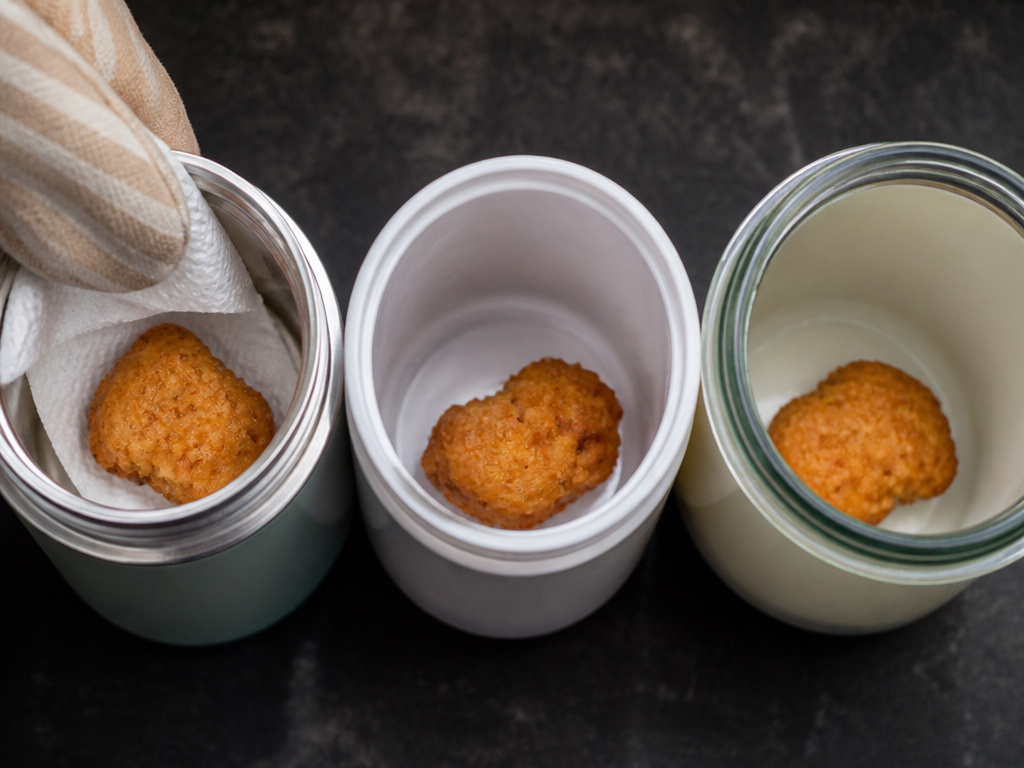
Not all thermoses are created equal for this task. The material lining the interior is the biggest factor in performance after preheating.
| Thermos Type | Best For | Heat Retention Reality |
|---|---|---|
| Stainless Steel, Vacuum-Insulated | Hot foods, long-term temperature hold | Can maintain food above 60°C for 2.5–3 hours when preheated correctly. |
| Plastic-Lined | Short-term use, cold foods | Loses heat faster than stainless steel. Not recommended for keeping foods safely hot. |
| Glass-Lined | Hot foods, no metallic taste | Performs similarly to stainless steel but is more fragile. |
The K-State food safety guide explicitly recommends a “stainless-steel or glass-lined thermos bottle rather than a plastic-lined one for hotter and safer food at lunchtime.” Plastic is a better thermal conductor than steel or glass, so heat escapes through it more readily.
When shopping for a best thermos for food, look for a wide-mouth design. A wide mouth thermos makes it easier to insert food without touching the hot sides and to place that critical paper towel liner. Narrow openings are for drinks.
Why the Paper Towel Hack Works (And When It Doesn’t)
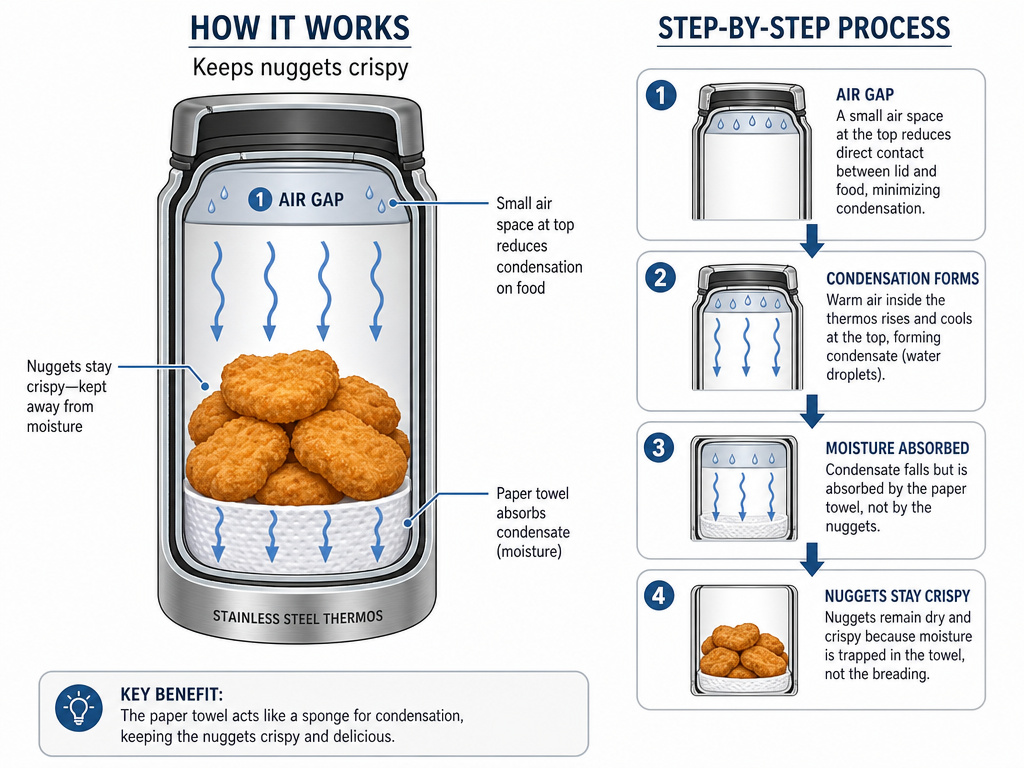
The viral trick of putting a paper towel in with your nuggets addresses a specific problem: condensate. As the hot nuggets and the hot air inside the thermos cool slightly, moisture releases and settles. Without the towel, that moisture soaks into the breading from the bottom up.
Common mistake: Stuffing the thermos completely full. Leave a small air gap at the top. Air is an insulator; overpacking pushes hot air out and reduces the thermos’s efficiency.
The paper towel sits at the bottom as a sponge. It doesn’t prevent steaming; it manages the aftermath. For this to work, the towel must be dry when it goes in. A damp towel from wiping out the thermos will transfer moisture directly to the food.
Some social media users report the hack failed for them. The usual culprits are a low-quality thermos, no preheating, or nuggets that weren’t hot enough to begin with. The towel can’t save you from a core temperature problem.
What Not to Use: The Insulated Bag Trap
You might think an insulated lunch bag or a delivery driver’s thermal pouch is a good alternative. The research says otherwise.
A separate study tested chicken nuggets in a Winco insulated delivery bag. The nuggets were cooked to 74°C, then placed inside. After one hour, the median temperature had plummeted to 44.5°C—deep in the danger zone. These bags are designed for very short-term transit, not for holding a safe temperature for a school or work day.
For true all-day safety, pair your thermos with an insulated lunch box. The secondary layer of insulation helps, but the thermos is the primary workhorse. Never rely on a soft bag alone for hot food.
The Realistic Timeline and Safety Check
Let’s set expectations with data. Based on the studies, here is what a proper procedure yields:
| Time Since Packing | Expected Nugget Temperature | Safety Status | Crispiness Status |
|---|---|---|---|
| 0–1 hour | Above 70°C | Safe | Optimal, crispy |
| 1–3 hours | 60°C – 70°C | Safe (if above 60°C) | Acceptable, may soften at edges |
| 3+ hours | Below 60°C | Entering danger zone | Soggy, steam-saturated |
| 5+ hours | Near room temperature | Unsafe (discard) | Very soggy, inedible texture |
If you are packing lunch for a child or someone with a vulnerable immune system, the conservative rule is the 4-hour consumption window. Even if the thermos feels warm, the internal temperature could be borderline.
Before you eat, do a sensory check. Open the thermos. The nuggets should steam slightly and be too hot to touch comfortably. If they are merely warm or, worse, room temperature, do not eat them. When in doubt, throw it out.
Understanding how a thermos works explains this limit. The vacuum insulation slows heat loss, but it cannot stop it entirely. Heat gradually transfers through the sealed lid and the container walls.
Frequently Asked Questions
Can I reheat chicken nuggets directly in the thermos?
No. A thermos is not a cooking or reheating appliance. You should never microwave a thermos, especially a stainless-steel one, as it can damage the vacuum seal and create a fire hazard. Always heat nuggets in an oven, air fryer, or skillet to at least 74°C before transferring them to a preheated thermos.
How do I clean a thermos after putting greasy nuggets in it?
Grease can cling to the walls. After use, fill the thermos with hot, soapy water and let it soak. Use a long bottle brush to scrub the interior. For stubborn grease or odors, a soak with a baking soda paste works well. Regular cleaning prevents residue from affecting future temperature retention. Here’s our full guide on how to clean a thermos properly.
My nuggets are still soggy. What did I do wrong?
The most likely failure points are insufficient preheating or overpacking. If you didn’t use boiling water for a full five minutes, the thermos stole the nuggets’ heat. If you stuffed it so full that the nuggets were pressed against the lid, condensate had nowhere to go but into the breading. Ensure you’re using a thermos for hot food correctly, with the paper towel and an air gap.
Are all thermoses microwave safe?
Almost never. Most high-performance thermoses with stainless steel or vacuum insulation are absolutely not microwave safe. Microwaving metal is dangerous, and it can destroy the insulation. Always check the manufacturer’s label. If you’re unsure, assume it’s not safe. We have a dedicated article answering are thermos microwave safe in detail.
What’s the best thermos brand for keeping nuggets crispy?
Brands like Thermos (for their Foogo or stainless steel lines), Zojirushi, and Stanley are consistently reliable because of their quality vacuum insulation. The specific model matters less than the specs: look for a stainless-steel interior, a wide mouth, and a tight-sealing lid. For a school-friendly size, a thermos for lunch like the Thermos FUNtainer is a common, tested choice.
The Bottom Line
Keeping chicken nuggets crispy in a thermos is a race against physics, not a mystery. Success requires a strict ritual: preheat with boiling water, use a stainless-steel thermos, employ a paper towel, and start with blazing-hot nuggets.
Trust the 3-hour window, not the 5-hour marketing. That timeline comes from lab tests, not lunchbox dreams. For the best shot, invest in a high-quality insulated thermos and follow the steps without shortcuts. Your reward is a warm, safe, and satisfyingly crispy lunch.
