Learn How to Thaw Bread from Freezer Without Drying It Out
This post contains affiliate links. As an Amazon Associate, we earn from qualifying purchases.
To thaw bread from the freezer, heat it. Letting it sit on the counter pulls moisture into the starch crystals and makes it stale. For a whole loaf, bake at 325°F for 20–30 minutes. For slices, microwave on high for 15–25 seconds or toast directly from frozen, adding a minute. The heat re-gelatinizes the starches, restoring a soft, fresh texture.
That re-gelatinization is the whole game. Staling isn’t about drying out; it’s about starch molecules recrystallizing as they cool. Room-temperature thawing gives those crystals hours to form. Heat breaks them down fast.
What follows: the exact times and temps for oven, microwave, and toaster, the safety line on the “danger zone,” and why even experts disagree on the counter method. You’ll also get the trick for reviving bread that’s already gone a bit stale.
Key Takeaways
- Heating thaws bread faster and prevents staling by breaking down starch crystals. Counter thawing promotes them.
- A whole loaf needs 20–30 minutes in a 325°F oven. Individual slices take 15–25 seconds in the microwave.
- You can toast bread straight from the freezer; just add 60–90 seconds to the normal cycle.
- Food safety agencies warn against thawing perishables in the “danger zone” (40–140°F), but bread is a low-risk exception if thawed within 2 hours.
- If your bread is a day stale, wet the crust and heat it at 400°F for 10 minutes to create reviving steam.
The Fastest Way: Oven & Microwave
Speed and texture quality point to one answer: apply heat. The Epicurious Test Kitchen protocol is the benchmark here. It delivers a thawed product that eats like fresh bread, not a defrosted compromise.
For a whole loaf or half-loaf, set your oven to 325°F. Place the frozen bread directly on the rack or on a rimmed baking sheet. You’re looking for 20 to 30 minutes total. The goal is a soft, fully thawed center and a crust that’s regained its crackle. Don’t wrap it in foil—that traps moisture and turns the crust soggy.
The Epi Test Kitchen’s whole-loaf method runs 325°F for 20 to 30 minutes. That’s the sweet spot between thawed and dried out.
For slices, the microwave is your fastest tool. Use high power for 15 to 25 seconds. Watch it closely. Five seconds too long and the bread turns tough and chewy as the moisture flashes to steam and escapes. If you’re thawing a single slice or a roll, wrapping it in a damp paper towel first can help distribute the heat more evenly and prevent hard edges.
| Method | Best For | Time & Temp | Risk If Rushed |
|---|---|---|---|
| Oven | Whole loaves, half-loaves | 325°F, 20–30 min | Dry, tough crust; still-frozen center |
| Microwave | Individual slices | High power, 15–25 sec | Tough, rubbery texture |
| Toaster (from frozen) | Slices, bagels, rolls | Normal cycle + 60–90 sec | Uneven toasting; cold spots |
| Toaster Oven | Slices, small rolls | 325°F, 5–8 min | Same as conventional oven, smaller scale |
The toaster is a brilliant shortcut. You can place frozen bread directly in the slot. It will take about double the time—add a minute to a minute and a half to your normal setting. The direct radiant heat thaws and toasts in one pass, and the resulting slice is often superior to a microwaved one.
TL;DR: Oven for loaves, microwave for slices in under 30 seconds, toaster for a 2-in-1 thaw-and-crisp.
The Science of Starch & Steam
Bread stales because of starch retrogradation, not simple moisture loss. When bread cools after baking, the gelatinized starch molecules start to realign into tight, ordered crystals. This process pulls water from the gluten network into the crystals, making the crumb firm and dry-feeling.
Freezing pauses this process. Thawing resumes it. The rate of crystal formation is temperature-dependent—it happens fastest just below freezing and slows as you go warmer. This is the counterintuitive bit: a slow, cold thaw on the counter gives starch crystals more time to form than a fast, hot thaw in the oven.
Heating bread reverses the process. At around 140°F, those starch crystals melt, releasing the trapped water back into the gluten network. This “re-gelatinization” is why a properly reheated loaf can taste springy and fresh, almost like it was just baked.
The steam-revival trick for stale bread works on the same principle. Wetting the crust and heating it creates a burst of steam inside the loaf. That moisture and heat work together to dissolve the starch crystals again. It’s a rescue operation, not a perfect restoration, but it can salvage bread that’s a day or two old.
The Safety Debate: Can You Thaw Bread on the Counter?
Official food safety guidance is unequivocal for meat, poultry, and dairy: never thaw in the “danger zone” between 40°F and 140°F, where bacteria multiply rapidly. The USDA defrosting safety guide and the Wisconsin thawing fact sheet are built around this rule.
Bread exists in a gray area. It’s a low-moisture, high-acidity (especially sourdough) food that isn’t a hospitable breeding ground for pathogens like raw chicken is.
Where this goes sideways: Assuming all “frozen food” has the same risk profile. A frozen lasagna with meat sauce left out for four hours is a hazard. A frozen baguette left out for three is not.
Here’s where the experts split: * King Arthur Baking’s Baker’s Hotline calls room-temperature thawing the “best” and “simplest” method: 30 minutes for slices, an hour for rolls, three hours for a whole loaf. * Epicurious and Cook’s Illustrated advise against it, stating it promotes staling. They universally recommend heating. * Bon Appétit lands in the middle: counter thawing is acceptable for “less perishable items” like bread, but if it will take more than 2 hours, move it to the fridge.
The practical takeaway? If your kitchen is cool and you’ll use the bread within a couple of hours, counter thawing is safe but texturally inferior. For the best eating quality, heat it.
The Slow & Steady Plan: Refrigerator Thawing
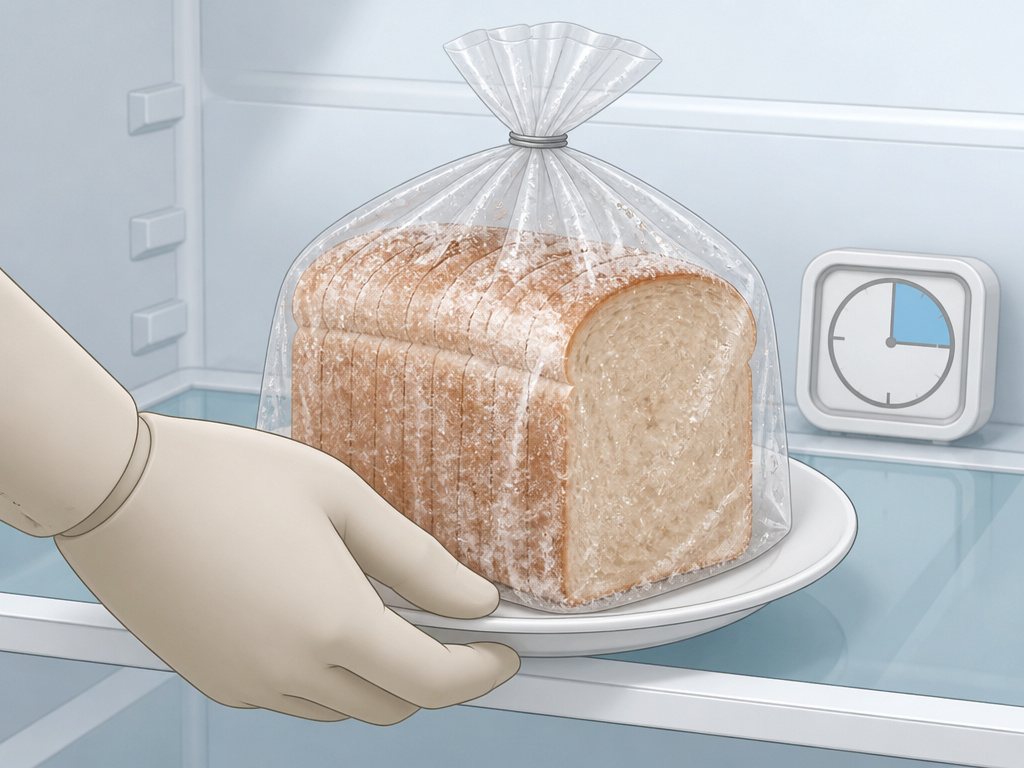 Sometimes you know you’ll want bread tomorrow. The refrigerator method is for planned-ahead perfection. It keeps the bread well below the danger zone, thaws it gently, and, if done right, minimizes texture loss.
Place your frozen loaf or slices in their storage bags directly in the fridge. Put it on a plate to catch any condensation. A standard loaf takes about 3 to 4 hours to thaw completely. A denser sourdough bread or a partial loaf might need 5 or 6.
The downside is the crust. Refrigerator air is dry, and it can wick moisture from the bread’s surface, leaving the crust a bit leathery. This is why fridge-thawed bread almost always benefits from a quick refresh in the toaster or a warm oven for just a few minutes before serving.
This method shines for storing cut bread. You can thaw just the number of slices you need, leaving the rest frozen, which is a smarter approach than thawing and refreezing a whole loaf.
What Not to Do: Common Thawing Mistakes
 A few missteps can turn frozen gold into a disappointing brick.
Don’t thaw and refreeze. Each freeze-thaw cycle damages the cell structure of the bread a little more. Ice crystals form, melt, and reform larger, piercing the gluten network. The result is a crumbly, dry loaf by the second thaw. Portion your bread before freezing bread.
Don’t microwave a whole loaf. The waves penetrate unevenly. You’ll get a hot, tough shell around a still-frozen, dense core. It’s a texture disaster.
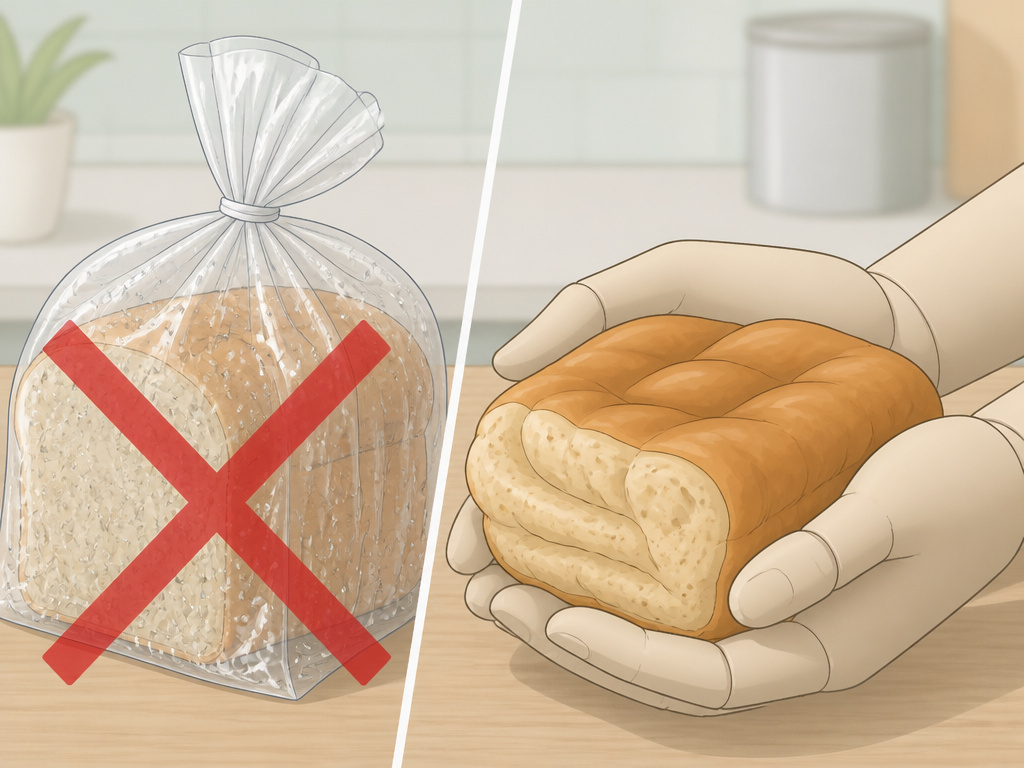
Don’t thaw in a sealed plastic bag on the counter. Condensation will form inside the bag and soak into the bread, making the crust gummy. If you must thaw on the counter, take the bread out of its bag.
Don’t assume all breads thaw the same. A delicate brioche or a crusty artisan loaf has different needs than sandwich bread. * Brioche & Enriched Doughs: High fat and sugar content makes them prone to greasiness when microwaved. Use a low oven (300°F) for 10-15 minutes. * Very Crusty Loaves (e.g., Ciabatta): Spritz the crust lightly with water before oven-thawing to prevent it from becoming tooth-breakingly hard.
Advanced Methods & Edge Cases
Beyond the basics, a couple of niche techniques solve specific problems.
The Steam Refresh: For bread that’s been thawed but still feels a bit firm or stale. Place the loaf on a baking sheet, put a separate oven-safe dish of boiling water on the rack below it, and heat at 350°F for 5-10 minutes. The steam environment rehydrates the crust beautifully.
The “Cook From Frozen” Approach for Dough: This isn’t for baked bread, but for frozen dough balls or rolls. The thawing methods research study on frozen dough found that some methods, like ultrasound, better preserved quality. For home bakers, the best practice is to move the dough to the fridge the night before, then let it come to room temperature and complete its rise before baking. Rushing this with a warm thaw destroys the yeast’s activity.
Dealing with Pre-Sliced Bread: The best storage methods for freezing involve separating slices with parchment paper. This lets you remove just one or two. Thaw these directly in the toaster—it’s the most efficient path from freezer to plate.
Frequently Asked Questions
Can you toast frozen bread?
Yes, and it’s one of the best methods. Place the frozen slice directly in the toaster. It will take roughly twice as long as fresh bread. Start with your normal setting plus 60 seconds, and check it. The result is a perfectly toasted slice with no intermediate soggy thaw phase.
How long does thawed bread last?
Once fully thawed, treat it like fresh bread. It will stay at peak quality for about 24 hours at room temperature in a proper bread container. After that, staling accelerates. You cannot refreeze it without significant quality loss.
Why does my thawed bread taste weird?
Two likely culprits. First, freezer burn. If the bread wasn’t sealed tightly in an airtight freezer storage bag, it can dehydrate and pick up off-flavors from the freezer. Second, the bread may have been near the end of its fresh life before freezing. Freezing pauses decay; it doesn’t reverse it.
Is it safe to thaw bread overnight on the counter?
From a pure food safety standpoint for bread, probably. From a quality standpoint, no. An 8-hour room-temperature thaw is a guarantee of advanced staling. You’ll have safe, but disappointing, bread. The fridge is the better overnight choice.
What’s the best way to thaw a baguette?
Baguette’s thin shape and large crust-to-crumb ratio make it tricky. The oven method is non-negotiable. Heat at 325°F for 10-15 minutes. For extra crackle, run the thawed baguette under the broiler for 30-60 seconds at the very end, watching it constantly.
Before You Go
Your move depends on time and tools. Need a loaf for dinner tonight? Heat it at 325°F. Just want a slice for toast? Put it in frozen. Planning for tomorrow’s lunch? Thaw a couple of slices in the fridge.
The one method to drop is the passive room-temperature thaw for quality reasons. It gives you the worst version of your bread. Whether you choose the speed of a microwave, the even heat of an oven, or the direct crisp of a toaster, applying energy is the key to reversing the clock on frozen bread. That, and starting with a well-wrapped loaf in the first place.
