The Answer: Can You Put Bread in the Freezer? Tips & Rules
This post contains affiliate links. As an Amazon Associate, we earn from qualifying purchases.
You can put bread in the freezer. Freezing at 0°F (-18°C) or lower halts mold growth and staling, extending shelf life to 2-3 months for most baked loaves. The catch is wrapping: you need an airtight, moisture-proof barrier to prevent freezer burn and odor absorption. Refrigeration, by contrast, accelerates staling within days.
That 0°F threshold isn’t a suggestion. It’s the line where bacterial and fungal activity stops. Cross it, and you’re just cold-storing, not preserving.
What follows is the mechanics behind those numbers: why your fridge is the enemy of texture, how a plastic bag at room temperature guarantees mold by day 10, and the two appliance settings (SuperFreeze, Extra Freeze) that actually work for loading a freezer. We’ll walk through the wrap, the thaw, and the one type of bread dough that should never see the freezer.
Key Takeaways
- Freeze bread at 0°F (-18°C) or colder for 2-3 months. Refrigeration prevents mold but dries bread out 3-5 times faster than freezing.
- Double-wrap in plastic then foil or a freezer bag, pressing out all air. Single-layer plastic traps humidity and leads to ice crystals and freezer burn.
- Thaw at room temperature inside its wrapping. Refrigerator thawing reintroduces staling; microwave thawing creates tough, chewy spots.
- Unbaked yeast dough weakens after a month frozen. Use it or lose it.
- Activate your freezer’s SuperFreeze or Extra Freeze function 6-24 hours before adding a large batch of fresh bread to maintain the 0°F core temperature.
The Correct Freezer Temperature & Timeline
Your freezer’s job is to hit 0°F (-18°C) and hold it. This isn’t about making ice cubes fast; it’s about physics. At this temperature, water molecules inside the bread crystallize in a way that doesn’t rupture the starch structure, and microbial life pauses completely.
According to the K-State safe food storage guide, baked bread without preservatives maintains quality for 2-3 months at 0°F. Baked muffins can last 6-12 months. Unbaked yeast doughs should only be frozen for 1 month before the yeast weakens and the gluten network degrades.
The timeline starts the moment the bread’s core reaches 0°F. A half-full freezer on a standard setting might take 12 hours to freeze a loaf solid. A fully loaded freezer without a boost function will struggle, letting the bread’s interior linger in the “danger zone” above 0°F where ice crystals grow large and damage cell walls.
| Bread Type | Optimal Freezer Duration (at 0°F) | Critical Limit |
|---|---|---|
| Baked Loaf (no preservatives) | 2-3 months | Texture becomes dry; may absorb odors after 4 months. |
| Baked Muffins / Quick Breads | 6-12 months | Higher fat/sugar content preserves moisture longer. |
| Unbaked Yeast Dough | 1 month | Yeast viability drops; loaf may not rise properly. |
| Par-baked Rolls | 2 months | Re-baking can dry out crust if frozen too long. |
Check your freezer’s actual temperature with a standalone thermometer. The dial setting is an estimate. If it reads +5°F, you’ve cut your safe storage window in half. That’s the difference between pulling out a fresh-tasting slice in March and a frost-bitten brick.
Why Your Refrigerator Is the Worst Place for Bread
It seems logical. Cool air stops mold, right? It does, but at a catastrophic cost to texture. Refrigeration introduces staling.
Staling isn’t dryness. It’s retrogradation: starch molecules realign and recrystallize, squeezing out moisture and making the crumb firm and gritty. This process accelerates dramatically between 32°F and 40°F. A study cited in the MDPI bread spoilage research confirms that reducing storage temperature actually speeds up staling. Your fridge is the perfect engine for it.
Where this goes sideways: Storing bread in a plastic bag in the fridge. The high humidity (over 90%) prevents moisture loss but creates a swamp that mold spores adore once the bread warms. You get stale, and you’re on a clock.
Meanwhile, freezing at 0°F locks starch molecules in place before they can retrograde. The trade-off is clear: use the freezer for long-term storage of texture, and the countertop (in a proper bread box) for short-term freshness of 2-3 days. The refrigerator serves neither goal well.
How to Freeze Bread: A Step-by-Step Guard Against Waste
This process is about creating a microenvironment. You’re shielding the bread from air (which causes freezer burn), humidity shifts (which cause ice crystals), and foreign odors (which bread absorbs like a sponge).
Before you start: Ensure your freezer is at 0°F. If adding more than a loaf or two, activate the SuperFreeze function. For a Miele, that means 6 hours for over 2kg of fresh food, or 24 hours for a large batch.
- Cool completely. Freezing warm bread creates condensation inside the packaging. That ice becomes freezer burn. Wait until the loaf is truly room-temperature.
- Portion for your needs. Freeze the whole loaf for family use, or slice it and separate slices with parchment paper for single-serving grabs. This prevents you from thawing a giant loaf every time you want toast.
- Apply the first barrier. Wrap the bread or portion tightly in plastic wrap. Press out every air pocket. This layer provides a moisture-proof seal.
- Apply the second barrier. Wrap the plastic-wrapped bundle in heavy-duty aluminum foil, or place it inside a heavy-duty freezer bag. If using a bag, press out all air and seal it. This layer guards against punctures and odor migration.
- Label with content and date. Use masking tape and a permanent marker. “Sourdough, 3/15” is enough. In three months, you won’t remember.
The double-wrap is non-negotiable for anything beyond a week. A single plastic bag is permeable over time, and that’s how you find frost inside the package. For an even stronger seal, consider vacuum sealing which removes almost all air and can extend the quality window.
Common mistake: Throwing a bakery paper bag directly into the freezer. That paper is porous. Your bread will taste like frozen peas within a week, and the texture will turn leathery from dehydration.
Thawing and Using Frozen Bread
How you thaw determines whether your preservation work pays off. The goal is to move the bread from 0°F to room temperature with minimal moisture redistribution.
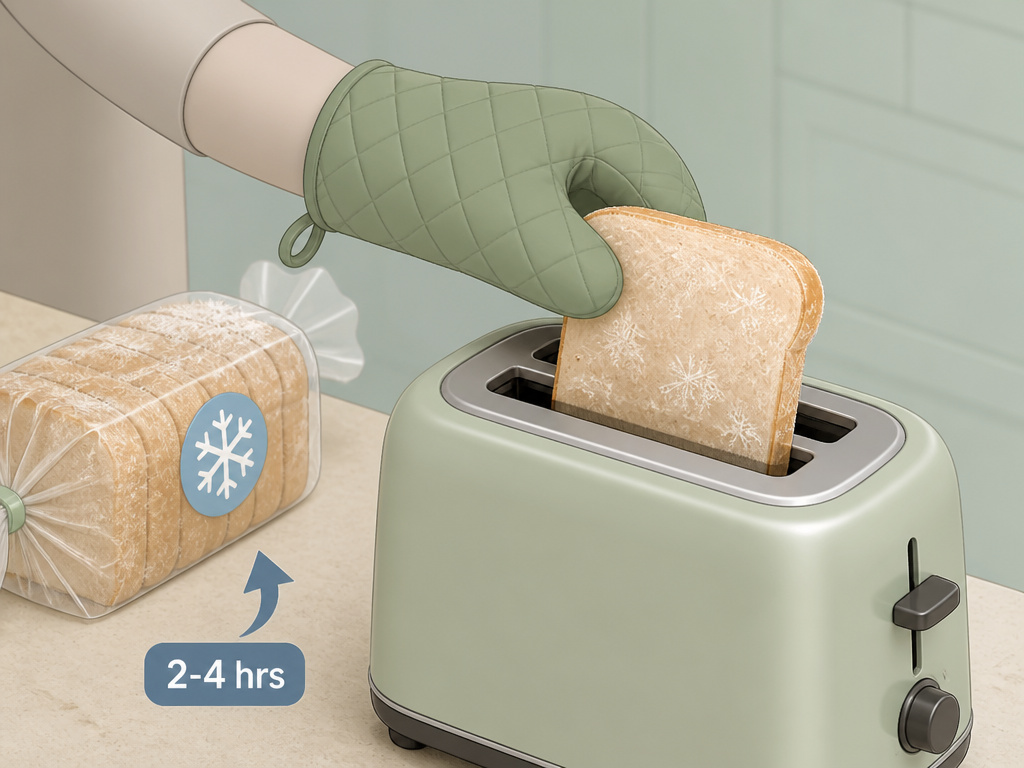
The countertop method works. Leave the wrapped bread on the counter for 2-4 hours. The wrapping prevents condensation from forming on the crust while the interior slowly warms. For a single slice, you can toast it directly from frozen—the toaster’s heat drives out ice crystals quickly.
Avoid the refrigerator for thawing. It replays the staling process, just slower. The bread spends hours in the worst possible temperature range for texture. The microwave is worse. It heats unevenly, creating steamy, gummy patches next to frozen zones.
For specific techniques, our guide on thawing bread breaks down the best methods for whole loaves, slices, and rolls. If you’ve frozen a delicate banana bread, the gentle countertop thaw is the only way to keep the crumb tender.
Once thawed, eat it within 24 hours. Refreezing thawed bread destroys the cell structure. You’ll get a crumbly, dry mess.
Special Cases: Sourdough, Dough, and Leftovers
Not all bread products freeze equally. The rules bend based on moisture content, acidity, and yeast activity.
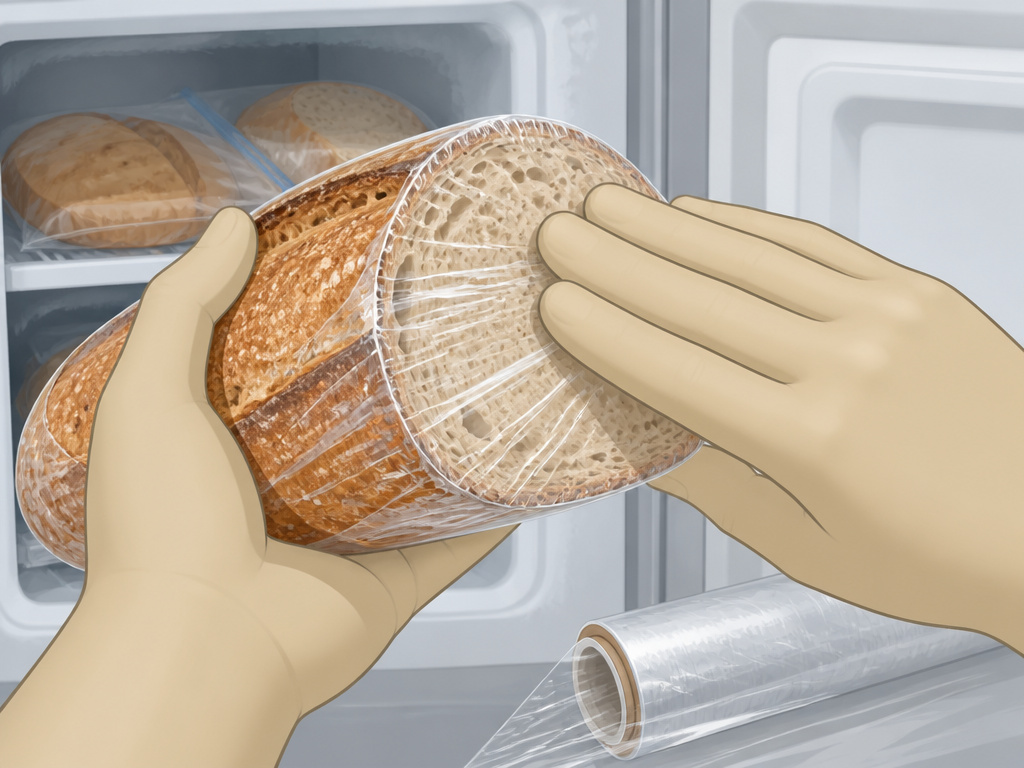
Sourdough bread freezes exceptionally well due to its acidity and stable crumb. Follow the double-wrap method. For long-term storing sourdough, portioning before freezing is smart. If you’ve already cut into it, the method for storing a cut sourdough loaf applies before you freeze: protect the exposed crumb with a tight wrap against the cut face.
Unbaked yeast dough is a temporary candidate. The K-State guide is clear: freeze for 1 month only. The yeast cells suffer ice crystal damage over time, and the gluten network weakens. Thaw overnight in the fridge before using.
Sandwiches and partial loaves can be frozen. Wrap individual sandwiches tightly. For a partial loaf, wrap the cut end directly with plastic before the second layer. This minimizes exposed surface area.
The principle is the same as freezing cheese—managing moisture and air exposure is everything. The right freezer-safe containers can also work for slices or rolls, provided they are truly airtight.
Troubleshooting: Freezer Burn, Odors, and Icy Loaves
You followed the steps, but something went wrong. Here’s the likely cause and fix.
| Problem | Likely Cause | Solution & Prevention |
|---|---|---|
| Freezer burn (grayish-white, dry patches) | Air contact over time. Packaging was not airtight or was too thin. | Trim off affected areas; the rest is safe to eat. Prevent with double-wrapping or vacuum sealing. |
| Off-flavors / Odors | Bread absorbed odors from other foods (e.g., fish, onions). | Use odor-barrier bags or ensure your secondary wrap is foil or a thick freezer bag. Store bread away from strong-smelling items. |
| Large ice crystals inside package | Warm bread was frozen, or freezer temperature fluctuated. | Cool bread completely before wrapping. Ensure freezer door seals tightly and isn’t overfilled, blocking air flow. |
| Gummy, wet texture after thawing | Condensation formed during thawing (bread thawed unwrapped) or was microwaved. | Thaw while wrapped. If using a microwave, use a low-power defrost setting and immediately toast the bread. |
| Loaf didn’t freeze solid in center | Freezer was overloaded, couldn’t maintain 0°F. | Use the SuperFreeze/Extra Freeze function when adding volume. Freeze in smaller batches. |
The part nobody mentions: A fully loaded, closed freezer will keep food frozen for about two days during a power outage. A half-full freezer might only last one day. Knowing this timeline prevents panic and unnecessary door-opening.
If your freezer struggles to hold temperature, the MU Freezer Problem Solver is a structured resource for diagnosing common issues.
Frequently Asked Questions
Can you freeze bread in its original bag?
No. Store plastic bags are not moisture-proof or durable enough for long-term freezing. They lead to freezer burn quickly. Always re-wrap.
How long does bread last in the freezer vs. The fridge?
Freezer: 2-3 months with quality texture. Fridge: 2-3 weeks before becoming unpalatably stale, though it may not mold. The freezer wins for preservation.
Does freezing bread kill mold?
No. Freezing suspends mold growth. When the bread thaws, any existing mold spores will reactivate and continue growing. Never freeze bread that already shows mold spots.
Can you toast bread directly from the freezer?
Yes. Toasting from frozen works well for slices. It may take 1.5 to 2 times longer than toasting thawed bread. This method bypasses the gummy texture stage.
What is the best bread for freezing?
Dense, low-moisture breads like sourdough, whole wheat, and rye freeze better than airy, high-moisture breads like ciabatta or baguettes. The tighter crumb structure suffers less ice crystal damage.
Can you freeze gluten-free bread?
Yes, but the window is shorter—aim for 1 month. Gluten-free breads often have a more delicate, moist structure that suffers texture loss faster in the freezer. Double-wrap is essential.
The Bottom Line
Freezing bread is a simple, effective tool against waste. Set your freezer to 0°F, double-wrap your loaf in plastic and foil, and label it with the date. You’ll stop throwing away stale ends and bakery overbuys.
Remember the hierarchy: the countertop or a bread box for freshness over 2-3 days, the freezer for anything beyond that. Abandon the refrigerator for bread storage—it’s the worst of both worlds. Your future self, reaching for a slice that still tastes like yesterday’s bake, will thank you for the discipline.
