How to Use an Anova Vacuum Sealer | Essential Setup & Tips
This post contains affiliate links. As an Amazon Associate, we earn from qualifying purchases.
To use an Anova vacuum sealer, match the food type to one of three settings: Moist for wet items, Dry for grains and powders, or Pulse for manual control with liquids. The chamber model needs a specific bag placement trick, and every model requires a clean, wrinkle-free bag edge.
The Moist, Dry, and Pulse settings aren’t just labels. They’re distinct suction patterns designed to stop liquid from hitting the heating element and to protect delicate foods. Getting the wrong one is how you end up with a wet mess or crushed berries.
What follows: which setting wins for your food, the one-step trick for a perfect chamber seal every time, and the three mistakes that burn out the heating element within a year.
Key Takeaways
- Use the Moist setting for wet foods like meat and fish. The slower suction pulls liquid away from the seal edge.
- For dry foods like rice or coffee, the Dry setting is faster and more aggressive.
- The Pulse button is for liquids and soft foods. Press and hold to control suction manually—stop before liquid touches the seal bar.
- On the chamber sealer, press down on the back right corner of the lid as the cycle starts to compensate for built-in play.
- Only use Anova-branded vacuum sealer bags. Generic bags won’t seal properly on the chamber model.
Which Anova Vacuum Sealer Do You Have?
Anova makes three main sealers, and the process changes with the model. The Anova Precision Vacuum Sealer Pro and the standard Anova Precision Vacuum Sealer are external suction machines. You lay the open end of the bag over the sealing bar. The Anova Precision Chamber Vacuum Sealer is a countertop cube where the entire bag sits inside a chamber before the lid closes.
The Anova Vacuum Sealer Pro features a “double seal” function, creating two parallel seals along the bag edge for extra security against leaks. Its manual includes specific pre-settings: “Moist” for marinated meats and fish, “Dry” for grains, and a “Pulse” function for delicate items like fruit.
The handheld Anova Precision Port is a different beast entirely—cordless and meant for sealing special containers or zipper bags, not for long-term food storage. This guide focuses on the countertop models that do the heavy lifting for your freezer.
If you’re comparing your options, our review of the best vacuum sealer machines breaks down the pros and cons of external suction versus chamber models.
The Lid Play You Need to Know
If you have the chamber sealer, the first step happens before you even press a button. The lid on the Anova Precision Chamber Vacuum Sealer has a slight amount of built-in play. If you don’t address it, you’ll get small, frustrating air pockets in your sealed bags, especially with moist items like pork loin or salmon.
The fix is simple but non-negotiable. As you start the vacuum cycle, place your palm on the back right corner of the lid and apply gentle, even pressure downward. Hold it there until the machine finishes sealing and beeps. This ensures the silicone gasket makes full contact with the chamber rim, creating the airtight seal the pump is working to achieve.
Skipping this step is why some users think their machine is defective. It’s not a flaw you can ignore; it’s a characteristic of the design that requires a one-second manual intervention.
Moist vs. Dry vs. Pulse: Picking the Right Setting
Your Anova has three core modes: Moist, Dry, and Pulse. Picking the wrong one doesn’t just give a bad seal—it can ruin the food or the machine.
| Setting | Best For | How It Works | Risk If You Get It Wrong |
|---|---|---|---|
| Moist | Marinated meats, fish, saucy items, any food with surface liquid. | Initiates a slower, gentler vacuum to pull liquid away from the bag’s open end before sealing. | Liquid gets sucked into the sealing channel. It contaminates the strip, causes a weak seal, and can eventually burn out the heating element. |
| Dry | Grains, coffee, nuts, crackers, powders, dehydrated foods. | Runs a faster, more powerful vacuum cycle since there’s no liquid to manage. | Used on wet food, it will pull liquid into the machine instantly. On delicate items like bread, it crushes them. |
| Pulse (Manual) | Soft fruits (berries), herbs, bread, soups, stews, any bag with significant liquid content. | Hold the button to vacuum; release to stop. Gives you full control to stop suction the moment liquid approaches the seal bar. | Letting the Pulse cycle run automatically defeats its purpose. You must watch the bag and stop manually. |
The Pulse function is your most powerful tool. It’s not a “gentle” automatic mode—it’s a manual override. You press and hold to vacuum, and you release to stop. For a bag of soup, you pulse until the liquid climbs to within an inch of the bag’s top, then you hit the Seal button. This is the only way to reliably seal high-liquid content without failure.
For general kitchen use, a standard vacuum sealer like the Anova Pro covers most needs, but understanding these settings is what separates a good seal from a perfect one.
Step-by-Step: From Bag to Seal
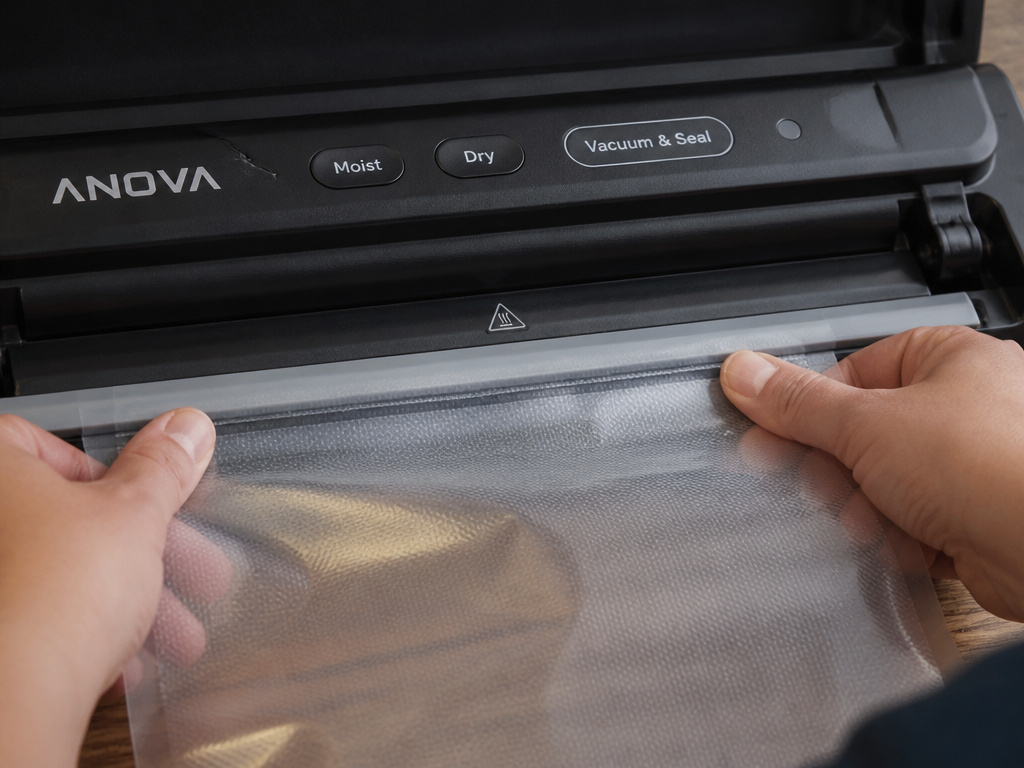 The universal steps are clean, place, select, and seal. Where you place the bag depends on your model.
For Anova Precision Vacuum Sealer (Pro & Standard)
- Prep the bag. Cut your bag from the roll, leaving at least 3 inches of empty space above the food. Wipe the inside top inch of the bag with a paper towel. Any moisture, oil, or crumbs here will break the seal.
- Load and place. Add your food. Lay the open end of the bag across the sealing bar, ensuring it’s flat and straight. The bag must fully cover the suction port.
- Close the lid. Lower the lid until it clicks or locks. On the Pro model, you’ll hear a distinct click.
- Select your setting. Press Vacuum & Seal. For wet food, press Moist first, then Vacuum & Seal. For dry food, press Dry first. For manual control with liquids, use the Pulse button.
- Let it run. The machine will beep when the vacuum cycle is complete and the seal is made. Do not lift the lid until it beeps.
- Double seal (optional but recommended). For the Pro model, press the Seal button immediately after the cycle to create a second, backup seal line. This is insurance against pinhole leaks.
Common mistake: Letting the bag wrinkle at the seal bar. A single fold in the plastic at the point of contact guarantees a failed seal. Smooth it flat with your fingers before closing the lid.
For Anova Precision Chamber Vacuum Sealer
- Prep the bag. Use only Anova’s chamber sealer bags. Standard bags are too thick and won’t seal. Leave ample empty space above the food.
- Load the chamber. Open the lid using the two side clips. Place the entire bag inside the chamber, with the open end draped over the black sealing bar at the back.
- Close and press. Secure the lid until both clips engage. Immediately place your hand on the back right corner of the lid and press down as you start the cycle.
- Select and seal. Choose Normal or Strong vacuum on the touchscreen, then press start. The machine will automatically seal once vacuum is achieved.
- Wait for the release. After sealing, the chamber will re-pressurize. Only open the lid after the indicator light shows the cycle is fully complete.
The process for a chamber vacuum sealer is more hands-off once the cycle starts, but the initial bag placement and lid pressure are critical.
Why Your Seal Fails (And How to Fix It)
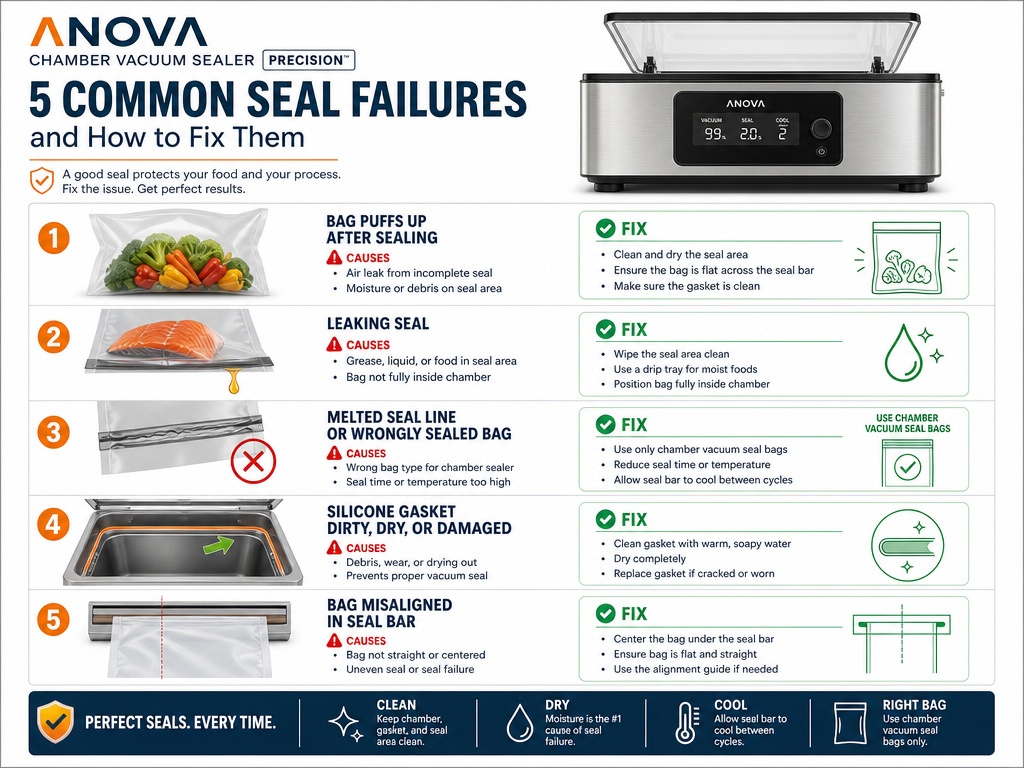 A bad seal isn’t random. It’s a diagnostic tool. Here’s what each failure mode means and how to correct it.
- The bag inflates after sealing. This is almost always food off-gassing. Fresh vegetables, fruits, and fermented foods release gases as they respire. The vacuum sealer can’t stop biology. For these items, you must freeze them immediately after sealing. Room-temperature storage is not an option.
- The seal looks good but leaks later. Check the bag’s edge for microscopic oil stains or crumbs. Even a tiny speck of grease from marinated chicken can create a capillary channel for liquid. Always wipe the inner seal area clean.
- The bag melts at the seal line. You used a non-vacuum-sealer bag. Standard freezer bags or storage bags have a lower melting point and will fuse to the heating element. Only use bags marked for vacuum sealing.
- No vacuum forms, but the seal bar works. The silicone gasket around the chamber lid is deformed or has debris stuck to it. Inspect it, clean it with a damp cloth, and ensure it sits evenly in its groove.
- The machine runs but doesn’t seal. The heating element might be damaged or dirty. For the chamber sealer, also confirm the bag is correctly over the black sealing bar and not slumped into the chamber.
These fixes apply to any using a vacuum sealer process, whether you have an Anova, a Nesco sealer, or a Chef Preserve.
Sealing Liquids and Soft Foods Without Disaster
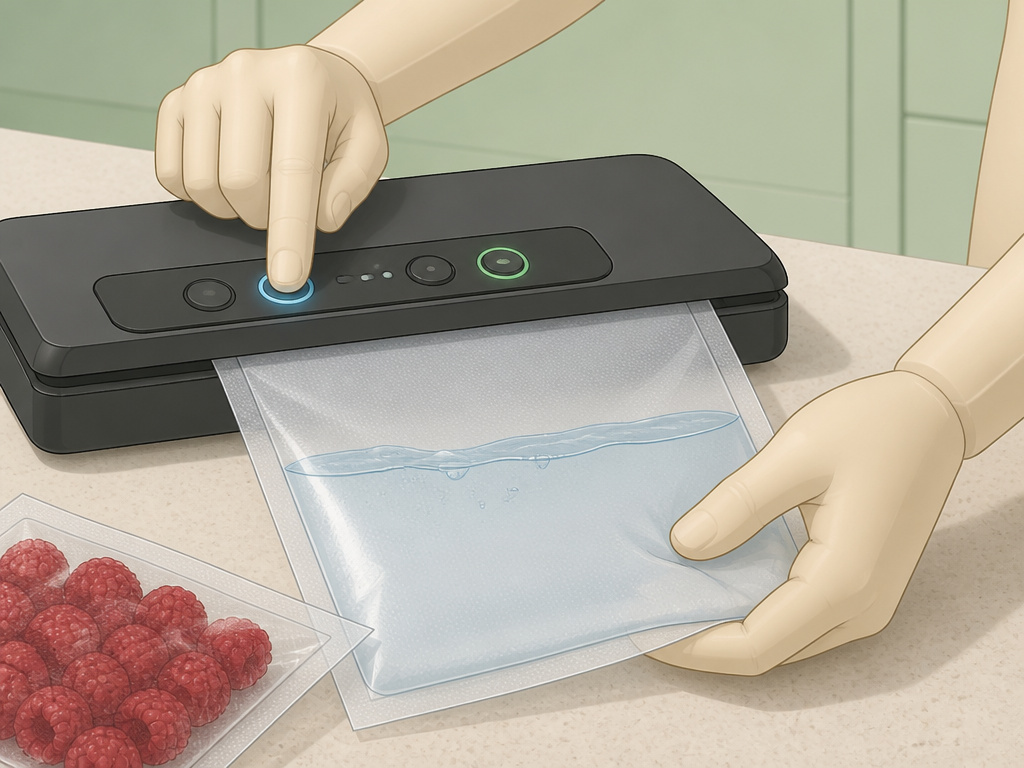 Liquids and delicate items are the two biggest challenges. The Pulse function exists for the first; a specific technique handles the second.
For soups, stews, or marinades, use the Pulse button. Fill your bag, leave plenty of headspace, and start pulsing. Watch the liquid climb. Stop the vacuum the moment the liquid reaches about an inch from the top, then immediately press Seal. For an extra margin of safety, freeze the liquid solid first, then vacuum seal the frozen block.
For soft fruits, herbs, or bread, the goal is to avoid crushing. Don’t use the automatic Dry cycle. Instead, use the Pulse function in short, half-second taps. This applies vacuum in tiny increments, giving the air inside the bag time to escape without collapsing the food’s structure. It takes longer, but a bag of intact raspberries is worth the patience.
This level of control is a key reason many prefer home vacuum sealers with manual overrides over simpler, automatic models.
What You Can (and Can’t) Vacuum Seal
Anova sealers are versatile, but physics and food chemistry set hard limits.
Do seal:
- Raw and cooked meats (use Moist setting, freeze immediately).
- Hard cheeses like cheddar or parmesan.
- Blanched vegetables (shock in ice water, dry thoroughly, then seal).
- Dry goods like rice, beans, and flour (Dry setting).
- Herbs (Pulse function, very short bursts).
Don’t seal (or seal with extreme caution):
- Raw mushrooms – They release too much gas and will inflate the bag.
- Soft cheeses like brie or fresh mozzarella – The pressure crushes them.
- Garlic in oil – Creates a risk of botulism in anaerobic environments.
- Fresh, un-blanched vegetables – They will continue to respire and break the seal.
The core principle of how vacuum sealing prevents freezer burn is the removal of air. But it doesn’t stop chemical or biological processes. Corrosive, acidic, or actively respiring foods need special handling.
Maintenance: The Three Things You Must Do
A vacuum sealer dies from neglect, not use. Keep it clean and it will last for years.
- Wipe the seal bar after every use. A dry microfiber cloth is enough. Any residual plastic or food debris will build up and create uneven heating.
- Inspect the chamber gasket monthly. On the chamber sealer, the silicone gasket is the heart of the vacuum. Look for cracks, nicks, or permanent deformities. A damaged gasket can’t hold pressure.
- Run a blank seal cycle monthly. With no bag in place, run a seal cycle on an empty, clean machine. This burns off any microscopic residue on the heating element and keeps it functioning evenly.
This routine is especially important for sealers for frequent use. Light users can stretch the deep-clean interval, but the post-use wipe is non-negotiable.
Frequently Asked Questions
Can I use any bag with my Anova sealer?
For the chamber sealer, no. You must use the proprietary chamber vacuum bags. The sealing mechanism requires a specific bag thickness and texture. For the external Pro and standard models, you can use third-party bags designed for vacuum sealers, but Anova-branded bags are guaranteed to work with their heating element.
Why is there still air in my bag after sealing?
For chamber sealers, the most likely cause is not applying pressure to the back right corner of the lid during the cycle. For external sealers, the bag might be wrinkled at the seal bar, the food might be off-gassing (like fresh vegetables), or the bag might have a tiny puncture. Always freeze produce immediately after sealing.
What’s the difference between the Moist and Dry settings?
The Moist setting runs the vacuum pump slower. This gives liquids in the bag time to settle away from the top edge before the seal bar closes. The Dry setting runs the pump at full speed for maximum air removal, since dry goods won’t cause a liquid problem.
How do I seal something very delicate, like berries?
Use the Pulse function. Place the berries in a bag, close it, and use very short, half-second presses on the Pulse button. This removes air gradually without crushing the fruit. Stop when the bag is snug but before the berries deform.
My Anova sealer isn’t pulling a vacuum. What should I check?
First, ensure the bag is properly positioned over the suction port (external) or fully inside the chamber (chamber). Check the lid gasket for debris or damage. For external models, check the bag for a blockage or a leak. For chamber models, listen for the sound of the pump—if it’s silent, the motor or switch might be faulty.
Before You Go
Your Anova vacuum sealer is more than a bag closer. It’s a precision tool with settings that map directly to your food’s texture. Use Moist for anything wet, Dry for anything powdery, and Pulse for everything in between. Remember the lid trick for the chamber model, keep the seal bar clean, and never assume a seal is good just because it looks tight. Freeze what bubbles, and double-seal what you can’t afford to lose. That’s the difference between food that keeps for months and a mess you find next week. For long-term storage, the right tool is a vacuum sealing for freezing focused machine, but your Anova will handle the vast majority of what a home kitchen throws at it.
