Is It Bad to Keep Bananas in the Fridge? | The 58°F Rule
This post contains affiliate links. As an Amazon Associate, we earn from qualifying purchases.
Storing bananas in the refrigerator is only bad before they ripen. Unripe, green bananas stored below 58°F (14.4°C) suffer chilling injury, a physiological disorder that causes grayish-brown discoloration under the peel, a bitter taste, and prevents proper ripening. Once bananas reach your desired ripeness (uniform yellow), you can refrigerate them for 2–3 days; the peel will brown, but the flesh stays cream-colored.
That 58-degree line isn’t arbitrary. It’s the threshold where cellular metabolism in tropical fruit stalls, and the damage is permanent. The grayish-brown patches you see under a refrigerated green banana’s skin are dead tissue, and no amount of warmth later will restart the ripening enzymes.
What follows is the breakdown of that rule: the specific science of chilling injury, the exact storage conditions used by commercial handlers, the step-by-step method for refrigerating ripe bananas, and what to do when you’ve already made the mistake.
Key Takeaways
- Refrigerate only ripe bananas. Green bananas stored below 58°F (14.4°C) develop chilling injury, bitter, discolored fruit that will never ripen properly.
- Ideal storage for unripe bananas is 58°F with 90-95% humidity. This commercial standard slows ripening without causing damage; a cool pantry or basement often hits this range.
- Once ripe, refrigerate for 2–3 days max. The peel will turn black, but the flesh inside remains edible and cream-colored.
- Ethylene gas management controls ripening speed. Trap it in a closed paper bag to speed up ripening; separate bananas on the counter to slow it down.
- Freezing is the long-term solution. Peel ripe bananas, slice or purée them, and freeze for up to two months for use in smoothies and baking.
The Science Behind Chilling Injury
Chilling injury is a physiological disorder, not rot. When tropical fruits like bananas are held at temperatures between 32°F and 50°F (0°C and 10°C), their cell membranes undergo a phase change. The lipids become more rigid, disrupting cellular metabolism and compartmentalization. Enzymes leak, compounds oxidize, and tissues break down.
Bananas are very sensitive to chilling injury, which makes the fruit unusable and unappealing. Notice the grayish brown discoloration affecting the area under the peel of the fruit. . Institute of Child Nutrition Banana Information Sheet
You’ll see the evidence as a dull, grayish-brown discoloration just beneath the peel. The fruit inside may develop a bitter, off flavor and a mealy texture. Crucially, the ripening process is halted, ethylene production stops, and the fruit will not soften or sweeten normally even if returned to room temperature. The damage is done in as little as 7 days at 50°F for some cultivars.
| Banana Cultivar | Chilling Injury Threshold | Optimal Storage Temp (up to 7 days) |
|---|---|---|
| Petite | ≤50°F (10°C) for 7+ days | 52°F (11°C) |
| Yangambi | ≤50°F (10°C) for 7 days | 52°F (11°C) |
| Red Macabu | <50°F (10°C) for 5 days | 50°F (10°C) |
| Common Cavendish | <58°F (14.4°C) for prolonged storage | 58°F (14.4°C) |
This is why proper organizing your fridge matters, the back of the top shelf is often the coldest spot, easily dipping below 35°F. That’s a death sentence for an unripe banana. The ideal fridge temperature for general food safety is 40°F or below, which is squarely in the chilling injury zone for this fruit.
How to Store Unripe Bananas Correctly
The goal with green bananas is to get them to ripeness without triggering chilling injury or letting them overripen too fast. The commercial standard is precise for a reason.
Store them at 58°F (14.4°C) with 90-95% relative humidity. At this temperature, ripening slows dramatically but doesn’t stop. Green fruit stored between 60°F and 70°F will ripen in 5 to 7 days. Your home’s coolest room, a basement, a pantry on an exterior wall, or a dedicated fruit cellar, often sits in this perfect 58-70°F range.
Common mistake: Storing bananas in a sealed plastic bag on the counter. This traps too much moisture and ethylene, speeding up ripening unevenly and promoting mold.
To slow ripening on the counter, separate the bunch. Bananas release ethylene gas, which ripens the entire cluster. Breaking them apart slows the process. You can also wrap the stem crowns tightly with plastic wrap or aluminum foil, which is where the bulk of ethylene is emitted.
For faster ripening, do the opposite. Place the bananas in a closed paper bag, perhaps with an apple or avocado. This traps ethylene gas, raising the concentration around the fruit and speeding up the process by a day or two. This method is detailed in our guide on storing bananas to manage ripening and pests.
How to Refrigerate Bananas Correctly (The Right Way)
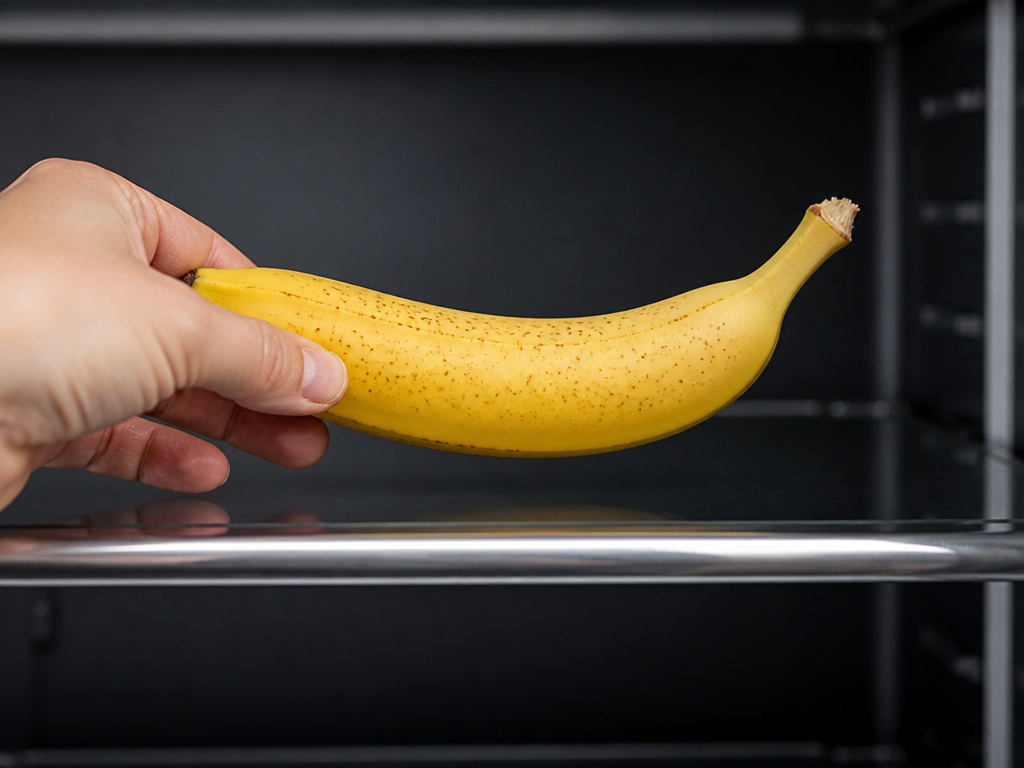
Refrigeration is a tool for ripe bananas you can’t eat immediately. The clock starts at peak yellow.
Wait for uniform yellow skin, perhaps with a few brown speckles. This signals starch has fully converted to sugar. At this point, the peel’s role as a protective barrier is paramount. Any bruises, cuts, or abrasions will oxidize rapidly in the cold, dry air of the fridge.
Place the whole, unpeeled bananas in the main body of the refrigerator, not in the crisper. The crisper’s higher humidity is better for greens, but for bananas, the slightly drier air of the main compartment helps slow microbial growth on the skin. They will keep for 2–3 days. The peel will turn black or dark brown, this is normal oxidation, not spoilage. The flesh inside remains firm and cream-colored.
I once refrigerated a perfectly yellow banana and forgot it for five days. The peel was jet black and shriveled. Peeling it back, the flesh was still pale and sweet, but had taken on a faint, musty odor from the deteriorating peel. Three days is the real limit.
If you need to store sliced banana, for a fruit salad or oatmeal topping, treat the cut surface. Dip slices in an acidic solution: 1 part lemon juice to 3 parts water. This prevents enzymatic browning for several hours. This same principle applies to keeping other fruits fresh, like when storing raspberries or keeping greens fresh.
The Freezing Alternative (For Long-Term Storage)
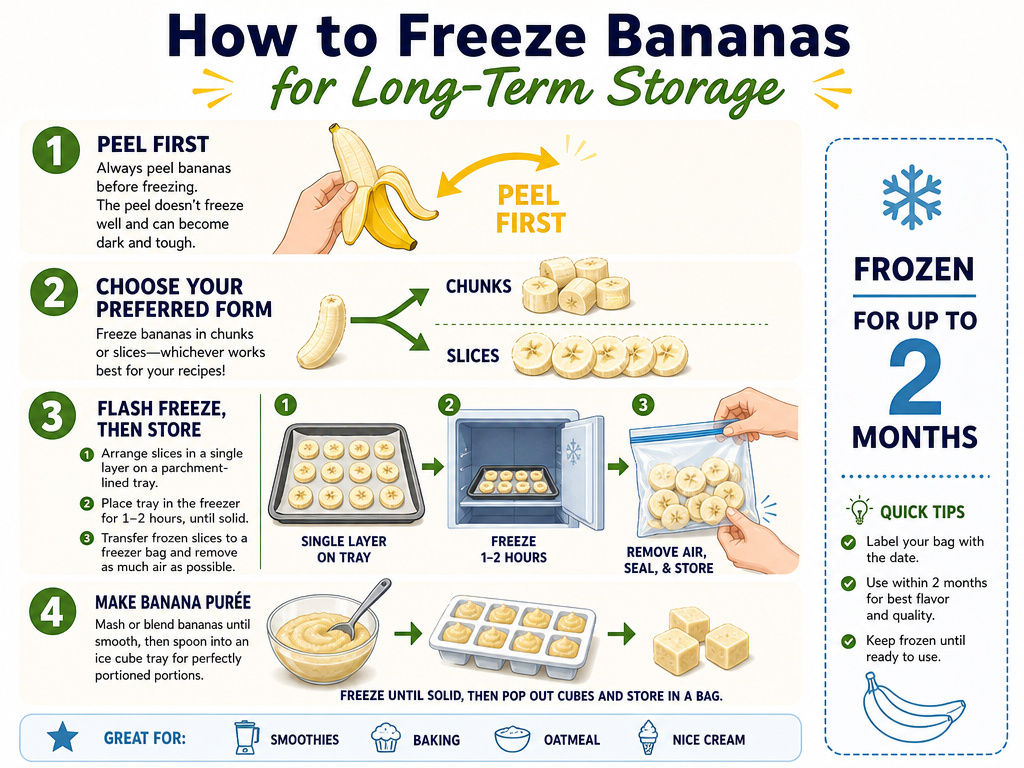
Freezing is the definitive answer for bananas you won’t eat within the 3-day refrigerator window. It stops all enzymatic and microbial activity.
- Peel the bananas first. The peel becomes impossible to remove after freezing.
- Choose your form factor. For smoothies, break into chunks. For baking, slice into coins or purée.
- Prevent freezer burn. Spread chunks or slices in a single layer on a parchment-lined tray. Freeze solid (2-3 hours), then transfer to an airtight freezer bag or container, squeezing out excess air.
- For purée, mash ripe bananas, mix in a teaspoon of lemon juice per cup to prevent discoloration, and freeze in portion-sized containers.
Frozen banana chunks will keep for two months before quality begins to decline. They are perfect for adding creamy texture to smoothies or for thawing and using in banana bread. This method of refrigerating soup for later use follows the same batch-and-freeze logic for reducing waste.
What to Do If You’ve Already Refrigerated a Green Banana
Mistakes happen. If you’ve pulled a green banana from the fridge and see that telltale grayish cast under the skin, the fruit is compromised.
You cannot reverse chilling injury. The banana will not ripen properly. It may soften slightly but will retain a bitter, off flavor and a mealy texture. It is not unsafe to eat, but it is unpleasant.
Your best option is to use it in cooked applications where sugar and other flavors can mask the defect. Think banana bread, muffins, or pancakes. The cooking process will soften the texture and blend the flavor. Do not use it in raw applications like smoothies or yogurt bowls, where the off-flavor will be front and center.
This salvage principle is similar to using overripe vegetables, like knowing the tricks for storing zucchini to then use in baked goods when they’ve passed their prime for slicing.
Frequently Asked Questions
Can you put bananas in the fridge to ripen?
No. Cold temperatures halt the ripening process by suppressing ethylene production and enzyme activity. A green banana placed in the fridge will not become yellow and sweet. It will likely develop chilling injury.
Why do banana peels turn black in the fridge?
The blackening is oxidation. The cold environment breaks down the pigments in the peel (chlorophyll and others), revealing darker compounds. It’s a purely cosmetic change that does not affect the edible fruit inside, provided the banana was ripe when refrigerated.
What is the best container for bananas in the fridge?
No container is needed for short-term storage of whole, ripe bananas. For cut bananas, use an airtight container to prevent odor absorption and drying out. For long-term storage, use freezer bags or the best food storage containers for a refrigerator that are freezer-safe.
How do you keep bananas fresh for two weeks?
You can’t keep ripe bananas fresh for two weeks. The strategy is to control the supply. Buy bananas at different stages of greenness. Store the greenest ones in a cool (58-65°F), dark place to slow ripening. As each batch ripens, refrigerate or freeze it. This staggered approach, coupled with freezing, is the only way to manage a two-week supply.
Do bananas last longer in the fridge or on the counter?
It depends on the banana’s stage. An unripe banana lasts longer on the counter (or in a cool pantry) until it ripens. A ripe banana lasts longer in the refrigerator, where the cold slows down the final stages of senescence and mold growth. The crossover point is that moment of perfect, uniform yellow ripeness.
Before You Go
The rule is simple but non-negotiable: cold is for ripe bananas only. Treat the 58°F mark as your guide, below that, green bananas break. Once they’re yellow, the fridge buys you a few extra days, and the freezer buys you months. Manage ethylene by separating bananas to slow things down or bagging them to speed things up. If you get it wrong, bake the evidence into a loaf of banana bread. For the definitive, sourced guidelines, always refer to primary resources like the Mississippi State University banana fact sheet or the UC Davis Postharvest banana facts.
