How to Store Zucchini in the Fridge for Maximum Shelf Life
This post contains affiliate links. As an Amazon Associate, we earn from qualifying purchases.
Store whole, unwashed zucchini in a loosely closed plastic bag in your refrigerator’s crisper drawer at 5°C to 10°C (41°F to 50°F). At this temperature and 95% relative humidity, zucchini can last up to two weeks. Storing it below 5°C (41°F) for more than a few days causes chilling injury, marked by water-soaked pits and rapid decay.
That 5°C line isn’t a suggestion. It’s the physical limit where the squash’s cell structure starts to fail. Most refrigerator default settings hover around 3°C (37°F), which is perfect for milk but will ruin a zucchini in under a week. The goal is to slow respiration without crossing into damage.
What follows is the breakdown of that rule: why the temperature and bag matter, how to handle cut and cooked squash, and the three common mistakes that turn firm squash into mush faster than you can say “zoodle.”
Key Takeaways
- Store zucchini between 5°C and 10°C (41°F and 50°F). Colder temperatures cause chilling injury within days.
- Never wash zucchini before refrigerating. Added moisture promotes mold growth on the thin skin.
- Keep zucchini away from ethylene-producing neighbors like tomatoes, potatoes, and green onions to prevent accelerated yellowing and decay.
- For cut zucchini, use a container lined with a dry paper towel to manage moisture and extend freshness to 4-5 days.
- Blanch zucchini before freezing to deactivate enzymes; frozen quality is best for cooked dishes, not raw salads.
The Right Temperature and Humidity (41°F to 50°F)
Your refrigerator’s general compartment is likely too cold. The consensus setting of 3°C (37°F) is ideal for preserving dairy and meat, but it crosses a critical threshold for summer squash.
Zucchini can be stored at 5°C (41°F) with acceptable market quality for up to two weeks. Storage below 5°C for more than 3-4 days generally results in chilling injury. This technical fact from postharvest science defines the entire game. The damage is cumulative and often begins before you even buy the squash.
Chilling injury symptoms include sunken, water-soaked pits on the skin, followed by discoloration and a slimy decay. The injury is irreversible. Once you see pitting, the squash is on a fast track to the compost bin. The UC Davis Postharvest Center squash factsheet notes this sensitivity is why commercial handlers are careful with their cold chains.
Your crisper drawer is your best tool. It’s often the warmest part of the fridge and, when closed, maintains higher humidity. Aim for that 95% relative humidity sweet spot. A loosely closed plastic bag inside the drawer replicates this modified atmosphere perfectly, it retains enough moisture to prevent shriveling but allows just enough airflow to discourage condensation.
| Storage Factor | Target Range | Consequence of Getting It Wrong |
|---|---|---|
| Temperature | 5°C – 10°C (41°F – 50°F) | Below 5°C: Chilling injury (pitting, decay) in 3-4 days. Above 10°C: Accelerated softening and yellowing. |
| Humidity | 90-95% Relative Humidity | Low RH: Squash shrivels and loses crispness within a week. |
| Airflow | Moderate (loose bag) | Sealed bag: Trapped ethylene and moisture speed spoilage. No bag: Rapid moisture loss. |
If your fridge doesn’t have a crisper temperature control, use a simple appliance thermometer. It’s the only way to know for sure. This same principle of precise temperature control applies to other delicate produce, which is why proper methods for storing leafy greens and refrigerating fresh berries are equally specific.
Step-by-Step: Storing Whole Zucchini
The process is straightforward, but each step has a mechanical reason. Skip one, and you shorten the shelf life.
- Do Not Wash. This is non-negotiable. Water on the surface compromises the thin, soft rind. It creates a microenvironment where mold spores and bacteria can thrive. Any soil can be brushed off gently just before you’re ready to cook.
- Check for Damage. Feel the entire squash. Any soft spots, cuts, or punctures are entry points for decay organisms. Use damaged zucchini within a day or two, separate from your main stash.
- Place in a Plastic Bag. A standard produce bag or a reusable silicone bag works. Do not seal it tight. Fold the top over once or punch a couple of small holes if using a zip-top bag. The goal is a humid microclimate, not a sealed anaerobic chamber.
- Put the Bag in the Crisper. This is the final move. The crisper’s higher humidity and slightly warmer temperature work with the bag to maintain the ideal 95% RH zone.
Common mistake: Washing zucchini before storage. The added moisture creates the perfect environment for mold and bacterial growth on the skin’s surface, often leading to spoilage days earlier.
The bag is your humidity regulator. Without it, the fridge’s fan constantly pulls moisture from the squash’s high-water-content flesh. With it sealed tight, you trap respiratory gases and any incidental moisture, creating a soggy decay pocket. Loose closure is the balance.
How to Store Cut Zucchini
Once the skin is broken, the rules change. The exposed flesh loses moisture quickly and is vulnerable to surface microbes. Your job is to manage wound respiration.
The best method uses a container and a paper towel. A shallow glass or plastic container with a lid is far superior to wrapping pieces in plastic wrap.
- Line the container with a single dry paper towel.
- Place the cut zucchini (slices, halves, cubes) in a single layer if possible.
- Secure the lid.
- Store it in the crisper drawer.
The paper towel absorbs excess moisture released by the cut surfaces, preventing a pool of water from forming at the bottom of the container. This pooled water is what turns cut squash slimy. Check the towel after a day or two; if it’s soaked, replace it with a fresh one. This system can keep cut zucchini fresh for four to five days.
For pre-grated zucchini destined for bread or fritters, the moisture problem is extreme. Press the grated squash firmly in a clean tea towel or paper towels to remove as much liquid as possible before storing it in a sealed container. Use it within two days.
Storing Cooked Zucchini
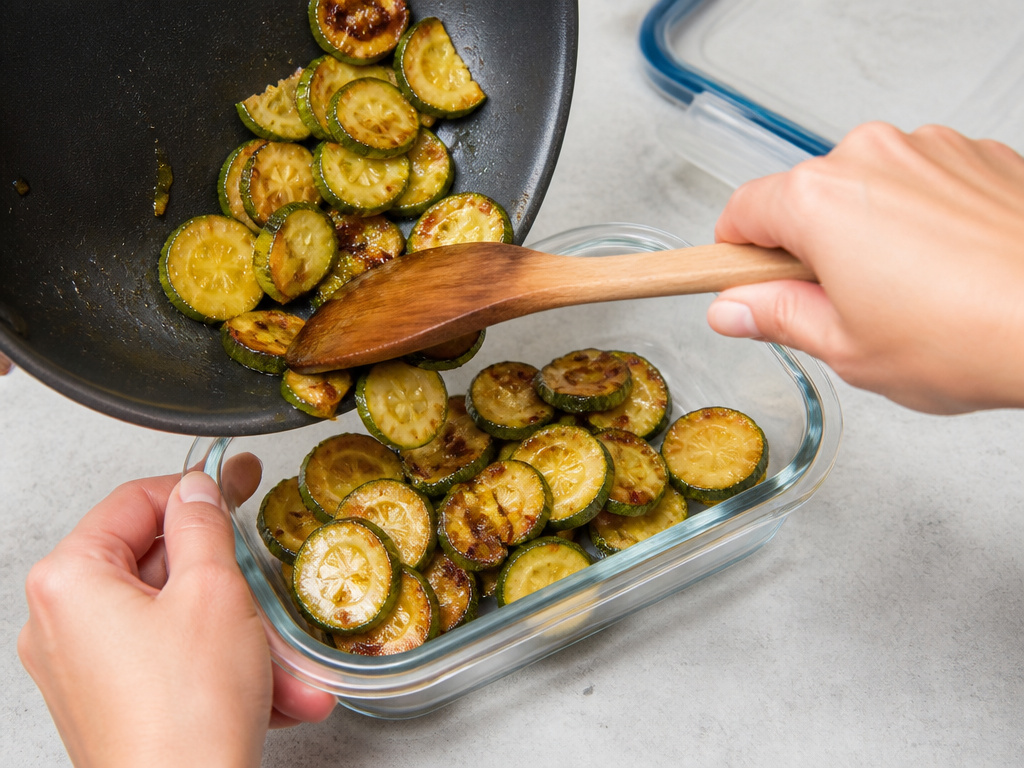
Cooked zucchini has a much shorter clock. The heat has broken down cell walls, releasing more water and creating an ideal breeding ground for bacteria.
Cool cooked zucchini to room temperature within two hours of cooking. Do not leave it on the stove. Transfer it to a shallow, airtight container, a food container designed for the fridge prevents odor transfer. The shallow depth allows the zucchini to cool quickly and evenly, slowing bacterial growth.
Refrigerate it immediately. Consume within three to four days. Reheat only the portion you plan to eat, bringing it to a full boil or 74°C (165°F) to ensure food safety. The texture will be softer after reheating; it’s best used in soups, sauces, or casseroles at this stage.
What to Keep Away From Your Zucchini (The Ethylene Problem)
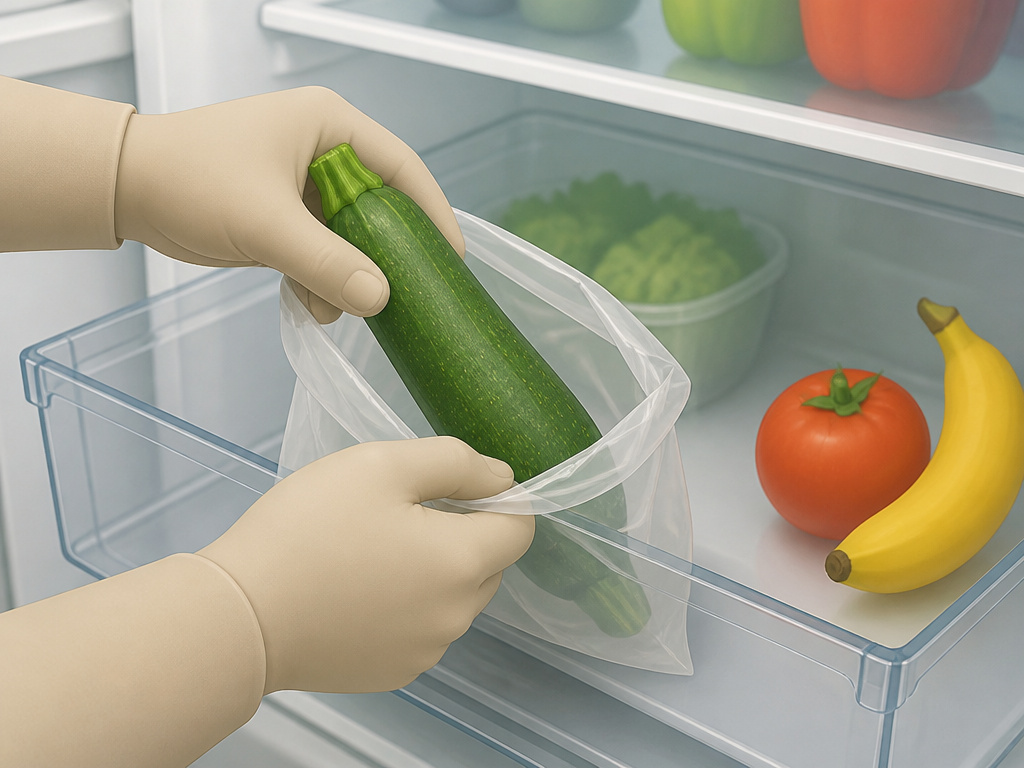
Zucchini is low to moderately sensitive to ethylene gas. This natural plant hormone accelerates ripening and, in the case of zucchini, promotes yellowing and tissue breakdown.
Where this goes sideways: Storing zucchini in a crowded crisper next to a tomato. The ethylene gas from the tomato triggers a rapid decline in the squash, leading to soft spots and yellowing you wouldn’t see otherwise.
The common high-ethylene producers in your kitchen include: * Tomatoes * Apples * Avocados * Bananas (especially ripe ones) * Potatoes * Green Onions
If your fridge space is limited, this becomes a critical part of fridge organization. Designate one crisper drawer for ethylene-sensitive produce (like zucchini, carrots, and leafy greens) and another for ethylene producers. At the very least, keep zucchini in its own bag, physically separated from these items. This same principle is why garlic and onions are stored outside the fridge entirely.
How to Freeze Zucchini for Long-Term Storage
Freezing is an option, but manage your expectations. The high water content means thawed zucchini will be limp and watery, perfect for soups, stews, baked goods, and casseroles, but useless for a fresh salad or sauté.
Blanching is the essential step. It deactivates the enzymes that cause loss of flavor, color, and texture during frozen storage.
Here is the blanching and freezing process:
- Wash and Cut. Slice or cube the zucchini to your preferred size (½-inch rounds or cubes are standard).
- Blanch. Bring a large pot of water to a rolling boil. Submerge the zucchini pieces for 1-2 minutes, just until they brighten in color.
- Ice Bath. Immediately drain the zucchini and plunge it into a bowl of ice water. This stops the cooking process completely. Let it sit for the same amount of time as the blanch.
- Dry Thoroughly. Spread the cooled pieces on a clean kitchen towel or paper towels and pat them completely dry. Any surface ice will lead to freezer burn.
- Flash Freeze. Spread the dry pieces in a single layer on a parchment-lined baking sheet. Freeze for 1-2 hours until solid.
- Bag and Seal. Transfer the frozen pieces to a freezer-safe bag or container. Remove as much air as possible before sealing. Label with the date.
Frozen zucchini is best used within three to four months for optimal quality. You can freeze grated zucchini raw without blanching for baking, but expect significant water release upon thawing, drain it well before using.
Signs Your Zucchini Has Gone Bad
Know when to walk away. Using spoiled squash isn’t worth the risk.
- Soft Spots or Mushiness: The flesh should be firm. Any give, especially localized mushiness, indicates advanced decay.
- Mold: Any visible fuzz, whether white, green, or black, means it’s done. Mold roots penetrate deeper than you can see.
- Water-Soaked Pitting: These sunken, dark pits are the hallmark of chilling injury. The squash is breaking down.
- Slimy Surface: A slippery film on the skin or cut surfaces is a sign of bacterial growth.
- Off Odor: Fresh zucchini has a mild, grassy smell. A sour, fermented, or foul odor is a clear signal.
When in doubt, throw it out. This is a basic tenet of organizing your fridge, regular checks prevent one spoiled item from contaminating others.
Frequently Asked Questions
Can you store zucchini at room temperature?
For a very short time, yes. If you plan to use it within 1-2 days, keeping it on the counter in a cool, dry spot is fine. Beyond that, the warmer temperature accelerates moisture loss and softening. For any real shelf life, the fridge is mandatory.
How long does zucchini last in the fridge?
Whole, unwashed zucchini stored correctly in the crisper at 5-10°C (41-50°F) can last up to two weeks. Cut zucchini lasts 4-5 days. Cooked zucchini should be eaten within 3-4 days. These timelines assume ideal conditions from the moment of purchase.
Why did my zucchini get slimy in the bag?
Sliminess is caused by excess moisture and poor airflow. You likely sealed the bag completely or placed wet zucchini inside. The trapped moisture allows bacteria to proliferate on the surface. Always store zucchini dry and in a loosely closed bag.
Can I freeze zucchini without blanching?
You can, but you shouldn’t for most uses. Unblanched zucchini will suffer severe texture and flavor degradation within a month or two, developing an off-taste. The exception is grated zucchini for baking, where the texture is less critical and you’ll drain the water anyway.
What’s the best way to store half a zucchini?
Treat it as cut zucchini. Wrap the uncut half tightly in plastic wrap to protect the exposed flesh, then place it in a container or bag in the crisper. Use it within 4-5 days. For shorter storage, a reusable bag works well here.
Is it safe to eat zucchini with brown spots?
It depends. Small, superficial brown spots or scratches are usually okay, just cut them away. However, if the brown spot is sunken, mushy, or part of a larger discolored area, it’s likely the start of decay or chilling injury. It’s safest to discard it.
Before You Go
Zucchini storage comes down to three defenses: temperature, humidity, and isolation. Hit the 5°C to 10°C (41°F to 50°F) range with a loose bag in the crisper, and you’ve solved the first two. Keep it away from tomatoes and onions, and you’ve handled the third.
The difference between a squash that lasts two weeks and one that pits in three days is often just a few degrees on your fridge’s thermostat. Check that setting. Use a bag. Keep it dry. That’s the entire manual.
