How to Store Raspberries in the Fridge & Prevent Mold Growth
This post contains affiliate links. As an Amazon Associate, we earn from qualifying purchases.
Store raspberries in the fridge at 31-32°F (0°C) with 90-95% humidity, inside a single layer in a ventilated container. Do not wash them until you’re ready to eat. For every hour they sit at room temperature after purchase, you lose a full day of their already short shelf life.
That temperature target is the line between a berry that lasts three days and one that turns to fuzz in 24 hours. The difference between your refrigerator’s general produce drawer and the ideal conditions is often 10 degrees or more, and that gap is where raspberries die.
What follows is the mechanics of why raspberries fail, drawn from university extension guides and cold-chain science. You’ll get the step-by-step, the tools that help, and the specific mistakes that turn a $5 clamshell into compost before tomorrow’s breakfast.
Key Takeaways
- Cool immediately. NC State Extension notes that for every hour raspberries are kept at room temperature after harvest, one day of shelf life is lost.
- Target 32°F. The ideal storage temperature is 31-32°F (0°C), as specified by the University of Tennessee Institute of Agriculture. Most fridge drawers run warmer.
- Keep them dry and alone. Store raspberries unwashed in a single layer in a ventilated container, and keep them away from ethylene-producing fruits like apples and peaches.
- Check your fridge’s real temperature. Use a simple fridge thermometer. A drawer at 41°F cuts shelf life by more than half compared to one at 32°F.
- Eat or freeze within 2-3 days. Even under perfect conditions, the shelf life for fresh raspberries is short. Plan to use them quickly.
The Single Most Important Factor: Temperature
Your refrigerator’s “cold” is probably not cold enough. The consensus from agricultural extensions is unambiguous: the ideal storage temperature for raspberries is 31-32°F (0°C). The University of Tennessee Institute of Agriculture lists this range for a shelf life of 2-3 days. Michigan State University Extension advises storage at or below 41°F, but that’s a practical maximum, not the ideal.
Storing raspberries at 31-32°F (0°C) with 90-95% relative humidity is the benchmark for maximizing postharvest life, slowing water loss and mold growth that accelerate rapidly above 40°F.
Why does a few degrees matter so much? Respiration and water loss. Raspberries have no protective skin. At higher temperatures, they respire faster, consuming their sugars and losing moisture through their porous surface. They also become a prime target for mold. NC State Extension states raspberries can mold in as little as a day if held at 68°F. Even at 50°F, their storage life is roughly one-third of what it is at 32°F.
The part nobody mentions: Your fridge’s main compartment might be at 37°F, but the produce drawer can be 5-10 degrees warmer due to poor air circulation and its location near the door. Without verification, you’re guessing.
| Storage Temperature | Expected Shelf Life | Primary Risk |
|---|---|---|
| 31-32°F (0°C) | 2-3 days (ideal) | Freezing injury if below -1.1°C |
| 36-41°F (2-5°C) | 1-2 days | Accelerated mold, moisture loss |
| 50°F (10°C) | < 1 day | Rapid softening, visible mold |
| Room Temp (68°F+) | Hours | Mold spores germinate within a day |
Step-by-Step: From Market to Fridge
Speed is the first ingredient. The clock starts ticking the moment you pick up the clamshell.
- Inspect and isolate at the store. Gently tilt the container. Look for any crushed, leaking, or visibly moldy berries at the bottom. One bad berry spreads rot to the rest faster than you think. If you see juice, pick another pack.
- Go straight home. Treat raspberries like ice cream. Don’t leave them in a hot car or run other errands. That “hour-for-a-day” penalty from the NC State Extension raspberry storage guide is real.
- Do not wash them. Water breaks down their cell structure and introduces moisture that encourages mold. Washing is the final step before eating, not storage.
- Transfer to a ventilated container. Dump them gently onto a dry paper towel. Discard any mushy or suspect berries you missed. Line a shallow, wide container with another paper towel. Place the raspberries in a single layer. Do not stack them.
- Cover, but don’t seal. Use the container’s vented lid, or place a dry paper towel over the top before loosely setting a lid on it. If using the original clamshell, open the vents fully. The goal is airflow without total exposure to dry fridge air.
- Place in the cold spot. This is usually the back of the main fridge compartment, away from the door. If your produce drawer is reliably cold (check with a thermometer), use that. The Liebherr BioFresh compartment, which holds “just above 0°C,” is designed for this exact purpose.
Choosing the Right Container (It’s Not the Clamshell)
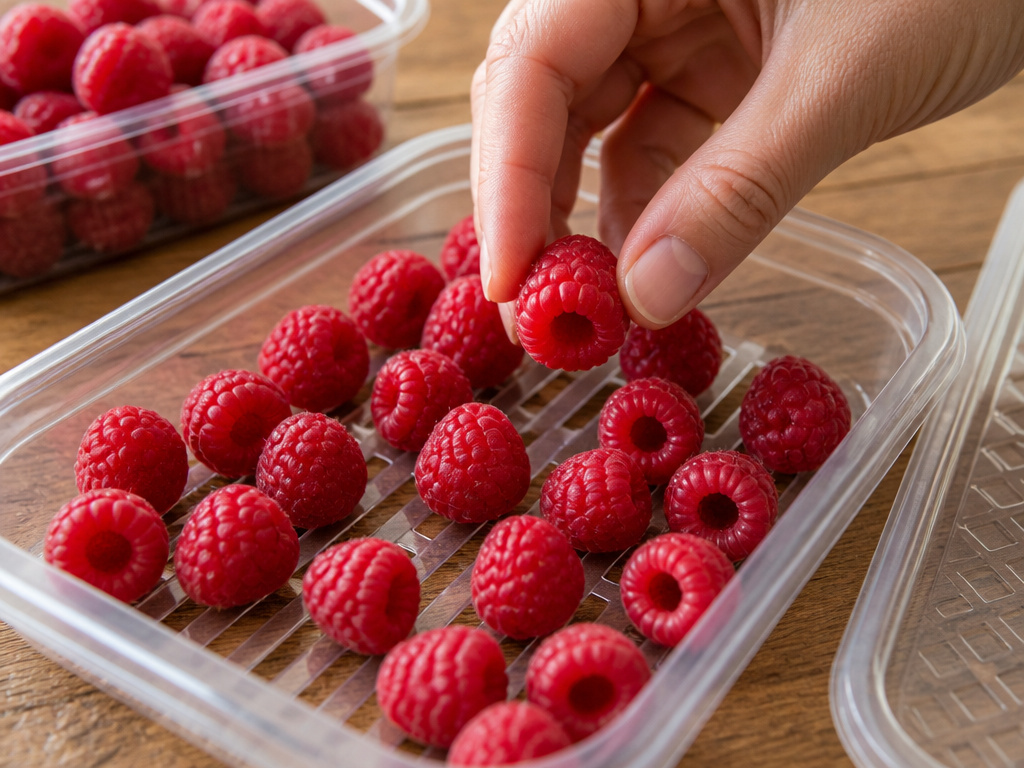
The plastic clamshell is for transport, not optimized storage. It’s deep, which encourages stacking and crushing, and its vents are often insufficient. You need a container that manages humidity and allows air circulation.
A wide, shallow container is king. It lets you store berries in one layer, preventing the weight of the top berries from bruising the bottom ones. The material matters less than the function.
Common mistake: Storing raspberries in an airtight plastic tub or a sealed plastic bag. This traps the ethylene gas they produce and any residual moisture, creating a humid, stagnant environment where mold thrives.
For most households, a ventilated food storage container is the best upgrade. Look for containers with adjustable vents or a lattice-style lid. The OXO Good Grips GreenSaver is a popular example because its vented lid and included humidity regulator create a better microclimate. If you don’t have a specialized container, a shallow glass or plastic dish loosely covered with a paper towel or beeswax wrap works well.
This is where using the right berry containers pays off. A good fruit storage container designed for delicate produce will extend the life of more than just your raspberries.
What to Keep Away From Your Raspberries
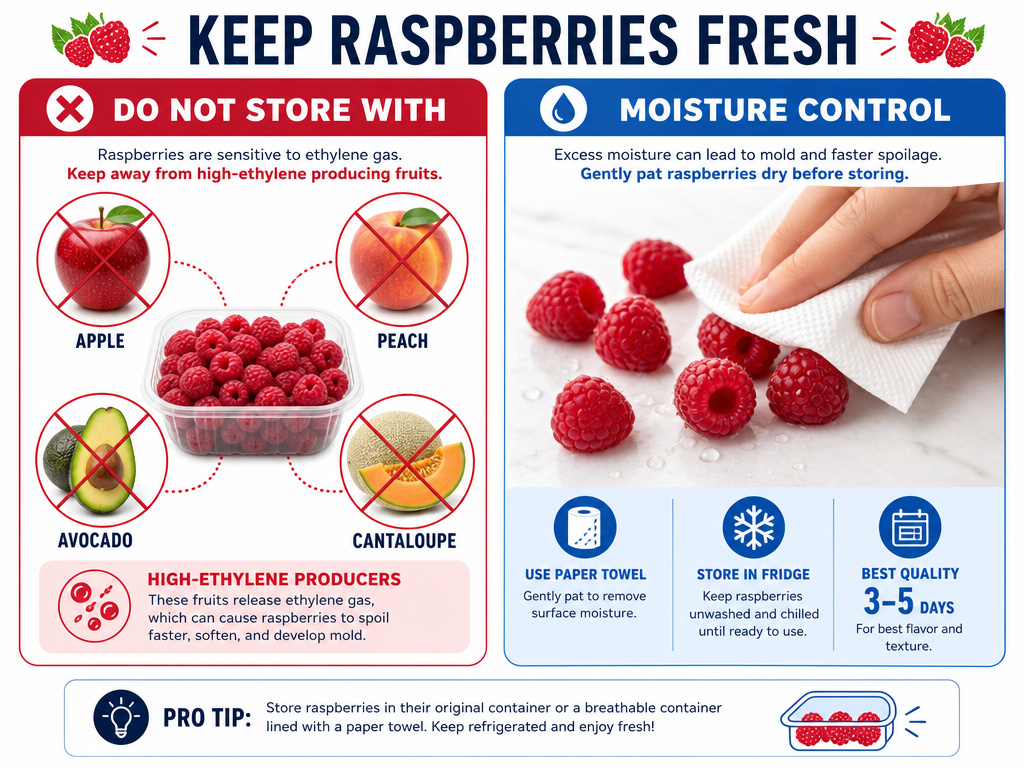
Raspberries are sensitive neighbors. Two things will shorten their life faster than a warm fridge: moisture and ethylene gas.
Ethylene is a natural plant hormone that triggers ripening and, eventually, decay. Some fruits produce it in large quantities. Storing raspberries next to these high producers exposes them to a gas that accelerates softening and breakdown.
According to the University of Tennessee guide, ethylene can cause “bitterness, softening, discoloration, and stem detachment” in sensitive crops. Keep your raspberries separate from: * Apples * Peaches * Nectarines * Pears * Avocados (as they ripen) * Cantaloupe
This is a direct application of knowing which fruits to store on the counter to ripen, and which belong cold and isolated. Your countertop fruit storage zone should be for ethylene producers, not for berries.
Moisture is the other enemy. Never store a damp berry. If you must rinse a few for immediate eating, pat them thoroughly dry with a paper towel. A pool of water at the bottom of a container is a death sentence.
Why Raspberries Fail: The Science of a Short Shelf Life
Understanding the “why” makes the rules stick. Raspberries are horticultural marvels and logistical nightmares.
They are aggregate fruits, meaning each tiny drupelet is its own fruit with a seed. The spaces between these drupelets are where mold spores land and moisture collects. They have no waxy peel, like a blueberry or grape, to protect them. This makes them incredibly prone to water loss. Ontario’s postharvest guidelines note that raspberries become unmarketable after losing just 6% of their weight to dehydration. A dry fridge air will suck them dry.
The molds that attack them are cold-tolerant. Botrytis cinerea (gray mold) can still grow, albeit slowly, at 32°F. Rhizopus stolonifer (Rhizopus rot) is stopped below about 40°F. This is why pre-cooling is so critical in commercial settings—it halts the mold’s momentum before it can establish.
| Problem | Cause | Visible Sign | Timeline |
|---|---|---|---|
| Gray Mold (Botrytis) | Fungal spores, often from one infected berry | Fuzzy gray patches | 1-3 days at room temp |
| Leaking / Mushiness | Physical crushing or overripe cells | Red juice in container | Immediate or within hours |
| Dull, Purple Color | Overripeness, ethylene exposure | Loss of bright red hue | 1-2 days |
| Dry, Shriveled Drupelets | Low humidity, air exposure | Berries look withered | 2-3 days in dry fridge |
This fragility is also why the industry sometimes uses modified atmosphere packaging (high carbon dioxide) during shipping—it suppresses mold growth. You can mimic this slightly by using breathable produce bags that allow for some gas exchange, but the primary lever you control is temperature.
How to Tell If Your Raspberries Have Gone Bad
Use your senses in this order: sight, touch, smell.
- Look for mold. Any visible fuzz (white, gray, or blue-green) means the entire container is contaminated, even if it’s only on one berry. The mycelium threads run through the fruit.
- Check for moisture. Excessive juice pooled at the bottom signals cell breakdown. A few droplets are normal; a puddle is not.
- Feel for texture. A fresh raspberry is plump and holds its shape. If they collapse under their own weight into a mushy mass, they’re past prime.
- Smell them. Fresh raspberries have a faint, sweet, grassy scent. A sour, vinegary, or alcoholic smell indicates fermentation and yeast growth.
If you see mold, discard all the berries. If they’re just overly soft but smell fine, use them immediately in cooked applications like jam, sauce, or baked goods.
Frequently Asked Questions
Can you wash raspberries before storing them?
No. Washing adds water that they cannot shed, creating a perfect environment for mold. Always wash raspberries just before you eat or cook with them. Gently rinse in a colander under cool water and pat completely dry with a paper towel.
How long do raspberries last in the fridge?
Under ideal conditions (32°F, high humidity, ventilated container), 2-3 days. In a typical home fridge produce drawer (around 40°F), plan for 1-2 days. This is a much shorter window than for storing strawberries or keeping zucchini fresh.
What is the best container for storing raspberries?
Wide, shallow container with ventilation is best. A ventilated food storage container like the OXO GreenSaver or a simple glass dish loosely covered with a paper towel works far better than the deep, original clamshell. The right containers for produce make a measurable difference.
Should I take raspberries out of the plastic container?
Yes. Transferring them to a better container allows you to inspect each berry, remove any bad ones, and arrange them in a single layer. It also lets you add a dry paper towel to absorb excess ambient moisture.
Can I freeze raspberries?
Absolutely. It’s the best way to preserve them for months. Do not wash before freezing. Spread dry, whole raspberries in a single layer on a parchment-lined baking sheet. Freeze solid (2-3 hours), then transfer to a heavy-duty freezer bag or airtight container. This “flash freezing” prevents them from clumping into a solid block.
Before You Go
The goal is to respect raspberries’ delicate nature and give them the specific conditions they need to last as long as possible. That means cold—real cold, verified by a thermometer.It means dry until the moment you eat them. And it means speed, from the store checkout to the back of your fridge.
Invest in a simple fridge thermometer and one good ventilated container. Use the same principles for storing fresh herbs and leafy greens—cold, dry, and uncrowded. When you get it right, you stop throwing away money and start enjoying every berry you buy.
