Can You Put a Cooling Rack in the Oven? Safety & Warp Test
This post contains affiliate links. As an Amazon Associate, we earn from qualifying purchases.
You can put a cooling rack in the oven if it’s made of uncoated stainless steel and has a manufacturer-stated temperature rating above 400°F. The rack must be placed inside a rimmed sheet pan, never directly on the oven grates. Non-stick coated or light-gauge metal racks can warp, release chemicals, or fail within minutes at roasting temperatures.
That temperature rating is the only thing standing between a useful tool and a warped, smoking mess. It’s printed on the product page or the rack’s packaging for a reason, ignore it, and you’re gambling with your meal and your appliance.
What follows: the three material specs that actually matter, the two common rack designs that fail under heat, and the single most reliable brand for high-heat roasting. You’ll also see the documented test where a popular rack warped at 425°F.
Key Takeaways
- Check for a printed temperature rating, not just “oven-safe.” Brands like USA Pan rate their bakeable grids to 450°F, while others cap at 400°F. A missing rating means the rack is for countertop use only.
- Stainless steel (304 or 18/8 grade) is the default. It resists rust, handles high heat, and lacks coatings that can degrade. Avoid non-stick coatings unless the manufacturer explicitly states they are oven-safe to your cooking temperature.
- Always use a rimmed sheet pan underneath. The pan catches drips, prevents flare-ups, and provides a stable base that reduces warping under heavy items like a whole chicken.
- Lightweight racks will bow. Look for cross-braces or a thicker gauge of metal. A Wirecutter oven rack review documented a thin aluminum rack warping and popping loudly just minutes into a 425°F bake.
- Round perforations can steam food. A grid of square or wire intersections allows better airflow. Racks with large, round holes may trap steam in the center of the pan, leading to uneven cooking.
What Makes a Cooling Rack Oven-Safe?
The answer isn’t a simple yes or no. It’s a checklist of three verifiable specs. If your rack misses one, leave it on the counter.
First, the material must be a heat-tolerant metal. Food-grade 304 or 18/8 stainless steel is the benchmark. This alloy doesn’t rust easily and withstands sustained heat without degrading. It’s what commercial kitchens use. Aluminum is common but less ideal; it heats and cools quickly, which can lead to warping if the gauge is too thin.
Second, the rack needs a stated temperature limit from the manufacturer. This is non-negotiable.
Common mistake: Assuming “oven-safe” means broiler-safe or suitable for 500°F. The phrase is meaningless without a number attached. Always look for the degree rating.
Third, the design must be sturdy. Flimsy wire grids with no support will sag under a pan of bacon. Look for models with cross-braces welded at the center or a thicker wire gauge. A rack that bends on your counter will definitely fail in the oven.
These three factors, material, rating, and structure, separate a true roasting rack from a cooling rack meant only for letting cookies breathe.
The Hidden Risk of Non-Stick Coatings
Many inexpensive racks have a non-stick coating to ease cleanup. That coating is the weakest link.
At temperatures above 400°F, common for roasting vegetables or crisping chicken skin, polymer-based coatings can begin to break down. They don’t always smoke or melt visibly. Instead, they can off-gas or impart a chemical taste to food. The U.S. Food and Drug Administration advises against using coated cookware above its stated safe limit for this reason. If your rack has a slick, colored surface and no temperature rating, assume it’s for countertop duty only.
For high-heat cooking, an uncoated stainless steel rack is the safer choice. It may require more scrubbing, but it won’t add unwanted flavors to your roast.
Oven-Safe vs. Countertop-Only: A Brand Breakdown
Not all racks are created equal. Manufacturers print different limits based on the metal thickness and coating used. Here’s how three common models compare.
| Rack Model | Material | Rated Max Temp | Best For | Risk If Exceeded |
|---|---|---|---|---|
| USA Pan Bakeable Cooling Grid | Silicone-based nonstick | 450°F | Roasting, baking, general oven use | Coating degradation over time |
| Nordic Ware Large Baking & Cooling Grid | Nonstick coating | 400°F | Moderate-temperature baking (cookies, pastries) | Coating may off-gas or warp |
| Uncoated 304 Stainless Steel Grid | 18/8 Stainless Steel | 500°F+ | High-heat roasting, broiling, frequent use | None if structure is sound; may discolor |
The USA Pan grid is a strong pick for most home ovens because its 450°F ceiling covers roasting and baking. The Nordic Ware non-stick option works for cookies but pushes its limit with a hot roast. A generic stainless rack with no rating is a gamble, it could be fine, or it could be a thin metal that warps.
This principle of checking manufacturer limits applies to all kitchen tools. It’s the same diligence you’d use when selecting freezer-safe glass to avoid thermal shock or choosing oven liners that won’t burn.
Why the Nordic Ware Multi-Purpose Rack Warped at 425°F
A real-world test highlights the stakes. The Nordic Ware Multi-Purpose Oven & Cooling Rack is made from a single sheet of aluminum and rated to 500°F. During a documented review, it warped dramatically a few minutes into cooking fries at 425°F, producing a loud popping sound. It did return to shape after cooling.
The problem was likely a combination of thin material and rapid, uneven heating. The rack also has round perforations, which the tester noted seemed to offer less airflow than a traditional wire grid, causing fries in the center to steam while edges burned. This is a design flaw, not a material failure. It shows that even a rated rack can perform poorly if its design doesn’t promote even air circulation.
How to Use a Cooling Rack in the Oven Safely
The procedure is simple, but each step has a consequence. Skip one, and you’ll know by the smell of burning drips or the sight of a bent rack.
- Confirm the temperature rating. Find the number on the packaging, product webpage, or instruction sheet. If your recipe calls for 425°F and your rack is rated to 400°F, use a different rack or lower the oven temperature. This is the same logic as using borosilicate glass for its thermal resilience, you match the tool to the job’s demands.
- Place the rack inside a rimmed sheet pan. The pan must have sides at least half an inch high to catch grease and juices. Placing the rack directly on the oven grates is a fire hazard; drippings will hit the heating element or oven floor and smoke.
- Center the pan in the oven. This ensures even heat distribution from all sides. A rack shoved to the back of the oven will cook food unevenly, with the front side underdone.
- Leave space between food items. Crowding the rack blocks airflow. Steam gets trapped, and food steams instead of roasts. For something like cherry tomatoes, which release a lot of juice, ample space is critical for the oven-drying tomatoes method to work.
- Use tongs or a spatula to remove food. The rack and pan will be extremely hot and possibly slick with grease. Never grab the rack with a bare hand or a cloth that might slip.
After cooking, let the rack cool completely on the sheet pan before handling it for cleaning. Pouring off hot grease immediately is a burn risk.
Where this goes sideways: Washing a hot rack under cold water. The thermal shock can warp thin metal permanently, just as it can crack glass containers. Always let it cool first.
Cleaning and Maintaining Your Oven Rack
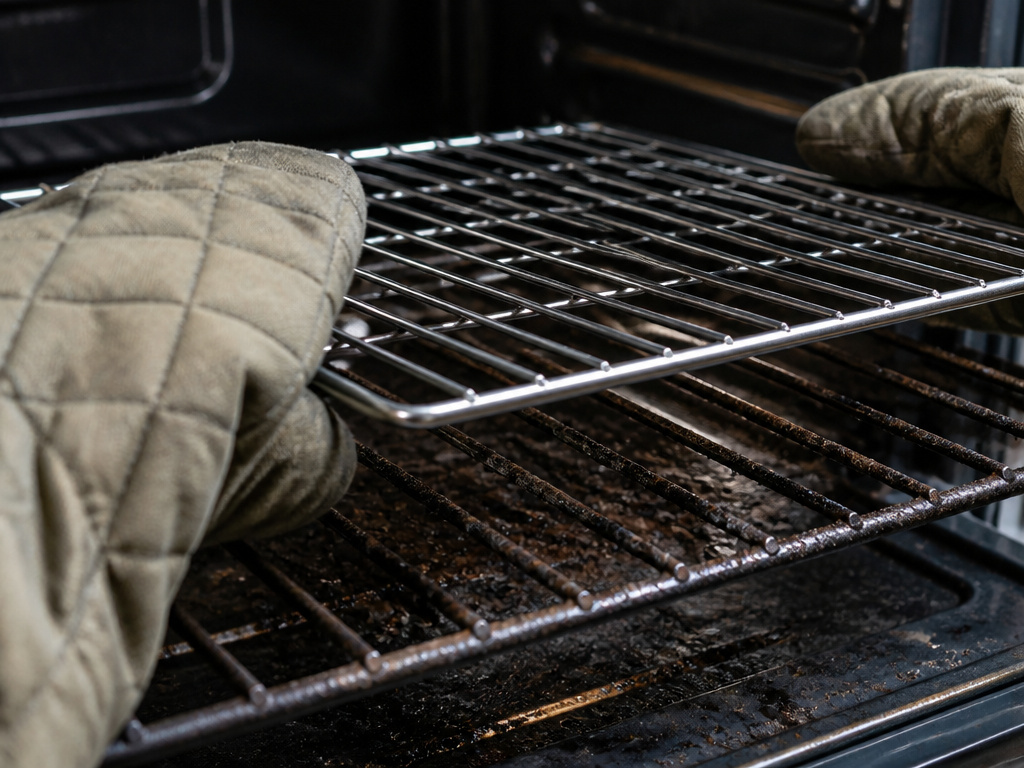
A rack used for roasting will get coated in polymerized fats, a hard, sticky residue that regular dish soap struggles with. Don’t reach for steel wool on a coated rack; you’ll scratch the surface off.
For stainless steel, make a paste of baking soda and water, spread it on the warm (not hot) rack, and let it sit for 15 minutes. Scrub with a nylon brush or a Dobie pad. The baking soda acts as a gentle abrasive. For baked-on grease, a soak in hot water with a dishwasher tablet can work wonders.
For non-stick racks, use only soft sponges and mild detergent. Abrasives destroy the coating, making the rack both less effective and potentially unsafe for future oven use as the coating flakes.
Dry the rack thoroughly before storing it. Trapped moisture in the welds or corners is the primary cause of rust, even on stainless steel. This is the same rust prevention logic you’d apply to a dish drying rack that sees constant water exposure.
Frequently Asked Questions
Can you put a wire cooling rack in the oven?
You can put a metal wire cooling rack in the oven if it’s made of stainless steel and states an oven-safe temperature rating. Avoid racks with plastic components, paint, or non-stick coatings that aren’t explicitly rated for high heat. Always place the rack on a rimmed baking sheet, not directly on the oven grates.
What temperature can a cooling rack withstand?
It depends entirely on the manufacturer. Common ratings are 400°F for non-stick coated racks and 450°F to 500°F+ for uncoated stainless steel models. The USA Pan Bakeable Cooling Grid is rated to 450°F. The Nordic Ware Multi-Purpose Rack is rated to 500°F but has been documented to warp at 425°F due to its thin construction.
Is it safe to put a non-stick cooling rack in the oven?
It is only safe if the manufacturer states the non-stick coating is oven-safe to a specific temperature. Many non-stick cooling racks are designed for countertop use only. Heating them beyond their limit can cause the coating to degrade, off-gas, or impart chemical flavors to food.
Can you use a cooling rack for broiling?
Only if the rack is specifically labeled as broiler-safe. Broiling subjects the rack to intense, direct heat from the top element. Most non-stick racks cannot handle this. A heavy-duty stainless steel rack with a high temperature rating (500°F+) is your best bet, but always check the manufacturer’s instructions first.
Why should you use a rack in the oven?
Using a rack elevates food, allowing hot air to circulate on all sides. This promotes even browning and crisping without the need to flip items constantly. It also lets fats and juices drip away into the pan below, preventing food from stewing in its own grease and reducing smoke from drippings hitting the oven floor.
The Bottom Line
A cooling rack can be a versatile oven tool, but the wrong one is a hazard. Ignore the “oven-safe” marketing and find the actual temperature rating. For reliability, choose an uncoated stainless steel rack with cross-braces and use it inside a rimmed sheet pan every time. This setup gives you the even heat and crispy results you want, without the warping, smoke, or chemical risks.
Store your oven-safe rack separately from your delicate countertop racks. Treat it like the specialized tool it is, and it will handle roasts, bacon, and vegetables for years. The goal is better cooking, not a kitchen cleanup nightmare.
