How to Store Cilantro: Keep It Fresh for Weeks, Not Days
This post contains affiliate links. As an Amazon Associate, we earn from qualifying purchases.
Store cilantro by treating it like a bouquet: stand the stems in a jar with an inch of cold water, cover the leaves loosely with a plastic bag, and refrigerate. This method, backed by agricultural extensions, maintains the 95-100% relative humidity cilantro needs to stay crisp for 10-14 days at 0°C. The herb’s aroma fades after about a week even if the leaves look fine.
That humidity target is the whole game. Cilantro is 90% water. Temperature shifts inside your fridge create condensation on those leaves, and excess water degrades the essential oils that carry its flavor. You are not just keeping it green; you are preserving the volatile compounds that make it taste like cilantro and not wet grass.
What follows: the three proven storage methods ranked by shelf life, the exact mistake that turns a bunch slimy in three days, and the science of why freezing is a last resort for cooking only.
Key Takeaways
- The jar-and-bag method is the gold standard, extending life to 10-14 days by replicating ideal 95-100% humidity.
- Never wash cilantro before refrigerating it. Surface moisture accelerates rot and strips flavor within days.
- Flavor degrades faster than the leaves wilt, expect the bright aroma to fade after 5-7 days even if the bunch still looks green.
- Freezing turns cilantro to mush for fresh use because ice crystals rupture its delicate cell walls upon thawing.
- Leaves stripped from the stem spoil three times faster, lasting only 2-3 days versus a week for an intact bunch.
The Jar Method (Bouquet Style)
This is not a trick. It is a direct mimic of the 95-100% relative humidity environment that the Ontario Ministry of Agriculture specifies for commercial cilantro storage. Your refrigerator is a dry, desert-like place for delicate herbs. The jar of water acts as a local humidity dome, and the loose plastic bag slows moisture loss without trapping too much ethylene gas.
For longer storage, place the cilantro bunch in a container of water like a bouquet of flowers. Cover the top loosely with a plastic bag. Refrigerate up to 1 week, changing the water in the container every two days. . Utah State University Extension
The steps are simple, but the details decide whether you get seven days or fourteen.
- Trim and hydrate. Snip a quarter-inch off the very bottom of the stems. This opens fresh capillaries to drink. Place them in a jar or glass with about an inch of cold water.
- Bag loosely. Drape a plastic produce bag or a reusable silicone bag over the leaves. Do not seal it tight. The goal is a greenhouse, not a vacuum chamber.
- Fridge placement. Keep it on a shelf, not in the crisper drawer. Most drawers are colder and more humid, which can push conditions past the ideal point and encourage sliminess.
- Change the water every two days. Stagnant water grows bacteria that travel up the stems.
Skip step four, and you will see the water cloud and smell a faint swampiness by day five. The stems brown from the bottom up, and the leaves yellow at the edges. This method is the benchmark for keeping other fresh herbs like parsley and mint vibrant, too.
The Paper Towel & Bag Method
No jar? This is your next best option. The damp paper towel provides the critical humidity, while the bag is just a barrier against the fridge’s dry air. It is a more forgiving system for a busy kitchen, but it trades some longevity for convenience.
Where this goes sideways: Making the paper towel too wet. The towel should feel cool and damp, not dripping. A soaked towel floods the bag, and the cilantro will rot in 3-4 days.
Follow this sequence for a clean, dry bundle every time.
- Lay a full-size paper towel flat. Run it under cold water, then wring it out completely.
- Unwrap your cilantro from any store packaging. Gently roll the whole bunch in the damp towel.
- Slide the bundle into a plastic produce bag or a reusable storage bag. Leave the top open or just loosely folded over.
- Place it in the crisper drawer. Here, the slightly higher humidity helps.
This setup keeps cilantro usable for 5-7 days. Check the towel on day three; if it feels dry, re-dampen it. If it feels soggy or you see dark spots on the leaves, replace it with a fresh, barely-damp towel.
The principle is the same for storing fresh parsley, a close cousin. The difference is parsley’s slightly sturdier leaves, which can often go a day or two longer under the same conditions.
| Storage Method | Best For | Expected Shelf Life | Critical Maintenance Step |
|---|---|---|---|
| Jar & Bag (Bouquet) | Maximum freshness, 10-14 days | 10-14 days | Change water every 48 hours |
| Damp Towel & Bag | Convenience, short-term planning | 5-7 days | Check/re-dampen towel on day 3 |
| Loose in Original Bag | Using within 2-3 days | 2-3 days | Remove any slimy leaves immediately |
Why Cilantro Wilts and Loses Flavor
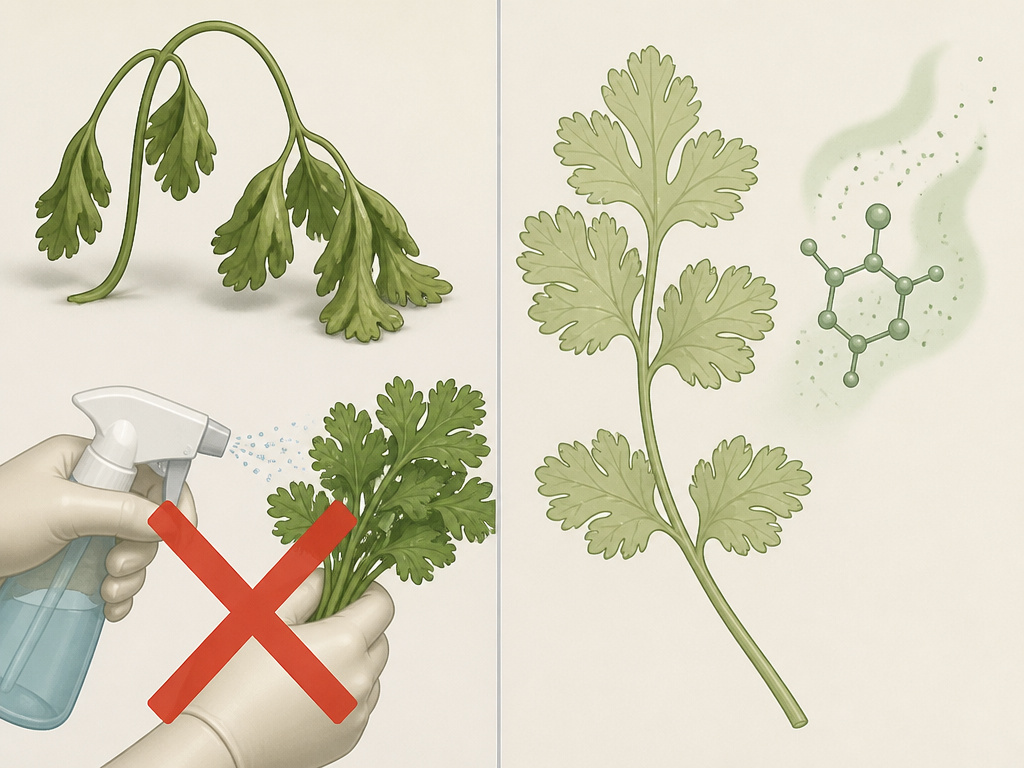
Cilantro fails in two distinct phases: texture first, then taste. Understanding this tells you when to use it and when to compost it.
Phase 1: The Wilt (Days 1-3). This is a water-pressure problem. The herb’s cells lose moisture to the dry fridge air, the leaves go limp, and the stems bend. The jar method solves this by providing constant humidity.
Phase 2: The Flavor Fade (Days 5-7+). This is a chemistry problem. The compounds that give cilantro its bright, citrusy aroma are volatile, they evaporate easily. Even in perfect 0°C storage, the USU Extension cilantro research page notes that aroma dissipates after about a week. The leaves may still be green and crisp, but they will taste muted, like a photocopy of the original herb.
Common mistake: Washing cilantro before storing it. As chef Michael Handal notes, excess moisture degrades the essential oils and leads to premature rotting. Always wash just before you use it.
This two-phase failure is why you should not judge cilantro by looks alone. Sniff it. If the punchy, distinctive scent is weak, it is past its prime for garnishes or fresh salsas, even if the leaves are still green.
How to Freeze Cilantro (And When Not To)
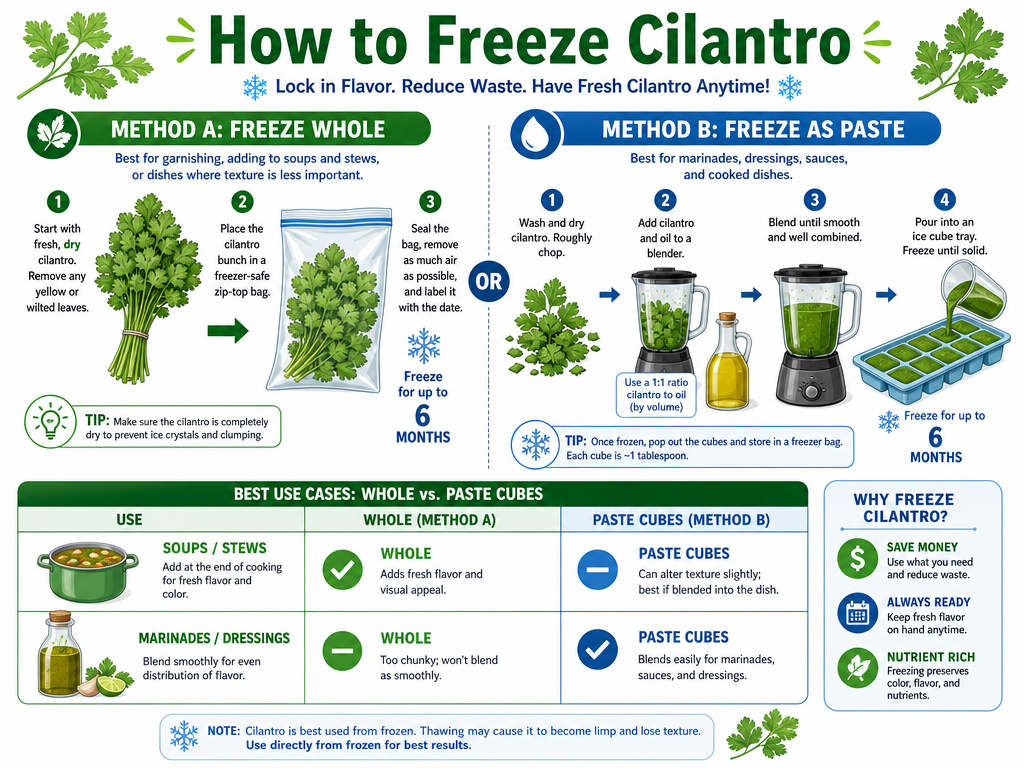
Freezing is not a freshness hack. It is a preservation technique for cooked dishes where texture does not matter. When cilantro freezes, the water inside its cells forms sharp ice crystals. Thawing bursts those crystals, turning the herb into a limp, dark-green mush.
When cilantro is frozen, ice crystals form in its cell walls. Upon defrosting, these crystals burst, making the herb limp and soggy. . Martha Stewart, citing chef expertise
If you accept that outcome, because the herb is going into a simmering soup or stew anyway, here are the two reliable methods.
Method A: Freeze Whole. Pat the unwashed bunch completely dry. Place it whole into a freezer-safe bag, squeeze out all air, and seal. It will be brittle and clumped when frozen. Chop it frozen directly into your cooking pot.
Method B: Freeze as Paste. This is the trick from the YouTube transcript. Blend clean, dry cilantro with a little oil (like avocado or olive) into a paste. Portion into an ice cube tray, freeze solid, then pop the cubes into a bag. One cube equals about a tablespoon of herb paste for sauces.
| Freezing Method | Best Use Case | Texture After Thawing | Pro Tip |
|---|---|---|---|
| Whole in Bag | Soups, stews, braises | Limp, soggy, dark green | Chop while still frozen; do not thaw first. |
| Oil Paste Cubes | Marinades, cooked sauces, dressings | Soft paste, retains color better | Use neutral oil to avoid overpowering the herb flavor. |
Freezing fresh basil follows a similar oil-paste logic, but basil’s more robust flavor holds up slightly better. For cilantro, consider freezing only if you bought a giant bunch for a big batch of chili.
Drying Cilantro: A Last Resort
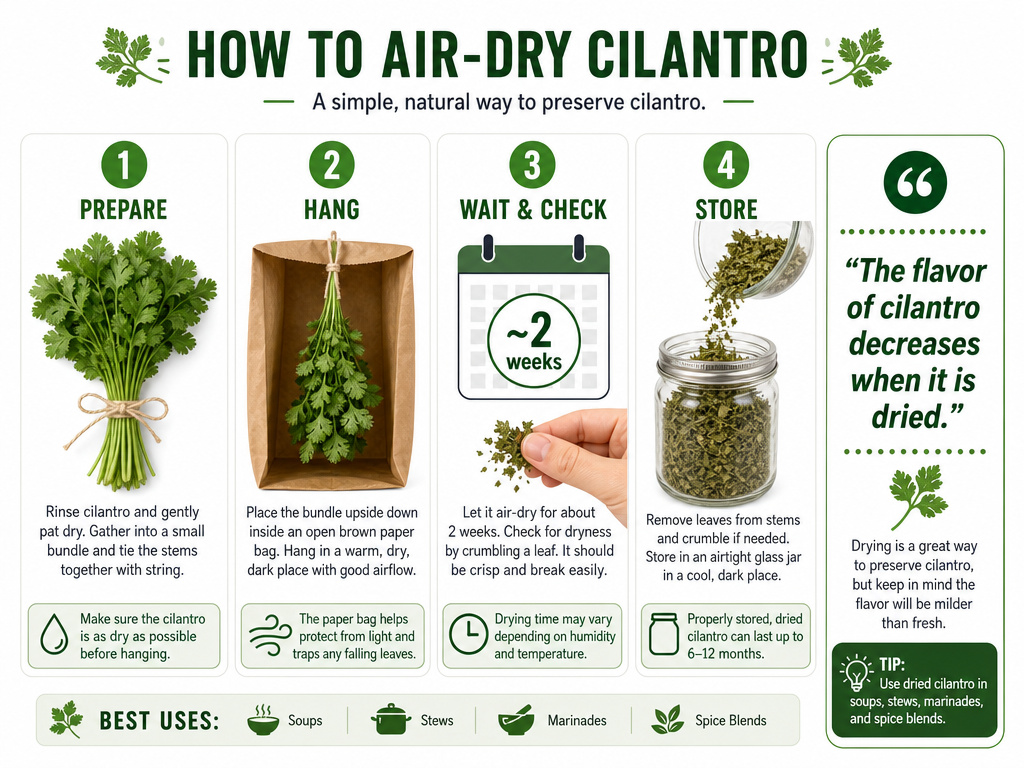
Drying is the least recommended option. The NDSU Field to Fork: Cilantro guide states plainly: “The flavor of cilantro decreases when it is exposed to heat or dried.” What you get is a faint shadow of the fresh herb, useful only in long-cooked dishes where it will be one of many background notes.
If you must dry it, air-drying is gentler than oven or microwave.
- Tie small bundles of clean, dry cilantro with string.
- Hang them upside down inside a brown paper bag in a cool, dark, well-ventilated room. The bag catches falling leaves and keeps out dust.
- Wait approximately two weeks until the leaves crumble easily to the touch.
- Store the dried leaves in an airtight container away from light and heat. Use within a year for any remaining flavor.
The process is identical for drying herbs like oregano or thyme. But for cilantro, the result is so mild that many cooks skip it entirely and just use the dried seeds, coriander, instead.
Buying and Prepping for Maximum Shelf Life
Your storage success is decided at the grocery store. A bunch that is already stressed will collapse no matter what you do.
Selection Rules:
- Look for erect, firm stems with no signs of bending or sliminess.
- Leaves should be vibrant green without yellow or black spots.
- Smell it. It should have a strong, clean, citrusy scent. No smell means no flavor left.
Prep Rules (Do This First):
- Unwrap it immediately when you get home. Remove any tight bands or twist-ties.
- Inspect and triage. Pick off any single wilted, slimy, or discolored leaves. One bad leaf spreads decay to its neighbors.
- Do not wash it. Store it dry, using one of the methods above.
- Only strip leaves right before you need them. The Chicago Food Bank guide notes leaves removed from the stem last only 2-3 days.
Think of cilantro as a living, breathing ingredient. Its needs are specific, and the Ontario Ministry of Agriculture cilantro page provides the commercial specs that home methods approximate. The goal is not indefinite life, but a predictable window of peak quality.
Frequently Asked Questions
Can you store cilantro in the original plastic bag?
Yes, but only for a very short term, 2-3 days. Store-bunch bags are often perforated, which is good for airflow but bad for retaining the high humidity cilantro needs. If you must keep it in the original bag, at least loosen the tie and place it in your crisper drawer. Check daily for condensation or slimy leaves.
Does cilantro last longer in water on the counter?
No. Room temperature accelerates the herb’s metabolism, causing it to yellow and wilt in 1-2 days. The water-and-bag method only works in the consistent cold of the refrigerator, which slows down decay and water loss.
Why does my cilantro turn slimy so fast?
Excess moisture is the cause. You likely washed it before storing it, or the paper towel you used was too wet, or condensation formed inside a tightly sealed bag. Sliminess is a sign of bacterial growth. Once it starts on a few leaves, it spreads through the whole bunch in a day.
How can you tell if cilantro has gone bad?
Look for black or dark brown spots on the leaves and stems. Feel for a slimy, wet texture on the stems or where leaves cluster. Smell it, bad cilantro has a foul, swampy odor instead of a fresh, green scent. If any of these are present, compost the whole bunch.
Is storing cilantro the same as storing parsley?
Very similar, but not identical. Parsley has slightly tougher leaves and stems, so it often lasts a day or two longer under the same jar or bag method. The core principle of maintaining high humidity is the same for both fresh herbs.
Before You Go
For the average cook, the jar-and-bag method is the only one you need to remember. It turns a perishable bunch into a reliable ingredient for up to two weeks. The paper towel method is a fine backup for a week-long plan.
The real insight is the timeline: flavor leaves before the leaves do. Plan your cilantro-heavy dishes, fresh salsas, garnishes, chutneys, for the first five days after purchase. Move it into cooked applications after that. And never, ever wash it until the moment it hits your cutting board.
That is how you keep cilantro from becoming a slimy, flavorless waste in the back of your fridge.
