Can You Freeze Alfredo Sauce From a Jar? A Complete Guide
This post contains affiliate links. As an Amazon Associate, we earn from qualifying purchases.
Yes, you can freeze Alfredo sauce from a jar, but its quality window is short, about 2 months for optimal texture. The dairy-heavy formula separates and can turn grainy after thawing because freezing ruptures fat and water cells. To maximize results, cool the sauce completely, transfer it to an airtight freezer bag or container leaving 1-2 inches of headspace, and freeze it flat. Thaw overnight in the refrigerator and reheat gently, stirring constantly.
That separation is the physical outcome of water expanding into ice crystals and fat globules clumping together, not a sign of spoilage. The sauce hasn’t gone bad; its emulsion has simply broken.
What follows: the precise steps to freeze jarred sauce, why the 2-month mark matters more than the 3-month safety limit, and the two ingredient tweaks that can salvage a broken batch after thawing.
Key Takeaways
- Freeze jarred Alfredo sauce within 2 months for the best texture; after that, graininess and separation become pronounced.
- Always cool the sauce to room temperature before packaging to prevent ice crystals and freezer burn.
- Use a heavy-duty freezer bag, remove all air, and freeze it flat for fast, even freezing and thawing.
- Thaw slowly in the refrigerator overnight, rapid thawing at room temperature guarantees separation.
- If the sauce separates upon reheating, a small whisk and a splash of milk or cream can often bring it back together.
The Science Behind Dairy Separation
Alfredo sauce is a fragile emulsion of fat, water, and protein. Freezing shatters that balance. Ice crystals form from the water content, expanding and puncturing the walls of fat globules and protein structures. Upon thawing, the water weeps out and the fat clumps, leaving you with a grainy, oily, sometimes watery sauce.
This is the predictable chemistry of a high-fat dairy product hitting 0°F. The NDSU Food Freezing Guide notes milk sauces often curdle and separate, recommending stirring during reheating to help retain smoothness.Your goal isn’t to prevent separation entirely, that’s nearly impossible with standard jarred sauce. Your goal is to manage it through technique.
Common mistake: Freezing a freshly opened, still-warm jar. The residual heat raises the freezer’s temperature around the package, creating large, damaging ice crystals and accelerating freezer burn. The sauce thaws into a watery, greasy mess.
The stabilizers in commercial Alfredo sauce buy you a little time, but they’re not magic. They delay separation, not defeat it. This is why the texture countdown starts the day you seal the freezer bag.
Why 2 Months is the Real Deadline
Food safety guidelines often cite 3-4 months for frozen sauces. Safety and quality are different timelines. At 0°F, pathogens are inert for far longer than a year. Quality decay is a sensory fade.
For jarred Alfredo, the quality cliff arrives around the 60-day mark. The sauce is still safe to eat well beyond that, but the texture degrades noticeably. It becomes more prone to permanent graininess, and the cheesy flavor can dull. Think of it as a best-by date for your palate, not your health.
| Storage Timeline | Texture & Quality | Best Used For |
|---|---|---|
| 0–2 Months | Minimal separation, easily reconstituted with stirring. Flavor remains close to fresh. | Pasta sauces, casserole toppings. |
| 2–3 Months | Noticeable graininess and oil separation. Requires vigorous whisking and added liquid to restore. | Mixed into baked dishes like chicken Alfredo pasta bake. |
| 3+ Months | Significant separation, potentially gritty texture. Flavor may be muted. | As a cooking ingredient in soups or fillings where texture is less critical. |
The Step-by-Step Freezing Process for Jarred Alfredo Sauce
This is a deliberate process to minimize cellular damage, not about dumping a jar into the freezer. The right container and technique matter more than the sauce itself.
1. Cool Completely. If you’ve heated the sauce, let it cool to room temperature. If the jar is unopened and room temp, you can proceed. Never freeze a hot or warm product. * Consequence if skipped: Steam creates condensation inside the package, which freezes into extra ice crystals. This leads to more water loss and a soggier, weaker sauce upon thawing.
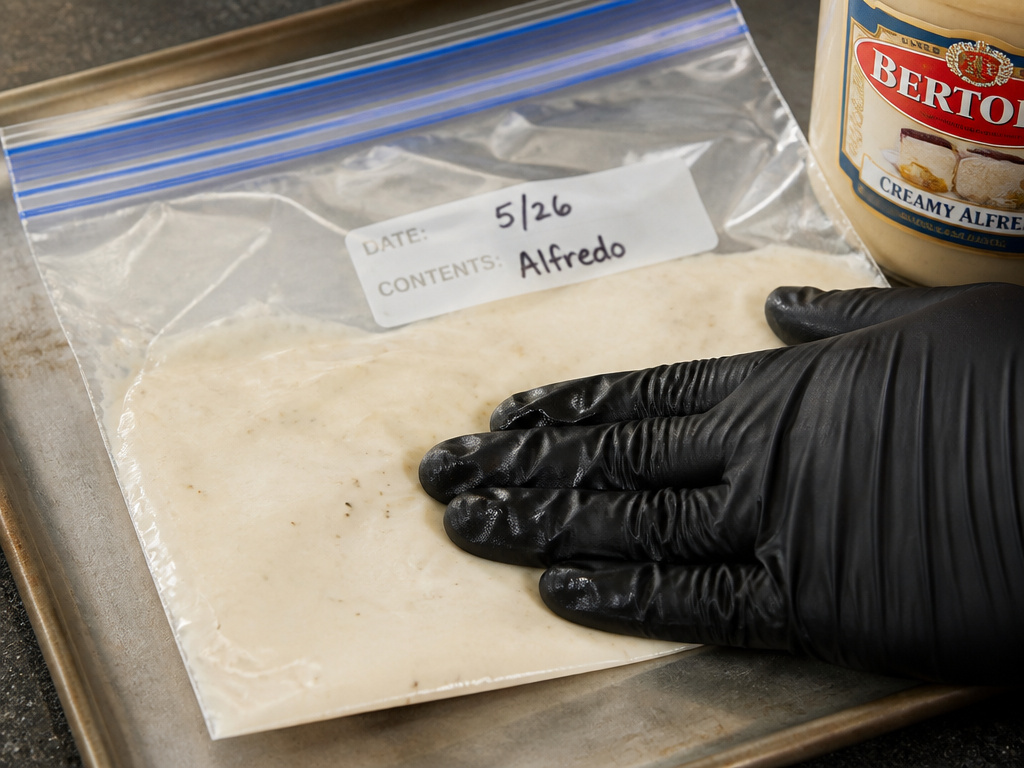
2. Portion and Package. Pour the sauce into your chosen freezer-safe container. For most, a heavy-duty, quart-sized freezer bag is ideal. * Leave 1-2 inches of headspace if using a rigid container to allow for expansion. * Remove all air from the bag before sealing. Use the water displacement method: lower the nearly sealed bag into a bowl of water, letting the water push the air out, then seal completely. * Label clearly with the contents and date.
3. Freeze Flat. Lay the sealed bag flat on a baking sheet. This creates a thin, uniform block that freezes quickly and evenly, minimizing crystal size. Once solid (after about 24 hours), you can stack the bags vertically to save space.
Container Showdown: Bag vs. Jar vs. Tub
Your packaging choice directly impacts texture and convenience.
Freezer Bags (Best): They allow you to remove almost all air, can be frozen flat for efficiency, and take up minimal space. They are single-use and require care to avoid leaks.
Glass Jars (Good, with rules): Must be specifically designed for freezing (wide-mouth, tempered glass like Mason jars). Leave ample headspace (1-2 inches). Avoid narrow-neck jars, expansion can crack them. Check out our guide on freezing in glass for specifics.
Plastic Containers (Adequate): Convenient and stackable, but they trap more air than a vacuum-sealed bag, increasing frost and freezer-burn risk. Ensure they are labeled as freezer-safe.
For long-term storage where texture is paramount, the bag-and-flat-freeze method wins. It’s the closest you can get to commercial flash-freezing at home. If you’re concerned about freezer burn, our article on how vacuum sealing prevents freezer burn explains the mechanism in detail.
Thawing and Reheating Without the Grain
This is where most attempts fail. Impatience ruins the sauce. Alfredo demands a slow, gentle return to temperature.
Thawing: Move the frozen sauce from the freezer to the refrigerator. Allow 12-24 hours for a full thaw. Do not thaw at room temperature or in warm water. The outer layers will thaw and separate long before the core melts, creating irreversible textural damage.
Reheating:
- Transfer the thawed sauce to a saucepan or skillet. It will likely look separated, this is normal.
- Heat on low to medium-low heat, stirring constantly with a whisk or silicone spatula.
- Bring it just to a simmer, not a rolling boil. The WSU convenience food freezing PDF advises reheating cream soups over boiling water or stirring to keep smooth.
- Once hot and combined, serve immediately.
Where this goes sideways: Cranking the heat to speed up reheating. High heat causes the proteins to tighten and squeeze out more water, accelerating separation into an oily, curdled pool. Low and slow is the only way.
The Salvage Operation for Separated Sauce
If, despite your care, the sauce looks broken, don’t dump it. Two rescue methods can often bring it back.
The Whisk & Liquid Method: While reheating over low heat, add a tablespoon of milk, cream, or even pasta water. Whisk vigorously. The new liquid and agitation can help re-emulsify the fats and water.
The Stabilizer Shake-Up: For future batches, consider a pre-freezing tweak. Adding a teaspoon of cornstarch or a tablespoon of cream cheese to the sauce before freezing can provide extra starch and fat molecules to help hold the emulsion during its freeze-thaw cycle. It’s a trick borrowed from freezing soup and other dairy-based liquids.
Jarred vs. Homemade: A Freezing Face-Off
The process is similar, but the starting points differ. Jarred sauce has stabilizers (like xanthan gum or modified cornstarch) that homemade lacks. This gives jarred sauce a slight edge in resisting separation, but it’s a marginal advantage.
Homemade Alfredo, with its fresh cream and Parmesan, has a purer flavor but is actually more delicate. It separates more readily. For homemade, the 2-month quality window is even stricter. Both benefit enormously from the cooling and flat-freezing techniques outlined above. Whether you’re dealing with leftovers from a brand like Bertolli or Ragu, or your own family recipe, the enemy is the same: time and temperature shock.
What Not to Do: The Refreezing Rule
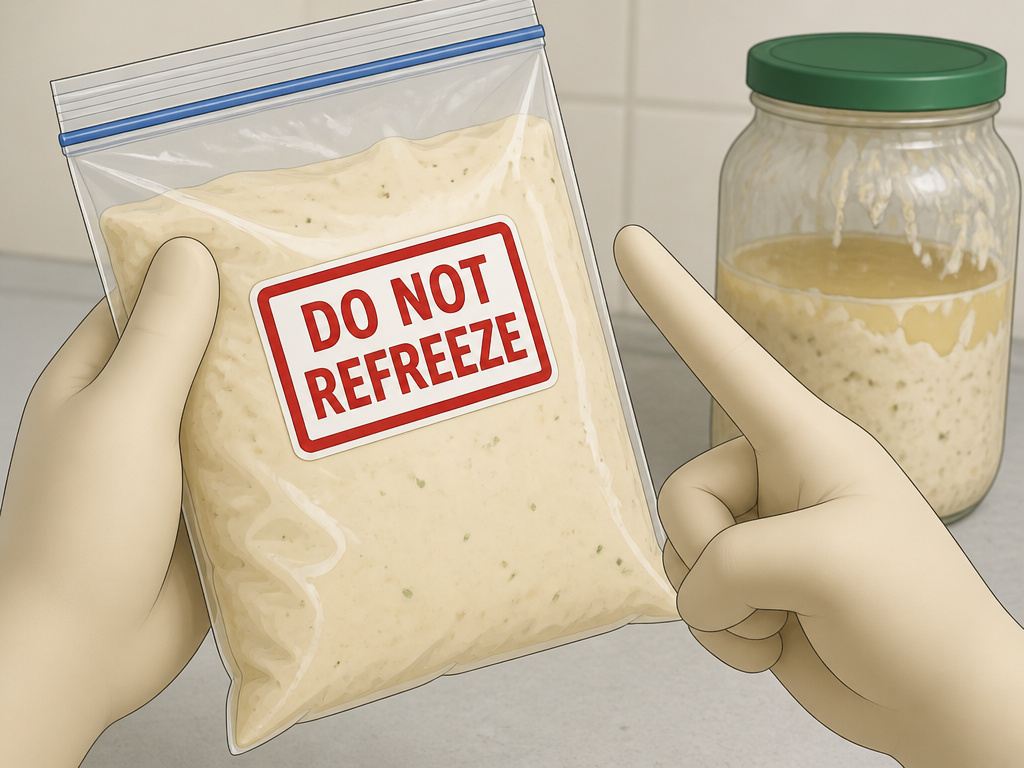
This is non-negotiable. Do not refreeze Alfredo sauce that has been fully thawed. The freeze-thaw cycle is destructive. Doing it twice multiplies ice crystal damage, guaranteeing a watery, grainy, unappealing product.
If you thaw a whole bag but only need half, use what you need and store the remainder in the refrigerator for up to 3 days. Treat it like a freshly opened jar. Planning your portions before you freeze, using smaller bags or even ice cube trays, is the smart way to avoid this dilemma. This principle applies to many dairy products, as covered in our article on freezing shredded cheese.
Frequently Asked Questions
Can you freeze Alfredo sauce with pasta in it?
You can, but you shouldn’t. Pasta absorbs the sauce and becomes mushy upon thawing and reheating. Freeze the sauce and pasta separately. Cook fresh pasta when you’re ready to eat and combine with the reheated sauce.
How long does frozen Alfredo sauce last?
For best quality, use it within 2 months. It will remain safe to eat indefinitely at 0°F, but texture and flavor degrade significantly after the 2-month mark.
Why did my frozen Alfredo sauce turn yellow?
This is a common result of freezing. It’s typically a harmless physical change in the fat and dairy components, not spoilage. The color does not affect safety.
Can you freeze Alfredo sauce in its original glass jar?
Only if the jar is specifically designed for freezing (like a canning jar) and you leave 1-2 inches of headspace at the top. Most commercial sauce jars are not tempered for freezer expansion and can crack. Transferring to a freezer bag is safer and more effective.
What’s the best way to reheat frozen Alfredo sauce?
Thaw overnight in the refrigerator. Then, reheat in a saucepan over low heat, stirring constantly, until it just reaches a simmer. A double-boiler method is even gentler and helps prevent scorching.
The Bottom Line
Freezing jarred Alfredo sauce is a practical way to reduce waste, but it’s a trade-off. You’re exchanging some textural perfection for convenience. Success hinges on three things: cooling the sauce completely, using an airtight bag and freezing it flat, and committing to a slow, gentle thaw and reheat. Respect the 2-month quality window, and always thaw in the fridge. When you reheat, keep the heat low and your whisk moving. For more on preserving other prepared foods, the MU Extension home food freezing guide offers a broad look at techniques.
