Can I Put Banana Pudding in the Freezer? The 2-Month Rule
This post contains affiliate links. As an Amazon Associate, we earn from qualifying purchases.
You can put banana pudding in the freezer for up to two months at 0°F. The custard and cookies freeze fine, but the bananas will turn dark, mushy, and lose flavor. For the best results, freeze the pudding without the whipped cream topping and use an airtight container.
That two-month window isn’t a guess. It’s the USDA’s upper limit for frozen pudding, echoed by university extension services. The clock starts ticking the moment the container hits the freezer coils. After 60 days, quality drops fast.
What follows: the exact steps that keep texture changes to a minimum, the one commercial product that solved the banana problem, and how to tell if your thawed pudding is still safe to eat.
Key Takeaways
- Freeze banana pudding for a maximum of two months at 0°F to maintain safety and best quality.
- The bananas will always darken and soften upon thawing; this is a chemical reaction, not a storage mistake.
- Leave off the whipped cream before freezing, it weeps and separates.
- Thaw overnight in the refrigerator, never at room temperature.
- If thawed pudding still contains ice crystals and is refrigerator-cold, it can be refrozen once.
The 2-Month Freezer Rule (And Why Bananas Break It)
University extensions are the quiet authority on home food preservation. Their guidelines are based on shelf-life testing, not opinion. The MU Extension freezing guide and the UC Davis food safety PDF both point to a two-month ceiling for desserts like steamed puddings and cream puffs. Banana pudding fits squarely in that category.
Freezing does not stop chemical change; it just slows it way down. Enzymatic browning in bananas continues at a glacial pace at 0°F, which is why they emerge from the freezer darker and softer.
The custard base and vanilla wafers handle the cold well. The custard’s fat and starch molecules form a stable matrix that holds its shape. Cookies might lose a little crunch but rehydrate into a pleasant softness. The bananas are the structural weak point.
Their high water content expands as it freezes, rupturing cell walls. When thawed, that water doesn’t go back into the cells. It leaks out, leaving the fruit mushy. Simultaneously, polyphenol oxidase enzymes, the same ones that brown a sliced apple, keep working, albeit slowly, in the frozen state. You get a double hit of texture loss and color change.
| Component | Freezes Well? | Result After Thawing |
|---|---|---|
| Custard/Pudding Base | Yes | Stable, creamy texture. May appear slightly curdled but recombines when stirred. |
| Vanilla Wafers | Moderately | Soft, moist texture. Loses snap but absorbs custard flavor. |
| Fresh Banana Slices | No | Dark brown, mushy, watery. Significant flavor loss. |
| Whipped Cream Topping | No | Separates, becomes grainy and watery. |
This is why most advice says to enjoy banana pudding fresh. Freezing is a salvage operation for leftovers, not a primary planning strategy.
What About Magnolia Bakery’s Frozen Pudding?
Magnolia Bakery launched a “frozen-to-thaw” banana pudding product as a direct answer to this problem. Their innovation isn’t better packaging; it’s recipe engineering. They use a banana puree or flavor system that doesn’t contain the same reactive enzymes and cell structures as fresh slices.
Their product can cycle between freezer and fridge because it was designed from the outset to withstand those temperature changes. Your homemade version, built on fresh fruit, cannot. This is a crucial distinction. A commercial formulation solving a problem doesn’t mean the problem doesn’t exist for home cooks, it confirms it.
Step-by-Step Guide to Freezing Banana Pudding
If you have a large batch to preserve, this method minimizes damage. The goal is rapid freezing to keep ice crystals small, which does less cellular damage to the cookies and custard.
Before you start: Ensure your freezer is at 0°F or below. Freeze only 2-3 pounds of pudding per cubic foot of freezer space to achieve a fast freeze. Overloading the freezer leads to slow freezing and larger ice crystals.
1. Cool Completely. Let the pudding settle in the refrigerator for at least two hours, uncovered. This stops carryover cooking and allows the custard to set. A warm pudding will create condensation inside the container, leading to ice crystals on the surface.
2. Omit the Whipped Cream. Scoop off any whipped cream topping. As the Ohio State freezing cooked foods guide notes, dairy-based toppings separate and become unpleasantly grainy when frozen. You can add fresh cream after thawing.
3. Choose the Right Container. Use a rigid, freezer-safe container with an airtight lid. Glass or thick BPA-free plastic works. The container should be just large enough to hold the pudding with minimal headspace, about half an inch is ideal. Excess air invites freezer burn.
4. Portion for Safety. Consider dividing a large batch into smaller servings. This lets you thaw only what you need and reduces the time the food spends in the temperature “danger zone” above 40°F during thawing.
5. Seal Out Air. Press a layer of plastic wrap directly onto the surface of the pudding. This creates a barrier against air, which is the main cause of freezer burn and off-flavors. Then snap on the airtight lid.
6. Label and Freeze. Write the contents and date on the container with a permanent marker. Place it in the coldest part of your freezer, ideally against the back or side wall where it’s coldest. Freeze flat.
Common mistake: Using a container that’s too large. The empty space fills with frosty air, drying out the top layer of pudding within weeks.
Following these steps is similar to best practices for freezing soup or how to freeze cheese, it’s all about excluding air and freezing fast.
How to Thaw Frozen Banana Pudding Safely
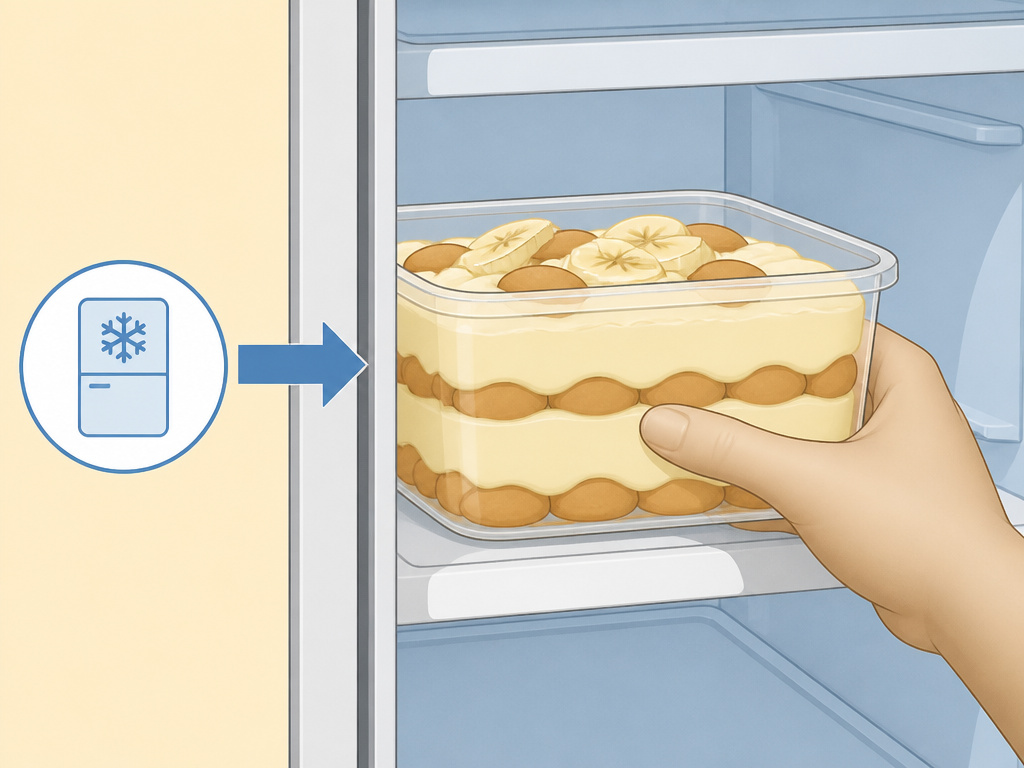
Thawing is where food safety meets texture rescue. The goal is to keep the pudding cold enough to stop bacterial growth but warm enough to thaw evenly.
Refrigerator Thawing is Non-Negotiable. Transfer the container from the freezer to the fridge. Allow 24 hours for a quart-sized portion. This slow, cold thaw gives the custard and cookies the best chance to rehydrate evenly without becoming a soggy pool.
What About the Microwave? Don’t do it. Microwaving will cook the edges of the custard while leaving a frozen core, and it will turn the already-fragile bananas into complete mush. If you’re in a desperate hurry, place the sealed container in a cold water bath, changing the water every 30 minutes. It’s still a compromise.
After Thawing, Stir Vigorously. The custard may look slightly separated or curdled. This is normal. A strong stir with a spoon or a few pulses with a hand mixer will usually re-emulsify it into a smooth consistency.
To Serve. Once thawed, you can enjoy it cold. If you prefer it less chilled, let it sit on the counter for 15-20 minutes, no more. Add a fresh layer of whipped cream and a few new banana slices for visual appeal and a burst of fresh flavor. This mirrors the logic of freezing banana bread, you often add a fresh element after thawing to compensate for what was lost.
Can You Refreeze Banana Pudding?
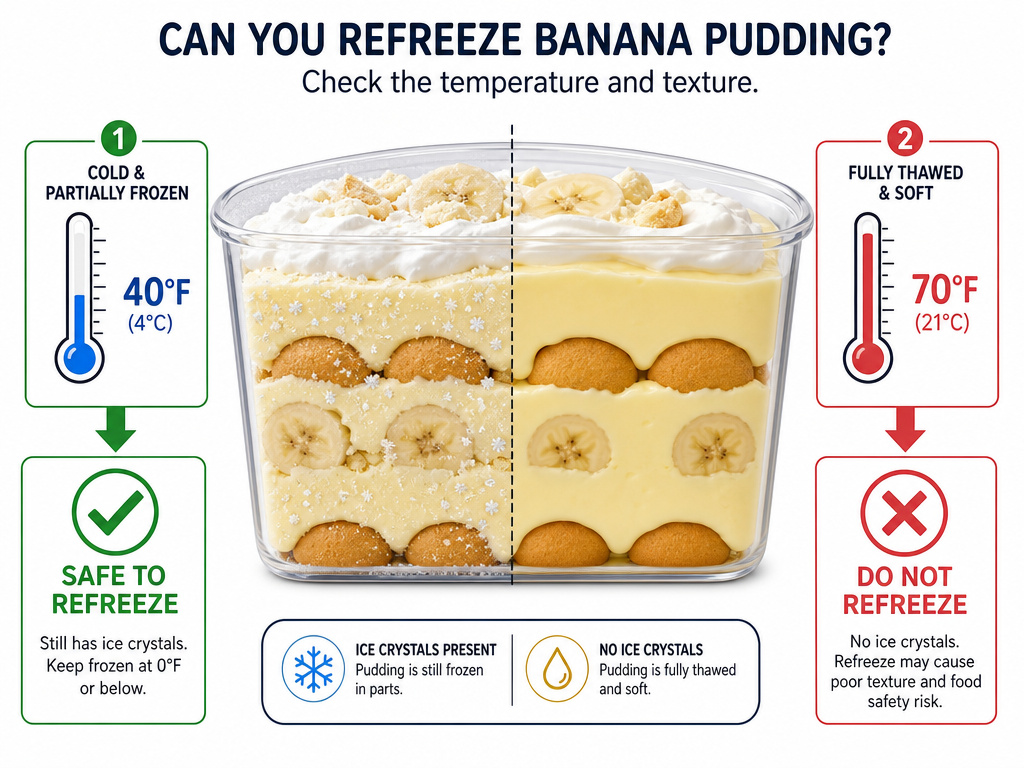
This depends entirely on temperature history, not a simple yes or no. The OSU Extension food freezing PDF provides the rule.
If thawed food still contains ice crystals or is refrigerator-cold (40°F or below), it can be refrozen. However, quality will suffer noticeably with each freeze-thaw cycle.
If you thawed a large container, took out one portion, and immediately put the still-icy remainder back in the freezer, that’s safe. The texture will be further degraded, but it won’t spoil.
If the pudding sat on the counter for three hours, reached room temperature, and became completely thawed and soft, do not refreeze it. Bacterial growth becomes a real risk, and the pudding’s structure is too broken to recover. When in doubt, throw it out.
This refreezing principle is consistent across many foods, from freezing jelly to how to freeze bread properly. Safety hinges on temperature control.
Troubleshooting: Common Freezing Problems
Even with perfect technique, things can go sideways. Here’s what to look for and whether you can fix it.
Problem: The pudding is watery and separated.
Cause: The custard was either undercooked before freezing or thawed too quickly. High heat can also cause custard proteins to tighten and squeeze out water.
Fix: Stir aggressively. If it’s still soupy, you can whisk in a small slurry of cornstarch and milk and gently reheat it on the stove until it thickens. Consider it a repair, not a restoration.
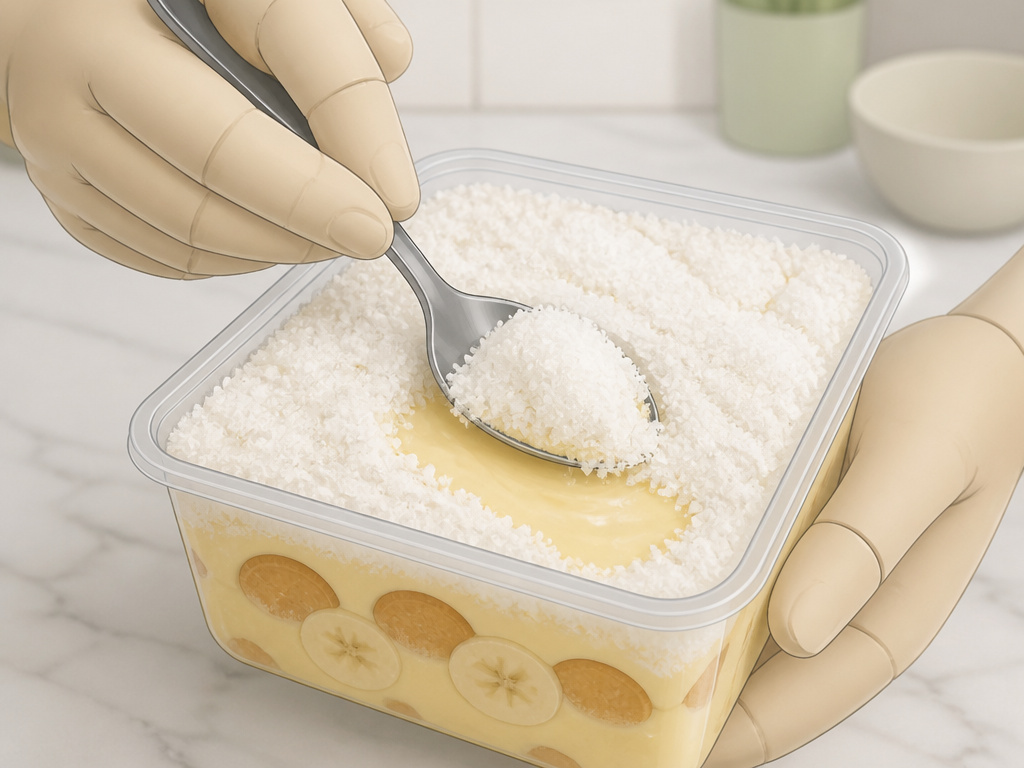
Problem: There are thick, icy crystals on top.
Cause: This is freezer burn, caused by air exposure in the container or temperature fluctuations in the freezer.
Fix: Scoop off the affected layer. The pudding underneath is safe but may have a slightly off flavor. Next time, use the plastic-wrap barrier method and ensure your freezer door seals tightly.
Problem: The bananas are completely black and tasteless.
Cause: This is the expected outcome. Enzymatic browning and cell rupture are irreversible.
Fix: You can’t fix it, but you can mask it. Fold in a handful of fresh banana slices just before serving to reintroduce flavor and texture. Alternatively, embrace it as a different dessert, the caramelized banana flavor can be pleasant in its own way.
Problem: The cookies have dissolved into a grainy paste.
Cause: The pudding was too warm when assembled, or the cookies were exceptionally thin and porous.
Fix: None. This is a textural loss. For future batches, ensure the custard is completely cool before layering, and use a sturdier cookie.
Managing these issues is part of learning what is freezer burn and how different ingredients react. It’s the same science that explains why freezing Jell-O works well but freezing gelatin salads does not.
Frequently Asked Questions
How long does banana pudding last in the freezer?
Banana pudding maintains its best quality for 1 to 2 months when stored at a constant 0°F. After two months, it remains safe to eat but will experience significant declines in texture and flavor. This guideline comes from USDA and university extension recommendations for similar dairy-based desserts.
Can you freeze banana pudding with the bananas in it?
Yes, you can, but you must accept that the bananas will turn dark brown and mushy. Freezing ruptures the fruit’s cell walls, causing irreversible texture loss. If you want to freeze a banana dessert with better results, consider a recipe like freezer jam that uses cooked or pureed fruit, which withstands freezing far better.
Does freezing ruin banana pudding?
Freezing doesn’t ruin it from a safety standpoint, but it permanently alters its texture and appearance. The custard and cookies fare okay, but the fresh banana component is fundamentally changed. Therefore, freezing is best reserved for preserving leftovers you can’t finish, not for making “make-ahead” banana pudding for a special event.
What’s the best container for freezing banana pudding?
Rigid, airtight plastic or glass container is best. Ensure it is labeled as freezer-safe. Before sealing, press plastic wrap directly onto the pudding’s surface to eliminate air pockets. This method is crucial for all containers for the freezer to prevent freezer burn.
Can I freeze individual servings of banana pudding?
Absolutely. Portioning into individual containers or ramekins is an excellent strategy. It allows for faster freezing and thawing, and you only defrost what you need. This approach is highly recommended and follows the same logic as using soup in freezer bags for single meals.
The Bottom Line
You can freeze banana pudding, but you’re signing up for a different dessert. The two-month rule from food safety authorities is your guide, not a suggestion. The bananas will darken and soften, that’s biochemistry, not a flaw in your method.
For the best outcome, freeze only the custard and cookie layers, use an airtight container with a plastic-wrap barrier, and thaw slowly in the refrigerator. Understand that refreezing is a temperature game, not a preference.
If you love the perfect, fresh version, make it and eat it. Freezing is your backup plan for the last helping that would otherwise go to waste. Sometimes, a slightly mushy, home-frozen pudding is still better than no pudding at all.
