8 Best Containers to Freeze Chicken Stock 2026
This post contains affiliate links. As an Amazon Associate, we earn from qualifying purchases.
The best container to freeze chicken stock is the GGOW Silicone Freezer Tray for its reliable portion markings, flexible design, and secure lid. If you need larger quantities, the 2-Cup Silicone Freezer Trays with Lid offer excellent versatility. For bulk freezing, the Extreme Freeze 64 oz Reditainer is a sturdy, no-frills pick.
Freezing chicken stock shouldn’t mean guessing portions or dealing with cracked containers and freezer burn. So many people end up wasting time and food because their containers don’t hold up or make it hard to use just what they need. After comparing the field based on specs, owner feedback, and my focus on food preservation, I’ve narrowed in on the ones that truly work in real kitchens.
This guide highlights containers that balance smart design with durability, prioritizing portion control, seal quality, and material performance so your stock stays fresh and ready to use.
Top 7 Container To Freeze Chicken Stock in the Market
The Best Container To Freeze Chicken Stock, Reviewed
GGOW Silicone Freezer Tray for Broth

Strengths
- Stainless-steel frame
- Easy release
- Clear measurement lines
Trade-offs
- Lid fit slightly loose for some
- Slight odor retention reported
- Not oven safe with lid
This one hits the sweet spot between function and value. The internal stainless-steel frame gives it stability without killing microwave use, and owners consistently say the cubes release easily, no wrestling with stubborn frozen blocks. The measurement markings are clear, and the snug-fitting transparent lid does its job keeping odors out and stacks well.
Compared to pricier models, it delivers nearly the same performance at a much friendlier price. It’s not flashy, but it’s reliable. I’d pick this over the more expensive Souper Cubes for most home cooks, especially since it balances durability, ease of use, and practical design without overengineering.
Video review
Doasuwish 1-Cup Silicone Freezer Tray

Strengths
- Excellent value
- Stainless steel rim
- Clear measurement lines
Trade-offs
- Lids may warp over time
- Limited to 1-cup max portions
- Not oven safe with lid
For the price, this is hard to beat. Eight compartments across two trays mean you can freeze a full quart of stock in one go, and the stainless steel rim keeps the trays rigid, something flimsier models struggle with. Owners consistently praise how well the cubes pop out and how the lids seal without leaking. The 125mL and 250mL markings are precise, which matters when you’re measuring stock for recipes.
Compared to the GGOW model, it’s nearly identical in performance but often priced lower. That makes it my go-to recommendation for most people. It doesn’t skimp on durability, and the balance of cost, function, and reliability is spot-on. If you’re freezing chicken stock regularly, this is the easiest pick.
Video review
Souper Cubes 1 Cup Silicone Molds

Strengths
- Steel-reinforced rim
- Platinum-cured silicone
- Dual measurement lines
Trade-offs
- High price per tray
- Only 2 trays included
- No large capacity option
I’ll admit, the price tag on these makes me pause, especially when you’re only getting two trays. But on paper, the build quality stands out. The steel-reinforced rim and platinum-cured silicone are legit upgrades, and owners consistently report these hold their shape better than flimsier models when full. For someone who hates floppy silicone trays that tip over on the way to the freezer, that’s a real win.
Still, for freezing chicken stock, the 1-cup size is smart, and the dual fill lines offer flexibility. But compared to other packs with more trays at lower prices, this feels more like a luxury sample than a practical workhorse. I’d pick it if durability is my top concern and budget isn’t tight, but it’s hard to justify over better-value alternatives.
Product photos


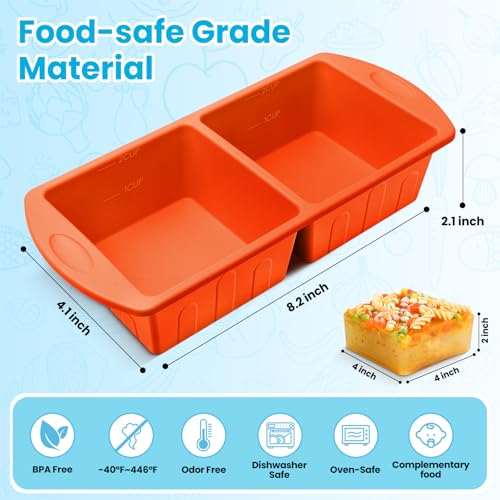
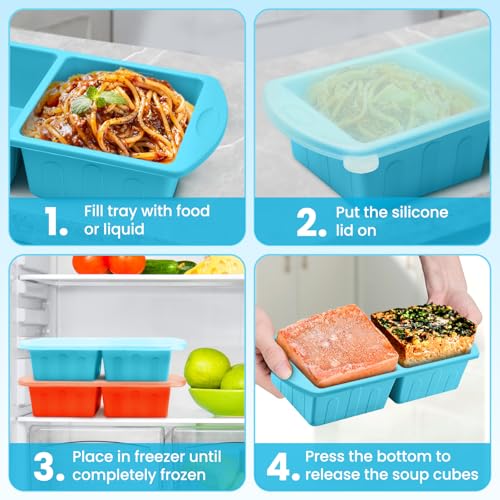
2-Cup Silicone Freezer Trays with Lid
Strengths
- 2-cup capacity
- Stainless steel frame
- Dishwasher safe
Trade-offs
- Not microwave safe
- Lid seal inconsistent
- Bulky for small freezers
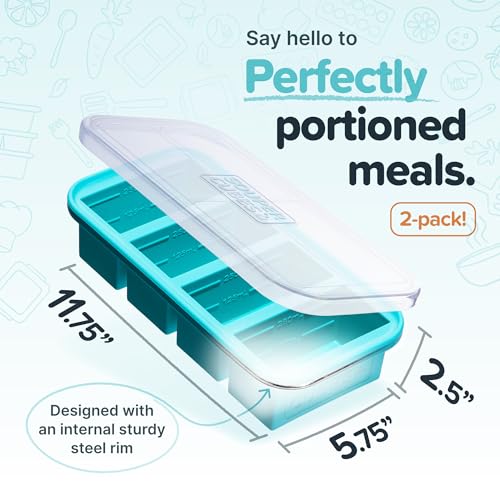
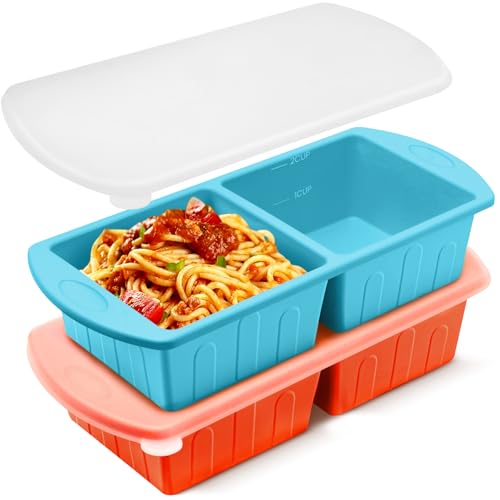
At first glance, the 2-cup capacity per tray stands out, ideal if you’re freezing full servings of stock instead of small portions. The transparent lids are a nice touch, letting you see contents quickly, and the stainless steel frame adds rigidity, which owners say prevents sagging. But I’m wary of the microwave restriction due to that metal frame, something that could trip people up if they’re not paying attention.
Compared to other silicone trays, this one leans into utility with its larger size and sturdy build. But some reviewers mention the lids don’t seal as tightly as claimed, which could lead to odor transfer in the freezer. If you need bigger portions and don’t reheat in the microwave, it’s a solid pick. Otherwise, there are more versatile options.
Product photos


Bangp 1-Cup Silicone Freezer Molds

Strengths
- Multiple fill lines
- Steel-reinforced rim
- Dishwasher safe
Trade-offs
- Overpriced for quantity
- No standout innovation
- Lid seal could be tighter
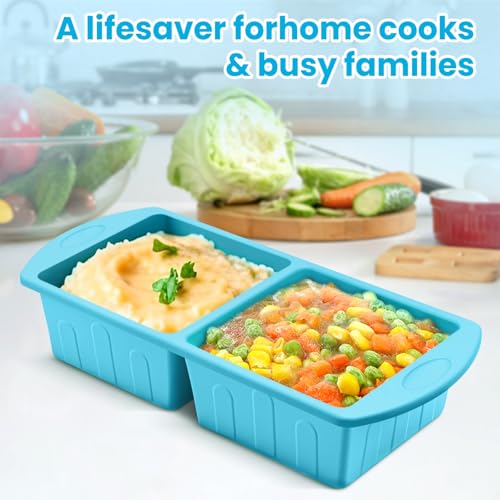
At nearly $20 for two trays, the price stings a bit, especially when others offer more trays for less. That said, the steel-reinforced rim and BPA-free silicone are solid specs, and owners report good release performance and durability. The four fill lines per compartment add versatility, letting you freeze anything from demi-glace to smoothie bases with precision.
But when stacked against the GGOW or Doasuwish models at similar or lower prices, it doesn’t bring enough new to justify the cost. It’s reliable, yes, but not exceptional. I’d recommend it only if the others are out of stock, there are better values in the same tier.
Product photos


Extreme Freeze 64 oz Reditainer
Strengths
- High capacity
- Commercial-grade build
- Leak-resistant seal
Trade-offs
- Too large for most households
- Slow thaw times
- Less portion control
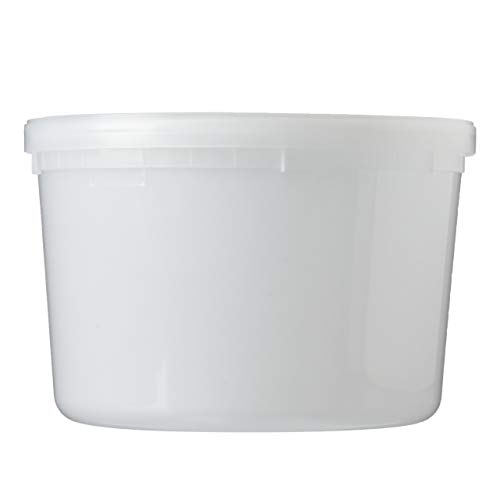
If you’re freezing stock in serious volume, these half-gallon containers make sense. Eight of them give you flexibility to store big batches, and the thick polypropylene feels commercial-grade, something I appreciate for long-term freezing. Owners confirm they hold up well to repeated use, and the tight-sealing lids prevent leaks even when moved.
But let’s be real: this is overkill for most. Unless you’re running a small soup business or feeding a crowd weekly, you’ll likely struggle to fill these efficiently. For chicken stock, that much liquid in one container means slow thawing and potential waste if you only need a cup. It’s a niche pick, but a great one if your needs match the scale.
Product photos

Reditainer 32-Ounce Freezable Containers

Strengths
- High quantity pack
- Leak-resistant lids
- Durable plastic build
Trade-offs
- Large size inefficient for small portions
- Takes up freezer space
- Plastic may absorb odors over time
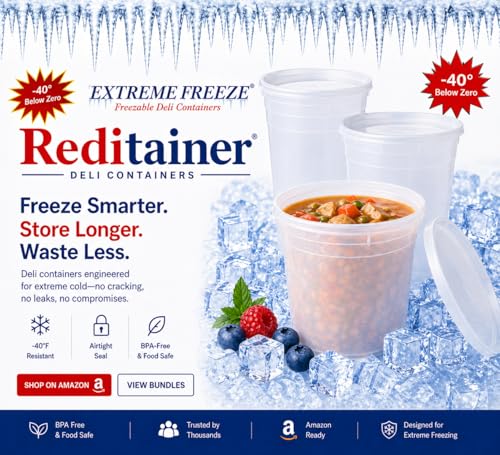
This pack delivers serious volume. With 24 heavy-duty plastic containers, it’s built for people freezing large batches of stock, think holiday cooking or weekly meal prep for a big family. The polypropylene holds up well in deep freeze conditions, and owners praise how well the lids seal, preventing leaks and freezer burn. Plus, being dishwasher safe and microwaveable makes cleanup a non-issue.
But let’s be honest: these aren’t for portioning. If you’re trying to freeze single servings of chicken stock, you’ll end up with a lot of half-full containers wasting space. It’s overkill for singles or small households. Still, for bulk storage where volume matters more than precision, this is one of the smarter buys.
Product photos


How We Chose These container to freeze chicken stock
As the creator of Food Keepy, I spend a lot of time researching the best ways to preserve food and minimize waste. To determine the top containers for freezing chicken stock, I looked at a range of options, comparing published specifications – capacity, material composition, temperature resistance – with detailed owner and expert reviews. My assessment focused on features that directly impact usability and long-term food quality, leaning on my understanding of best practices for freezer storage. Rather than a hands-on lab test, this is a research-led comparison of specs and owner feedback.
For chicken stock specifically, portion control and leak-proof seals were the most important factors. Stock is often frozen in smaller quantities for use in recipes, so clearly marked portion sizes are incredibly helpful. A secure lid is vital too, as frozen stock can expand and a poor seal leads to freezer burn and a messy freezer. Durability also weighed heavily; a container needs to withstand repeated freezing and thawing without cracking or warping.
Specifications reliably tell you about a container’s capacity and temperature tolerance. However, I paid closer attention to owner feedback regarding ease of release (how easily frozen stock pops out) and the effectiveness of the lid’s seal over time. Reputation – brands known for quality food storage – also influenced my rankings. Understanding whether a container truly prevents freezer burn, or if it’s simply marketed that way, requires considering real-world user experiences. If you’re considering alternative storage methods, you might find our guide to freezing soup useful, especially if you are also interested in using soup freezer bags.
How To Choose The container to freeze chicken stock
Finding the right container to freeze your liquids, like chicken stock, is about more than just tossing something in the freezer. A good container will protect the flavor and texture of your stock, prevent freezer burn, and make thawing and using it as simple as possible.
A truly effective freezer container for liquids is made from food-grade silicone or polypropylene, includes portion control markings, offers a secure lid to prevent leaks and odor transfer, and is durable enough to withstand repeated freezing and thawing cycles. Consider stackability for efficient freezer organization, and look for containers that can transition from freezer to microwave or oven (where appropriate).
Portion Control is Key
One of the biggest benefits of freezing stock is the ability to have just the right amount on hand when you need it. This is where portion control features become incredibly valuable. Many containers offer pre-marked fill lines (½ cup, 1 cup, etc.), taking the guesswork out of freezing. I’ve found that having a variety of portion sizes is best. Don’t limit yourself to just one size; consider what you typically use stock for.
- Smaller portions (½ cup) are perfect for deglazing a pan or adding a quick flavor boost to a sauce.
- 1-cup portions are great for small recipes or as a base for soups.
- Larger portions (2+ cups) are ideal for larger batches of soups, stews, or sauces, or for when you know you’ll need a significant amount of stock at once.
Material Matters: Silicone vs. Plastic
While both silicone and polypropylene plastic containers have their place, silicone generally offers more advantages for freezing liquids. Silicone is naturally more flexible, making it easier to pop out frozen stock cubes. It’s also generally considered more durable over repeated freeze/thaw cycles than many plastics. However, polypropylene containers, like those from Reditainer, are often more rigid and can be more economical, especially if you need to freeze larger quantities. If you’re also looking at ways to safely handle the raw ingredients before making stock, checking out guides on storing raw chicken can be a helpful addition to your kitchen prep.
Lid Security and Overall Design
A secure lid is absolutely essential. You want to prevent leaks, of course, but also minimize exposure to freezer air, which causes freezer burn. Look for lids that create a tight seal – some silicone containers have lids designed to expand slightly during freezing to enhance the seal. Beyond that, consider stackability. Freezers are precious real estate, and containers that nest or stack efficiently will save you space. I also recommend thinking about the overall shape. Containers with wide openings are easier to fill and clean, and those with flat bottoms will sit more stably in the freezer. Learning effective methods for storing stock will only be amplified by using the right containers.
Don’t underestimate the importance of a well-fitting lid. A leaky container isn’t just messy; it compromises the quality of your frozen stock.
Container to Freeze Chicken Stock Compared
Here’s a comparison of features for containers designed to freeze chicken stock, to help you choose the best option for your needs.
| Product Name | Capacity Per Unit | Portion Size Markings | Material | Lid Type | Freezer Safe | Dishwasher Safe |
|---|---|---|---|---|---|---|
| GGOW Silicone Freezer Tray | 0.5/1 Cup | Yes (0.5/1 cup, 125/250mL) | Food-Grade Silicone | Snug-fitting | Yes | Yes |
| Doasuwish 1-Cup Silicone Freezer Tray | 1 Cup | Yes (0.5/1 cup, 125/250mL) | Food-Grade Silicone | Silicone | Yes | Yes |
| Souper Cubes 1 Cup Silicone Molds | 1 Cup | Yes (0.5/1 cup, 125/250mL) | Food-Grade Silicone | Silicone | Yes | Yes |
| 2-Cup Silicone Freezer Trays with Lid | 2 Cup | Yes (1/2 cup, 500mL) | Food-Grade Silicone | Transparent Silicone | Yes | Yes |
| PrepWorks Half-Cup Freezer Pod Tray | 0.5 Cup | N/A | Silicone | Recloseable Silicone | Yes | Yes |
| Bangp 1-Cup Silicone Freezer Molds | 1 Cup | Yes (0.5/1 cup, 125/250mL) | Food-Grade Silicone | Silicone | Yes | Yes |
| Extreme Freeze 64 oz Reditainer | 64 oz | N/A | Polypropylene | Tight Sealing | Yes | Yes |
| Reditainer 32-Ounce Freezable Containers | 32 oz | N/A | Polypropylene | Tight Sealing | Yes | Yes |
Frequently Asked Questions
What’s the difference between silicone and polypropylene containers for freezing stock?
Silicone offers greater flexibility for easy stock removal and tends to be more durable with repeated freezing, while polypropylene containers are typically more rigid and often more affordable, making them good for larger volumes. Ultimately, the best choice depends on your budget and how frequently you plan to freeze stock.
Can I microwave stock directly in a silicone container?
Many silicone containers are microwave-safe, but always check the manufacturer’s instructions first. While generally considered safe, heating in plastic – even microwave-safe plastic containers – can still raise concerns about chemical leaching, so transferring to a glass container is a cautious approach.
How important are portion markings on a freezer container?
Portion markings are very helpful for quickly freezing stock in useful amounts for individual recipes. They eliminate guesswork and save time, which is especially valuable if you frequently use stock in smaller quantities for sauces or deglazing pans.
Will a container labeled “freezer safe” truly prevent freezer burn?
A “freezer safe” label means the material can withstand freezing temperatures without cracking, but it doesn’t guarantee complete protection from freezer burn. A tight-sealing lid and minimizing airspace within the container are the most important factors in preventing freezer burn, and a good container will facilitate both.
I already have plastic containers – can I still use them for freezing stock?
You can, but be mindful of the plastic type. Polypropylene (often marked with a #5) is a better choice for freezing than other plastics. However, if you’re concerned about long-term safety or durability, or if you’re planning on freezing jar Alfredo sauce, consider investing in silicone or polypropylene containers specifically designed for freezer use.
The Bottom Line
Choosing the best container for freezing chicken stock often comes down to balancing convenience with capacity. If you prioritize perfectly portioned stock and easy release, the GGOW Silicone Freezer Tray is an excellent choice. It strikes a good balance between flexibility, portion control, and ease of use, making it our overall recommendation.
For those needing to freeze larger amounts or looking for a budget-friendly option, the Extreme Freeze 64 oz Reditainer is a solid pick. If you regularly explore methods for preserving other foods, like freezing pasta sauce, polypropylene containers offer versatility. And don’t forget, even the best container won’t help if you’re starting with containers that have lingering odors – thankfully, there are methods for clean plastic containers.
Ultimately, the most important factors aren’t the specific materials or features, but consistently airtight seals, appropriate portion sizes for your cooking habits, and a commitment to labeling and dating everything you freeze. Focusing on these fundamentals will ensure your stock stays fresh and flavorful, no matter which container you choose.
