How to Store Food Long Term Successfully | 3 Vital Tips
This post contains affiliate links. As an Amazon Associate, we earn from qualifying purchases.
To store food long term, you need to control three things: temperature, humidity, and oxygen. Keep dry goods like grains and beans in a cool (50–70°F), dark place with less than 60% humidity inside airtight containers with oxygen absorbers. Freeze meats and vegetables at 0°F or below. Refrigerate perishables between 34°F and 40°F. The exact shelf life depends on the food type and how well you lock out these three enemies.
That’s the framework. The difference between food that lasts 25 years and food that spoils in 5 isn’t magic, it’s the gap between a basement and an attic. Temperature decides the speed of chemical decay. Humidity introduces mold and rust. Oxygen turns fats rancid.
What follows breaks down each pillar with the numbers from the university extension studies, shows you which containers actually work, and walks through building a storage plan for staples like rice, beans, and oats. By the end, you’ll be able to look at any space in your home and know exactly what you can store there, and for how long.
Key Takeaways
- Temperature is the throttle for spoilage. For every degree a freezer operates above 0°F, storage time decreases. Wheat stored in a cool basement lasts 25 years; in a hot attic, just 5.
- Humidity above 60% ruins everything. It causes metal cans to rust, paper labels to degrade, and dry goods to clump or mold. A dehumidifier is non-negotiable in damp spaces.
- Oxygen absorbers are not optional for true long-term storage. They prevent fats from going rancish and stop insect eggs from hatching. Mylar bags with absorbers inside a sealed 5-gallon bucket is the gold standard for dry goods.
- Containers are not created equal. Glass jars are great for visibility and short-term pantry use but shatter and let in light. Food-grade plastic buckets are durable but slightly permeable to oxygen over decades.
- Your pantry location matters more than the food inside. Avoid cabinets near ovens, hot water pipes, or refrigerator exhausts. Even a few degrees of extra heat cuts shelf life in half.
The 3 Pillars of Long-Term Food Storage
Forget complicated charts for a moment. Every method of long-term food storage, freezing, canning, dehydrating, or storing dry goods, succeeds or fails based on how well it manages temperature, humidity, and oxygen. Get these three right, and shelf life stretches from months to decades. Miss one, and your investment spoils.
The optimal temperature for dry storage is between 50°F and 70°F, according to the University of Georgia Extension. Refrigerators should hold 34°F to 40°F, and freezers must maintain 0°F or lower. For every degree a freezer operates above 0°F, the safe storage time for the food inside decreases.
1. Temperature: The Decay Accelerator
Heat speeds up every chemical reaction, including the ones that make food spoil. Think of temperature as a throttle for decay. The cooler the environment, the slower the process.
A landmark study from Brigham Young University, cited by Utah State University Extension, makes this brutally clear. Wheat stored in a cool basement retained acceptable quality for 25 years. The same wheat stored in a hot garage or attic lasted only 5 years. That’s a fivefold difference driven solely by temperature.
Here’s what that means for your storage spaces:
| Storage Area | Target Temperature | What Happens If It’s Warmer |
|---|---|---|
| Freezer | 0°F or below | Ice crystals reform larger, puncturing cell walls. Food suffers “freezer burn”—dry, tough, and flavorless—much faster. |
| Refrigerator | 34°F – 40°F | Bacteria multiply rapidly between 40°F and 140°F (the “danger zone”). Food spoils and can become unsafe within days instead of weeks. |
| Pantry/Cupboard | 50°F – 70°F | For every 10°F increase, the rate of quality loss doubles. Oils go rancid, vitamins degrade, and colors fade. |
| Basement/Cellar | Cool, as close to 50°F as possible | Ideal for canned goods, root vegetables, and buckets of dry grains. |
Where this goes sideways: Using a cabinet next to the oven or refrigerator exhaust vent as a pantry. The ambient heat can be 10–15°F warmer than the rest of the kitchen, silently cutting the shelf life of your pasta, flour, and canned tomatoes in half.
2. Humidity: The Silent Destroyer
Humidity is water vapor in the air. When it’s high, above 60% relative humidity, that vapor condenses on cool surfaces (like metal cans) or gets absorbed by dry foods (like powdered milk).
The consequences are physical and immediate. High humidity causes metal cans to rust at the seams. It makes paper labels disintegrate. It turns rock-hard brown sugar into a single sticky brick and transforms powdered drink mix into a solid, unusable lump.
Low humidity is critical for dry storage. In areas of high environmental humidity, a dehumidifier may be needed. – Utah State University Extension
For dry goods like rice, beans, and oats, moisture is the gateway for mold and bacteria. It’s also what allows insect eggs, which are present in virtually all bulk grains, to hatch. Your goal is to create a desert inside your storage container.
3. Oxygen: The Enemy of Fats and Freshness
Oxygen causes oxidation. In practical terms, it makes nuts and whole grains taste stale and rancid. It also supports the life processes of aerobic bacteria and molds. Removing oxygen is the final step in creating a long-term stable environment.
This is where oxygen absorbers come in. These small packets contain iron powder that rusts, chemically binding with oxygen inside a sealed container. You don’t need to vacuum seal; the absorber does the work for you.
The part nobody mentions: Oxygen absorbers are useless if the container isn’t airtight. A standard plastic lid on a bucket or a poorly sealed Mylar bag will let new oxygen seep in over time, and the absorber will be exhausted within months. The seal is everything.
Choosing Your Battle: Container Types Compared
Your container is the final fortress standing between your food and the three enemies. The right choice depends on what you’re storing, for how long, and where it will live.
| Container Type | Best For | Lifespan (Est.) | Critical Weakness |
|---|---|---|---|
| Mylar Bag + Bucket | Dry grains, beans, pasta, powdered foods | 25+ years | Bags are not rodent-proof. Must be placed inside a hard-sided container like a 5-gallon bucket. |
| Food-Grade Plastic Bucket | Bulk storage, protecting Mylar bags, non-food items | Indefinite (for container) | Slightly permeable to oxygen over very long periods (decades). Always use with a Mylar bag liner for food. |
| Glass Jar (Mason type) | Home-canned goods, dehydrated foods, pantry staples (1-2 year rotation) | As long as the seal holds | Lets in light (can cause nutrient loss), heavy, and breakable. Not for freezing liquids. |
| Metal Can (Commercial) | Commercially canned goods (vegetables, meats, fruit) | 2-5 years (low-acid) | Susceptible to rust in high humidity. Can bulge or seam-fail if frozen. |
| Freezer-Specific Bags/Containers | Meats, vegetables, prepared meals | 6-12 months (quality) | Thin bags allow freezer burn after a year. Not airtight for dry storage. |
Mylar bags with oxygen absorbers, placed inside sealed 5-gallon buckets, are the undisputed champion for dry goods you want to forget about for a decade or more. The Mylar blocks light and moisture; the bucket blocks pests, physical damage, and adds an extra oxygen barrier. This is the method detailed in the Oregon State Extension food storage guide for achieving maximum shelf life.
Glass is fantastic for your everyday pantry where you rotate through flour or beans within a year. You can see what’s inside, and it’s completely impermeable. But for true long-term storage in a basement, its weight and fragility become liabilities, and it does nothing to block light.
Common mistake: Storing food in its original packaging, like a paper flour sack or a thin plastic bag inside a bucket. Paper is not airtight and wicks moisture. Thin plastic is slightly permeable to oxygen and odors. Always repackage for the long haul.
Step-by-Step: Packaging Dry Goods for 25-Year Storage
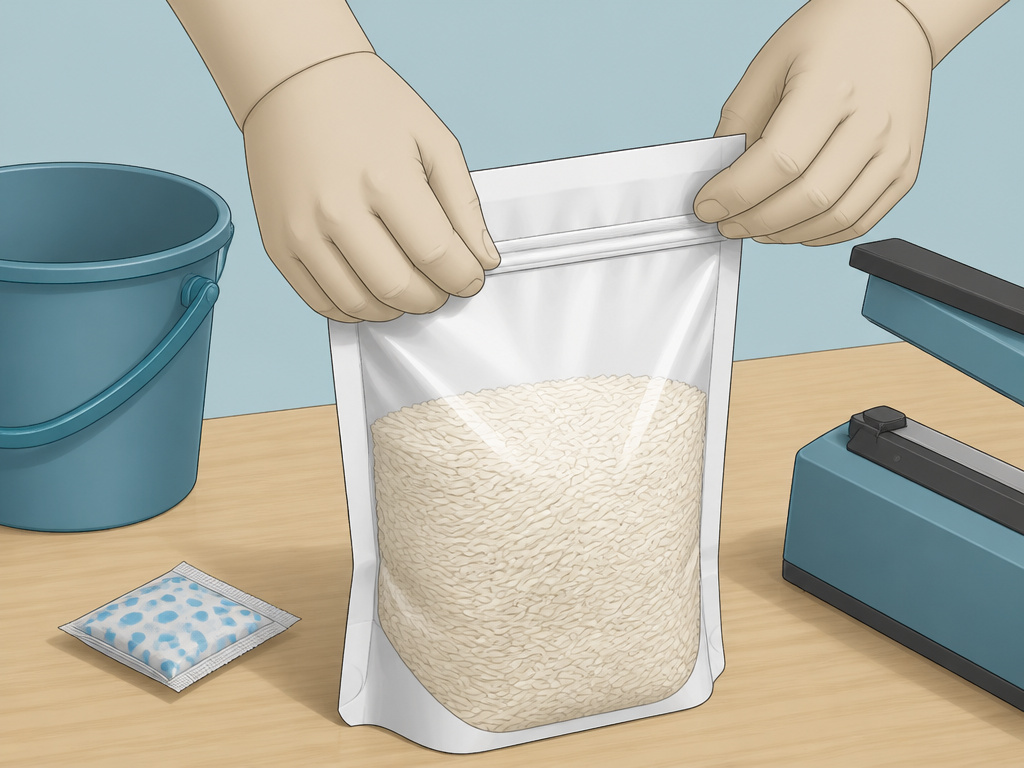
This is the hands-on process for putting the theory into practice. You’ll need: food-grade 5-gallon buckets, Mylar bags (gallon or 5-gallon size), oxygen absorbers (300cc size is typical for a gallon bag), a clothes iron or hair straightener, and a bucket lid sealing tool.
- Clean and dry your bucket. Any dust or moisture inside will contaminate your food. Let it air out completely.
- Insert the Mylar bag. Open it up and place it inside the bucket, folding the top over the bucket’s rim.
- Fill the bag with your dry food. Leave about 3–4 inches of space at the top for sealing. Pour in your rice, beans, oats, or wheat.
- Add oxygen absorbers. Drop in the correct number (usually 1-2 per gallon) on top of the food. Do not open the absorber packets until you are ready to seal; they start working immediately.
- Seal the Mylar bag. Press out as much air as you can by hand. Then, use the hot iron or hair straightener on its highest setting to melt the Mylar layers together, creating a continuous, airtight seal. Go slowly to ensure no gaps.
- Seal the bucket. Press the lid on firmly. A rubber mallet or a bucket lid press ensures a perfect, airtight seal.
- Label everything. Write the contents and date on the bucket with a permanent marker. Assume you’ll forget what’s inside in five years.
Skip step 5 at your peril. A poorly heat-sealed Mylar bag will leak air. The oxygen absorbers will be used up within months, and the remaining oxygen will slowly turn your grains rancid. You won’t know until you open it years later.
What to Store Where: A Food-Specific Guide
 Not all foods are suited for the same conditions. This table matches common long-term staples with their ideal storage method and realistic shelf life under perfect conditions.
| Food Item | Best Method | Ideal Conditions | Realistic Shelf Life (Best Quality) |
|---|---|---|---|
| White Rice | Mylar bag + bucket with O2 absorbers | Cool (50-70°F), dark, dry | 25+ years |
| Dried Beans | Mylar bag + bucket with O2 absorbers | Cool (50-70°F), dark, dry | 25+ years |
| Rolled Oats | Mylar bag + bucket with O2 absorbers | Cool (50-70°F), dark, dry | 20+ years |
| Whole Wheat Kernels | Mylar bag + bucket with O2 absorbers | Cool (50-70°F), dark, dry | 25+ years |
| Pasta | Mylar bag + bucket with O2 absorbers | Cool (50-70°F), dark, dry | 20+ years |
| Commercially Canned Vegetables | Original can, in pantry | Cool (50-70°F), dark, dry | 2-5 years |
| Home-Canned Goods (properly processed) | Glass jar, in pantry | Cool (50-70°F), dark, dry | 1 year |
| Dehydrated Vegetables/Fruits | Glass jar or Mylar bag, in pantry | Cool (50-70°F), dark, dry | 1-2 years (longer if vacuum sealed) |
| White Flour | Mylar bag + bucket with O2 absorbers | Cool (50-70°F), dark, dry | 10+ years |
| Granulated Sugar / Salt | Original bag inside sealed bucket | Cool (50-70°F), dark, dry | Indefinite (does not spoil, but may clump) |
For specifics on individual items, our guides on long-term rice storage methods, storing dried beans, and long-term oatmeal storage walk through the nuances.
The Pantry vs. Basement vs. Freezer Decision
 You now know the rules. The final step is auditing your own home’s spaces against them.
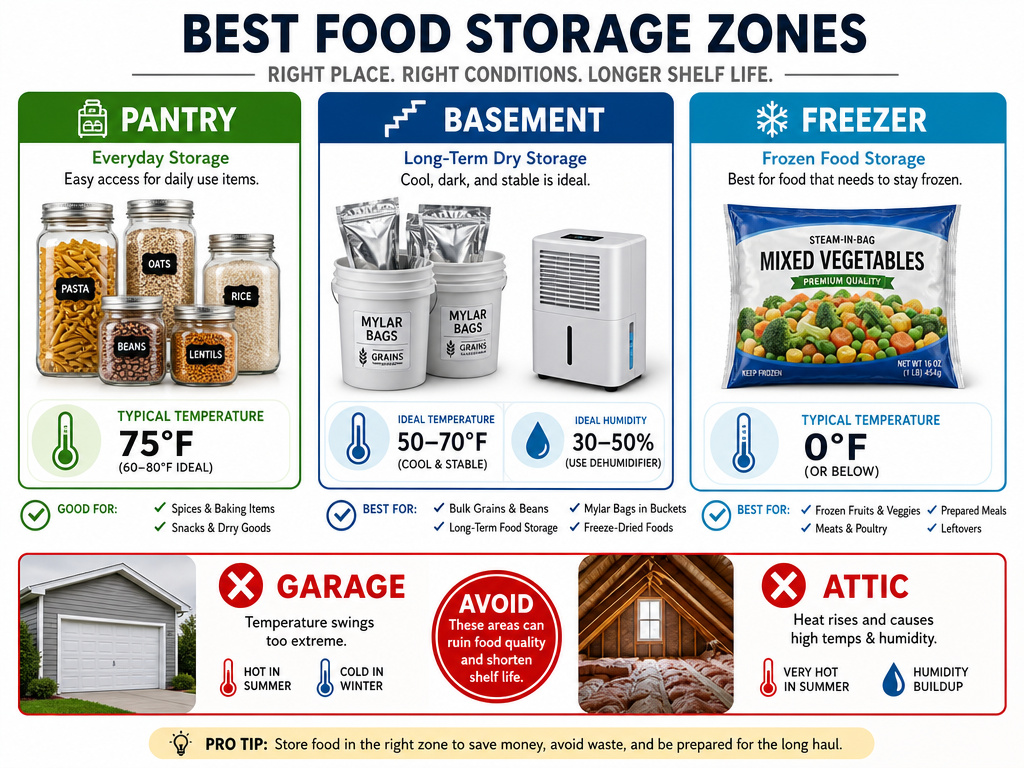
Your Pantry/Cupboard: This is for rotation storage. It should hold a 3-6 month supply of foods you actually eat, packaged in glass or sturdy plastic containers. Use the University of Georgia food storage factsheet as a guide for safe refrigerator and pantry times. If your pantry is consistently above 75°F, it’s only suitable for very short-term storage (weeks, not months).
Your Basement/Cellar: This is the prime real estate for long-term bulk storage. It’s naturally cooler and darker. This is where your Mylar-bagged buckets of rice, wheat, and beans should live. If your basement is damp (common), a dehumidifier is a mandatory investment. The Texas A&M AgriLife Extension bulletin on safe home food storage emphasizes keeping areas dry to prevent mold and rust.
Your Freezer: This is for long-term preservation of perishables. Maintain 0°F or lower. Freeze meats, vegetables, and cooked meals in moisture-proof, freezer-weight packaging. Remember, freezing does not kill bacteria; it only puts them to sleep. Thaw in the refrigerator, not on the counter.
The garage or attic? Almost never. Temperature fluctuations are too extreme, swinging from freezing in winter to over 100°F in summer. This thermal cycling causes canned goods to expand and contract, stressing seams, and causes fats in dry goods to go rancid rapidly. The BYU wheat study proves this is where food goes to die quickly.
Frequently Asked Questions
How long does vacuum-sealed food last?
Vacuum sealing is excellent for medium-term storage (1-3 years) in the pantry or freezer. It removes most air, slowing oxidation and freezer burn. However, the plastic used in household vacuum bags is still slightly permeable to oxygen over very long periods. For true 25-year storage, vacuum-sealed bags should be placed inside a Mylar bag with an oxygen absorber, or better yet, inside a sealed bucket.
Can I store food in plastic buckets without Mylar bags?
You can, but you shouldn’t for decades-long storage. Food-grade plastic buckets are slightly permeable to oxygen. Over 5-10 years, enough oxygen will seep in to degrade quality and allow insect eggs to hatch if present. For a 1-2 year rotating pantry, a bucket with a gamma-seal lid is fine. For your deep storage, always use a Mylar bag liner. Our article on long-term food storage containers dives deeper into the pros and cons of each type.
What is the absolute longest-lasting food?
Under ideal conditions (cool, dry, oxygen-free), white rice, dried beans, wheat kernels, and salt have virtually indefinite shelf lives from a safety standpoint. They may lose some nutritional value and flavor over decades, but they won’t spoil in a way that makes you sick. Sugar also lasts indefinitely but may harden into a brick. For a full list, see our guide to foods with the longest shelf life.
Do I really need oxygen absorbers for sugar and salt?
No. Sugar and salt are crystalline and do not contain fats that go rancid. They also act as preservatives themselves. In fact, putting an oxygen absorber in with pure salt can draw in moisture from the air and cause clumping. Store them in their original bags inside a sealed bucket to keep them dry and free-flowing. We have specific guides on storing sugar and storing salt long-term.
How do I know if my long-term stored food is still good?
For dry goods in Mylar/buckets: inspect the bucket for dents or a popped lid (signs of gas production from spoilage). When opened, the Mylar bag should be sucked tight against the food if oxygen absorbers worked. Smell the food. It should smell neutral, like grain or beans. Any off, rancid, or musty odor means it’s compromised. For canned goods, never consume anything with a bulging lid, leaking seam, or off odor.
The Bottom Line
Long-term food storage isn’t about buying special food. It’s about defending ordinary food from its three enemies: heat, moisture, and air. Start with the space you have. If it’s cool and dry, you can store buckets. If it’s warm or humid, fix that first with insulation or a dehumidifier.
Then, choose your containers based on your timeline. For a one-year pantry rotation, glass and sealed plastic are fine. For a decade-long reserve, it’s Mylar bags, oxygen absorbers, and buckets. Finally, label everything with the contents and date. Your future self will thank you when they don’t have to play mystery-grain roulette.
The goal is resilience, not hoarding. A well-planned long-term food supply turns uncertainty into a simple question of which bucket to open next.
