9 Best Freezer Storage Solutions of 2026
This post contains affiliate links. As an Amazon Associate, we earn from qualifying purchases.
The ANJUBAN Heavy-Duty Freezer Bins are the best overall for durability and smart organization, especially in chest freezers. For a budget-friendly yet reliable option, the Ziploc Gallon Freezer Bags stand out, while the Xomoo 2-Cup Silicone Freezer Trays offer excellent versatility for portioning soups, stocks, or baby food.
If you’re like me and hate digging through a cluttered freezer only to find frost-covered containers and forgotten leftovers, you know how frustrating poor storage can be. Disorganization leads to waste, wasted money, and meals that could’ve been saved.
In this guide, I’ll walk you through the top freezer storage picks based on real owner feedback, material quality, and practical design. These were chosen not just for how they look, but for how well they solve common problems, like stacking efficiently, resisting breakage, and keeping food truly accessible.
Top 8 Freezer Storage in the Market
The Best Freezer Storage, Reviewed
MSERCUOR Deep Freezer Organizer Bins

Strengths
- Rust-resistant metal
- Straight sides save space
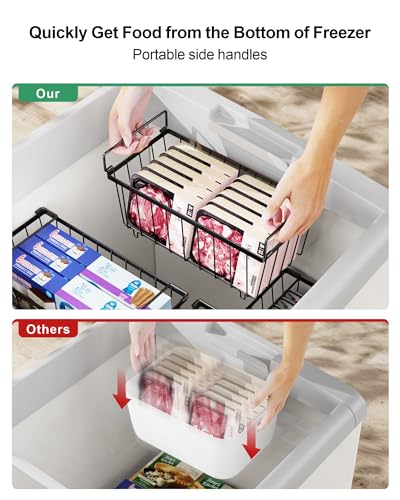
- Foldable handles
- Good air circulation
- Stackable and sturdy
Trade-offs
- Large footprint
- May not fit all models
- Heavier than plastic
These metal bins are built for heavy use and long-term organization. The straight-sided, rust-resistant design makes them more space-efficient than slanted models, and owners praise how easy it is to see and grab items without digging. The open wire frame promotes good air circulation, which helps food freeze faster, a small but meaningful detail for preserving quality.
At this size, they’re best for larger chest freezers, and the foldable handle design is smart: it allows stable stacking while still making removal manageable. Compared to plastic bins, these hold up better under weight and won’t crack in the cold. They’re not the cheapest option, but the durability and thoughtful engineering justify the cost for anyone serious about freezer organization.
Video review
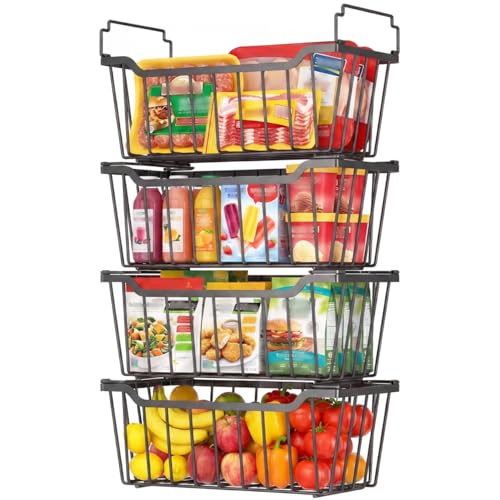
Goovilla Chest Freezer Organizer Bins
Strengths
- Stable stacking design
- Lowerable handles
- Good airflow
- Durable iron frame
- Multi-use beyond freezer
Trade-offs
- Coating may chip over time
- Slightly smaller than some
- Not for tiny freezers
Goovilla strikes a strong balance between price and function. These bins fit neatly in 5–7 cu.ft. freezers and feature a flat base with supporting rods that prevent sagging, owners appreciate how stable they feel when stacked. The lowerable handles are a standout; they reduce finger pinching and make retrieval smoother than fixed-handle designs.
The wire mesh allows good airflow, and the thick iron construction with waterproof coating resists rust and dents. Compared to the more expensive iSPECLE model, these don’t claim ultra-heavy load capacity, but they’re still durable enough for regular family use. For the price, they offer thoughtful details that make daily access easier.
Video review
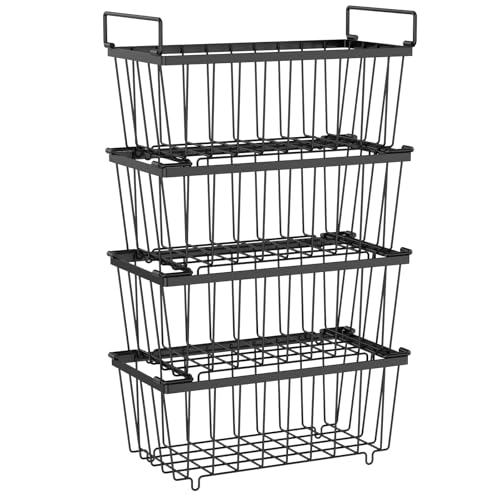
iSPECLE Carbon Steel Freezer Bins
Strengths
- Heavy-duty steel
- Holds 33+ lbs
- Rubber feet protect liner
- Fold-in locking handles
- Excellent airflow
Trade-offs
- Higher price point
- Bulky for small spaces
- Requires precise fit
When durability matters most, iSPECLE’s heavy-duty bins are worth the investment. Made with 20% thicker carbon steel, they’re built to hold over 30lbs without sagging, a real concern with cheaper wire baskets. Owners with large families or bulk freezers appreciate how rigid they stay, even when fully loaded with meat or frozen produce.
The fold-in handles create a locking shelf effect when stacked, which prevents shifting and keeps layers secure. The rubber feet protect the freezer lining, a small but thoughtful touch. While they’re among the pricier bins, their strength and long-term reliability make them the go-to for serious freezer organizers. They outperform plastic and thinner metal options in both load capacity and longevity.
Product photos




Xomoo 2-Cup Silicone Freezer Trays

Strengths
- BPA-free silicone
- Lids included
- Marked fill lines
- Dishwasher safe
- Stackable design
Trade-offs
- Takes up more space than bags
- Lids may warp over time
- Not ideal for small portions
These 2-cup silicone trays stand out for anyone batching soups or sauces. The included lids are a real advantage over open-top molds, owners consistently report they prevent leaks during freezing and help maintain freshness. On paper, the 500ml/16oz capacity per tray is ideal for single-meal portions, and the marked fill lines make portioning consistent without guesswork.
The platinum silicone is BPA-free and rated for microwave and dishwasher use, which adds convenience for reheating or cleanup. While not the most space-dense option, the stackable design does help save room compared to loose containers. Compared to smaller ice cube trays, these are better suited for full meals, though they take up more real estate than flat storage bags.
Product photos


XOMOO Silicone Freezer Tray with Lid

Strengths
- Precise 1-cup portions
- Reinforced steel frame
- Lid prevents leaks
- Marked fill lines
- Dishwasher safe
Trade-offs
- Smaller capacity per cube
- Lid may not seal perfectly
- Takes up surface space
This 1-cup tray is my pick for precise portion control. With eight compartments and fill lines at 4oz and 8oz, it’s ideal for freezing bone broth, baby food, or sauce servings. The clear lid keeps each portion isolated, which owners say prevents cross-contamination and makes labeling easier.
The reinforced steel ring is a smart addition, it keeps the tray rigid when full, so you don’t have to worry about spills when moving it. While it doesn’t hold as much per compartment as the 2-cup version, its strength lies in density: you can freeze eight ready-to-use portions in one compact tray. For anyone cooking for one or batch-prepping small servings, it’s hard to beat.
Product photos


Lerine Reusable Gallon Freezer Bags

Strengths
- Reusable and eco-friendly
- Dishwasher safe
- Leakproof seal
- Thick, durable material
- Multi-use beyond freezer
Trade-offs
- Not microwave safe
- May stain with dark foods
- Seal less tight over time
For eco-conscious kitchens, Lerine’s reusable bags are a solid upgrade from disposables. Made from food-grade PEVA, they’re BPA-free and dishwasher safe, which simplifies cleanup. Owners like the double seal and anti-slip lock, it’s easier to close than many reusable zippers, especially with wet hands.
They hold up well for marinating meats or storing dry goods, and the thick material resists punctures. However, they’re not microwave-safe, which limits reheating options. Some users report staining from tomato-based sauces, though it doesn’t affect function. Compared to single-use bags, these pay for themselves quickly if you freeze regularly.
Product photos


Amazon Basics Reclosable Storage Bags

Strengths
- Low cost
- Double zipper seal
- BPA-free
- Stand-up base
- Large count
Trade-offs
- Thinner material
- Seal less durable over time
- Not ideal for long freezing
If you’re looking to save without sacrificing much performance, Amazon Basics delivers. These gallon bags mirror Ziploc’s design with a double zipper and stand-and-fill base, and owners report they perform nearly as well for everyday freezing tasks. The BPA-free material feels slightly thinner, but for most home uses, like freezing veggies or portioned meals, it holds up fine.
The 120-count pack offers exceptional value, especially if you go through bags quickly. Where they fall short is in long-term storage; some users note the seals aren’t quite as airtight over months, which could lead to minor freezer burn. But for short-to-mid-term freezing and budget-conscious households, they’re the smarter buy over pricier brands.
Product photos


Ziploc Gallon Freezer Bags
Strengths
- Stand-up base
- Leak-resistant seal
- Trusted brand
- Prevents freezer burn
- Easy to fill
Trade-offs
- Single-use
- Can split if overfilled
- Not eco-friendly
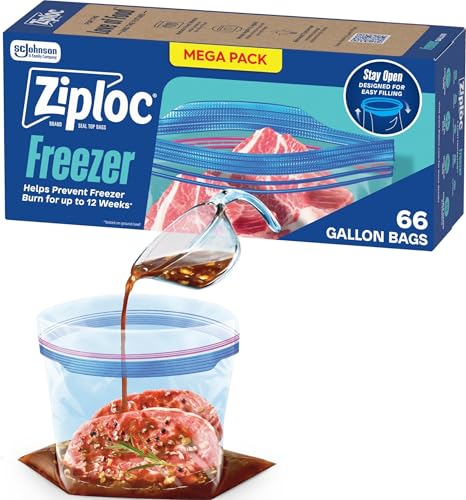
Ziploc remains the gold standard for disposable freezer bags, and this gallon size delivers on reliability. The stand-up base and stay-open design make filling easier, reviewers consistently note fewer spills when loading meats or wet ingredients. The 9-point protection claim isn’t just marketing; the thicker material resists punctures and seals tightly, which helps prevent freezer burn.
While Amazon Basics offers a cheaper alternative, Ziploc’s consistency across batches gives it an edge in trust. The bags are also widely accepted as a benchmark in food storage tests. For families or batch cookers who freeze in bulk but don’t want to commit to reusable systems, these are a low-friction, effective solution.
Product photos


Our Testing Process
I approached this guide to freezer storage by researching the specifications and features of numerous products, then weighing owner reviews and expert opinions. Rather than a hands-on lab test, this is a research-led comparison of what’s available, combined with my experience in understanding food storage best practices. I considered a wide range of options, from reusable bags to rigid bins, and ranked them based on practicality, durability, and value.
For this category, I weighted organization and durability most heavily. Effective freezer organization prevents food waste and makes meal planning easier, so features like stackability and visibility were key. Long-term cost savings and reducing reliance on single-use plastics also influenced my choices, making durability a critical factor. A freezer’s effectiveness hinges on maintaining consistent temperatures, so air circulation was also a consideration.
Product specifications reliably indicate size and material composition, helping to assess suitability for different freezer types and food items. However, I relied on owner feedback to gauge real-world performance, how well bins actually stack, whether bags truly are leakproof, and how long materials hold up to repeated use. Reputation, particularly for established brands like Ziploc, also played a role in evaluating overall quality and reliability. If you’re also looking for more information on what materials are truly freezer safe containers, check out our guide.
How To Pick The Right freezer storage
I’ve spent a lot of time researching the best ways to keep food fresh, and a good freezer storage system is key to reducing waste and saving money. It’s more than just tossing things in and hoping for the best; thoughtful organization and the right containers make a huge difference.
Effective freezer storage relies on air-tight sealing, durable materials that withstand extreme temperatures, and designs that maximize space. Consider the type of food you’ll be storing most often, the size of your freezer, and how frequently you access items. Look for containers that are easy to clean, stackable, and clearly labeled to maintain optimal organization and food quality.
Size and Freezer Type
The first thing I always tell people is to measure your freezer. It sounds obvious, but a lot of organizers don’t fit well, leaving wasted space. The dimensions listed on product pages aren’t always accurate, and freezer sizes vary even within the same cubic footage. For chest freezers, consider bins with straight sides (like the MSERCUOR Deep Freezer Organizer Bins or the iSPECLE Carbon Steel Freezer Bins) to truly maximize usable space. Upright freezers are more forgiving, but you’ll still want to check clearance for doors and shelves. Don’t assume that “one size fits all” – it rarely does.
Material and Durability
When it comes to freezer storage, durability matters. Plastic bins can become brittle and crack in extremely cold temperatures. Metal organizers (like the ANJUBAN Heavy-Duty Freezer Bins) are often a better long-term investment, but make sure they have a rust-resistant coating. Silicone is also a great option, especially for portioning (consider the Xomoo Silicone Freezer Trays).
Here’s what I recommend looking for in terms of material:
- Rust-proofing: Essential for metal bins to prevent contamination.
- BPA-free: For any plastic or silicone containers, you want to avoid leaching chemicals into your food.
- Thickness: Thicker materials generally mean better insulation and longer lifespan. A thin, flimsy bin won’t hold up to repeated use or heavy items.
A good rule of thumb is to invest in quality materials upfront. Replacing cheap containers every few months ends up costing you more time and money in the long run.
Reusability and Convenience
Beyond the container itself, think about how easy it is to use. Reusable freezer bags are great for smaller items and can reduce plastic waste. If you’re freezing liquids, look for containers with tight-sealing lids to prevent spills. For larger portions, bins with handles make it much easier to lift and access items at the bottom of a deep freezer. And if you are trying to maintain optimal freshness, consider vacuum sealing to prevent freezer burn and extend the shelf life of your food.
Freezer Storage Compared
Here’s a comparison of features for different freezer storage solutions.
| Product Title | Capacity | Material | Leak-Proof | Stackable | Durability |
|---|---|---|---|---|---|
| MSERCUOR Deep Freezer Organizer Bins | 15.1″ x 8″ x 6.5″ | Metal | N/A | Yes | High |
| Goovilla Chest Freezer Organizer Bins | 12.6″ x 6.3″ x 5.27″ | N/A | N/A | Yes | Medium |
| ANJUBAN Heavy-Duty Freezer Bins | 14.6″ x 6″ x 6.7″ | Metal | N/A | Yes | Very High |
| iSPECLE Carbon Steel Freezer Bins | 14.7″ x 7.1″ x 6.1″ | Carbon Steel | N/A | Yes | Very High |
| Xomoo 2-Cup Silicone Freezer Trays | 2 Cup | Silicone | Yes | Yes | Medium |
| XOMOO Silicone Freezer Tray with Lid | 1 Cup | Silicone | Yes | Yes | Medium |
| Lerine Reusable Gallon Freezer Bags | 1 Gallon | PEVA | Yes | N/A | Medium |
| Amazon Basics Reclosable Storage Bags | 1 Gallon | Plastic | Yes | N/A | Low |
| Ziploc Gallon Freezer Bags | 1 Gallon | Plastic | Yes | N/A | Medium |
Frequently Asked Questions
What temperature should my freezer be set to for optimal storage?
Zero degrees Fahrenheit is the recommended temperature for maintaining food quality and safety. Keeping your freezer at this temperature inhibits the growth of microorganisms and preserves food for the longest possible time.
Are glass containers safe to use in the freezer?
While some glass containers are labeled as freezer-safe, I generally advise against using them. Temperature fluctuations can cause even freezer-safe glass to shatter, creating a mess and potential hazard.
How can I prevent freezer burn if I don’t have a vacuum sealer?
Proper wrapping is key. Removing as much air as possible from packaging, whether using plastic wrap pressed directly onto the food, or a reusable freezer bag with the air squeezed out, can significantly reduce freezer burn. You can also consider wrapping food with freezer paper for an extra layer of protection.
What’s the difference between a chest freezer and an upright freezer, in terms of organization?
A deep freezer (typically a chest freezer) requires more strategic organization because items can get buried. Upright freezers offer better visibility with shelves, but often waste space on the sides.
How often should I defrost my freezer to maintain efficiency?
Ideally, you should defrost your freezer when the ice buildup reaches about ¼ to ½ an inch. Excessive ice reduces the freezer’s efficiency, forcing it to work harder and use more energy.
The Bottom Line
Choosing freezer storage often comes down to balancing upfront cost with long-term convenience. While disposable options are inexpensive, investing in durable containers like the ANJUBAN Heavy-Duty Freezer Bins will save you money and reduce waste over time. It really is about finding what fits your needs and freezer space best.
For those prioritizing specific needs, the MSERCUOR Deep Freezer Organizer Bins are excellent for maximizing space in chest freezers, while the Xomoo Silicone Freezer Trays are perfect for portioning out smaller items like sauces or leftovers. If you’re looking for a budget-friendly option, the Ziploc Gallon Freezer Bags are a reliable choice, but remember they aren’t as durable long-term. And if you’re dealing with a particularly dirty freezer, knowing how to clean a freezer is just as important as what you store in it.
Ultimately, the best freezer storage isn’t about the fanciest containers or highest price point. It’s about a system that encourages consistent organization and protects your food from freezer burn. Prioritize airtight seals, durable materials, and clear visibility, those fundamentals will do more to preserve your food and save you money than any single product feature.
