How to Freeze Spinach in a Bag: Prevent Slimy Thaws with Quick Blanch
This post contains affiliate links. As an Amazon Associate, we earn from qualifying purchases.
Yes, you can freeze spinach in a bag. Blanch it for two minutes in boiling water, cool it immediately, drain it thoroughly, then pack it into a quality freezer bag with as much air removed as possible. Store it at 0°F or lower. Skip the blanching step and your spinach will turn slimy within six months, even in the bag.
That two-minute blanch is the line between a usable ingredient and a disappointing mess. It stops the enzymes that break down texture and flavor, a process that continues at freezer temperatures. The bag is just the container; the real work happens in the pot.
What follows is the breakdown of that two-minute rule, the exact packing method that prevents freezer burn, and the one storage mistake that ruins texture faster than anything else.
Key Takeaways
- Blanch spinach for exactly two minutes in boiling water. Under-blanching leaves enzymes active, which turns thawed spinach mushy and dulls its color within months.
- Use a one-gallon pot with at least two gallons of water per pound of greens. Crowding the pot drops the temperature and leads to uneven blanching.
- Squeeze every drop of water out after cooling. Trapped water forms ice crystals that rupture cell walls, creating a slimy puree upon thawing.
- Set your freezer to -10°F for 24 hours before adding unfrozen packages. A rapid freeze creates smaller ice crystals, which preserve cell structure and texture.
- Label bags with the date. Blanched spinach keeps quality for 12-14 months; unblanched spinach declines noticeably after 6 months.
The 2-Minute Rule for Blanching Spinach
Blanching is not cooking. It’s a targeted heat shock. You plunge the leaves into violently boiling water to deactivate peroxidase and catalase enzymes. If you don’t, these enzymes keep working slowly at freezer temperatures, breaking down chlorophyll, destroying vitamins, and turning the leaves to a slimy, olive-drab paste. The South Dakota State University spinach preservation guide specifies a two-minute boil for spinach. This isn’t a suggestion; it’s the threshold.
Technical Snippet: Water blanching spinach requires a full, rolling boil maintained for 120 seconds after the leaves are submerged. This thermal exposure denatures the specific peroxidase enzymes responsible for off-flavors and texture loss in frozen storage. Under-blanching by 30 seconds leaves enough active enzyme to degrade quality within 8 months.
The water volume matters as much as the time. The Michigan State University blanching guide recommends one gallon of water per pound of vegetables, but doubles it to two gallons for leafy greens like spinach. Why? Greens release a lot of water when they hit the heat, which can drop the temperature of a small pot out of the effective blanching range. Your pot should feel oversized.
Common mistake: Dumping a full colander of spinach into a quart of simmering water. The boil stops, the clock is meaningless, and the leaves at the bottom overcook while the top ones steam. Work in batches that keep the water at a fierce roll.
The cooling step is just as critical. You must stop the cooking the instant the two minutes are up. A bowl of ice water works, but running cold tap water over the leaves in a colander is faster if you have good pressure. The leaves should go from boiling to cold in under 60 seconds. Let them sit in the cooling water for about as long as they were in the hot water.
Why Unblanched Spinach Turns to Slime
You can skip the pot and just shove fresh spinach into a freezer bag. It will freeze. It will also be a different product when it thaws. The cell walls break down without the blanching process to stabilize them. The result is a wet, dark, stringy mass that only works fully dissolved into a soup or smoothie.
The timeline is the giveaway. Properly blanched spinach retains its color, separable leaf structure, and fresh flavor for a year or more at 0°F. Unblanched spinach starts to decline in quality after about six months. The University of Alaska Fairbanks freezing guide notes that home-frozen vegetables have an optimal storage life of 8 to 12 months, but that window assumes proper blanching. Unblanched greens are on the very short end of that range.
Where this goes sideways: Freezing unwashed spinach straight from the clamshell. Grit and soil freeze into the leaves, becoming impossible to rinse out later. You’ll taste the dirt in every bite.
So when does the no-blanch method make sense? Only when you know you’ll use the spinach within a few months, and only in applications where texture is irrelevant. A green smoothie or a creamed spinach side dish will hide the damage. For a quiche filling or a pasta topping, you’ll notice.
Packing for Success: Bags vs. Containers
Your goal is to get as much air out as possible before sealing. Air carries moisture, and moisture moving from the food to the cold, dry freezer air causes freezer burn. That’s the dry, leathery, greyish patches that make food taste stale.
For bags, the water-displacement method is the most effective. Place your drained, squeezed spinach in a freezer bag. Slowly lower the bag into a bowl of cold water, letting the water pressure push the air out through the top. Seal the bag just before the water reaches the zipper. This gets you closer to the air removal of a vacuum sealing device without the cost.
| Packaging Type | Best For | Critical Step | Headspace Required? |
|---|---|---|---|
| Freezer Bag (quart or gallon) | Loose-pack chopped spinach, purees | Water-displacement air removal | No |
| Rigid Plastic Container | Whole leaves, delicate layers | Tap container to settle contents | ½ inch |
| Glass Jar (freezer-safe) | Long-term storage, visibility | Leave wide mouth for expansion | 1 inch |
If you use a rigid container, you must leave headspace. The OSU Extension freezing guide specifies ½ inch to 1 inch for expansion as the water inside the spinach freezes. Skip this, and the lid will pop or the container will crack. This is less of an issue with flexible bags, but overfilling them makes it harder to remove air and can cause seams to burst.
Label everything. Write “Spinach – Blanched” and the date. An unlabeled lump of green in the back of the freezer is a mystery you’ll throw out in six months.
The Freezer Setup That Actually Works
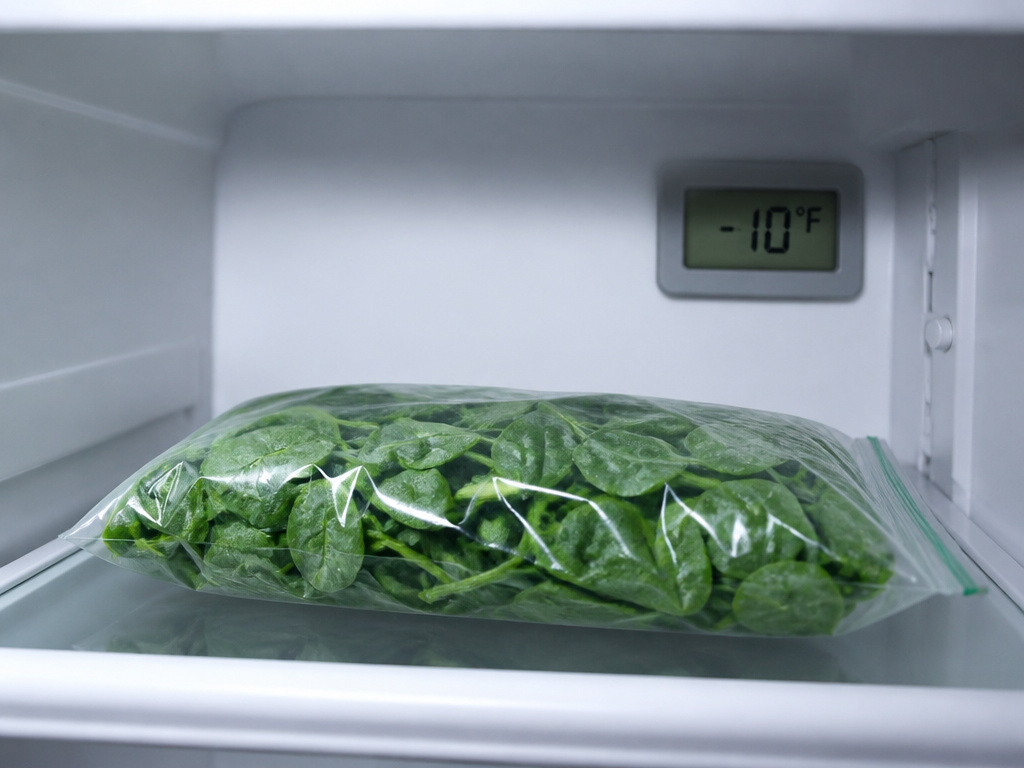
Your home freezer is not a commercial flash-freezer. It chills slowly from the outside in. Large ice crystals form when freezing is slow, and these crystals puncture cell walls. That’s why thawed spinach sometimes leaks green water and has a mushy texture—it’s literally ruptured.
The NDSU Agriculture freezing basics guide has a specific countermeasure: set your freezer to -10°F about 24 hours in advance of adding unfrozen food. This creates a colder environment so the temperature drop is faster once the spinach goes in. After the packages are solid (usually overnight), you can return the setting to 0°F for storage.
Don’t overload the freezer. The same guide recommends adding only 2 to 3 pounds of unfrozen food per cubic foot of space in a 24-hour period. If you have a 5-cubic-foot freezer section, that’s a maximum of 10-15 pounds of spinach at once. Stacking warm bags together turns them into an insulating block that freezes unevenly.
Place packages in a single layer directly on the coldest shelf, usually near the back or bottom. Once frozen solid, you can reorganize them into a more efficient system to organize your freezer. A well-organized freezer isn’t just tidy; it prevents older items from getting lost and exceeding their storage life.
Step-by-Step: From Fresh Leaf to Frozen Asset
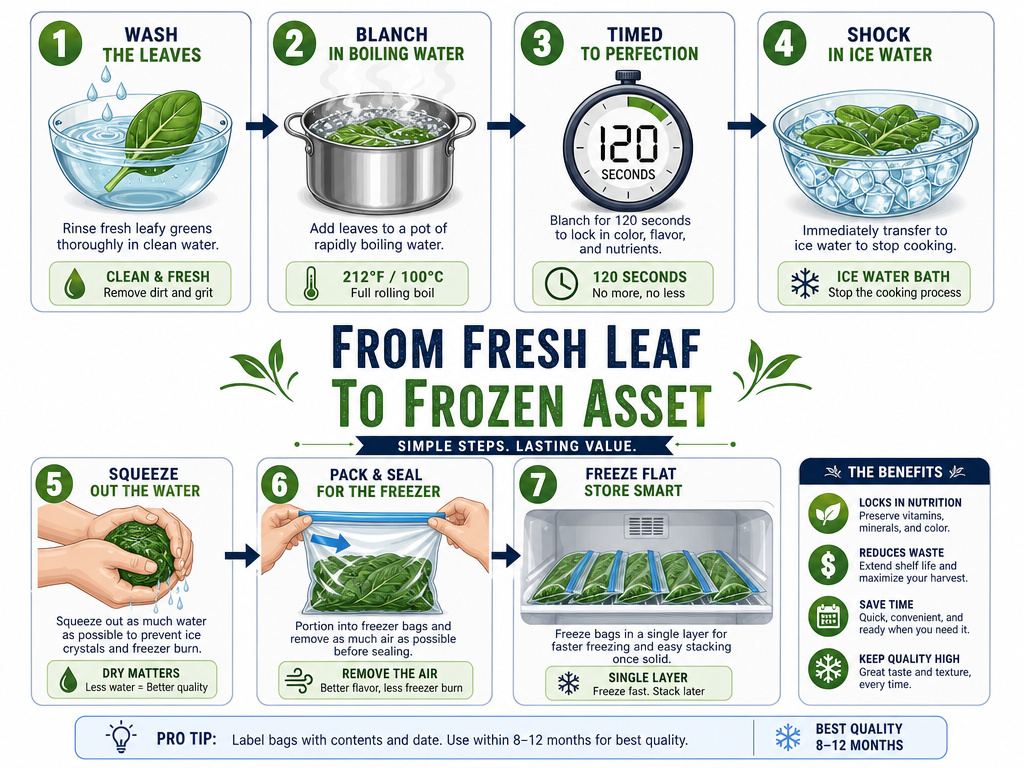
This sequence assumes you’re blanching. If you’re skipping it, go straight to step 4, but acknowledge the trade-off.
- Wash and trim. Submerge spinach in a sink full of cold water. Swirl, lift out, and drain. Repeat until no grit remains in the sink. Trim any thick, woody stems. Wet leaves are fine for blanching.
- Boil the water. Use a large pot—at least 8 quarts for one pound of spinach. Bring two gallons of water to a rolling boil. Salt is optional; it doesn’t penetrate in two minutes but can season the water.
- Blanch for 120 seconds. Submerge the spinach using a spider strainer or mesh blanching basket. Start timing when the water returns to a full boil. Stir once to ensure even exposure.
- Cool immediately. Drain the spinach and plunge it into a bowl of ice water, or hold it under cold running water for two minutes. The leaves should feel cold to the touch.
- Drain and squeeze. Get every drop of water out. Use your hands to squeeze handfuls into tight balls, or press it in a colander with a plate. This step is non-negotiable.
- Pack and remove air. For bags, use the water-displacement method. For freezer-safe containers, pack tightly but leave ½ inch of space at the top.
- Freeze rapidly. Place sealed packages in a single layer on the coldest shelf of your pre-chilled freezer. Do not stack them.
Easy to miss: Squeezing after cooling, not before. If you squeeze warm spinach, you’re pressing out flavorful juices along with the water. Cold spinach holds onto its flavor.
Frequently Asked Questions
Can I freeze spinach without blanching it first?
Yes, but the results are different. Unblanched spinach will become slimy and lose its bright green color within 6 months. It’s best used in cooked dishes like soups, stews, or smoothies where texture doesn’t matter. Blanching preserves texture and color for over a year.
How long does frozen spinach last?
When properly blanched, drained, and stored at 0°F in an airtight bag, spinach maintains best quality for 12 to 14 months. Unblanched spinach is best used within 6 months for acceptable quality. It remains safe indefinitely if frozen, but flavor and texture deteriorate.
Do I need to thaw frozen spinach before using it?
No. For most cooked applications, you can add frozen spinach directly to the pot, pan, or blender. Thawing it first just creates a puddle of green water you’ll have to drain. If a recipe calls for chopped spinach, it’s easier to chop it before freezing.
Can I freeze spinach in the original plastic container it came in?
You can, but it’s not ideal. Those containers are not designed for long-term freezer storage; they are thin and allow moisture loss. For better results, transfer the spinach to a proper freezer bag or airtight container. If you do use the original box, place it inside a larger freezer bag to add an extra moisture barrier.
What’s the best way to prevent freezer burn on frozen spinach?
Remove as much air as possible from the package. For bags, use the water-displacement method or a vacuum sealing device. Ensure your freezer maintains a steady 0°F temperature and avoid storing spinach in the door, where temperature fluctuates most. Properly packaged spinach can last over a year without showing signs of freezer burn.
Is it safe to refreeze spinach that has thawed?
It is safe only if the spinach still contains ice crystals or has been kept at 40°F or below for no more than a day or two after thawing. If it has thawed completely and warmed up, bacteria can multiply rapidly. When in doubt, cook it thoroughly and use it immediately, or discard it.
The Bottom Line
Freezing spinach in a bag works, but the bag is the last step. The work happens in the boiling water and the cold squeeze. Blanch for two minutes with plenty of water, cool it fast, squeeze it dry, and get the air out. That sequence turns a perishable green into a kitchen staple that tastes like summer in the middle of winter.
Skip a step, and you’ll know it by the texture. The bag is just there to keep the freezer air out. Your pot, your colander, and your hands do the real preserving.
