Keeping Uncooked Apple Crumble in the Fridge: A Full Guide
This post contains affiliate links. As an Amazon Associate, we earn from qualifying purchases.
You can keep uncooked apple crumble in the fridge for 24 to 48 hours before baking. The USDA’s 2-hour rule applies to the butter and any dairy in the topping, so you must get the assembled dish into the fridge within that window. For the crispiest result, store the crumble topping separately in an airtight container for 2-3 days and add it to the fruit just before baking.
That 48-hour limit isn’t arbitrary. It’s the point where the butter in the topping begins to weep into the flour, and the fruit’s natural juices start to soften the crisp layer before it ever hits the oven. A raw crumble is a race between your schedule and the ingredients’ chemistry.
What follows: the USDA’s specific temperature rule, the one mistake that turns your topping to mush before baking, and the prep-ahead trick from a test kitchen that lets you cut apples two days early without browning.
Key Takeaways
- The assembled, raw crumble lasts 24-48 hours in the fridge. Beyond that, the topping absorbs too much juice.
- Refrigerate within 2 hours of assembly. Butter and flour sit in the bacterial “danger zone” (40°F–140°F) after that.
- For best texture, store the topping separately in an airtight container for up to 3 days.
- Very juicy fruit (like berries or ripe peaches) will soak a raw topping overnight. Keep them apart.
- Pre-cut apples do not brown meaningfully after baking. America’s Test Kitchen found they bake up equally tender.
The USDA’s 2-Hour Rule: Why It’s Not Just a Suggestion
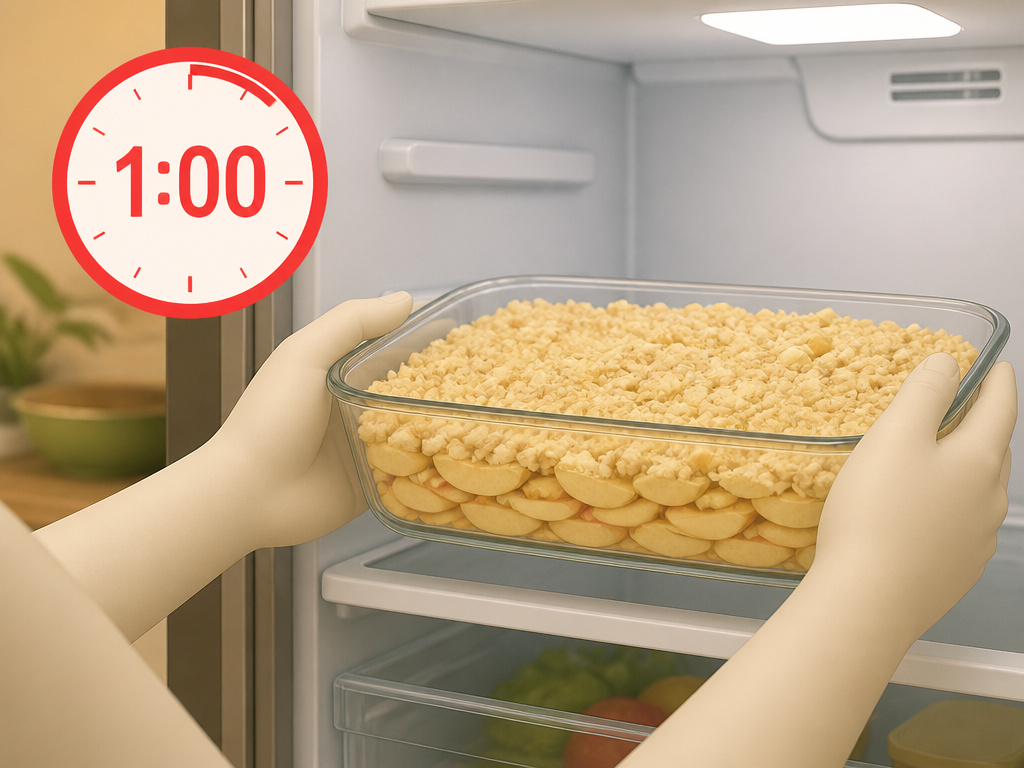
Your crumble topping is butter, flour, and sugar. Butter is a dairy product. The USDA states that perishable foods containing dairy should not sit at room temperature for more than 2 hours. This isn’t about the apples; it’s about the fat.
The USDA recommends that dishes containing dairy or eggs should not sit out for more than 2 hours, as bacteria can multiply rapidly in the “danger zone” (40°F to 140°F).
Once you rub the cold butter into the flour, the clock starts. If your kitchen is warm, above 70°F (21°C), that window shrinks to one hour. The risk isn’t always visible mold. Salmonella and E. Coli don’t change the smell or look of your crumble topping. They just wait.
The fix is simple: assemble your crumble directly in the baking dish you’ll use, then slide it into the fridge immediately. Don’t let it sit on the counter while you preheat the oven or tidy up. That 20-minute delay is a tenth of your safety budget gone.
| Kitchen Temperature | Max Time at Room Temp | Primary Risk |
|---|---|---|
| Below 70°F (21°C) | 2 hours | Bacterial growth in butter |
| Above 70°F (21°C) | 1 hour | Accelerated spoilage, topping softens |
| Above 90°F (32°C) | 30 minutes | Butter melts, flour paste forms |
This rule is the same one that governs storing cheesecake or any dairy-based dessert. The principle doesn’t change because the dish is unbaked.
Raw & Assembled: The 48-Hour Texture Countdown
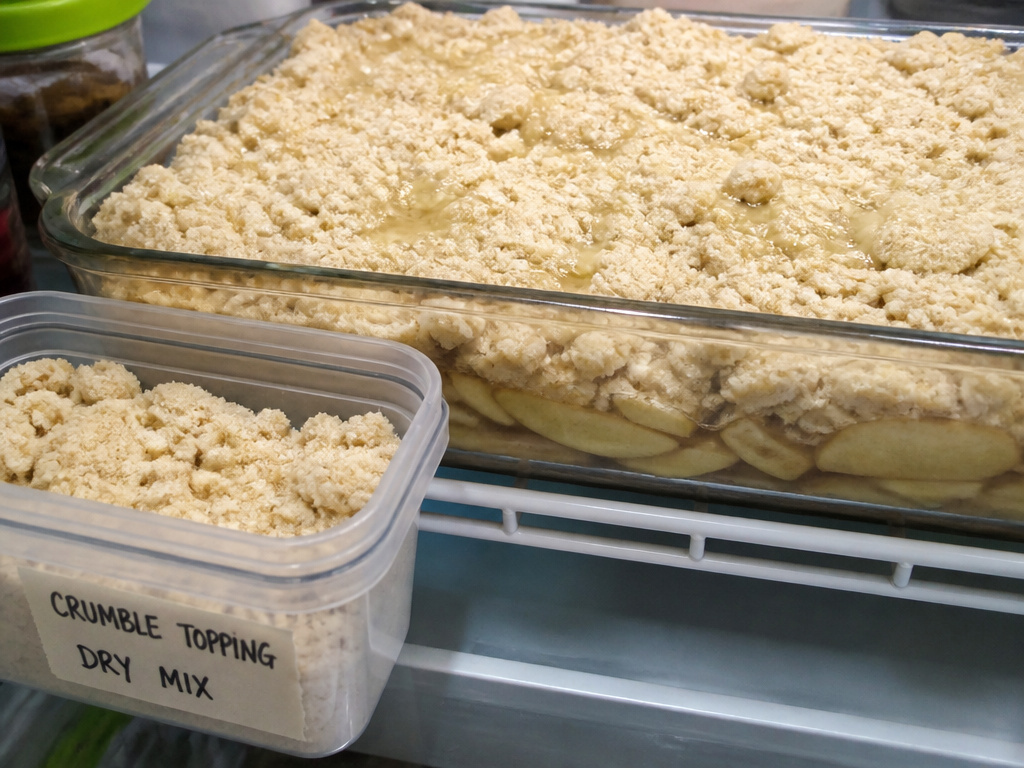
An assembled raw crumble can be kept chilled until the next day. Some sources stretch that to 48 hours. That’s the ceiling, not a target.
The topping is a sponge. Even refrigerated, the sugar and flour will slowly pull moisture from the fruit filling. After two days, you’ll have a damp, compact layer that bakes into a dense crust, not a crisp one. The butter also begins to separate, you might see greasy spots in the flour mixture.
Common mistake: Letting a raw crumble sit in the fridge for three days because it “looks fine.” By day three, the topping has absorbed enough liquid to become a paste. It bakes into a tough, cookie-like layer instead of flaking apart.
For a make-ahead party, the 24-hour mark is safe. For best results, follow the method from Simply-Wafa: prepare the crumble topping in advance, store it separately, and scatter it over the fruit just before baking. The topping keeps in an airtight container in the fridge for 2 to 3 days. This is the same kind of container you’d use for storing pancake batter, it locks out humidity.
When to Break the “Assemble First” Rule
Some fruits are too wet to sit under a crumble topping for a full day. Berries, very ripe peaches, and juicy plums will create a syrup that soaks the flour before the oven can set it.
Solution: Keep the fruit and topping in separate containers. Use a glass or BPA-free plastic dish for the fruit, the same type recommended for storing soup to prevent flavor transfer. Combine them in the baking dish only when you’re ready to bake.
Prepping Apples in Advance: The Browning Myth, Debunked
You need to peel and slice six apples for a crumble. Doing it the morning of is a chore. Can you do it tonight?
America’s Test Kitchen ran the test. They compared crumbles made with just-cut apples to ones made with apples cut and refrigerated one and two days earlier.
“The brown apples and the fresh apples baked up equally tender and juicy and were similar in flavor, and, surprisingly, all had pretty much the same light golden color.”
The browning enzymes are real, but the acids released during baking break down the pigments. The texture and taste don’t suffer. This changes your prep schedule completely.
The method: After cutting, toss the apples with a little lemon juice if you’re concerned, but it’s not necessary for flavor. Seal them in a zipper-lock bag, squeezing out the air, and refrigerate. They’ll be ready for your crumble filling for up to two days. This is a more forgiving process than storing delicate fresh greens, which wilt quickly.
Step-by-Step: How to Store Uncooked Crumble Correctly
This isn’t just “put it in the fridge.” The order matters.
- Prepare your filling. Toss sliced apples with sugar, spices, and a thickener like flour or cornstarch. Place them in the bottom of your baking dish. If you’ve pre-cut the apples, use them straight from their bag.
- Make the topping. Use cold butter, and rub it into the flour and sugar with your fingertips until it resembles coarse breadcrumbs. Do not overwork it; warm hands melt the butter.
- Decide: assemble now or later? For baking within 24 hours, sprinkle the topping evenly over the fruit now. For baking later than 24 hours, or if your fruit is very juicy, store the topping in a separate airtight container. This is one of the best food storage containers for the fridge, it keeps the topping dry.
- Refrigerate within 2 hours. Cover the baking dish tightly with plastic wrap or a lid. Place it on a shelf where the fridge temperature is a consistent 40°F or below.
- Bake from cold. When ready, bake the crumble straight from the refrigerator. You may need to add 5-10 minutes to the baking time.
What happens if you skip step 4? The butter enters the danger zone. Even if you refrigerate it later, bacterial growth may have already started. The risk is foodborne illness, not just soggy topping.
Why the Topping Goes Soggy (And How to Stop It)
Sogginess has two causes: moisture migration and condensation.
Moisture migration is the natural movement of water from the wet fruit to the dry topping. Refrigeration slows it but doesn’t stop it. That’s why the 48-hour limit exists.
Condensation is the killer you can control. Never cover a warm or even slightly warm crumble. The steam hits the cold lid and rains back down on your perfect crumbs.
Where this goes sideways: Putting a lukewarm assembled crumble into a sealed container. The trapped steam condenses overnight, and you open the fridge to a soggy, wet blanket over your apples.
The fix: let the fruit mixture cool to room temperature before adding the topping and sealing it. Or, better yet, keep the components separate until bake time. This technique is similar to keeping coffee beans dry, moisture is the enemy of texture.
Frequently Asked Questions
Can you freeze uncooked apple crumble?
Yes, but with a caveat. Freeze the fruit filling and the crumble topping in separate airtight containers or bags. The topping can freeze for up to 3 months. The fruit filling may become watery upon thawing, so it’s better for baking directly from frozen with an extended bake time.
How long does unbaked crumble topping last in the fridge?
The topping alone, stored in an airtight container, lasts 2 to2643 days in the fridge. It can also be frozen for 2-3 months. This is your best make-ahead strategy for crisp texture.
Does the type of apple affect storage?
Yes, but not in the way you think. Firmer apples like Granny Smith or Honeycrisp release less juice than a McIntosh or Cortland. With very juicy varieties, stick to the “store components separately” rule, especially if prepping more than a day ahead.
Can I use this method for other fruit crumbles?
Absolutely. The rules apply to any fruit crumble, peach, berry, rhubarb. The juicier the fruit, the more important it is to keep the topping separate. For berries, which are delicate, treat them like you would when storing raspberries: handle gently and limit their time layered with dry ingredients.
Is it safe to eat raw crumble topping?
No. The flour is raw and can carry pathogens like E. Coli. Always bake the crumble to a safe internal temperature (the filling should be bubbling) to ensure food safety.
Before You Go
Keep uncooked apple crumble in the fridge for a day, maybe two. Respect the USDA’s 2-hour window like it’s a law, because for food safety, it is. For texture that actually crumbles, store the topping separately. And cut your apples up to two days ahead without a second thought; the browning truly doesn’t matter once baked.
Your default method for a dinner party tomorrow: prep the filling tonight, mix the topping tomorrow afternoon, assemble just before the oven preheats. That’s the sweet spot between planning ahead and preserving the crunch.
