Does Keeping Bread in the Fridge Make It Last Longer? Answered
This post contains affiliate links. As an Amazon Associate, we earn from qualifying purchases.
No. Refrigerating bread does not make it last longer in a way that matters for eating quality. It accelerates the staling process, the starch recrystallization that turns soft crumb dry and firm, while delaying mold growth. For fresh-tasting bread, the counter or freezer are better choices.
The science is counterintuitive. Most of us think cold preserves things. With bread, the fridge temperature range is the worst possible zone for its starches. It pushes them into a crystalline structure that locks moisture away from your palate, turning bread stale in a day or two. Mold might take longer to appear, but you’re left with a crumbly, tasteless loaf nobody wants to eat.
What follows is the breakdown of why this happens, the exact temperatures where it’s fastest, and the storage methods that actually work. You’ll see the data from food science labs, learn the one time a fridge is useful, and get a clear path to keeping your bread fresh.
Key Takeaways
- Refrigerator temperatures (around 4°C / 40°F) are the peak zone for starch retrogradation, the chemical process behind staling. Bread can become 400% firmer in days.
- A fridge delays mold by creating a dry, cool environment, but the trade-off is accelerated texture loss. The bread becomes inedibly stale before mold even has a chance.
- For short-term storage (2-3 days), a bread box or airtight container at room temperature preserves texture best.
- For long-term storage (beyond 3 days), freezing is the only reliable method to halt both staling and mold without quality loss.
- The wrapping matters as much as the location. A plastic bag or airtight container is mandatory to prevent moisture loss, which compounds the staling effect.
The Science of Staling: Why the Fridge Fails
Staling isn’t just drying out. It’s a molecular reorganization. When bread bakes, starch granules swell with water and gelatinize. As the bread cools and sits, those starches want to revert to their ordered, crystalline state. This process, called retrogradation, squeezes water out of the starch matrix and into the surrounding gluten and air pockets. The crumb feels firm and dry because the moisture is no longer bound within the starch where your tongue senses it as soft.
The rate of this recrystallization is temperature-dependent. It happens fastest not in the freezer, and not at room temperature, but right in the middle.
For starch gels in bread-like concentrations, retrogradation occurs at temperatures above the glass transition point (around -5°C) and below the melting point (around 60°C). The maximum rate is typically observed around 4°C, standard refrigerator temperature.
One study quantified this. When mixed-type sourdough bread was stored in a plastic bag at fridge temperature (8.2°C), its firmness increased to 398% of its original value after several days. Pan wheat bread under the same conditions firmed up to 424%. At room temperature in the same bag, the firming was significantly slower. The cold didn’t preserve texture; it wrecked it.
This is why a loaf left on the counter for two days might still be acceptable, but the same loaf in the fridge becomes a doorstop by day two. The cold is actively working against you.
How Mold Fits In
Mold spores need moisture and warmth to germinate and grow. A refrigerator is cool and, due to its humidity controls, often dry. This environment suppresses mold. So yes, visible fungal growth might take longer to appear on a refrigerated loaf.
But here’s the catch: by the time mold might have started at room temperature (say, day 5 or 6), your refrigerated bread is already well into its staling process and likely unpalatable by day 3. You’ve traded a slightly longer visual shelf life for a much shorter edible shelf life. It’s a bad deal.
The One Scenario Where the Fridge Wins
There is a single, narrow use case for refrigerating bread. If you live in a very hot and humid climate (consistently above 27°C / 80°F with high humidity) and you know you will finish a loaf within 48 hours, the fridge can be a tactical choice.
In these conditions, mold growth on the counter can outpace staling. The fridge’s mold-suppression might give you a slight edge, but you must accept the accelerated texture loss. Use this only as a last resort, and always store the bread in an airtight plastic bag to minimize moisture exchange.
For everyone else, the vast majority of households, this scenario doesn’t apply. The math doesn’t work in the fridge’s favor.
The Better Alternatives: Room Temperature vs. Freezer
Your goal is to slow starch retrogradation and prevent moisture loss. Different methods balance these needs differently.
| Storage Method | Best For | How It Works | Texture Timeline |
|---|---|---|---|
| Airtight Container / Bread Box (Room Temp) | Loaves eaten within 2-3 days. | Minimizes moisture loss, allows moderate retrogradation rate. | Peak freshness 1 day, good for 3 days. |
| Plastic Bag (Room Temp) | Short-term, high-humidity environments. | Creates a humid microclimate, slows drying. Good bread storage baseline. | Good for 2-4 days before staling. |
| Refrigerator (in plastic bag) | Hot/humid climates, <48-hour consumption. | Suppresses mold, maximizes retrogradation. A last resort. | Noticeably stale by day 2. |
| Freezer (Double-wrapped) | Long-term storage beyond 3 days. | Halts retrogradation and microbial activity completely. | Preserves “day-of” texture for months. |
Room Temperature: The Gold Standard for Freshness
For daily bread, the counter is king. The key is controlling the environment. – Use a bread box or ceramic bread keeper. These containers maintain a stable humidity level, allowing just enough air circulation to prevent sogginess but not so much that the loaf dries out. They are the ideal best bread storage solution for a kitchen. – A resealable plastic bag is the next best thing. It acts as a barrier. The study showed humidity inside a sealed plastic bag reached about 90%, drastically slowing moisture loss. This is a simple, effective method for storing bread in the kitchen. – Keep it whole, and don’t refrigerate the crust. Once you cut into a loaf, you’ve breached its natural moisture barrier (the crust). From that point, an airtight bread container is non-negotiable.
Common mistake: Putting crusty artisan loaves in plastic bags. The crust loses its crispness and becomes leathery. For these, a paper bag for a day, then switch to a bread box or freeze the remainder.
Freezing: The Pause Button
Freezing is the only way to genuinely stop the clock. At -18°C, starch retrogradation and microbial growth are effectively paused. 1. Slice before freezing if you plan to toast slices later. 2. Double-wrap: First in plastic wrap or a reusable silicone bag, then in foil or a freezer bag. This prevents freezer burn (ice crystal formation that degrades texture). 3. Thaw correctly: For a whole loaf, thaw at room temperature in its wrapping for 3-4 hours. For slices, pop them straight into the toaster. Our guide on thawing bread covers the details.
Freezing is so effective that the UC ANR safe food storage guide lists baked bread without preservatives as lasting 2-3 months in the freezer versus only 2-3 weeks in the refrigerator. That’s a tenfold increase in edible shelf life.
What About Different Bread Types?
Not all breads age the same. The basic rules apply, but with tweaks.
Sourdough & Artisan Loaves: These often have a thicker crust and a denser, more acidic crumb. The acidity naturally inhibits mold. They typically keep better at room temperature than commercial sandwich bread. A bread box is perfect. For long-term storage, follow the same freezing bread rules.
Commercial Sandwich Bread: This is the most vulnerable. Its soft texture and higher moisture content make it prone to both staling and mold. It has the shortest natural life. If you can’t finish it in 3-4 days, freeze half the loaf immediately.
Sweet Breads & Raisin Bread: The high sugar content acts as a humectant, retaining moisture. They resist staling a bit longer but can attract mold. Room temperature in an airtight container for a few days, then freeze.
The Virginia Tech food storage guidelines categorize them broadly, but your nose and fingers are the best tools. If it smells yeasty and feels springy, it’s good. If it smells dull and feels firm, it’s staling.
The Tools You Actually Need
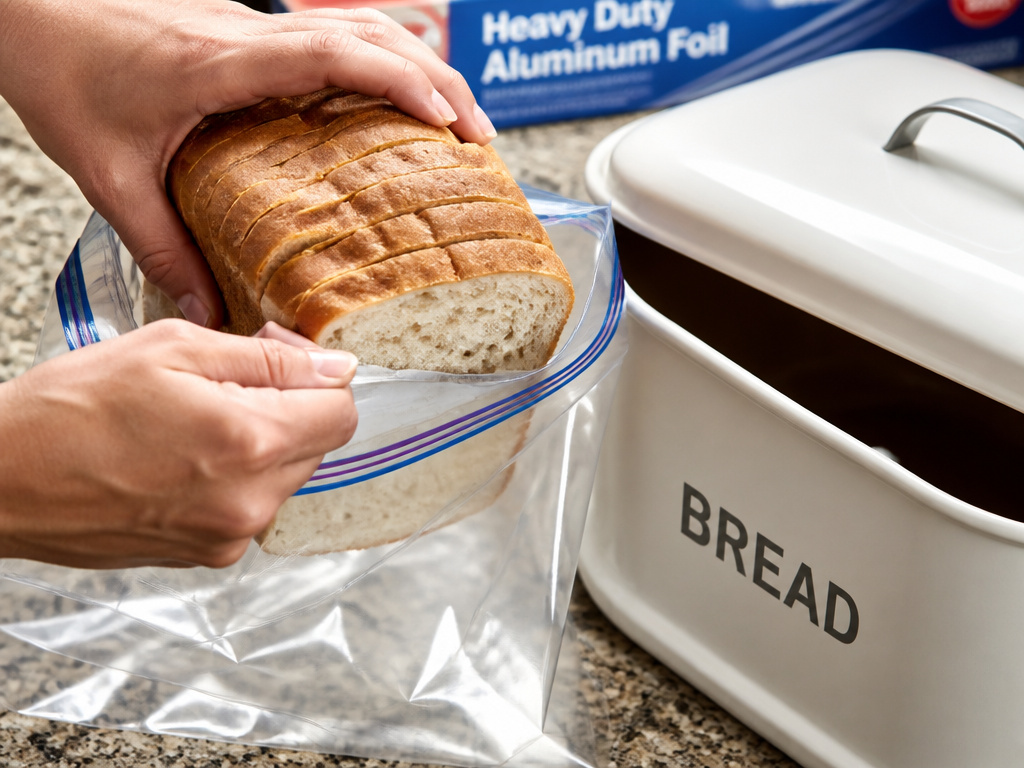
You don’t need a pantry full of gadgets. You need one or two right tools. – For the counter: A Victorinox Bread Box or a Meyer Ceramic Bread Keeper. Both create the ideal microclimate. Failing that, a gallon-size resealable plastic bag works. – For the freezer: Reusable Silicone Storage Bags (Stasher or similar) plus heavy-duty foil. The double barrier is key. – What to skip: Those “bread savers” that inject gases or special cloth bags marketed for weeks of freshness. They can’t overcome the fundamental chemistry of starch retrogradation at room temperature, and they certainly don’t help in the fridge.
The right bags for bread or specialized bread storage containers make the practical difference between a method that works and one that doesn’t.
Frequently Asked Questions
Does toasting reverse staling?
Toasting improves the texture of stale bread by driving out moisture and re-crisping it, but it doesn’t reverse the starch retrogradation. The flavor will still be flat and “stale” compared to fresh bread. It’s a salvage operation, not a reset.
How long does bread last in the fridge vs. On the counter?
On the counter in a plastic bag or bread box: 3-5 days before staling makes it undesirable. In the fridge in a plastic bag: 2-3 weeks before mold, but it will be unpalatably stale within 2-3 days. The OSU Extension refrigeration guidelines note that “bread stales more quickly at refrigerator temperatures” and recommend freezing instead.
Why does my bread get soggy in the fridge?
This is usually a condensation issue. Warm bread placed directly in a cold fridge releases moisture into the sealed bag or container, which then condenses on the cooler bread surface. Always let bread cool completely to room temperature before sealing it for storage, whether on the counter or in the fridge.
Is a bread box better than a plastic bag?
For room temperature storage, yes, for crusty loaves. A good bread box provides balanced humidity and a bit of air flow, keeping the crust crisp longer. For pre-sliced sandwich bread, a plastic bag is simpler and just as effective for short-term storage. It depends on your optimal storage goals.
Before You Go
The fridge is for ingredients, not for bread you plan to eat fresh. Its cold accelerates the very process that ruins texture, offering only a marginal delay in mold as consolation. For bread you’ll eat this week, a simple bread box or plastic bag on the counter is the answer. For anything longer, your freezer is the only real preservation tool.
Remember the numbers: 400% firmer in the fridge in days versus months of near-perfect preservation in the freezer. The choice for quality is clear. Stop refrigerating your bread.
