Learn How to Preserve Mushrooms with 3 Effective Methods
This post contains affiliate links. As an Amazon Associate, we earn from qualifying purchases.
You can preserve mushrooms safely using three USDA and extension-approved methods: pressure canning (button mushrooms only), freezing (after blanching or sautéing), and drying in a dehydrator at 120°F. The shelf life at room temperature is 1–3 days, but drops to 2–3 days even in a standard fridge at 5°C (41°F) per ISO 7561-1984. Storing fresh mushrooms in an airtight container unrefrigerated can create botulism risk within a week.
That 2–3 day fridge window is the whole problem. Mushrooms respire fast and carry their own enzymes for breakdown. Leaving them in the store clamshell on a middle shelf buys you a weekend at most before the caps soften and dark spots appear.
What follows breaks down the three methods that actually work, the one method (pickling) that needs a tested recipe, and the precise temperatures and timelines from primary sources like the ISO standard and university extension guides. By the end you’ll know which method fits your harvest volume and how to avoid the single packaging mistake that turns preservation into a food safety hazard.
Key Takeaways
- Only pressure-can button mushrooms. Other varieties lack the uniform density for safe heat penetration; canning them risks underprocessing and spoilage.
- Freeze after a heat treatment. Blanching or sautéing deactivates the enzymes that cause texture loss and off-flavors in the freezer within two months.
- Dry at 120°F until brittle. A lower temperature leaves moisture inside, which leads to mold in storage; a higher temperature cooks the mushrooms instead of drying them.
- Never store fresh mushrooms in a sealed plastic bag. Without perforations, respiration depletes oxygen and can promote Clostridium botulinum growth, a documented botulism risk flagged by Health Canada.
- Treat wild mushrooms with extreme caution. Toxins in poisonous varieties are not destroyed by drying, cooking, or canning. Only preserve mushrooms you can identify with absolute certainty.
The 3 Legitimate Preservation Methods (And What Doesn’t Work)
Mushrooms are not vegetables. They are fungi with a cellular structure and moisture content that demands specific handling. The consensus advice to “keep them in a paper bag in the fridge” addresses short-term storage, not preservation. For shelf life measured in months, you have three proven paths.
The ISO 7561-1984 standard for cultivated mushrooms states they can be stored for 4 to 5 days at +2°C (35.6°F) and for only 2 to 3 days at +5°C (41°F). Your refrigerator likely runs around 4°C (40°F). That puts your fresh mushrooms on a 3-day clock from the moment you bring them home.
ISO 7561-1984 specifies that cultivated mushrooms (Agaricus bisporus) should be precooled immediately after harvest to a temperature not dropping below 2°C. For storage, a relative humidity of 90% is recommended. Higher humidity may cause condensation and discoloration; lower humidity leads to wilting. The mushrooms may be washed but must be dried within a few minutes, as persistent surface moisture causes browning.
1. Pressure Canning: The Strict Rules
Canning is the only shelf-stable method, but it comes with a non-negotiable restriction. According to the Oregon State University Extension, only domestically grown button mushrooms may be safely canned due to density and texture differences. Chanterelles, morels, and other wild varieties cannot be safely processed this way.
The density of a button mushroom allows heat to penetrate evenly during the pressure-canning process. A less dense, hollow-stemmed mushroom creates an air pocket that shields bacteria from the heat, leading to potential underprocessing. The consequence is spoilage or, in the worst case, botulism.
You must use a pressure canner, not a water bath. Mushrooms are low-acid, with a pH above 4.6. A boiling-water bath cannot reach the 240°F needed to destroy C. Botulinum spores.
| Canning Factor | Requirement | Risk If Ignored |
|---|---|---|
| Mushroom Type | Domestically grown button mushrooms only. | Irregular heat penetration; bacterial survival. |
| Jar Size | Half-pint or pint jars only. | Inconsistent processing in larger jars. |
| Process Time | 45 minutes at 10 psi (weighted) or 11 psi (dial). | Incomplete spore destruction; spoilage within weeks. |
| Acidification | Add ⅛ tsp crystalline ascorbic acid per pint. | Rapid discoloration and quality loss. |
The process is straightforward but exact. You pack hot, pre-boiled mushrooms into hot jars with an inch of headspace, add salt and ascorbic acid for color, then process. Deviating from the tested process time is how jars fail.
2. Freezing: The Texture Trade-Off
Freezing is the most versatile method, suitable for almost any edible mushroom variety. The catch is texture. Frozen raw mushrooms become spongy and leak water upon thawing because ice crystals rupture the delicate cell walls.
The fix is a pre-freezing heat treatment. You have two options: steam blanching or sautéing. Both deactivate the enzymes responsible for texture breakdown.
Steam Blanching (Best for Color)
- Soak prepared mushrooms for 5 minutes in a solution of 1 teaspoon lemon juice or 1½ teaspoons citric acid per pint of water.
- Drain, then steam in a basket: whole buttons for 5 minutes, quarters for 3.5 minutes, slices for 3 minutes.
- Cool immediately in ice water, drain thoroughly, and pack into freezer containers.
The acidulated bath is critical. It chelates the metals that catalyze browning reactions. Skipping it leads to gray, unappealing mushrooms after thawing.
Sautéing (Best for Flavor)
This is the preferred method for many cooks. Sauté sliced mushrooms in a small amount of oil or butter until they release their moisture and begin to brown. Cool completely before packing. The flavor concentrates, and they are ready to add directly to soups, sauces, or stir-fries.
Where this goes sideways: Freezing raw, untreated mushrooms. The texture turns to rubbery mush within a month, and they develop a metallic off-flavor as enzymes continue to work in the frozen state.
Frozen, properly treated mushrooms maintain quality for 8 to 12 months. After that, freezer burn and flavor loss accelerate.
3. Drying: The Space-Saver
Drying removes the moisture that microbes need, reducing weight by about 90%. It is ideal for shiitake, morels, porcini, and button mushrooms. A dedicated food dehydrator is the most reliable tool.
The target is 120°F (49°C). Go lower and drying takes days, raising the risk of microbial growth during the process. Go higher and you cook the mushrooms, sealing in moisture and creating a case-hardened shell that stays chewy inside.
Clean mushrooms with a soft brush or a very quick rinse. Slice uniformly, about ½ inch thick, so they dry at the same rate. Dry until crisp or brittle—snapping a piece in half should show no moisture or flexibility in the center. This can take 4 to 8 hours depending on humidity and slice thickness.
| Drying Problem | Likely Cause | Fix |
|---|---|---|
| Chewy, not brittle | Temperature too low, slices too thick, or stopped too early. | Increase temp to 120°F, slice thinner, dry 2 hours longer. |
| Dark, tough exterior | Temperature too high (>130°F). | Lower temperature immediately; tough exterior may be permanent. |
| Uneven drying | Overloaded trays, poor air circulation. | Leave space between slices; rotate trays every 2 hours. |
| Mold in storage | Not fully dry, stored in a sealed container while warm. | Confirm brittleness; cool completely before packing in an airtight jar. |
Store dried mushrooms in an airtight container in a cool, dark place. They will keep for over a year. To use, rehydrate in boiling water for 10-20 minutes. The soaking liquid is packed with flavor—strain it and use it as a broth.
Why Your Fridge Isn’t a Long-Term Solution
Refrigeration only slows decay; it doesn’t stop it. The peer-reviewed mushroom quality preservation review notes the shelf-life of Agaricus bisporus is 5–7 days at 0–2°C (32–35.6°F) and about 8 days under optimal refrigerated conditions. Most home refrigerators operate at 4–5°C (39–41°F), cutting that window in half.
The packaging matters as much as the temperature. Health Canada’s guidance explicitly warns against storing fresh mushrooms in hermetically sealed packages without commercial sterility. The mushrooms continue to respire, consuming oxygen and producing carbon dioxide and moisture. In a sealed bag, this quickly creates a low-oxygen, high-humidity environment.
Common mistake: Moving store-bought mushrooms to a sealed plastic container or zipper bag. This can deplete oxygen in under 24 hours, creating conditions favorable for Clostridium botulinum, the bacteria that causes botulism.
The safe approach for short-term fridge storage is the original perforated container or a paper bag. The paper absorbs excess moisture while allowing gas exchange. Even then, plan to use them within three to four days for best quality.
Step-by-Step Mushroom Drying (The Foolproof Sequence)
Drying is the most accessible long-term method. You need a dehydrator, a sharp knife, and patience. Here’s the sequence that prevents the common failure points.
1. Select and Clean
Choose fresh mushrooms with closed caps. Avoid any with open gills or slimy spots. Wipe them clean with a damp cloth or soft brush. If you must rinse, do it quickly under cold water and pat them completely dry with a towel immediately. Lingering water extends drying time by hours.
2. Slice Uniformly
Consistency is everything. Slice stems and caps to a uniform ½-inch thickness. Slices that are too thick won’t dry in the center; slices that are too thin will become brittle dust. For small button mushrooms, halving or quartering works.
3. Load the Dehydrator
Arrange slices in a single layer on the trays. Do not overlap them. Air needs to flow over every surface. If your dehydrator has adjustable temperature, set it to 120°F. If it has a “vegetable” setting, use that.
4. Dry Until Brittle
This is not a “set and forget” step. Start checking after 4 hours. Bend a slice. It should snap cleanly, not bend. The center should have no visible moisture or softness. The largest pieces will take the longest—sometimes 8 hours or more. Remove dry pieces as they finish.
5. Condition and Store
Even when they seem brittle, residual moisture can be uneven. To prevent mold, “condition” the dried mushrooms. Cool them completely, then place them in a sealed glass jar for 24 hours. If condensation forms on the jar walls, they need more drying time. Store the final product in an airtight container away from light and heat.
This method works for button, shiitake, oyster, and morel mushrooms. It is the cornerstone of many food preservation techniques for low-moisture ingredients.
Canning vs Freezing vs Drying: Which Method Wins?
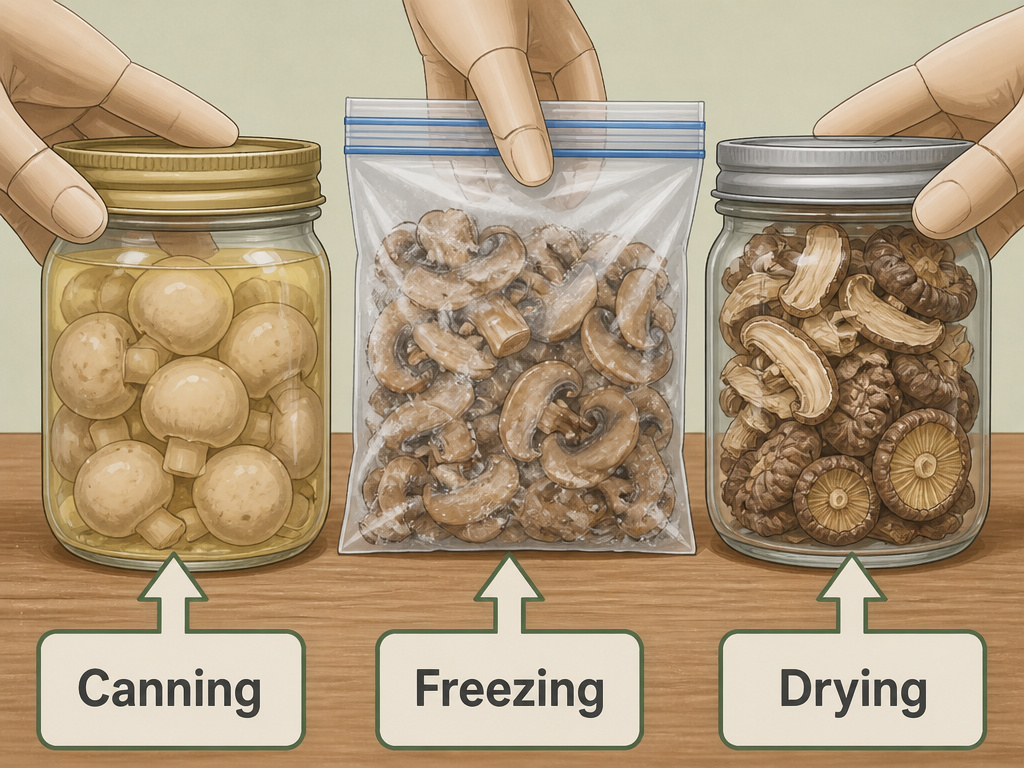
Your goal dictates the tool. Use this comparison to match the method to your intended use.
| Method | Best For | Shelf Life | Biggest Drawback |
|---|---|---|---|
| Pressure Canning | Shelf-stable storage of button mushrooms; ready-to-use in recipes. | 1+ years at room temp. | Equipment-intensive; only safe for one mushroom type. |
| Freezing | Preserving texture and flavor of any edible variety for cooked dishes. | 8–12 months. | Requires freezer space; texture change if not pre-cooked. |
| Drying | Maximizing storage space, creating flavor concentrates for broths. | 1+ years at room temp. | Rehydration required; not suitable for all culinary uses. |
For a pantry staple: Drying wins. It requires no electricity after processing and stores compactly. A quart jar holds the equivalent of several pounds of fresh mushrooms.
For ready-to-cook convenience: Freezing sautéed mushrooms is unmatched. Having a bag of pre-cooked mushrooms ready for pasta or gravy saves significant time.
For absolute shelf stability: Pressure canning is the only answer. It is the method detailed in the OSU Extension preserving mushrooms publication for a reason—when done correctly, it is perfectly safe and reliable.
Canning shares principles with preserving tomatoes and other low-acid vegetables, demanding the same respect for pressure and processing time.
The Botulism Risk You Haven’t Considered
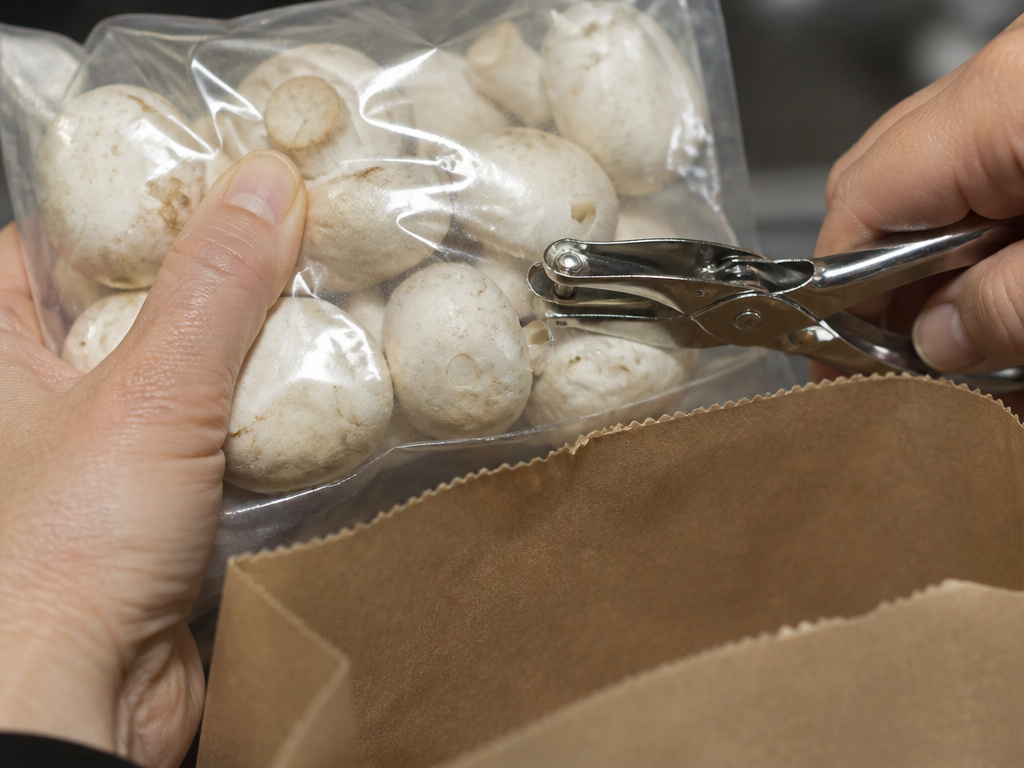
Most food spoilage is obvious—mold, slime, foul smell. Botulism toxin is invisible, odorless, and tasteless. Mushrooms present a unique risk because they are often stored in plastic packaging.
The science is clear: Clostridium botulinum spores are ubiquitous in soil. Mushrooms, grown in composted soil, can carry these spores. The spores are harmless until they germinate and produce toxin, which requires a moist, low-oxygen, low-acid environment. A sealed plastic bag of fresh mushrooms provides all three conditions within days.
This isn’t theoretical. Health Canada’s guidance mandates that plastic film for fresh mushrooms must be visibly perforated with minimum 3.0 mm holes to allow air exchange. Packages without holes must be labeled “Keep Refrigerated” and carry a “Best Before” date, and even then are a calculated risk for short-term storage only.
Before you start: Never attempt to preserve mushrooms in oil at room temperature. Garlic-in-oil preparations are notorious for botulism, and mushrooms carry the same risk. Any mushroom preserved in oil must be refrigerated and used within a week, following the same strict rules as preserving garlic in oil.
The safe path is to treat any unperforated, sealed package of mushrooms as a short-term vessel. Transfer them to a paper bag or perforated container as soon as you get home. For long-term preservation, use one of the three heat-processing methods (canning, blanching for freezing, or drying) that destroy spores or remove the conditions they need to grow.
Frequently Asked Questions
Can you preserve mushrooms by pickling?
You can, but it requires a tested, acidified recipe from a reliable source like a university extension. Mushrooms are low-acid, so a standard vinegar brine may not drop the pH enough to be safe for room-temperature storage. Most tested recipes are for “marinated” mushrooms meant for refrigerator storage and consumption within a month. Do not improvise.
Why did my frozen mushrooms turn black?
Enzymatic browning. Mushrooms contain polyphenol oxidase enzymes that react with oxygen. The pre-treatment acid bath (lemon juice or citric acid) is essential to inhibit this reaction. Skipping it allows the enzymes to work even during blanching and freezing, leading to dark, discolored results. The same principle applies to preserving basil and other delicate herbs.
Is it safe to dry wild mushrooms?
Only if you are 100% certain of their identity. The toxins in poisonous mushrooms are stable compounds that are not destroyed by drying, cooking, or canning. Mistaking a toxic variety for an edible one and preserving it concentrates the poison. When in doubt, preserve only commercially cultivated mushrooms. This rule is paramount and overrides any preservation guide.
How long do dried mushrooms last?
Properly dried and stored in an airtight container in a cool, dark place, they will retain best quality for about a year. After two years, they lose potency and flavor but are generally still safe if no moisture was present. Check for any signs of moisture or off odors before use.
Can I use an oven instead of a dehydrator?
You can, but it is less efficient and harder to control. Ovens rarely maintain a steady 120°F; their lowest setting is often 170°F or higher. This cooks the mushrooms too quickly, trapping moisture inside. If you must use an oven, prop the door open with a wooden spoon to allow moisture to escape and monitor them closely. A dehydrator is a more reliable investment for any serious preserving fruit or vegetable projects.
Before You Go
Preserving mushrooms boils down to controlling water and microbiology. The fridge buys you days; heat processing buys you months.
For the average cook with a surplus of button mushrooms, freezing after a quick sauté is the most practical win. It locks in flavor with minimal fuss. For foragers or gardeners with larger, varied harvests, a dehydrator pays for itself by turning pounds of fragile fungi into jars of shelf-stable ingredients.
Remember the two non-negotiable rules: never can anything but button mushrooms, and never store fresh mushrooms in an airtight, unperforated container. Those rules come from documented food safety guidance, not overcaution. Follow the timelines from the ISO standard and extension guides, and you’ll turn a perishable ingredient into a pantry asset without guesswork.
