How to Keep Cilantro in Fridge: A 3-Method Storage Guide
This post contains affiliate links. As an Amazon Associate, we earn from qualifying purchases.
To keep cilantro in the fridge, you must balance moisture and airflow within a 32–40°F (0–4°C) environment. The best method is the water bouquet: trim stems, place in a jar with an inch of water, cover loosely with a plastic bag, and refrigerate. Change the water every two days. This extends freshness for up to two weeks, per Utah State University Extension guidance.
That 32–40°F range isn’t a suggestion. It’s the documented cold, moist storage zone for produce, and your fridge’s default 38°F setting sits right in the middle. Cilantro wilts outside this band because its cell structure breaks down, too cold and it freezes, too warm and it respires into slime.
The rest walks the choice between three proven methods, the science behind your crisper drawer, and the one mistake that turns a bright bunch to mush in three days.
Key Takeaways
- The water bouquet method is the longest-lasting, keeping cilantro fresh for up to two weeks when you change the water every two to three days.
- Your refrigerator must run between 32–40°F (0–4°C); a warmer fridge cuts shelf life in half regardless of your storage technique.
- Dry your cilantro thoroughly if you wash it before storage. Surface water trapped against the leaves is the fastest route to mold.
- The crisper drawer is only effective if its humidity vent is adjusted correctly; for herbs, you often need the low-humidity (vent open) setting.
- Remove any yellow or slimy stems immediately. One spoiled stem spreads decay to the entire bunch within 48 hours.
The Fastest Fix: The Water Bouquet Method
This method treats cilantro like cut flowers. It works because the stems continue to draw water up to the leaves, maintaining turgor pressure and crispness.
Start with a fresh bunch. If the roots are attached, leave them on, they help with water uptake. If not, trim about half an inch off the stem ends with a sharp knife. A clean cut opens the vascular tissue.
Place the bunch in a clean glass or jar with about an inch of fresh, cold water. Loosely cover the leaves and jar top with a plastic produce bag or plastic wrap. Refrigerate immediately.
Change the water every two days. Stagnant water grows bacteria that clog the stems. If you see the water getting cloudy before two days, change it sooner.
This technique is endorsed by the Utah State University cilantro storage and handling guide, which notes it can preserve quality for about a week with proper care. In practice, with vigilant water changes, many bunches last ten to fourteen days.
Where this goes sideways: Using a tall, narrow jar that forces the leaves to be crammed against the sides. The leaves need air circulation. A wide-mouth mason jar or a simple drinking glass is ideal.
| Step | Action | Why It Matters |
|---|---|---|
| 1. Trim | Cut 1/2″ off stem ends. | Opens fresh vascular tissue for water uptake. |
| 2. Hydrate | Place in jar with 1″ cold water. | Stems draw moisture to keep leaves crisp. |
| 3. Cover | Loosely tent with a plastic bag. | Maintains high humidity without trapping ethylene gas. |
| 4. Maintain | Change water every 2-3 days. | Prevents bacterial growth that rots stems. |
The Damp Towel & Bag Technique
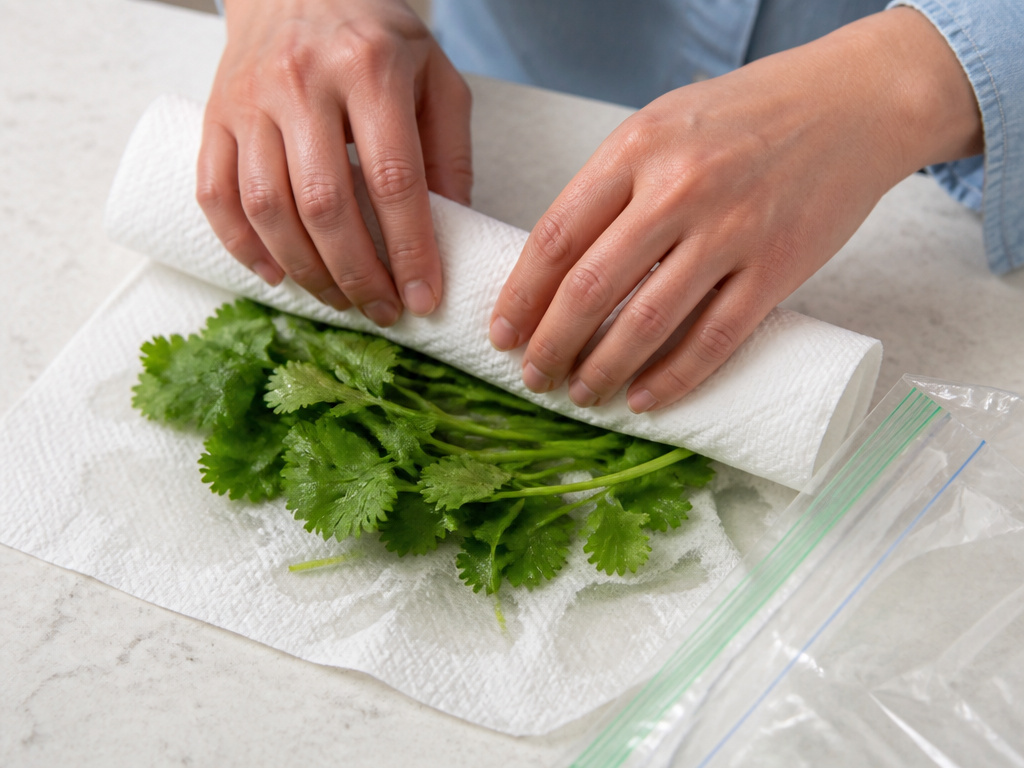 For those with limited door shelf space, the damp towel method is a close second. It mimics the moisture balance of professional herb storage.
You need paper towels or a thin, clean kitchen cloth. The goal is damp, not wet. Run the towel under cold water and wring it out until no water drips.
Lay the cilantro bunch on the towel. If the bunch is large, consider dividing it into two smaller bundles. Roll the towel around the cilantro gently, don’t crush it. Place the rolled bundle inside a partially open plastic bag or a reusable silicone bag. Do not seal it airtight.
The bag should be open or have a few holes punched in it. This allows for slight airflow, which carries away the ethylene gas the herb produces as it ages. A sealed bag traps this gas and speeds decay.
Store the bundle in the main body of your fridge, not the door. The temperature is more stable there. The towel will dry out over 3-4 days. If it feels dry to the touch, re-dampen it.
This method reliably keeps cilantro fresh for 7-10 days. It’s my default for pre-chopped cilantro or when I know I’ll use it within the week.
The Simple Vented Bag (For Under a Week)
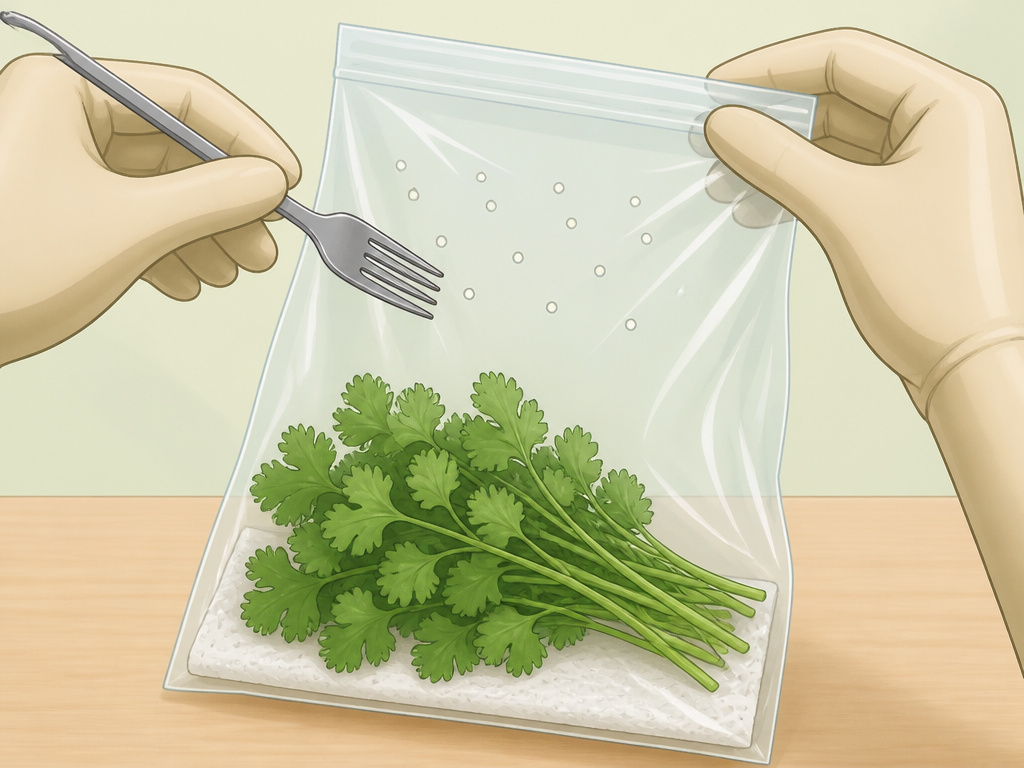 Sometimes you just need to stash the bunch for a few days. The vented bag is the quickest option, but its ceiling is about five to seven days.
Use the plastic bag the cilantro came in, or a standard produce bag. Take a fork or scissors and poke 6-8 small holes around the top half of the bag. This is critical. The holes provide ventilation.
Add a single dry paper towel to the bottom of the bag before putting the cilantro in. The towel will absorb any excess moisture that condenses. Place the bunch inside, expel as much air as you can, and twist-tie the bag closed.
Store it in the crisper drawer. This method works because it creates a micro-environment with decent humidity and the essential airflow the herb needs. According to the Oregon State Extension storage publication, parsley and cilantro last about one week under good refrigeration, this bag setup hits that mark.
Common mistake: Using a perfectly sealed zipper bag. Without vents, moisture condenses on the leaves within hours, starting the slime process.
The 32–40°F Sweet Spot
Your storage method is irrelevant if your fridge is too warm. Cilantro, like most leafy herbs, requires a narrow temperature band to slow respiration and delay wilting.
The ideal refrigerator temperature is 37°F. This sits safely within the 32–40°F (0–4°C) range that university extensions define as “cold, moist storage.” You can check your fridge’s temperature with a standalone appliance thermometer placed in the center of the middle shelf.
Worth knowing before you start: The doors and upper shelves are the warmest zones in your fridge. The back of the bottom shelf and the crisper drawers are the coldest. Store cilantro toward the back.
The crisper drawer is a double-edged sword. Its high-humidity setting (vent closed) is great for vegetables that lose water, like carrots and broccoli. But cilantro needs high humidity with airflow. For herbs, set the crisper to low humidity (vent open). This allows some moist air to escape, preventing the stagnant, wet conditions that breed mold.
If you’re serious about fridge organization, dedicate a high-visibility spot in a cold zone for herbs. A clear salad container on a middle shelf works better than a hidden drawer.
Prep: To Wash or Not to Wash?
The internet is split. Some sources say never wash before storage; others insist a good wash extends life. The resolution lies in what happens after the wash.
Washing can introduce surface moisture that leads to rot. But not washing leaves soil and microbes that also accelerate spoilage. The compromise is to wash and dry thoroughly.
If you choose to wash, do it as soon as you get home. Use a salad spinner. It’s the single best tool for the job. 1. Submerge the bunch in a bowl of cold water, swish gently, and lift out. 2. Place the cilantro in the salad spinner basket. 3. Spin until no water flies out. 4. Lay the leaves on a dry kitchen towel for 10 minutes to air-dry any residual dampness.
Only then proceed with your chosen storage method. This removes field grit and potential pests while minimizing water residue. For a quick stash, this pre-washed cilantro is perfect for the damp towel method.
What Not to Do: Three Quick-Rot Triggers
Cilantro has clear failure modes. Avoid these three things.
- Sealing it airtight in a container with water still on the leaves. This creates a terrarium. Mold appears in two days.
- Storing it near ethylene-producing fruits. Apples, bananas, and avocados release ethylene gas, a ripening hormone that turns cilantro yellow and accelerates decay. Keep herbs in a separate drawer.
- Ignoring spoiled stems. One slimy or blackened stem will spread mold spores to the rest of the bunch. When you change the water or check the bundle, remove any compromised pieces immediately.
These mistakes often explain why a good method to preserve fresh cilantro seems to fail. The technique was sound, but a rogue apple in the fruit bowl or a sealed lid undid it.
How to Store Cilantro Long-Term
For keeping cilantro beyond two weeks, you must leave the refrigerator. Freezing is the most effective long-term cilantro storage solution.
Chop clean, dry cilantro leaves and tender stems. Pack them tightly into an ice cube tray. Pour just enough water or olive oil over the herbs to cover, then freeze. Once solid, pop the cubes into a labeled freezer bag.
Frozen cilantro won’t be crisp for garnish, but it retains its potent flavor for cooked dishes like soups, stews, and sauces for 4-6 months. It’s a far better option than dried cilantro, which loses most of its characteristic aroma.
Frequently Asked Questions
Does cilantro last longer in a glass of water or wrapped in a towel?
The glass of water method generally lasts longer, up to two weeks with proper care. The damp towel method caps out at about 10 days. The water method actively hydrates the stems, while the towel method only maintains existing moisture.
Should you store cilantro in the crisper drawer?
Yes, but only if you set the crisper to the low humidity setting (vent open). Cilantro needs airflow to prevent moisture buildup. The high-humidity setting (vent closed) creates a wet, stagnant environment that leads to mold.
How can you tell if cilantro has gone bad?
Look for dark, slimy stems, yellow or blackened leaves, and a sour or off smell. Fresh cilantro should be bright green, firm, and smell clean and citrusy. If it’s wilted but not slimy, it can often be revived in a bowl of ice water for 15 minutes.
Can you store cilantro and parsley the same way?
Yes. Both are tender leafy herbs with similar moisture and temperature requirements. The water bouquet and damp towel methods work identically for parsley, cilantro, and similar fresh greens.
The Bottom Line
For maximum shelf life, use the water method. For daily convenience, the damp towel technique is foolproof. Both depend on a fridge holding 37°F and a commitment to remove any spoiling pieces the moment you see them.
Your goal isn’t just to keep cilantro fresh; it’s to match the method to your cooking timeline. Need it for tonight? A vented bag is fine. Planning a week of tacos? The damp towel has you covered. Want it on standby for two weeks? The water bouquet is the only way.
Check your refrigerator temperature setting first. That’s the foundation every storage trick builds on.
