How to Clean and Store Strawberries for Longer Shelf Life
This post contains affiliate links. As an Amazon Associate, we earn from qualifying purchases.
To clean and store strawberries for maximum shelf life, wash them under cool running water just before you plan to eat or use them, pat them completely dry, and store them dry and unwashed in a breathable container at 32°F with 90-95% relative humidity. This cold-chain protocol, documented by university extensions, can extend freshness to 7 days versus 3 days at typical fridge temperatures.
That 32°F target is the physical threshold where cellular breakdown and mold growth slow to a crawl. Home refrigerators usually run between 35-40°F, which cuts a strawberry’s potential shelf life in half.The gap between “cold” and “correctly cold” is the difference between berries that last the week and berries that turn to mush by Wednesday.
What follows is the breakdown of that protocol: the right way to wash without waterlogging, the specific container choices that maintain humidity without trapping mold, and the simple adjustments to make your refrigerator’s crisper drawer work like a commercial cooler. We’ll also cover how to spot the point of no return with mold and the one freezer trick that preserves vitamin C.
Key Takeaways
- Store unwashed strawberries at 32°F (0°C) with 90-95% relative humidity for up to 7 days of freshness. Typical home fridge temperatures (35-40°F) reduce shelf life to about 3 days.
- Wash berries under cool, running water just before use and dry them thoroughly. Washing before storage introduces moisture that accelerates mold growth.
- Discard any moldy berry and the berries immediately touching it. Mold spores travel on contact, so spot-cleaning is ineffective.
- Use vented containers like the original clamshell or a paper-towel-lined tray. Airtight containers trap ethylene and moisture, creating a spoilage environment.
- For long-term storage, freeze strawberries whole or sliced with a splash of lemon juice to reduce vitamin C loss during the freezing process.
Why Strawberries Spoil So Fast (And the Number That Controls It)
Strawberries are essentially fragile, water-filled sponges with no protective rind. Their postharvest clock starts ticking the second they’re picked, and the rate is controlled by one variable: temperature.
Raising the strawberry’s temperature from 0°C to 10°C (32°F to 50°F) increases its deterioration rate two- to four-fold. Berries held at 20°C (68°F) have one-quarter to one-half the life expectancy of those held at 0°C.
This is an exponential breakdown. The primary source of that stat is the Ontario Ministry of Agriculture, and it explains why leaving berries on the counter for an afternoon can cost you days of fridge life.The enemy is respiration, the fruit’s own metabolism, which generates heat, consumes sugars, and softens texture. Cold dramatically slows this process.
The second enemy is Botrytis cinerea, or gray mold. This fungus is the most common postharvest disease for strawberries, and its growth is directly suppressed by maintaining the cold chain. The optimal storage temperature of 32°F is a deliberate balancing act. It’s as cold as you can get without crossing the freezing point of the fruit itself, which begins at 30.6°F, according to the Rutgers NJAES FS1258 publication.
| Storage Condition | Temperature | Relative Humidity | Expected Shelf Life | Primary Risk |
|---|---|---|---|---|
| Optimal Commercial Cooler | 32°F (0°C) | 90-95% | Up to 7 days (UC ANR) | Freezing damage if <30.6°F |
| Typical Home Refrigerator | 35-40°F (2-4°C) | ~70-80% | ~3 days (ICN) | Rapid moisture loss, mold |
| Room Temperature (Dry Storage) | 68°F (20°C) | Ambient | Up to 24 hours (ICN) | Extreme softening, fermentation |
Your goal in home storage is to mimic the first row as closely as possible. The rest of this guide details how.
The 3-Step Clean & Dry Method
Washing a strawberry is about removing field debris and potential contaminants without compromising the berry’s delicate cellular structure. Doing it at the wrong time is the most common mistake.
Step 1: Wait to Wash. Leave strawberries unwashed until the moment you’re ready to eat or cook with them. The UC ANR strawberry storage guide is explicit: washing before storage introduces free water, which is the primary catalyst for mold growth and leaching of water-soluble flavors and vitamins.
Step 2: Use Cool, Running Water. Place the strawberries in a colander. Run cool tap water over them, gently turning them with your hands. Do not let them soak in a bowl of water. Soaking causes the berry to absorb water through its pores and the stem scar, which dilutes flavor and leads to a mushy texture.
Step 3: Dry Them Completely. This is the non-negotiable step. Spread the washed berries in a single layer on a clean kitchen towel or several layers of paper towel. Gently pat them dry. Any surface moisture left behind becomes a breeding ground. For a larger batch, let them air-dry for 15-20 minutes, turning once.
Common mistake: Washing a whole batch and putting the slightly damp berries back in the fridge. The dampness spreads, and you’ll see fuzzy white or gray spots starting within 36 hours.
If you must pre-wash for convenience, say, for kids’ snacks, you commit to eating them that same day. There is no middle ground.
Storing Strawberries in the Refrigerator
Your refrigerator’s crisper drawer is your best tool, but it needs configuration. The goal is to hit two targets: maximum cold and high humidity, without sealing the berries in a swamp.
First, Maximize Cold. Place your strawberries in the coldest part of your fridge, which is usually the back of the bottom shelf or the crisper drawer. Use a refrigerator thermometer to check. If your fridge only gets down to 37°F, that’s fine, just know the shelf-life clock is faster. Never store them in the door, where temperature fluctuates wildly.
Second, Manage Humidity. The ideal 90-95% relative humidity is tough in an empty home fridge. The Rutgers Cooperative Extension food safety guide suggests two hacks: place a damp cloth in the crisper drawer (not touching the berries), or store the berries in their original vented clamshell. Those little holes are deliberate. They allow for slight air exchange, which prevents condensation from building up inside the package while still slowing moisture loss.
If you’ve transferred berries to a new container, follow this checklist: – Line the bottom with a dry paper towel to absorb incidental moisture. – Use a container that is not airtight. A loosely covered bowl or a produce bag with a few holes punched in it works. – Do not stack berries deeply. A single layer, or two at most, prevents crushing and allows cold air to circulate.
This approach to food storage applies broadly, but strawberries are one of the most humidity-sensitive fruits. For other delicate berries, the principles are similar but the timing differs, check our guide on how to store raspberries for specifics.
Choosing and Prepping Your Container
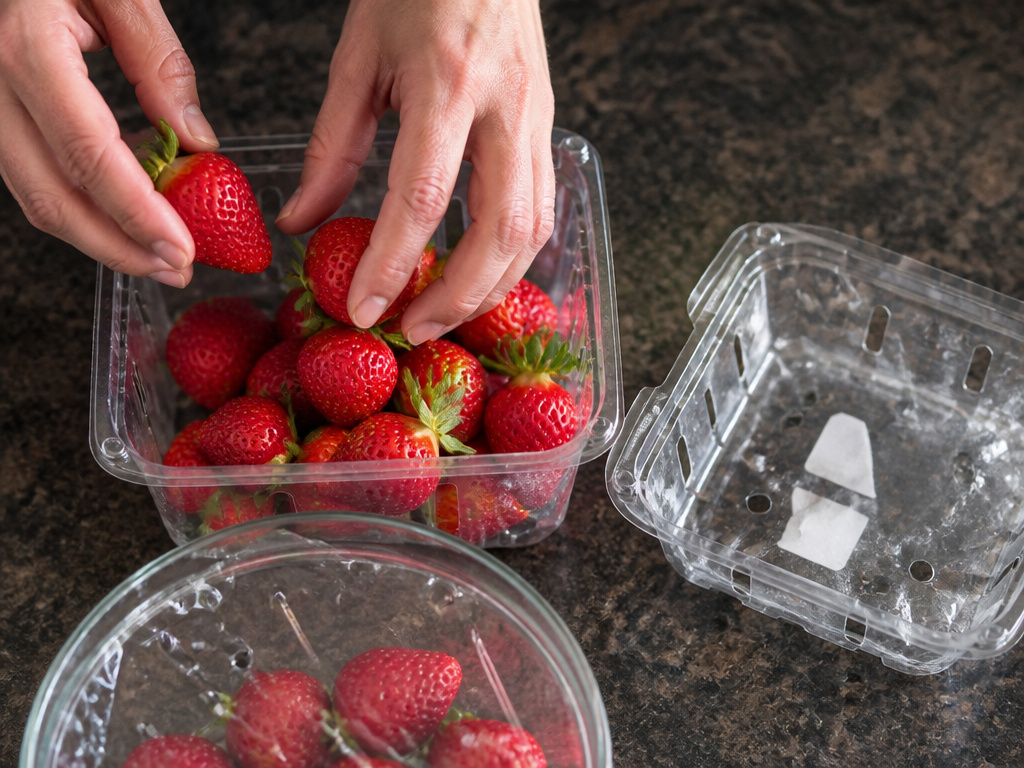 The container is a microclimate manager. Here are the options, ranked.
| Container Type | Best For | Why It Works | Risk If Used Wrong |
|---|---|---|---|
| Original Vented Clamshell | Short-term storage (3-5 days) | Designed for berry respiration; vents prevent condensation. | Overpacking crushes bottom berries. |
| Paper-Towel-Lined Tray | Drying after washing; very short-term holding | Absorbs moisture, allows maximum air flow. | Exposes berries to fridge odors if uncovered. |
| Perforated Produce Bag | Bulk storage from a farmers’ market | Maintains higher humidity than open air, some breathability. | Can trap moisture if not perforated, leading to rapid mold. |
| Airtight Plastic Container | Never for fresh strawberries | Traps ethylene gas and moisture, accelerating decay. | Berries turn to mush and mold in 2 days. |
The vented clamshell is the winner for most people. If it’s damaged, replicate its function. Place berries in a bowl, cover loosely with plastic wrap, and poke 5-6 holes in the top with a knife. This simple step is more effective than any “berry keeper” gadget sold.
How to Handle Mold and When to Discard
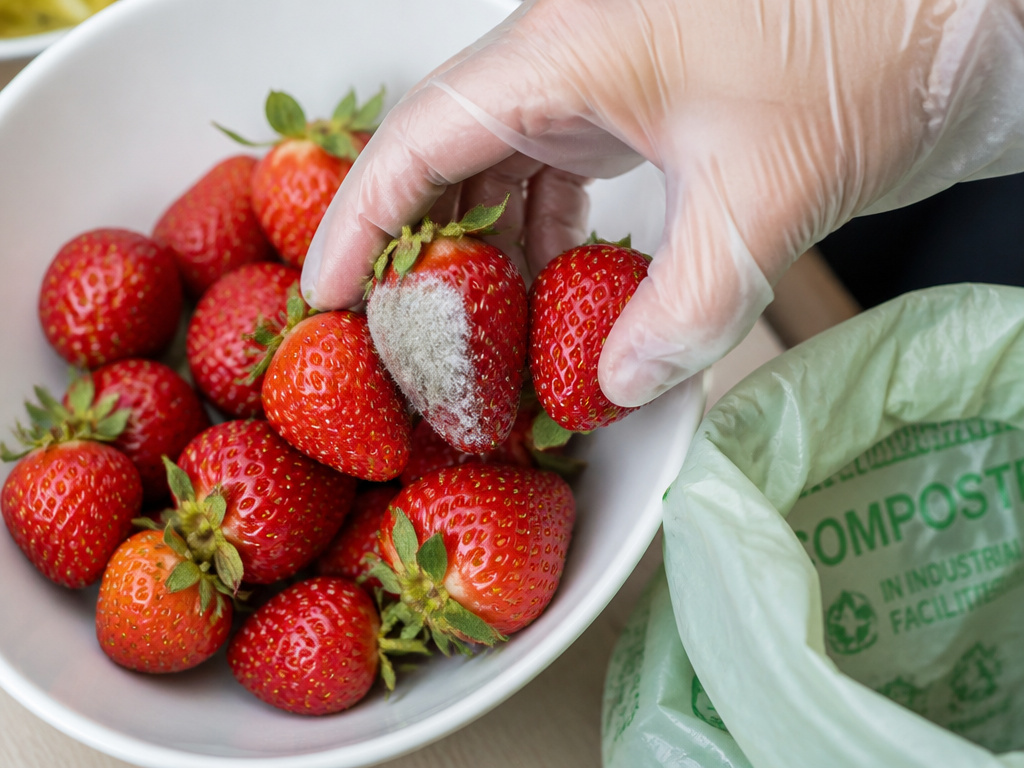 You find one fuzzy berry in the corner. The instinct is to pluck it out and save the rest. That instinct wastes the whole container.
If one berry is moldy, mold spores will have traveled to surrounding berries. Discard the moldy berry and any adjacent berries to prevent further contamination and loss.
That directive comes straight from the Institute of Child Nutrition’s Strawberry Information Sheet. Botrytis spores are airborne and spread on contact. The visible fuzz is the fruiting body; the microscopic threads (hyphae) have already infiltrated the neighboring fruit. Saving the berries next to the moldy one means you’re eating those threads.
Signs it’s time to toss the whole batch:
- Two or more moldy berries in different parts of the container.
- A fermented, alcoholic, or sour smell.
- Berries that are severely leaky and sitting in a pool of red juice.
- A slimy texture when you gently squeeze.
Regular maintenance is key. When you put berries in the fridge, make a habit of checking them the next day. Remove any that are softening or show signs of damage. A clean storage environment starts with a clean refrigerator. Spills and debris in the crisper can harbor mold spores that transfer to your fresh produce.
Freezing Strawberries for Long-Term Storage
Freezing is the only real long-term storage method for strawberries, and it works beautifully if you respect the fruit’s chemistry. The goal is to preserve texture and nutrients, not just make icy blobs.
The Lemon Juice Trick: The ICN sheet notes that adding a small amount of lemon juice to berries just prior to freezing can reduce vitamin C loss. The ascorbic acid in lemon juice acts as an antioxidant. For a quart of sliced berries, a teaspoon of lemon juice tossed gently is sufficient.
Method 1: Tray-Freeze for Perfect Pieces.
- Wash, dry, and hull the strawberries. Slice if desired.
- Arrange pieces in a single layer on a parchment-lined baking sheet. They must not touch.
- Place the sheet flat in the freezer for 2-4 hours, until the berries are hard.
- Transfer the frozen pieces to a heavy-duty freezer bag or airtight container. Squeeze out excess air. This prevents them from freezing into a solid brick, so you can scoop out a cup at a time.
Method 2: Dry-Pack for Preserving Whole Berries.
Place whole, dry, unhulled strawberries directly into a freezer bag. Remove air, seal, and freeze. They will freeze together, but the hull provides a handle for eating frozen or for using in cooked applications like jam.
Frozen strawberries are best used within 8-10 months for peak quality. For other long-term preservation ideas, our article on how to store dehydrated fruit covers the conditioning and packaging steps for shelf-stable snacks.
Frequently Asked Questions
Can you wash strawberries with vinegar?
You can, but for mold prevention, it’s less effective than the cold chain. A vinegar bath (1 part white vinegar to 3 parts water) can kill some surface bacteria and extend counter life slightly. However, it must be followed by a thorough rinse and complete drying. For refrigerator storage, the 32°F temperature is a more reliable mold inhibitor than any wash. Vinegar can also impart an off-flavor if not rinsed well.
Should you remove the green tops (calyx) before storing?
No. The UC Davis Postharvest strawberry facts advise leaving the cap attached during washing and storage. Removing it creates an open wound where juice leaks and water enters, diluting flavor and speeding decay. Hull them just before eating or cooking.
How long do strawberries last in the fridge?
At the ideal 32°F with high humidity, up to 7 days. In a typical home fridge (35-40°F), plan for 3-5 days if they were pristine when stored. Shelf life plummets if berries were stored warm after purchase or are packed wet.
What’s the best way to store cut strawberries?
Eat them the same day. Once cut, the cellular damage is extensive and oxidation begins immediately. If you must store them, place cut pieces in a very small, airtight container (to minimize air volume) and refrigerate for no more than 24 hours. They will be soft and less vibrant.
Can you store strawberries with other fruits?
Yes, with caution. Strawberries are not ethylene sensitive, so they won’t ripen faster next to apples or bananas. However, they can absorb strong odors from foods like onions. Their main compatibility issue is physical: don’t stack heavy produce on top of them. For other fresh ingredients that need similar care, see our guides on storing fresh herbs, cilantro, and green onions.
Before You Go
The core of strawberry storage is cold, dry, and breathable. Stop washing them until you’re ready.Use the vents on the clamshell. Put them in the back of the fridge. Those three actions will get you 90% of the way.
The final 10% is vigilance. Check your berries the day after you buy them. Pull out the one that’s getting soft. Move them to a paper-towel-lined tray if the container feels damp. That single minute of maintenance is what stretches a three-day berry into a seven-day berry. It turns a potential mold farm into a week’s worth of snacks.
