How to Store Cake in Fridge: The Ultimate Guide for Freshness
This post contains affiliate links. As an Amazon Associate, we earn from qualifying purchases.
Store cake in the fridge by first letting it cool completely, then sealing it airtight against the fridge’s dry air. Use plastic wrap pressed directly on exposed surfaces or an airtight container. Set your refrigerator to 40°F (4°C) or below. This method is mandatory for cakes with perishable fillings like custard, cream cheese, or fresh fruit, and can extend the life of most cakes by 3-7 days.
The 40°F threshold is the line where bacterial growth slows enough for food safety. But your fridge’s cooling mechanism works by circulating dry, cold air.That air pulls moisture from any exposed surface. A cake isn’t just getting cold in there; it’s actively dehydrating.
What follows is the countermeasure: how to use your fridge as a preservation tool instead of a drying box. We’ll cover the non-negotiable temperature setting, the exact wrapping sequence that stops flavor transfer, and the shelf-life charts pulled from university extension manuals. You’ll know which cakes must go in cold, which should never go in, and how to pull one out that still tastes fresh.
Key Takeaways
- Your refrigerator must be at 40°F (4°C) or colder for safe cake storage; use an appliance thermometer to verify.
- Never refrigerate a warm cake. Condensation will make it soggy and promote mold.
- For frosted cakes, use the “chill trick”: refrigerate uncovered for 15-30 minutes to harden the frosting, then wrap tightly.
- Cakes with perishable dairy or fruit fillings (whipped cream, custard, cream cheese, fresh fruit) require refrigeration.
- Plain butter cakes, pound cakes, and most buttercream-frosted cakes are often better kept at room temperature under a cake dome for 1-3 days.
The 40°F Rule: Your Fridge Isn’t Just Cold, It’s an Arid Desert
That target temperature of 40°F (4.4°C) comes straight from the Texas A&M AgriLife Extension food storage guide. Perishable foods stored above that line spoil rapidly. But hitting that number is only half the battle.
The other half is understanding what happens inside the box. A refrigerator cools by blowing air across cold coils. This process lowers humidity. The resulting environment is cold but arid, perfect for slowing microbes but terrible for keeping baked goods moist. An uncovered cake acts like a sponge for this dry air, losing moisture from its crumb and absorbing any ambient odors—think of last night’s garlic chicken infusing your vanilla sponge.
A refrigerator’s cooling mechanism actively reduces humidity. The dry, circulating air will pull moisture from an exposed cake’s surface at a rate double that of still room air, leading to staleness within hours, not days.
This is why the ideal fridge temperature is a tight range. The University of California ANR recommends 34°F to 40°F (1.1°C to 4.4°C). The cooler end of that range is safer, but the drying effect is more pronounced. Your goal is to stay at or below 40°F while creating a microclimate of humidity around the cake itself.
Common mistake: Assuming the fridge’s built-in dial is accurate. It often isn’t. Place a standalone appliance thermometer on the middle shelf, wait 24 hours, and check. A two-degree variance is the difference between safe storage and a risky bacterial playground.
Why Airtight Sealing Is Non-Negotiable
A seal does two jobs. It locks in the cake’s own moisture, creating a buffer against the dry fridge air. It also locks out odors and prevents flavor transfer. Your choice of seal depends on the cake’s state.
For a full, uncut cake, especially a decorated one, the “chill trick” is professional grade. Place the uncovered cake in the fridge for 15-30 minutes. This sets the butter in the frosting solid. Once firm, you can snugly wrap the entire cake in plastic wrap without smudging a single piped rose. Follow with a layer of aluminum foil for an extra barrier.
For cake layers or slices, plastic wrap pressed directly onto the exposed crumb is mandatory. Don’t just tent it over the top. Lay the wrap directly on the cut surface and smooth it down to eliminate air pockets. Then wrap the whole piece. For loose slices, a best fridge containers with a tight-fitting lid is excellent.
| Sealing Method | Best For | Risk If Skipped |
|---|---|---|
| Plastic wrap + foil (chill trick) | Fully frosted, decorated cakes | Frosting smudges; odors absorbed; rapid drying. |
| Plastic wrap pressed on cut surface | Cut cakes, slices, layers | Exposed crumb dries out and hardens within a day. |
| Airtight container | Slices, cupcakes, unfrosted layers | Stale, crumbly texture; flavor transfer from other foods. |
| Cake carrier with seal | Transporting frosted cakes | Frosting damage; movement during transport. |
The middle shelf is the sweet spot for placement. The door shelves experience temperature swings every time you open the fridge, and the back wall might be too cold, risking freezer burn. Good fridge organization means leaving a little space around the cake container for air circulation, which helps maintain a stable temperature throughout the cavity.
Which Cakes Must Be Refrigerated (And Which Shouldn’t)
The rule is simple: follow the filling. The sponge itself is rarely the issue; it’s what’s in or on it that dictates the rules.
Cakes that must be refrigerated contain perishable ingredients that enter the “danger zone” (above 40°F) quickly. This includes: – Cheesecake (any kind, baked or no-bake) – Cakes with whipped cream frosting or filling – Cakes with cream cheese frosting or filling – Custard or curd-filled cakes (like lemon curd layer cake) – Cakes with fresh fruit toppings or compotes (e.g., strawberry shortcake) – Mousse cakes – Tiramisu (contains raw egg and mascarpone)
For these, room temperature is a hard no. Their safe window is short, often 3-4 days max. The refrigerating cheesecake protocol is particularly strict due to its dense dairy content.
Cakes that are better at room temperature include: – Pound cakes and butter cakes – Angel food and chiffon cakes – Sponge cakes (without perishable fillings) – Cakes frosted with American buttercream (made with butter and powdered sugar) – Fruitcakes (the traditional, alcohol-soaked kind)
These cakes rely on their fat content (butter, oil) or sugar syrup for moisture. The fridge’s cold temperature will harden these fats, giving the cake a dense, hard texture. Cold also mutes flavor. Stored under a cake dome or in an airtight container in a cool kitchen, they’ll stay soft and flavorful for 1-3 days.
Where this goes sideways: Refrigerating a perfectly good pound cake. The cold solidifies the butter. You’ll bite into a slice that tastes bland and feels heavy, blaming the recipe when it was the storage.
What about buttercream? This is the big confusion point. Standard buttercream is shelf-stable. It’s fine at room temperature for 2-3 days. Refrigerate it only if your kitchen is very hot, or if you need to store the cake for longer than three days. Remember the chill trick before wrapping.
Step-by-Step: How to Store Cake in the Fridge
This sequence assumes your fridge is already at or below 40°F. If you’re unsure, check that first.
- Cool Completely. Let the cake cool on a wire rack until no warmth remains on the bottom or sides. This can take 2-3 hours for layered cakes. Putting a warm cake in the fridge creates condensation inside the wrapping. That moisture becomes a soggy layer on the frosting and a breeding ground for mold.
- Choose Your Wrapping.
- For a full, frosted cake: Use the chill trick. Chill uncovered, then wrap tightly in plastic wrap, then foil.
- For a cut cake or slices: Press plastic wrap directly onto the exposed cake surface. Then wrap the entire piece.
- For layers or cupcakes: Place in an airtight container. You can line layers with parchment paper to prevent sticking.
- Label It. Use a piece of masking tape to note the cake type and the date it was stored. You will forget in three days.
- Place on Middle Shelf. Keep it away from the door and the back wall. Ensure some space for air flow.
- Serve Correctly. Remove the cake from the fridge 30-60 minutes before serving. This allows the fats to soften and the flavors to bloom. A cold cheesecake tastes dull and overly dense.
Before you start: Verify your fridge temperature with a thermometer. A setting of 40°F (4°C) is a safety threshold, not a suggestion. Also, clean up any spills in the fridge first to prevent cross-contamination of odors.
The part nobody mentions: Every time you open the fridge door, you cause a small temperature spike and release humidity. If you’re in and out constantly, your cake’s microclimate suffers. Try to consolidate your trips.
How Long Does Cake Last in the Fridge?
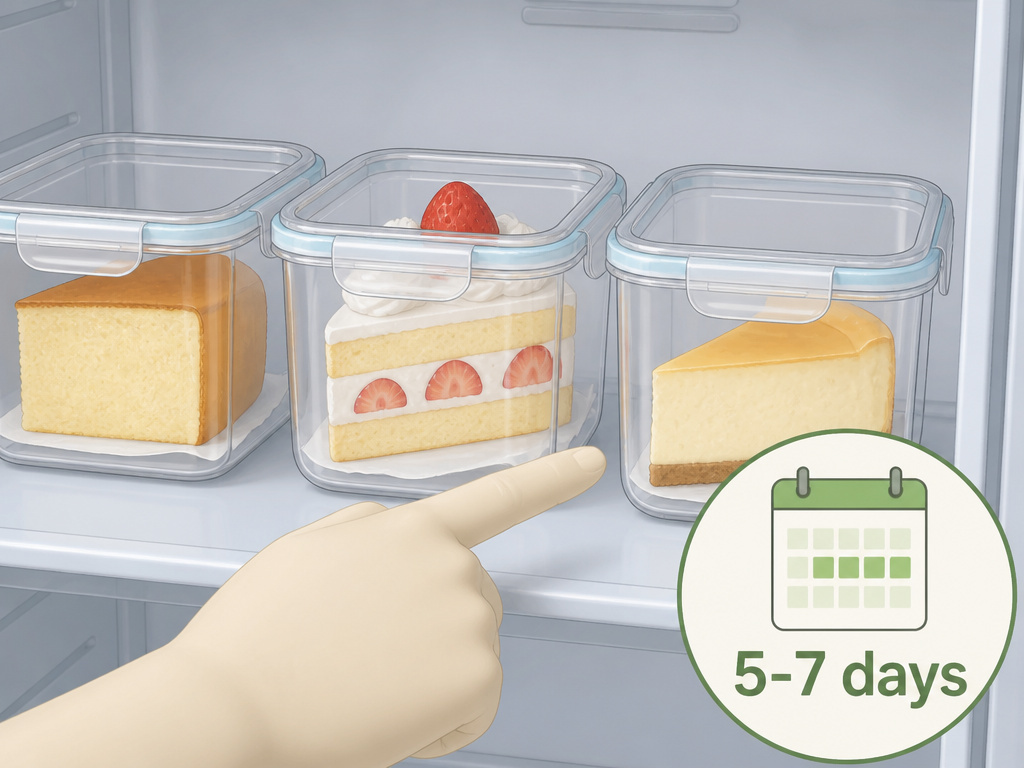
Timelines depend almost entirely on the cake’s ingredients. A plain sponge lasts longer than a strawberry cream cake. These figures are drawn from the Kansas State University storage times guide and other extension publications.
| Cake Type | Refrigerator (≤40°F) | Key Condition |
|---|---|---|
| Cheesecake | 5-7 days | Must be airtight; quality declines after day 5. |
| Whipped Cream Cake | 2-3 days | Very perishable; do not leave out. |
| Cream/Custard Filled | 3-4 days | Includes Boston cream, éclair cakes. |
| Frosted Butter Cake | 4-5 days | Airtight container; buttercream may harden. |
| Unfrosted Butter Cake | 1 week+ | Stays moist longer when sealed. |
| Angel Food / Chiffon | 6-12 months | Freezer only; fridge drying ruins texture. |
| Fruitcake (traditional) | Up to 1 week | Can last longer due to sugar/alcohol content. |
These are maximum quality timelines. Always use sight and smell. If you see any discoloration, weeping filling, or smell anything off, discard it.
For unbaked cake batter, the rules change. You can refrigerate batter for about 24 hours, but the leavening agents (baking powder, baking soda) will slowly lose potency. For best results, the University of California food storage guide notes that using double-acting baking powder can help. Still, baked cake freezes better than batter chills.
The same logic applies to uncooked desserts like unbaked apple crumble topping. The fridge will hold it, but the texture of the topping will suffer from moisture absorption.
Freezing vs. Refrigerating: Which Is Actually Better?
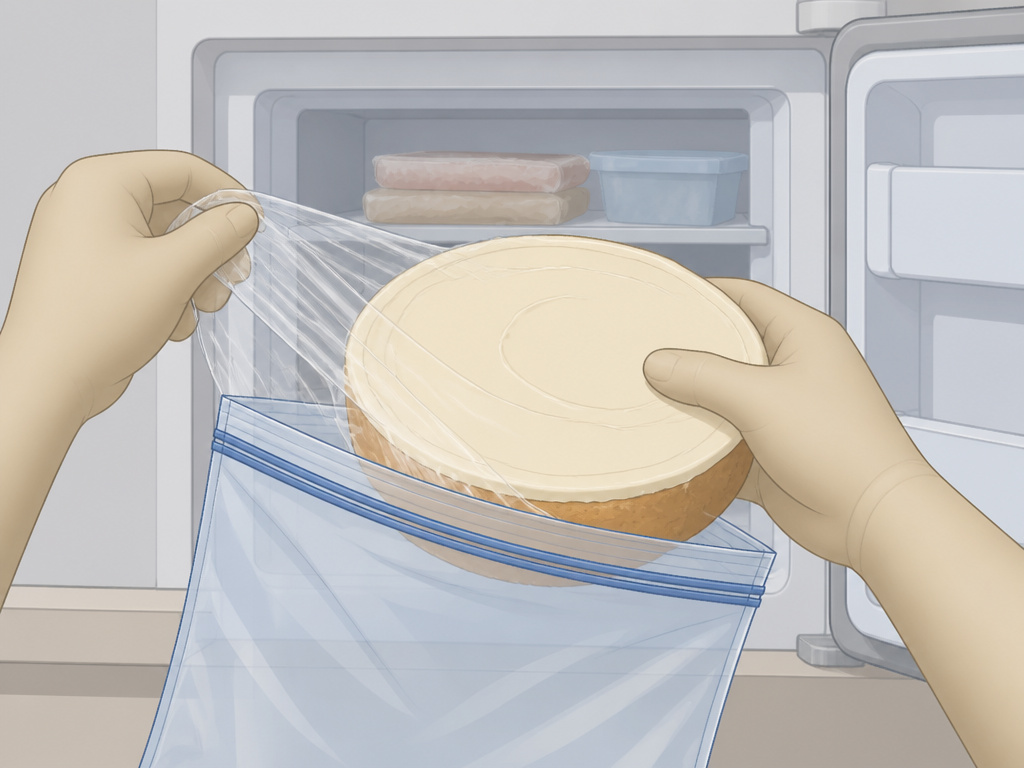
Freezing is a better quality-preservation method than refrigeration for anything beyond a 3-4 day window.
Refrigeration slows bacterial growth and is essential for perishable fillings. But it doesn’t stop chemical and physical changes. Starch molecules in the cake continue to retrograde (recrystallize), leading to staling. The dry air still slowly pulls moisture, even through wraps.
Freezing nearly pauses these processes. A well-wrapped cake frozen at 0°F will taste remarkably fresh after 2-3 months. The technique is crucial: double wrap in plastic wrap, then place in a heavy-duty freezer bag or wrap in foil. Thaw, still wrapped, overnight in the refrigerator.
For cake layers, freezing is a professional’s prep secret. Wrap cooled layers individually and freeze. Thaw in the fridge the day before you need to assemble and frost. This is often better than refrigerating the finished cake.
TL;DR: Need to store a perishable cake for less than 4 days? Refrigerate. Need to store any cake for longer than 4 days? Freeze it. The freezer is your friend for storing food you want to actually enjoy later.
Troubleshooting Common Cake Storage Problems
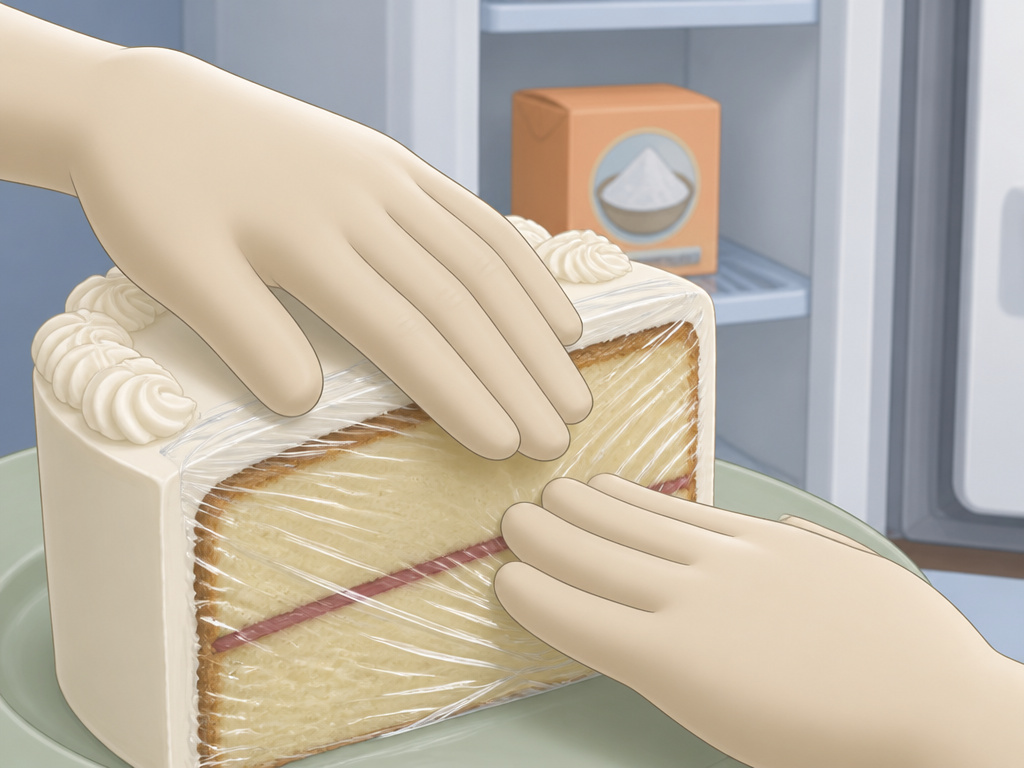
Dry, crumbly cake: This is almost always an airflow issue. The seal failed. Plastic wrap wasn’t pressed directly on the cut, or the container lid wasn’t snapped tight. Next time, focus on eliminating air pockets.
Soggy frosting or layers: Condensation. The cake went in warm, or it was wrapped while still slightly warm from your hands. Ensure complete cooling. Also, avoid storing in the fridge door where temperature fluctuations cause repeated condensation cycles.
Odd flavors (savory, onion, etc.): Odor absorption. Your fridge likely needs a clean, and the cake wasn’t sealed sufficiently. An eliminating fridge odors routine with baking soda is good, but an airtight seal is better. The chill trick + plastic wrap + foil is the triple defense.
Frosting stuck to wrap: You didn’t chill it first. The frosting must be firm to the touch before any wrap touches it.
Mold growth: This is a food safety failure. The cake was either stored too warm (above 40°F), stored for longer than its ingredients allow, or condensation from improper cooling created a wet environment mold loves. When in doubt, throw it out.
Frequently Asked Questions
Can you store a cake in the fridge overnight?
Yes, absolutely. Overnight storage is fine for any cake that requires refrigeration. For buttercream cakes that don’t need refrigeration, it’s still fine if you’ve sealed them properly. The key is the airtight seal to prevent drying.
Does buttercream cake need to be refrigerated?
Most buttercream cakes do not need refrigeration if consumed within 2-3 days. Buttercream (butter and powdered sugar) is shelf-stable. Refrigerate only if your kitchen is very hot, the cake has a perishable filling, or you need to store it beyond three days. The cold will harden the buttercream.
How do you keep a cake moist in the fridge?
You create a humidity barrier. Press plastic wrap directly onto any exposed cake surface to lock in moisture. For a whole cake, use the chill-trick and double wrap. The goal is to prevent the fridge’s dry, circulating air from contacting the cake’s crumb.
Can I refrigerate a cake with fondant?
You can, but it’s risky. Fondant sweats when moved from cold to room temperature, becoming sticky and discolored. If you must refrigerate a fondant-covered cake, do so uncovered for the shortest time possible, then let it come to room temperature still uncovered to minimize condensation on the surface.
How long does cheesecake last in the fridge?
Properly stored cheesecake lasts 5-7 days in the refrigerator. It must be in an airtight container or tightly wrapped. After 5 days, the texture may become grainy and the flavor less bright. This is one case where following specific cheesecake storage steps pays off.
The Bottom Line
Storing cake in the fridge is a deliberate process of cooling, sealing, and temperature management. Set your fridge to 40°F or below and verify it with a thermometer.Let the cake cool completely—every time. Match your wrapping method to the cake: the chill trick for decorated frosted cakes, plastic-wrap-to-crumb for cut pieces, airtight containers for slices.
Remember the guiding principle: the fridge is a dry, cold desert. Your job is to build a tiny, humid oasis around your cake. Do that, and you’ll pull out a slice that’s still soft, flavorful, and safe days later. Skip a step, and you’ll get a stale, flavor-compromised lesson in food science. Now you know which result to choose.
