How to Store Raw Chicken: Safe Fridge & Freezer Guidelines
This post contains affiliate links. As an Amazon Associate, we earn from qualifying purchases.
Store raw chicken in the coldest part of your refrigerator at 40°F (4°C) or below for a maximum of 1 to 2 days. For longer storage, freeze it solid at 0°F (-18°C) in moisture-proof packaging: a whole bird keeps for a year, pieces for 9 months, and ground chicken or giblets for 3 to 4 months. The clock starts ticking the moment you leave the store.
That 1-2 day window is the specific time bacteria like Salmonella need to multiply from a harmless few to a colony large enough to cause illness. Your refrigerator only slows them down.A degree or two above 40°F cuts that safety margin in half.
What follows is the breakdown of those official timelines, the physical steps to hit them, and the single storage mistake that causes more kitchen contamination than any other.
Key Takeaways
- The 1-2 day refrigerator rule applies to all raw chicken: whole birds, pieces, giblets, and ground. Pre-stuffed chicken breast drops to 1 day.
- Freezer times vary by cut: whole chicken (1 year), pieces (9 months), ground/giblets (3-4 months) at 0°F.
- Place raw chicken on a plate or in a sealed container on the bottom shelf. This contains leaks and prevents juices from dripping onto ready-to-eat foods below—the core of cross-contamination.
- Use moisture-proof wrap or a vacuum sealer for freezing. Standard grocery store foam trays and plastic film are not freezer-safe for long-term storage.
- Your fridge must read 40°F or below. A simple thermometer is the only way to know. A 5-degree warmer fridge cuts safe storage time by a third.
Why the “Back of the Fridge” Isn’t Good Enough
You know the drill. Get home from the store, shove the chicken pack in the back of the fridge. It feels cold, so it must be safe. The problem is placement. The back might be coldest, but it’s also where forgotten items leak onto your produce drawer.
Where this goes sideways: Storing a leaking chicken package above your lettuce. Dripping juices carry bacteria down, contaminating food that won’t be cooked. The lettuce gets eaten raw, and the risk transfers directly.
The goal is cold and contained. The UK Food Standards Agency separation guide frames this as a vertical rule: raw meat, poultry, and fish go below ready-to-eat food.If your fridge has only one compartment, that means the bottom shelf, every time. Put the package on a plate or inside a lidded container. This single habit addresses most home cross-contamination risks.
Do you actually know your fridge’s temperature right now? Most don’t. An appliance dial set to “5” might be holding at 45°F. Buy a standalone fridge thermometer. Place it in the center of the middle shelf. Adjust the dial until it reads 40°F or, ideally, between 32°F and 38°F as the Texas A&M AgriLife Extension recommends. That verification is the foundation of every safe storage timeline that follows.
The Critical Refrigerator Timeline (and What Breaks It)
The USDA refrigeration safety guidelines give a 1 to 2 day window for raw chicken. Why the range? It accounts for variable fridge temperatures and the initial bacterial load on the meat. Treat 1 day as the rule if your fridge runs near 40°F. If you can reliably hold 34°F, you might get the second day.
Refrigerator storage times for raw poultry assume a consistent temperature of 40°F (4°C) or below. Whole birds, parts, giblets, and ground chicken all share the same 1-2 day maximum. This short window exists because psychrotrophic bacteria, which grow in cold temperatures, can still multiply slowly, doubling every 10-20 hours even at ideal refrigeration.
The table below translates the official guidance. Notice ground meat and giblets get the same short timeline as a whole bird.
| Chicken Type | Max Fridge Time (at ≤40°F) | The “Why” Behind the Limit |
|---|---|---|
| Whole Bird | 1-2 days | Larger mass stays colder longer, but cavity can harbor bacteria. |
| Pieces (breasts, thighs) | 1-2 days | More surface area exposed to air and potential contamination. |
| Giblets (liver, heart) | 1-2 days | Organ meat is more perishable and nutrient-rich, accelerating spoilage. |
| Ground Chicken | 1-2 days | Grinding incorporates bacteria throughout the mass and vastly increases surface area. |
| Pre-stuffed Chicken Breast | 1 day | Stuffing creates an insulated pocket where temperature drops slower, a prime breeding ground. |
The countdown starts at the grocery store checkout. If you run other errands for an hour on a hot day, you’ve already eaten into that safety margin. The USDA steps to keep food safe state perishables should be refrigerated within two hours, or one hour if the ambient temperature is above 90°F. Go home first.
What does spoiled raw chicken smell like? It’s a sour, slightly sweet odor that’s unmistakable once you’ve encountered it. The surface may also feel tacky or slimy, even when cold. When you see or smell that, the 1-2 day rule is irrelevant. Discard it.
Freezing: The Year-Long Pause Button
Freezing stops bacterial growth dead. It doesn’t kill the bacteria present, but it puts them in stasis. Quality, however, continues to degrade slowly due to freezer burn and oxidation. That’s why freezer times are about eating quality, not just safety.
Your freezer must be at 0°F (-18°C) to hit these benchmarks. A freezer that fluctuates between 10°F and 15°F will cause rapid quality loss and ice crystal formation, tearing the meat’s cellular structure. The result is a dry, grainy texture when thawed.
Here is the breakdown from the FoodSafety.gov cold storage chart and Texas A&M data. Ground chicken and giblets have the shortest freezer life because their higher fat content can turn rancid over time.
| Chicken Type | Max Freezer Time (at 0°F) | Quality Goal & Packaging |
|---|---|---|
| Whole Chicken | 1 year | Maintain texture for roasting. Use a vacuum sealer or double-wrap in heavy-duty foil/plastic. |
| Chicken Pieces | 9 months | Preserve moisture for grilling or sautéing. Individually wrap pieces before bagging. |
| Ground Chicken | 3-4 months | Prevent rancidity. Freeze in 1-pound portions in airtight freezer containers. |
| Giblets | 3-4 months | Retain flavor for gravy. Store in a small, sealed container or bag. |
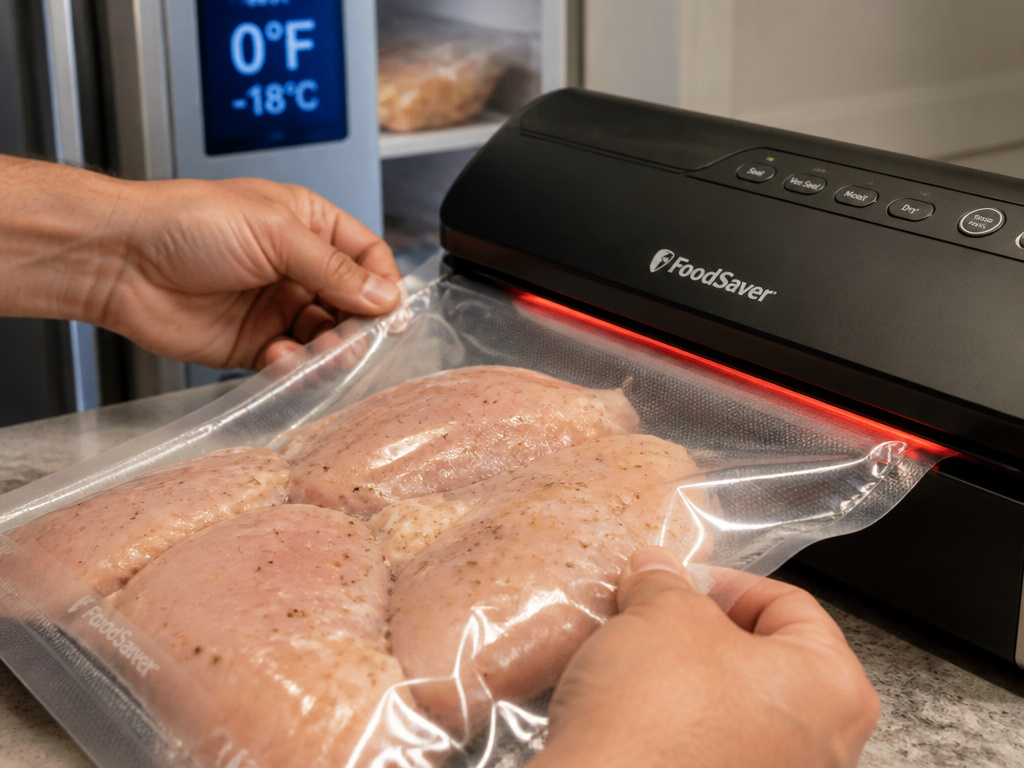
Packaging is the whole game. The flimsy plastic wrap and foam tray from the supermarket are designed for the fridge, not the freezer. They are neither moisture-proof nor vapor-proof. Within weeks, your chicken will develop grayish-white freezer burn patches—dried-out, tough spots where moisture has sublimated out of the meat.
For best results, repackage before freezing. For a whole bird or parts, a FoodSaver vacuum sealer is the gold standard. The next best option is a double wrap: first in plastic cling wrap pressed directly onto the meat to eliminate air pockets, then in a layer of heavy-duty aluminum foil or a freezer-weight zip-top bag with the air pressed out.
Label everything. Write the contents and the date with a permanent marker. “Chicken thighs, 10/26/2023.” In six months, you won’t remember.
Step-by-Step: From Grocery Bag to Storage
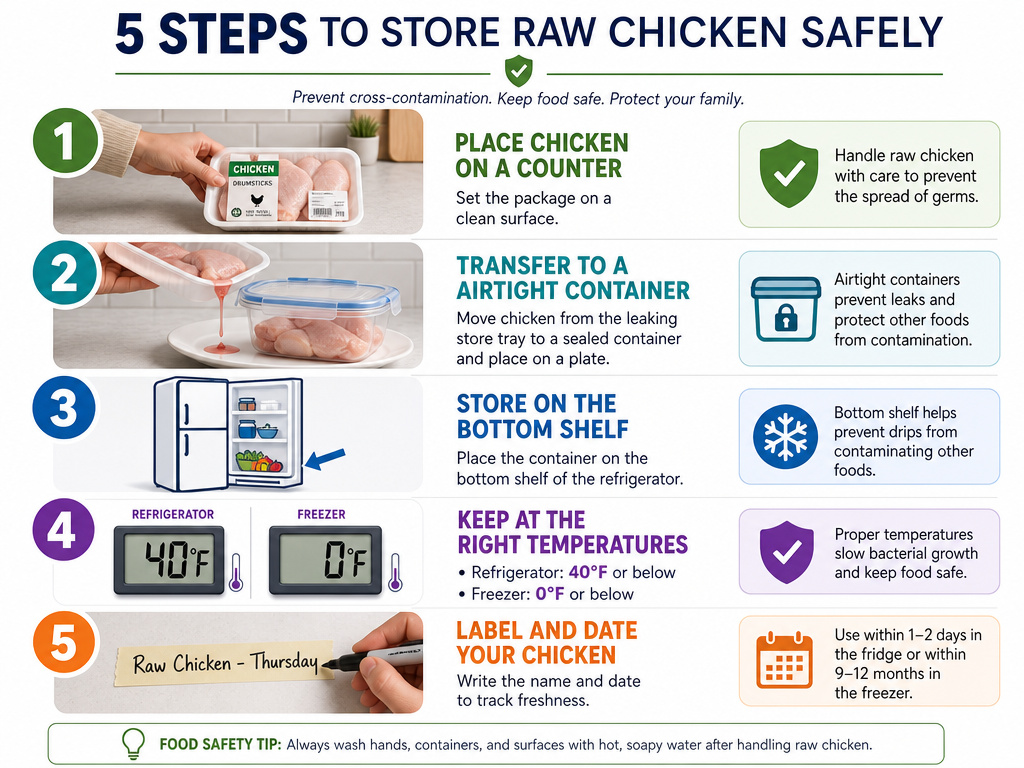
This isn’t just theory. Here is the physical sequence that locks in safety from the moment you walk in the door.
- Unpack Immediately. Make the grocery run your last errand. Take the chicken out of the bag first. If the package feels even slightly cool to the touch, you’re likely within the two-hour window.
- Inspect and Repackage (Optional but Recommended). Check the store packaging for leaks or tears. If it’s intact, you can store it as-is in the fridge for a day or two. For longer fridge storage or for freezing, transfer to a new container.
- For the fridge: Place the whole package or the repackaged chicken on a plate or shallow dish. This catches any seepage.
- For the freezer: Follow the repackaging method described above. Portion ground chicken into amounts you’ll use at one time.
- Choose the Right Spot. In the refrigerator, this is the bottom shelf, toward the back where it’s coldest. This follows the proper raw meat storage protocol and mirrors the logic for raw fish. In the freezer, place packages against the walls or on the bottom where temperature is most stable.
- Set Your Temperatures. Use a thermometer. Verify the fridge is at or below 40°F. Verify the freezer is at 0°F. This is a one-time setup that pays off for years.
- Log the Date. Put a piece of masking tape on the fridge door with the purchase date: “Raw Chicken – Thursday.” For freezer items, label the package directly before you lose track.
Skipping the plate or container is the most common mistake. A single drop of chicken juice can contain millions of bacteria. It drips onto your tomatoes or hard-boiled eggs on the shelf below, and you’ve created a hidden contamination chain.
Thawing and the No-Refreeze Myth
You’ve frozen your chicken correctly. Now you need to use it. Thawing is the second critical control point.
Common mistake: Thawing chicken on the counter. The outer layer enters the bacterial “danger zone” (40°F–140°F) long before the inside is thawed, allowing rapid pathogen growth.
There are only three safe methods, listed in order of preference:
- In the Refrigerator. This is the best method. Place the frozen package on a plate on the bottom shelf. Allow 24 hours for every 5 pounds. It will be ready tomorrow.
- In Cold Water. Submerge the airtight package in a bowl of cold tap water. Change the water every 30 minutes. A 1-pound package thaws in about an hour.
- In the Microwave. Use the “defrost” setting based on weight. Cook immediately after thawing, as some parts may begin to cook.
What about refreezing chicken? The old rule was “never refreeze.” The official food safety procedures are more nuanced. You can safely refreeze raw chicken that has been thawed in the refrigerator, provided it still feels cold (40°F or below) and hasn’t exceeded its original 1-2 day fridge shelf life. The texture will suffer further, but safety is maintained. Chicken thawed in cold water or the microwave should be cooked, not refrozen.
Special Cases: Giblets, Ground, and Pre-Stuffed
Not all chicken is created equal. These three types demand extra attention.
Giblets (livers, hearts, gizzards) are the most perishable. They often come packed inside a whole bird. Remove them immediately and store separately in the fridge or freezer. Their rich iron content makes them spoil faster. Use or freeze them within 1-2 days.
Ground Chicken has the highest risk profile. The grinding process distributes any surface bacteria throughout the entire mass. This is why its freezer life is shortest (3-4 months)—fat oxidation happens faster. Treat it with urgency. Pre-portion it before freezing to avoid thawing a giant block.
Pre-stuffed Chicken Breasts are a category of their own. The USDA gives them a 1-day maximum fridge life. The stuffing acts as an insulator, preventing the center from chilling as quickly as a solid piece of meat. This creates a temperature gradient where bacteria can thrive. Do not freeze pre-stuffed raw chicken; the stuffing doesn’t freeze well and becomes soggy and unsafe upon thawing.
If you buy a whole bird with a pop-up timer, that timer is for cooking, not storage. Ignore it until the bird goes in the oven. Your storage clock is still 1-2 days.
The Tools That Actually Matter
You don’t need a commercial kitchen. You need three reliable tools.
- Refrigerator/Freezer Thermometer. The $10 Govee digital thermometer with a display you can read from outside the fridge is a game-changer. Data beats guesswork.
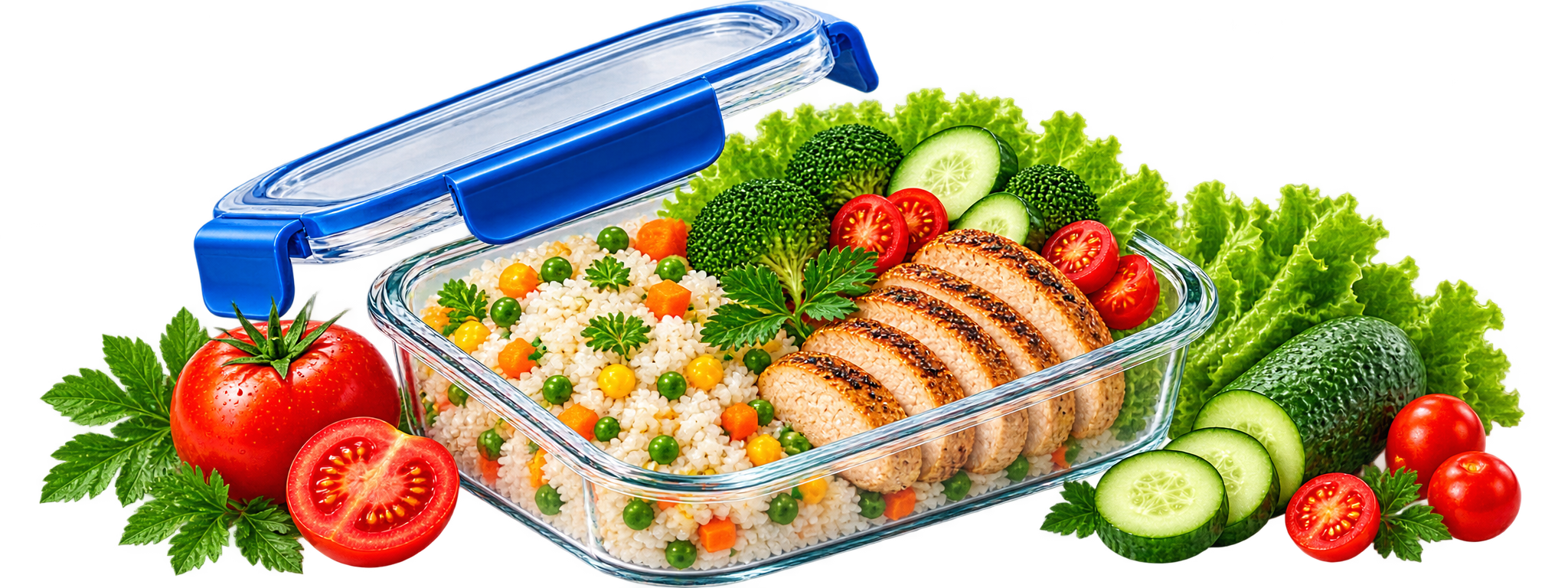
- Airtight Containers for the Fridge. Glass containers like Pyrex with locking lids are ideal. They contain leaks, are easy to clean, and let you see what’s inside. Use them for short-term storing raw meat.
- Freezer-Specific Packaging. For the freezer, you need a barrier to air and moisture. Freezer-weight zip-top bags (like Ziploc Freezer Bags) are the minimum. A vacuum sealer (like a FoodSaver) is the investment that pays off in zero freezer burn and maximum quality retention over months.
A sharpie for labeling is the fourth unofficial tool. Without it, you’re playing freezer roulette.
Frequently Asked Questions
Can you store raw chicken in its original packaging?
Yes, but with a major caveat. The original foam and plastic wrap tray is fine for 1-2 days in the fridge if it’s leak-proof. For any longer fridge storage or for freezing, you must repackage. The original materials are not designed to prevent freezer burn or long-term moisture loss.
How can you tell if raw chicken has gone bad?
Trust your senses in this order: smell, touch, sight. Bad chicken has a strong, sour, or ammonia-like odor. The surface will feel unusually slimy or sticky, even after rinsing. The color may shift from pink to a grayish hue. If any one of these signs is present, discard the chicken.
What is the safest way to store raw chicken before cooking?
The safest method is in the coldest part of your refrigerator (≤40°F), placed on a plate or in a sealed container on the bottom shelf, and cooked within 1 day of purchase. This minimizes time, controls temperature, and prevents cross-contamination.
Does freezing chicken kill bacteria?
No. Freezing at 0°F puts bacteria into a dormant state. They do not multiply, but they are not killed. When the chicken thaws, any bacteria present become active again. This is why safe thawing practices are non-negotiable.
How long can you marinate raw chicken in the fridge?
You can marinate raw chicken in the refrigerator for up to 2 days. After that, the acidic components in the marinade (like vinegar or lemon juice) can begin to break down the proteins, giving the meat a mushy texture. Always marinate in a covered, non-reactive container (glass or plastic) on the bottom shelf.
Is it safe to store raw chicken next to other raw meats?
It is generally safe from a cross-contamination perspective, as all raw meats carry similar risks. However, for optimal food quality, it’s best to store them separately or in their own containers to prevent flavors from transferring. The real rule is storing all raw meats below ready-to-eat foods.
The Bottom Line
Store raw chicken on the bottom shelf of a fridge at 40°F or colder, and cook it within 1 to 2 days. Freeze it at 0°F in proper packaging if you need more time. The difference between safe and risky is a thermometer, a plate, and a calendar.
The principles here for chicken apply directly to storing cooked chicken and homemade stock. They’re the same battle against time, temperature, and cross-contamination, just at a different starting point. Get the raw storage right, and everything that follows becomes simpler.
