How to Store Opened Sweetened Condensed Milk: Best Methods
This post contains affiliate links. As an Amazon Associate, we earn from qualifying purchases.
Store opened sweetened condensed milk in an airtight glass or plastic container in the refrigerator at 35–40°F. The official manufacturer safety window is 3 days, not the 1-3 weeks often cited online. Freezing is effective for 3-4 months despite canning warnings, but it will separate and require vigorous stirring upon thawing.
The 3-day rule comes straight from the manufacturer’s spec sheet. It’s a safety standard, not a suggestion. Most kitchens push that limit because the high sugar content seems to act as a preservative, but that sugar doesn’t stop every type of spoilage.
What follows is a breakdown of the official specs, the practical kitchen extensions, and the exact steps to keep your leftovers safe and usable for your next dessert.
Key Takeaways
- The Nestlé Product Information Sheet mandates using opened sweetened condensed milk within 3 days when stored below 5°C (41°F). Eagle Brand recommends 3-4 days.
- Never store leftovers in the opened can. Transfer to an airtight glass or plastic container immediately to prevent metallic taste and contamination.
- Freezing works for 3-4 months, but the milk will separate. Thaw in the fridge overnight and stir vigorously to recombine.
- Discard immediately if you see mold, discoloration, or a slimy texture, or if it smells sour or alcoholic.
- A bulging, dented, or leaking can—opened or not—is a risk for botulism and must be thrown away.
The 3-Day vs. 3-Week Storage Timeline
The internet says opened sweetened condensed milk lasts 1-3 weeks in the fridge. The people who make it say 3 days. Who’s right? Both are, but for different reasons.
The Nestlé Product Information Sheet is explicit: “Once opened, use immediately or reseal, store below 5°C and use within 3 days.” That’s not a guess. It’s a dated, active food safety specification (effective November 2020). Eagle Brand’s FAQ suggests a slightly more generous 3-4 days for refrigerated leftovers. These timelines are conservative, liability-aware ceilings.
Where this goes sideways: The high sugar concentration in sweetened condensed milk inhibits many bacteria, creating a false sense of security. It does not stop mold spores or certain yeasts, which can grow slowly in the fridge over 7-10 days. You might not see or smell them until it’s too late.
General food storage sites and home cooks routinely cite the 2-week mark. This works until it doesn’t. The discrepancy isn’t about the milk going “bad” in the toxic sense overnight at day 4. It’s about quality and risk. After a week, oxidation and fridge odors begin to alter the flavor. By two weeks, the risk of visible mold or an off, fermented smell climbs sharply.
| Source | Recommended Fridge Life After Opening | Notes |
|---|---|---|
| Nestlé (Official) | 3 days | Product Information Sheet, store below 5°C (41°F). |
| Eagle Brand (Official) | 3-4 days | Store leftovers in an airtight container. |
| FoodLasts (citing USDA/FDA) | 2-3 weeks | General guideline; acknowledges risk increases over time. |
| Common Kitchen Advice | 1-2 weeks | Based on observable spoilage, not manufacturer testing. |
Your call depends on your risk tolerance. For a custard or ice cream base serving guests, stick to the 3-day rule. For a splash in your morning coffee a week later, a visual and sniff test is your guard.
Why the Can is the Enemy After Opening
That thin metal lining inside the can isn’t a perfect shield once you break the seal. Leaving sweetened condensed milk in the opened can invites two specific problems.
First, it can pick up a metallic taste within a day or two. This is especially true if the can is stored on its side, allowing the milk to constantly touch the scored edge. Second, and more importantly, it’s an infection risk. The interior is no longer sterile, and the large opening exposes the contents to airborne mold spores and bacteria every time you open the fridge.
The fix is immediate transfer.
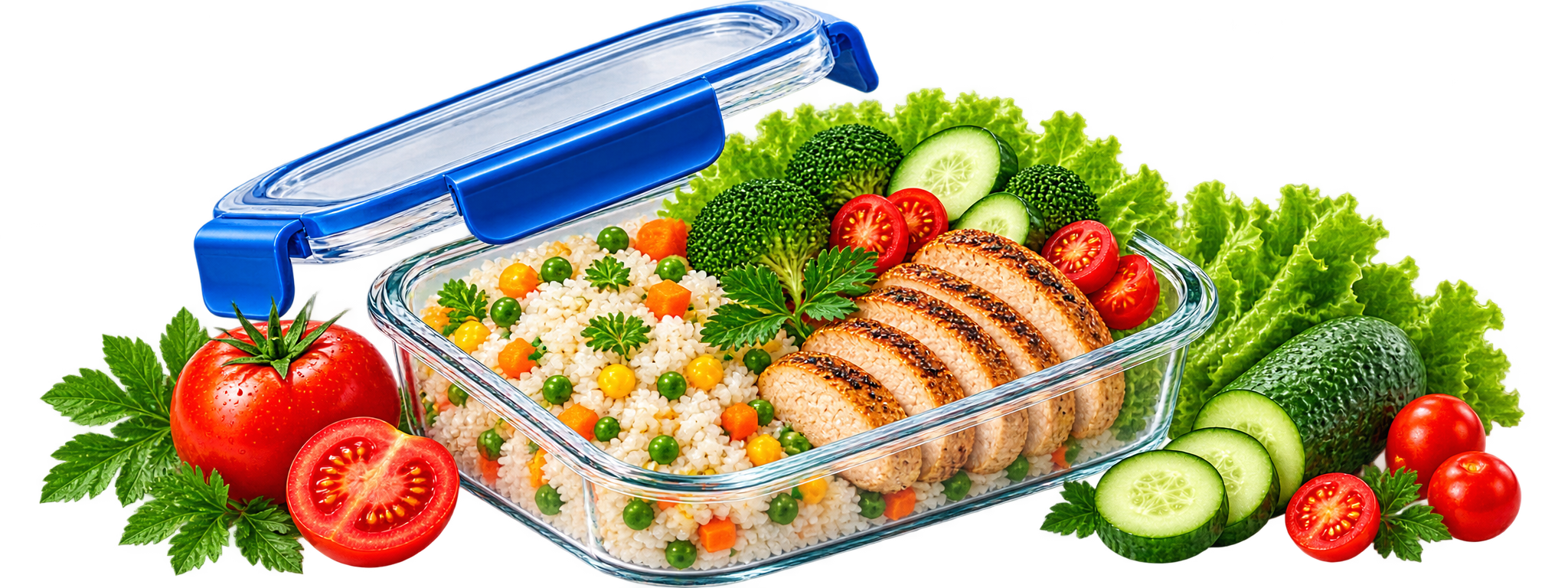
- Choose glass or food-grade plastic. A small mason jar or a dedicated condiment container with a tight-sealing lid is ideal. Glass won’t absorb odors.
- Scrape it all out. Use a rubber spatula to get every last bit from the can. Introducing a new contaminant (like a crumb from previously used butter) is worse than leaving a teaspoon behind.
- Press a layer of plastic wrap directly on the surface before sealing the lid. This minimizes the air pocket, slowing oxidation.
This isn’t just about storing condensed milk. It’s the same principle for any high-sugar, low-acid canned dairy product, like evaporated milk or coconut milk.
Freezing: The Official Warning vs. Kitchen Reality
Here’s the clearest conflict between the manual and the kitchen. Nestlé and Eagle Brand explicitly advise against freezing sweetened condensed milk. Eagle Brand states freezing “changes its physical properties (colour, flavour, texture, etc.)” and warns that freezing a sealed can could compromise the seam. Yet, the practical guide from FoodLasts, citing USDA/FDA data, says it keeps 3–4 months in the freezer.
So who wins? Your intended use decides.
The part nobody mentions: Freezing works, but it transforms the texture. The fat separates from the sugary syrup. Thawed milk will look curdled and grainy. This is normal.
If you need it for baking or cooking, freezing is a viable long-term food storage strategy. The vigorous stirring or whisking required after thawing will re-emulsify it for recipes where it’s mixed with other ingredients. The texture change is irrelevant in a cheesecake or fudge.
If you need it for drizzling or a silky sauce, freezing is a bad idea. You’ll never get the perfectly smooth, pourable consistency back.
How to freeze it correctly:
- Portion it first. Freeze in an ice cube tray, then pop the cubes into a freezer bag. Each cube is roughly a tablespoon, perfect for coffee or single servings.
- Use an airtight container. Leave about half an inch of headspace for expansion.
- Thaw in the refrigerator overnight, never on the counter.
- Stir or whisk aggressively until smooth before use.
How to Tell if It’s Gone Bad
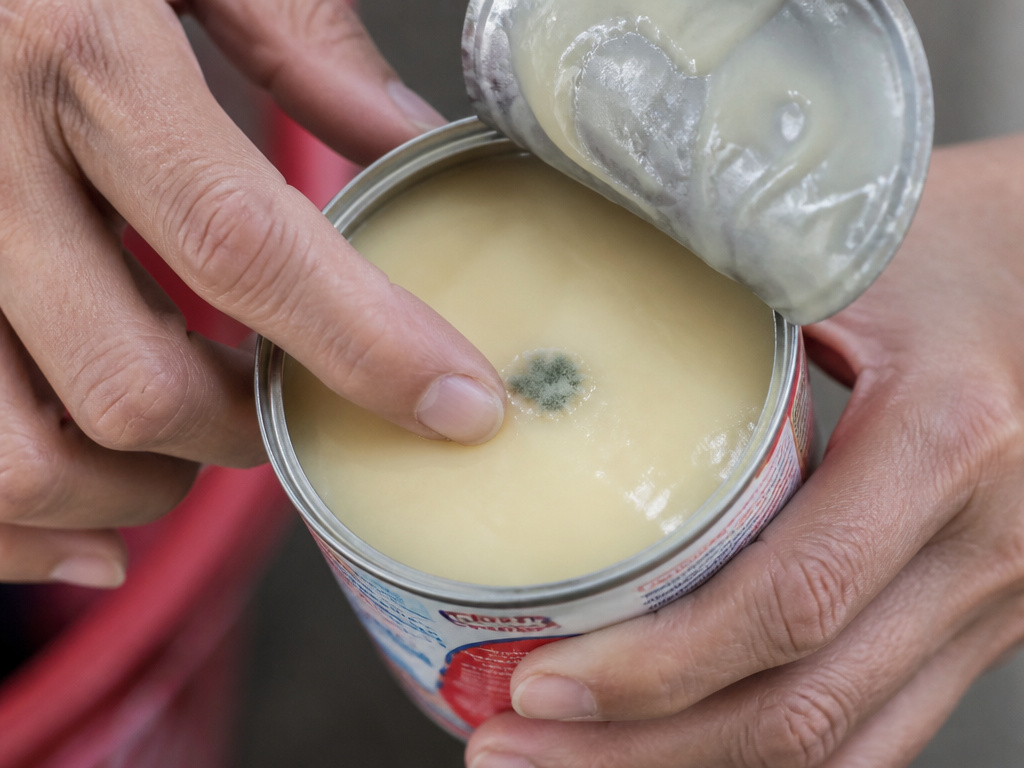
Sweetened condensed milk is resilient, but it’s not immortal. Rely on your senses, in this order.
Look. The first sign is often visual. Check for any spots of mold (blue, green, white, or black fuzz) or an overall darkening or yellowing that wasn’t there before. A slimy film on the surface or a watery separation that doesn’t recombine with stirring means toss it.
Smell. It should smell sweet and milky. A sour, cheesy, or distinctly alcoholic odor means fermentation has started. Don’t taste it.
Texture. If it’s become uncharacteristically thick, grainy, or has developed a stringy, mucous-like quality, it’s spoiled.
The high sugar content means it won’t smell like spoiled fresh milk. The off-smell is subtler, closer to old yogurt or yeast. When in doubt, the Clemson University dairy safety factsheet principle applies: throw it out. The cost of a new can is trivial compared to foodborne illness.
This sensory check is a core skill for all dairy products, from aging cheddar to cooked eggs.
The Critical Danger of Damaged Cans
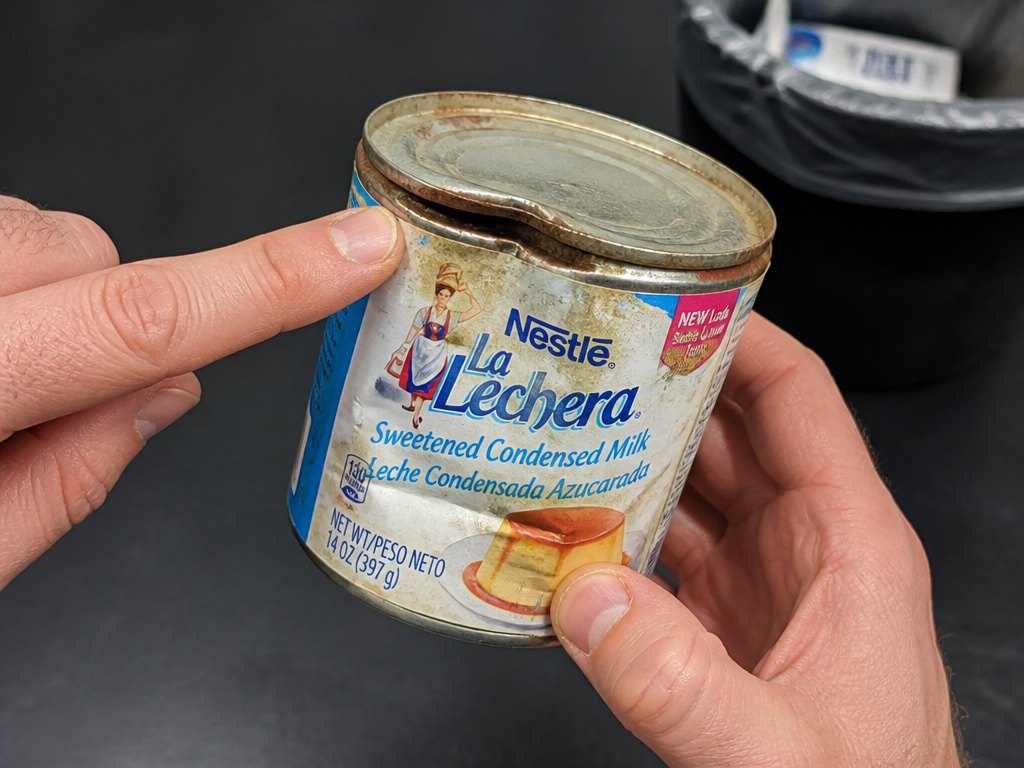
This rule applies before you even open the can. If a can of sweetened condensed milk is bulging, severely dented (especially along the seams or rim), rusted, or leaking, do not open it. Throw it away immediately.
A bulging can indicates gas production inside, a potential sign of Clostridium botulinum bacteria growth, which causes botulism. This toxin is odorless, tasteless, and lethal. The canning process and high sugar content make sweetened condensed milk a low-risk product for botulism, but a compromised can is a breach in that defense system.
Before you start: Inspect every can before purchase and again before opening. A dent from dropping it on the floor is usually fine. A dent that crushes the seam or rim is not. Rust that perforates the can is an automatic discard. When in doubt, throw it out.
What Not to Do: Two Costly Mistakes
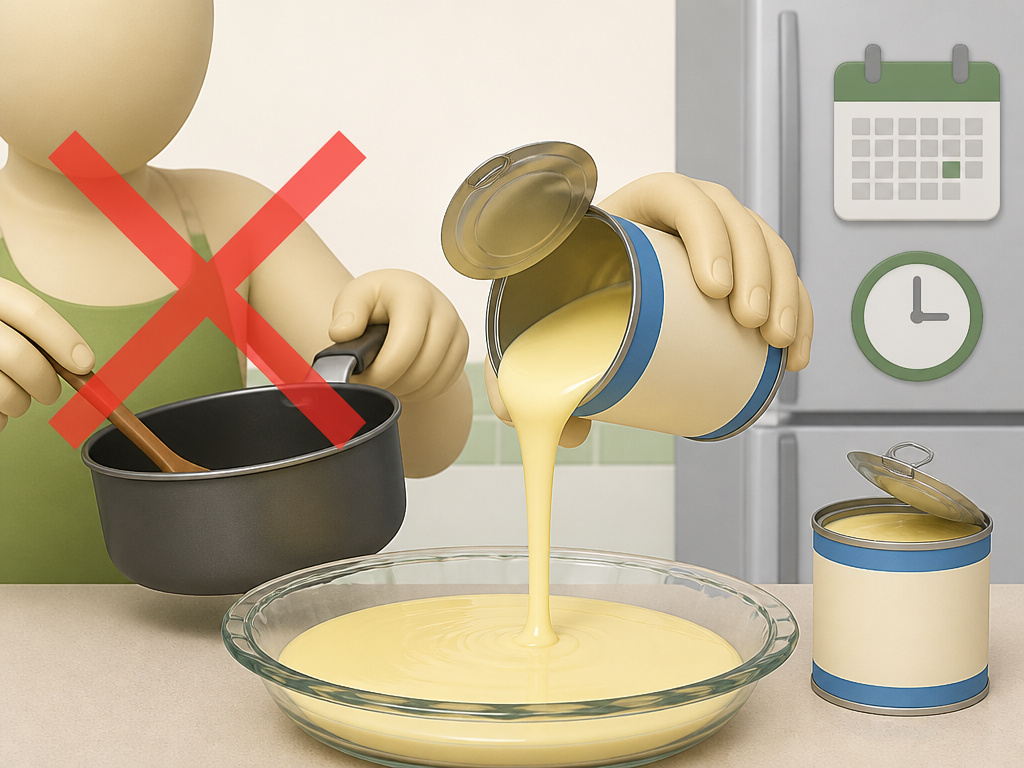
Beyond the can, two common errors ruin good condensed milk faster than time.
Never heat the can. Eagle Brand is explicit: “For safety reasons, we do not recommend heating a can of our condensed milk, opened or unopened. The current can is not designed to withstand high temperatures.” Want to make dulce de leche? Pour the milk into a pie plate or double boiler first. Heating the sealed can risks explosion; heating the opened can leaches more metal into the product.
Don’t treat it like shelf-stable honey. Once opened, the clock is ticking, even in the fridge. That “best by” date on the unopened can becomes irrelevant. You now have a perishable dairy product. Plan your recipes to use it within the safe window, or freeze portions immediately.
This proactive planning is what separates an organized pantry from a wasteful one. It’s the same mentality needed for storing pancake batter or cooked rice—know the safe window and work within it.
Frequently Asked Questions
Can I leave opened sweetened condensed milk on the counter?
No. Once opened, it must be refrigerated. The USDA’s “2-hour rule” applies: don’t leave it between 40°F and 140°F for more than 2 hours (1 hour if the room is above 90°F). Bacteria growth is rapid in that zone.
Why did my condensed milk turn yellow or brown in the fridge?
This is likely oxidation, not necessarily spoilage. Exposure to air causes the milk solids and sugars to slowly caramelize and darken. It’s still safe if it smells normal and has no mold, but the flavor may be slightly altered. Using a container with minimal headspace and pressing plastic wrap on the surface slows this down.
Can I use sweetened condensed milk past the “use-by” date if it’s unopened?
Yes, typically for months. An unopened can is shelf-stable for up to two years past its printed date if stored in a cool, dry place. The “best by” date is about quality, not safety. Always inspect the can for damage before using.
Does low-fat sweetened condensed milk last as long as regular?
Yes. The storage guidelines and safety timelines are identical for regular and low-fat versions. The fat content doesn’t significantly impact the growth rate of spoilage organisms in this high-sugar environment.
My recipe only needs a tablespoon. What’s the best way to store the rest?
Freeze it in tablespoon portions using an ice cube tray. Once frozen solid, transfer the cubes to a freezer bag. Thaw one cube in the fridge overnight or in a sealed bag under warm running water for a few minutes when needed.
Before You Go
The safest path is the manufacturer’s: three days in the fridge, in a sealed glass jar. For the home cook willing to accept a marginal risk for less waste, a visual and smell check can extend that to a week, maybe two. Freezing bridges the gap for bakers, with the forewarning that thawed milk needs a serious whisking.
Your best tool isn’t a fancy container—it’s your nose and eyes. When either signals doubt, the general food storage rule wins: toss it. A four-dollar can of milk isn’t worth a night of regret.
