Learn How to Store Roasted Garlic Safely and Effectively
This post contains affiliate links. As an Amazon Associate, we earn from qualifying purchases.
Store roasted garlic submerged in extra virgin olive oil inside a sealed, airtight container in the refrigerator at or below 40°F (4.4°C). The USDA’s baseline rule is seven days, but a stable 38°F (3.3°C) can extend that safe window to two weeks. Never store garlic in oil at room temperature. Freezing halts bacterial growth and is the only long-term safe method.
That temperature gap, two degrees, is where the entire safety margin lives. It’s the difference between following a generic guideline and hitting a specific, verifiable target that buys you an extra week without risk. Most refrigerators drift between 35°F and 40°F depending on where you measure and how often the door opens. The back of the bottom shelf is cold and stable. The door is warmer and swings with every opening. That variability is why one source says one week and another says two. Your job is to know which zone your jar sits in.
What follows: the exact storage specs drawn from government and expert sources, the two documented botulism outbreaks that set the rules, the step-by-step transfer from oven to jar, and the freezer method that sidesteps the clock entirely. By the end, you’ll know the number on your fridge thermometer matters more than the date on your calendar.
Key Takeaways
- The USDA’s 40°F (4.4°C) rule gives a seven-day safety window for garlic confit. A confirmed 38°F (3.3°C) extends it to two weeks.
- Room temperature storage of garlic in oil is linked to two documented botulism outbreaks (Vancouver 1985, New York 1989). It is never safe.
- Freezing roasted garlic makes the risk of botulism “essentially zero” according to food safety experts. It’s the only method for storage beyond two weeks.
- Submerge cloves completely in oil before sealing. The oil displaces oxygen, creating an anaerobic barrier that slows spoilage.
- Store the jar in the main compartment, never the door. Temperature swings and warmer zones in the door can shorten the safe period by days.
Why Room Temperature Is a Hard No
Two outbreaks. Vancouver in 1985 and New York in 1989. Both traced to commercially produced garlic-in-oil products stored at room temperature. The bacterium Clostridium botulinum produces a neurotoxin in low-oxygen, low-acid environments, exactly the conditions inside a jar of garlic submerged in oil. The spores are common in soil and harmless until they have the right environment to grow and produce toxin. Room temperature provides that environment.
The part nobody mentions: Botulism toxin is odorless and tasteless. You cannot see, smell, or taste it in contaminated food. The first sign is often neurological: blurred vision, slurred speech, muscle weakness. By then, the toxin is already at work.
This is why every reputable source shouts the same rule: never leave roasted garlic in oil on the counter. Not for an hour after cooking. Not for a weekend. The transfer from heat to cold must be immediate. The confit is called “confit”, to preserve, because the oil and the cool temperature work together. Break one half of that pair and you break the preservation.
The Refrigerator Rules: Temperature Over Date
Your calendar is a liar. The date you wrote on the jar is a guess. The number on your fridge thermometer is the fact.
The USDA’s recommendation is a baseline: store at 40°F (4.4°C) or below and discard after seven days. That advice comes from a study of garlic and oil stored at room temperature. It’s a conservative, one-size-fits-all rule designed for the warmest acceptable fridge temperature.
Professor Schaffner, cited by Serious Eats, notes that a refrigerator holding a steady 38°F (3.3°C) can safely extend that window to two weeks. The two-degree drop isn’t trivial. Pathogens flourish above 40°F; holding at 38°F builds in a buffer against normal temperature fluctuations when you open the door.
What Temperature Is Safe for Garlic Confit?
This is the technical core. The safety window isn’t a fixed countdown; it’s a function of temperature stability.
Garlic confit requires refrigeration at ≤40°F (4.4°C) to inhibit Clostridium botulinum growth. Storage at 38°F (3.3°C) provides a greater safety margin against typical refrigerator temperature fluctuations, potentially extending the safe consumption period from seven days to fourteen days when the garlic remains fully submerged in oil within an airtight container.
If your fridge temperature is uncertain or fluctuates, stick to the seven-day rule. If you have a thermometer confirming a steady 38°F or colder, the two-week window is defensible. The variance in online advice, one week versus two, stems entirely from this temperature assumption. Most home refrigerators average between 35°F and 40°F, but few owners know their actual number.
| Storage Zone | Typical Temperature | Safe Duration for Garlic Confit | Why It Varies |
|---|---|---|---|
| Main compartment (back) | 35–38°F (1.7–3.3°C) | Up to 2 weeks | Coldest, most stable area. |
| Main compartment (front) | 38–40°F (3.3–4.4°C) | 7 days | Slightly warmer, some fluctuation. |
| Refrigerator door | 40–45°F (4.4–7.2°C) | 3–5 days | Warmest, highest fluctuation with use. |
Step-by-Step: From Oven to Safe Storage
This isn’t just cooling and jarring. The sequence matters because it minimizes the time the garlic spends in the danger zone between 40°F and 140°F.
- Cool, but not to room temperature. Let the roasted garlic and oil cool just enough to handle, about 15 minutes. You want to avoid sealing scorching-hot food in a jar, as the steam can create condensation. But you do not want it to reach a lukewarm, room-temperature state.
- Use a clean, heatproof container. Glass jars like Ball or Kerr mason jars are ideal. The container must be airtight. Wash it in hot, soapy water and dry it thoroughly. Any residual moisture is a vector for spoilage.
- Submerge the cloves completely. Transfer the garlic to the jar. Pour the warm cooking oil over the cloves until they are covered by at least half an inch of oil. This oil layer seals out air. If you didn’t cook in enough oil, top it off with fresh extra virgin olive oil.
- Seal and refrigerate immediately. Put the lid on tightly. Place the jar in the back of the lower shelf of your refrigerator, the coldest, most stable spot. Do not leave it on the counter to finish cooling.
- Label with the discard date. Write “Use by” and today’s date plus seven days (or fourteen if you know your fridge is 38°F). This isn’t a guess. It’s a commitment.
Where this goes sideways: Storing the jar in the refrigerator door. The door is 5-10 degrees warmer and experiences a temperature spike every time you open it. Garlic confit stored there will approach the 40°F threshold daily, cutting its safe life by half.
Freezing: The Zero-Risk Long-Term Method
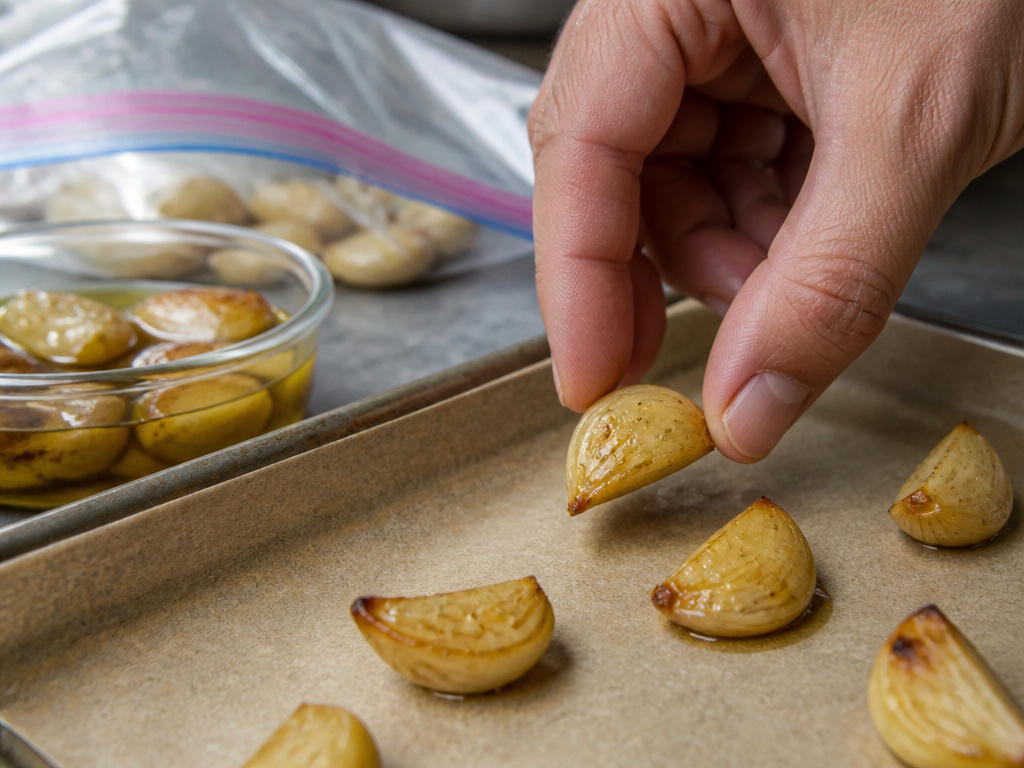
When you want to keep roasted garlic for months, refrigeration’s clock is your enemy. Freezing stops it.
“Once you freeze something, the risk of botulism becomes essentially zero if the food is kept frozen,” notes Professor Schaffner. The bacteria cannot grow or produce toxin in frozen conditions. This is the only method recommended for storage beyond two weeks.
You have two good paths.
Method 1: Freeze cloves individually. Spread the peeled, cooled roasted garlic cloves on a parchment-lined baking sheet. Freeze them solid for 3-4 hours. Then transfer the frozen cloves to a freezer-safe bag or container, squeezing out excess air. This lets you grab a single clove without thawing the whole batch.
Method 2: Freeze in oil. Portion the garlic and its oil into small, airtight containers or ice cube trays. Freeze solid, then pop the cubes out into a bag. This preserves the flavored oil for cooking.
| Freezing Method | Best For | Thawing Instructions |
|---|---|---|
| Individual cloves on sheet | Using a few cloves at a time | Take needed cloves from bag; thaw 10 min at room temp or overnight in fridge. |
| Portioned in oil (cubes) | Preserving the infused oil | Transfer cube to sealed container in fridge overnight. |
Frozen roasted garlic lasts for 2–3 months before quality declines, though it remains safe indefinitely while frozen. The texture will be softer after thawing, perfect for mashing into sauces, spreads, or soups.
Container and Environment Edge Cases
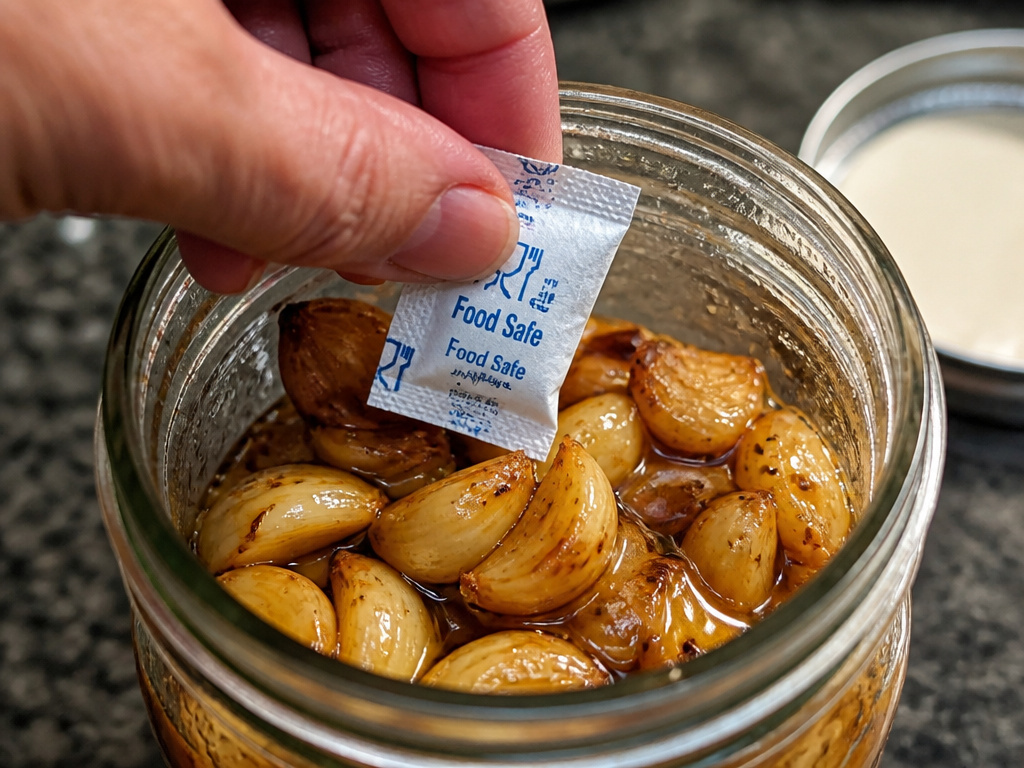
The jar is your first defense. The environment inside your kitchen is the second.
Airtight is non-negotiable. A glass jar with a rubber-gasket lid (like a Le Parfait jar) or a standard mason jar works. Plastic containers can absorb odors and may not seal as perfectly over time. The goal is zero oxygen exchange.
High-humidity kitchens can cause condensation inside the jar, even in the fridge. If you see moisture beads on the garlic, it’s a warning. One fix: add a small food-safe desiccant packet (like those found in seaweed snacks) to the container to absorb excess moisture.
Very dry environments can cause the oil to separate or the garlic to dry out at the surface. If you open the jar and the garlic looks exposed, add a fresh, thin drizzle of oil to re-establish the seal before closing it again.
Your general approach to food storage principles, clean containers, stable temperatures, minimizing air exposure, applies directly here. The same vigilance that keeps your ginger root fresh for months is what protects roasted garlic for weeks.
How to Tell If Roasted Garlic Has Spoiled
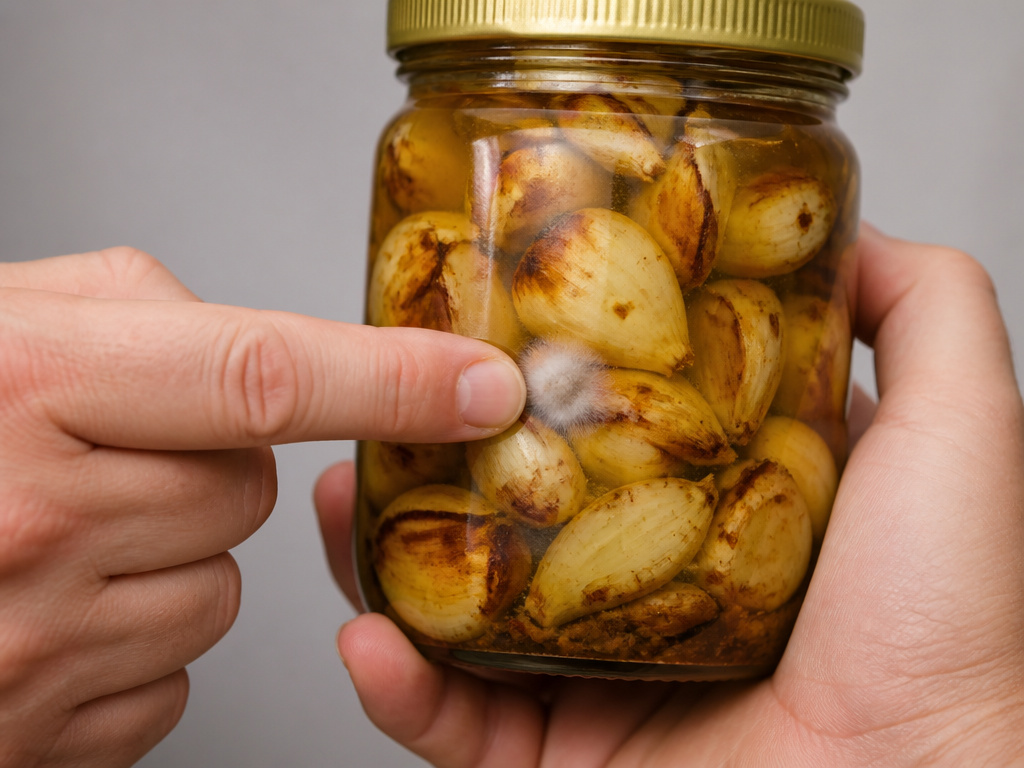
Botulism toxin is invisible. Other spoilage signs are not. Check your jar before every use.
- Smell: Roasted garlic should smell sweet, mellow, and of garlic and olive oil. Any sour, cheesy, or acetone-like odor means toss it.
- Sight: Look for mold (fuzzy spots of any color) or bubbles forming in the oil. Both signal microbial growth. The oil should be clear, not cloudy.
- Texture: The cloves should be soft but intact. A slimy, mushy texture is a clear sign of bacterial spoilage.
- Taste: If it passes the above tests, taste a tiny bit. Any sharp, bitter, or “off” flavor that wasn’t there before means discard the entire batch.
When in doubt, throw it out. The cost of a head of garlic and some oil is nothing compared to the cost of a foodborne illness. This is a YMYL topic, your health is on the line. The guidelines from the USDA and experts exist because the alternative is documented, serious harm.
Properly storing peeled garlic follows similar rules, but roasted garlic’s low-acid, oil-submerged state demands stricter temperature control. It’s closer to the methods for preserving garlic in oil than to simple garlic storage for whole bulbs.
Frequently Asked Questions
Can I store roasted garlic in water instead of oil?
You can, but it changes the safety dynamic. Water does not create an oxygen barrier like oil does, and it can promote bacterial growth faster. Garlic stored in water in the fridge should be used within 3-4 days. It is not a preservation method; it’s a short-term holding method.
Does adding herbs or spices change how long it lasts?
Yes, and not for the better. Adding fresh herbs like rosemary or thyme introduces additional moisture and potential bacteria into the anaerobic oil environment. This can shorten the safe window. If you want flavored oil, make a separate infused oil and add it when you use the garlic, not during storage.
Why do some recipes say roasted garlic in oil lasts a month?
They are wrong, and they are dangerous. Any source claiming a month for refrigerated garlic confit is ignoring the established food safety science from the USDA and the history of botulism outbreaks. At best, they are assuming a freezer. At worst, they are repeating a myth that can make people sick.
Can I can roasted garlic in oil for shelf-stable storage?
No. Home canning of low-acid vegetables (like garlic) in oil is extremely hazardous and cannot be made safe with a water bath or pressure canner at home. The risk of botulism is high. This is why commercially prepared garlic-in-oil products contain acidifiers or preservatives and require refrigeration after opening.
Is it safe if I reheat the refrigerated garlic confit before using it?
Reheating to a simmer (165°F or 74°C) will destroy active bacteria, but it will not destroy any botulism toxin that may already be present. The toxin is heat-stable. Proper refrigeration from the start is the only prevention. Reheating is not a safety net.
The Bottom Line
Store roasted garlic submerged in oil in a sealed glass jar at the back of a cold refrigerator. Know your fridge’s temperature. At 40°F, you have seven days. At a verified 38°F, you have two. The door is not cold enough. Freezing is the only safe option for long-term storage, stopping the biological clock entirely.
The rules exist because of two outbreaks in the 1980s. They are not theoretical. Your best garlic storage methods for whole bulbs are about freshness; storage for roasted garlic in oil is about safety. Treat the temperature and the timeline as the hard lines they are.
