How to Store Peeled Garlic for Maximum Shelf Life & Safety
This post contains affiliate links. As an Amazon Associate, we earn from qualifying purchases.
Store peeled garlic in an airtight container in the refrigerator for 1–2 weeks. For longer storage, freeze whole cloves on a tray then bag them, or submerge cloves in undiluted vinegar or wine in the fridge. Never store raw garlic in oil at room temperature due to the risk of botulinum toxin.
That “never at room temperature” clause is the line between a kitchen shortcut and a documented food safety hazard. The bacterium Clostridium botulinum thrives in low-oxygen, low-acid environments like garlic submerged in oil. It produces a toxin that is fatal in micrograms.
What follows: the exact refrigerator timelines from commercial packing studies, the one acid that neutralizes the botulism risk, and the freezing method that keeps flavor intact for six months.
Key Takeaways
. – Refrigerated shelf life is temperature-sensitive. At 0°C (32°F), peeled garlic lasts 3–4 weeks. At 5°C (41°F), it’s 2–3 weeks. At 10°C (50°F), quality drops within 1–2 weeks. – Oil is a botulism vector, not a preservative, at room temperature. Raw garlic in oil must be refrigerated and used within four days or frozen immediately. – Acid is a safe preservative. Submerging peeled cloves in undiluted vinegar or wine creates an environment that prevents C. Botulinum growth. Store it in the refrigerator. – Freezing is the longest-term home method. Flash-freeze whole cloves on a tray before bagging to prevent a solid clump. Frozen garlic retains pungency for months. – Commercial methods use specific pre-treatments. Studies show dipping cloves in hot water or gingelly oil and sealing in BOPP or unventilated HDPE packages can extend shelf life to 42 days at 10°C.
How Long Does Peeled Garlic Last in the Fridge?
The answer isn’t one number. It’s a curve that drops steeply with every degree above freezing.
Commercial peeled garlic in modified atmosphere packaging (MAP) maintains excellent visual quality for 21 days at 0°C and 16 days at 5°C. At 10°C, acceptable quality lasts about 10 days. (Acta Horticulturae, 2016)
Your home refrigerator likely sits between 5°C and 7°C. That puts your airtight container of peeled garlic in the 2–3 week window for peak quality. After that, cloves soften, discolor, and may develop mold.
Why the steep drop? Two mechanisms. First, enzymatic activity and respiration increase with temperature. Second, higher humidity inside a sealed container accelerates decay. The OSU Extension preserving garlic guide notes that bruised or damaged cloves deteriorate fastest.
| Storage Temperature | Expected Shelf Life (Commercial MAP) | Home Refrigerator Reality |
|---|---|---|
| 0°C (32°F) | 3–4 weeks | Hard to achieve; freezer territory |
| 5°C (41°F) | 2–3 weeks | 2–3 weeks in airtight container |
| 10°C (50°F) | 1–2 weeks | 1 week before noticeable decline |
For the best garlic storage methods, treat your peeled cloves like a fresh ingredient, not a pantry staple. Plan to use them within two weeks.
The Oil Storage Trap
This is where most online advice turns dangerous. A jar of garlic cloves covered in oil looks preserved. At room temperature, it is an incubator.
Never store raw, untreated garlic in oil at room temperature. For short-term storage, peeled cloves may be submerged in oil and stored in the refrigerator for up to 4 days. Longer than four days could allow Clostridium botulinum growth. (OSU Extension Service)
The bacterium is anaerobic. It lives without oxygen. A garlic clove submerged in oil provides the perfect low-oxygen, low-acid environment. The toxin it produces is odorless, tasteless, and heat-stable, ordinary cooking won’t destroy it.
The safe alternative is acid. Submerge peeled cloves in undiluted vinegar or wine. The acidic environment inhibits botulinum growth. The garlic in oil method requires strict refrigeration and a four-day clock.
If you want garlic-infused oil, you have two safe paths. Acidify the garlic first in a vinegar solution for 24 hours, then add oil. Or, freeze the garlic-in-oil mixture immediately. Do not leave it on the counter.
Freezing Peeled Garlic: The Long Game
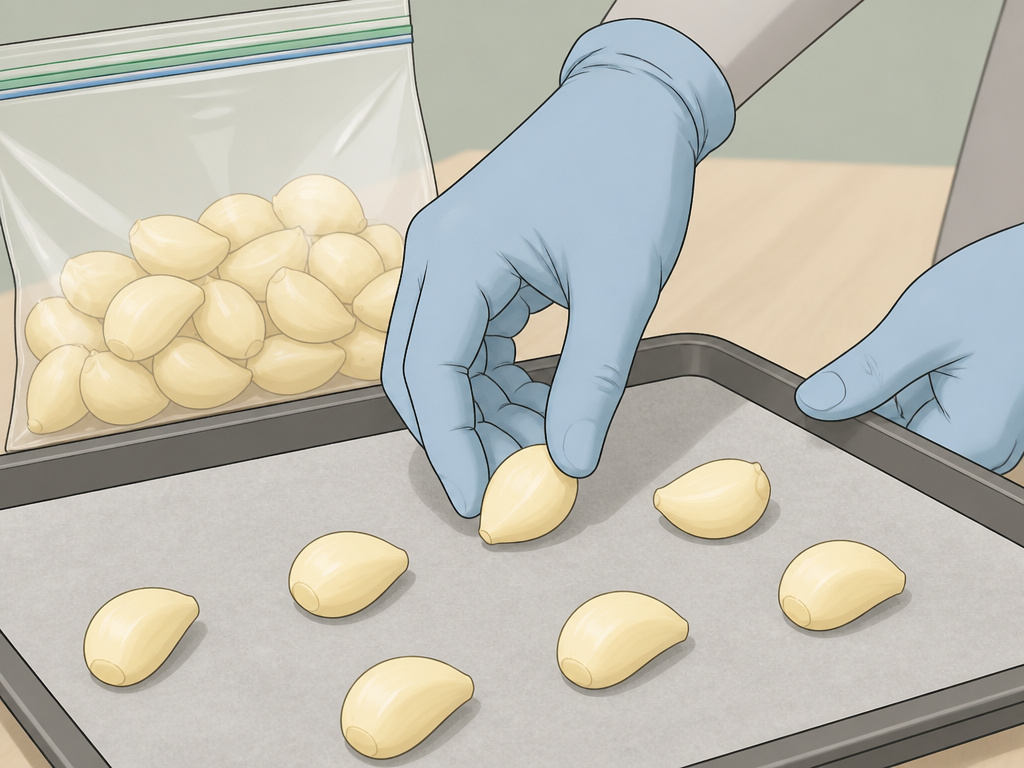
Freezing is the most forgiving long-term method for home cooks. It stops biological activity cold.
The mistake is tossing cloves directly into a bag. They freeze into a solid lump. You must thaw the entire block to use one clove.
The fix is a flash-freeze. Spread peeled, dry cloves in a single layer on a parchment-lined tray or plate. Freeze for two hours until solid. Then transfer the individual frozen cloves to a freezer bag or airtight container. Squeeze out excess air.
This tray-freeze method is the same principle used for freezing ginger or chopped onion storage. It gives you a scoopable supply.
Frozen garlic works best in cooked applications. The texture becomes soft upon thawing, making it poor for raw uses like aioli. The flavor and pungency, however, remain strong for at least six months.
The Acidic Liquid Preservative
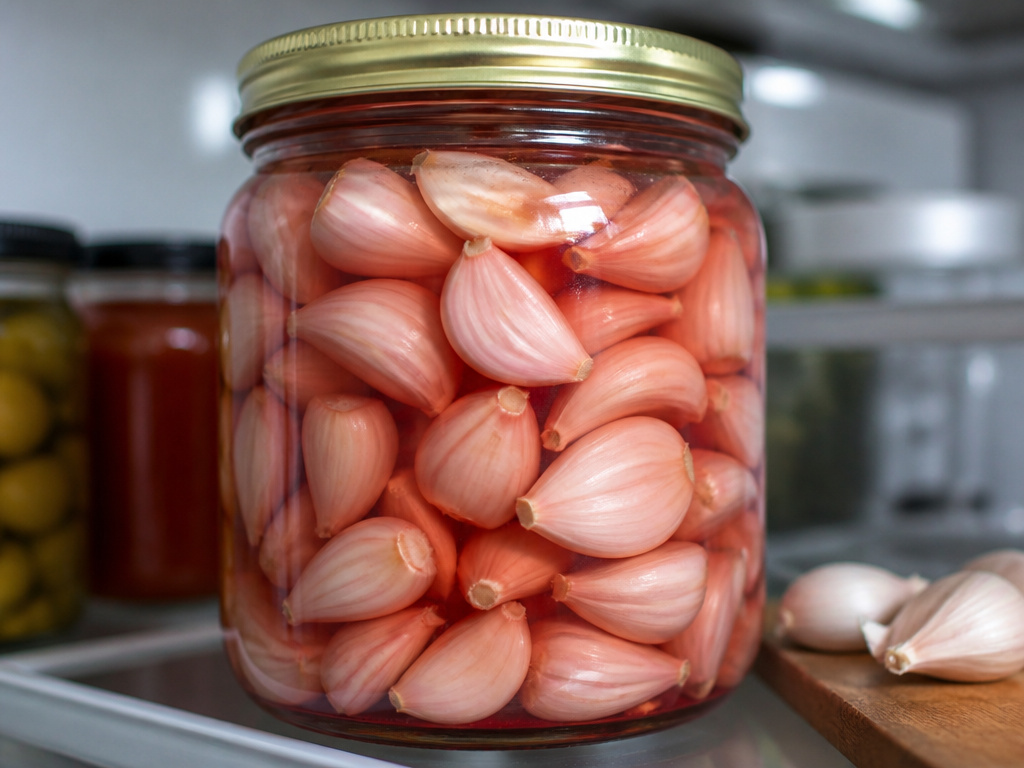
When refrigeration space is limited but you need a shelf-stable option, reach for vinegar or wine. Not oil.
The science is straightforward. Clostridium botulinum cannot produce toxin in a high-acid environment (pH below 4.6). Undiluted vinegar and wine both meet that threshold.
Peeled garlic cloves may be submerged in undiluted wine or vinegar and stored in the refrigerator. The acidic environment prevents botulinum growth. (OSU Extension Service)
Use a clean glass jar. Pack peeled cloves inside. Cover completely with your chosen liquid. Seal and refrigerate.
The garlic will flavor the liquid over time. Use both the cloves and the infused vinegar or wine in dressings, marinades, or sauces. Do not store this mixture at room temperature, it can develop surface mold.
This method bridges the gap between fresh and preserved. It’s a useful trick for bulk prepping, similar to techniques for keeping herbs fresh.
What Commercial Packers Know (That You Can Use)
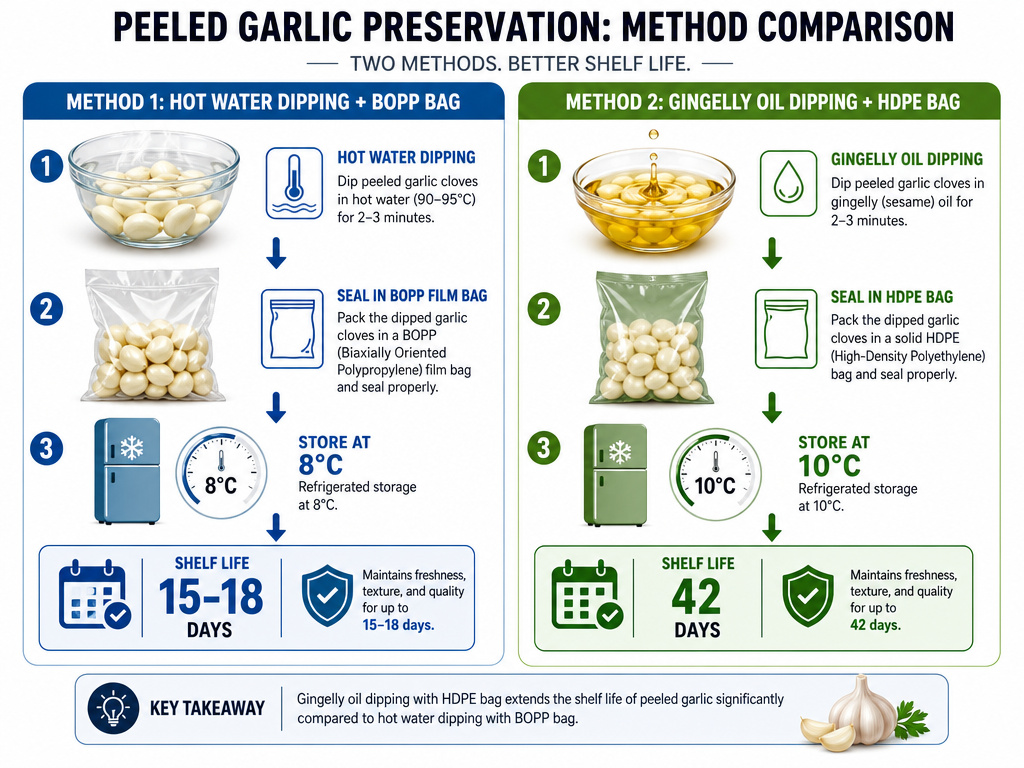
Industrial-scale preservation of peeled garlic relies on three levers: pre-treatment, packaging material, and gas atmosphere. Two studies show what works.
A study from the Indian Institute of Horticultural Research found that peeling garlic cloves and packaging them in BOPP films after a hot-water dip gave a shelf life of 15–18 days at 8°C. At room temperature (28°C), it was just 3 days.
Another study, published in ARCC Journals, tested pretreatments. Garlic cloves dipped in gingelly oil (sesame oil) and packed in unventilated HDPE bags lasted 42 days at 10°C. Untreated cloves in ventilated packages lasted only 18 days under the same conditions.
| Pre-treatment | Packaging | Storage Temp | Shelf Life Result |
|---|---|---|---|
| Hot water dip | BOPP film | 8°C (46°F) | 15–18 days |
| Gingelly oil dip | HDPE (no vents) | 10°C (50°F) | 42 days |
| None (control) | HDPE (vents) | 10°C (50°F) | 18 days |
The takeaways for your kitchen: moisture control and oxygen exclusion matter. An airtight container is your version of modified atmosphere packaging. Keeping cloves dry and cold mimics the commercial pre-treatment effect.
For more on the science, the RSC Advances ozone treatment study details how low-dose ozone gas can further suppress decay.
The Botulism Warning: Specifics, Not Scare Tactics
Why is this a YMYL (Your Money or Your Life) topic? Because the consequence of a mistake is not spoilage, it’s poisoning.
Botulism toxin paralyzes muscles. It starts with blurred vision, drooping eyelids, and difficulty swallowing. It can progress to respiratory failure. The PMC postharvest garlic stability study and other primary sources treat this risk as a foundational constraint, not an afterthought.
The rules are non-negotiable. 1. No raw garlic in oil at room temperature. Ever. 2. Refrigerated garlic-in-oil has a four-day limit. Freeze it for longer storage. 3. Acidic liquids (vinegar, wine) are safe for refrigeration. They change the chemistry. 4. When in doubt, freeze. Freezing is the only method that stops all biological activity indefinitely.
This is the same precautionary framework used for storing roasted garlic, roasting changes the pH and moisture content, altering the risk profile.
Frequently Asked Questions
Can you store peeled garlic in water?
No. Submerging peeled garlic in plain water accelerates decay and leaching of flavor compounds. Water creates a high-moisture environment that promotes microbial growth and enzymatic breakdown. Use an acidic liquid (vinegar) or dry storage methods instead.
How do you keep peeled garlic from turning blue or green?
Discoloration is a harmless chemical reaction between garlic’s sulfur compounds and trace minerals (often copper or iron) in water or on surfaces. It’s more common with young garlic or cloves damaged during peeling. The color change does not indicate spoilage. To minimize it, use fresh, undamaged cloves and avoid contact with reactive metals (use glass containers).
Is it safe to store peeled garlic in the freezer long-term?
Yes. Properly frozen peeled garlic remains safe to eat indefinitely. Quality, flavor and texture, will degrade after about 6-12 months. For best quality, use within six months. Flash-freezing cloves individually on a tray before bagging prevents freezer burn and clumping.
Can I store peeled garlic in honey?
Fermented garlic honey is a separate preservation method. Raw garlic submerged in honey undergoes lactic acid fermentation over several weeks at room temperature, creating an acidic environment that is safe. This is not a simple storage method; it’s an active fermentation process. Do not attempt it without following a verified recipe for fermented garlic honey.
What’s the best container for refrigerated peeled garlic?
Glass jar with a tight-sealing lid or a rigid plastic food storage container. The goal is an airtight seal to maintain humidity and prevent odor transfer. Avoid flimsy plastic bags that can puncture. Glass is non-reactive and easiest to clean.
Before You Go
Peeled garlic is perishable. Its shelf life is a race between your meal plan and natural decay.
The refrigerator buys you two, maybe three weeks in an airtight container. Freezing buys you months. Acidic liquids like vinegar buy you safety and flavor infusion. Oil at room temperature buys you nothing but risk.
Your default move for a leftover handful of cloves: tray-freeze them. Your move for prepping a week’s meals: jar them in the fridge. Your move for never worrying about botulism: memorize the four-day oil limit and then ignore oil storage altogether.
For the broader context, see our articles on storing onions and general food storage principles. Garlic follows the same rules, cold, clean, and contained.
