Freezer Paper vs Parchment Paper: Are They the Same Thing?
This post contains affiliate links. As an Amazon Associate, we earn from qualifying purchases.
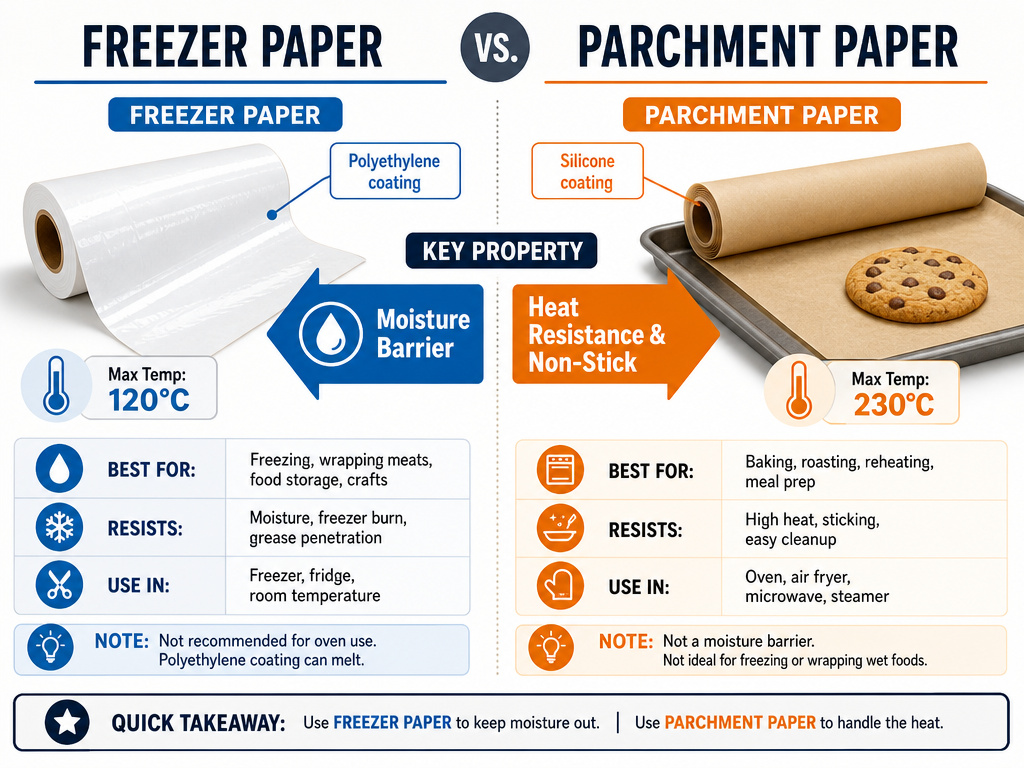
No. Freezer paper and parchment paper are not the same. They are engineered opposites: freezer paper is a polyethylene-coated kraft sheet for sub-zero cold storage, while parchment paper is a silicone- or quilon-treated cellulose sheet for high-heat baking. The plastic coating on freezer paper softens at 110-120°C (230-248°F), well below a standard oven’s temperature, and will melt, smoke, and contaminate food. Parchment paper withstands 220-230°C (425-450°F). Using one for the other’s job guarantees failure.
That temperature gap isn’t just a spec. It’s the line between a preserved cut of meat and a kitchen full of smoke. The confusion starts because both come on a roll and feel stiff. But one side of freezer paper is glossy plastic; parchment paper is uniformly matte. Their jobs don’t overlap. You wouldn’t use an ice pack to bake bread. Don’t use freezer paper to line a sheet pan.
What follows: the exact coatings, the science behind their temperature limits, and the specific brands built for long-term protection. You’ll learn why quilters swear by one and bakers by the other, and how to read a product spec sheet to know exactly what you’re buying.
Key Takeaways
- Freezer paper has a polyethylene plastic coating on one side for moisture and air barriers in the freezer. Parchment paper is coated with silicone or quilon for non-stick, heat-resistant baking.
- Never put freezer paper in an oven. Its coating melts around 110-120°C (230-248°F), releasing fumes and ruining food.
- Look for the shiny side to identify freezer paper. Parchment paper looks and feels the same on both sides.
- Manufacturer grades like Graphic Packaging’s 12-15 month or Norpak’s 40lb (65 GSM) sheets indicate long-term freezer burn protection for meat and fish.
- For fatty foods like bacon or cheese destined for long storage, double-wrapping with freezer paper or using a vacuum sealing bag is safer than a single layer.
The Coatings That Decide Everything
The core difference is in the coating. This isn’t a minor variation—it’s a complete functional inversion dictated by chemistry.
Freezer paper is essentially heavy-duty kraft paper with a thin layer of polyethylene laminated to one side. This plastic film is what creates the barrier. It locks moisture in and air out, which is the entire mechanism for preventing freezer burn. The USDA FSIS packaging glossary classifies related papers like “Frozen foods paper” for their high moisture and vapor resistance. The plastic side is always shiny. The paper side is plain, often printable.
Parchment paper starts with cellulose fibers that are treated with acid for strength and smoothness. It’s then coated with silicone or, less commonly, quilon (a chromium salt solution). This coating provides the non-stick, heat-resistant surface. According to the Wikipedia definition of parchment paper, this silicone layer is what allows it to withstand temperatures up to 220-230°C (425-450°F) without breaking down or transferring flavor.
The plastic coating on freezer paper starts to soften at approximately 110-120°C (230-248°F). At standard baking temperatures, it will melt, potentially releasing fumes and bonding to your food or bakeware. This is not a risk—it’s a certainty.
Why does the coating type matter beyond heat?
Polyethylene is inert and stable at freezer temperatures (down to -18°C / 0°F), making it ideal for long-term storage without chemical migration into cold, dry foods. Silicone’s stability at high heat makes it perfect for creating a non-stick layer between dough and hot metal. They are solutions to opposite problems.
What Happens if You Bake with Freezer Paper?
You get smoke, melted plastic on your pan, and ruined food. The failure isn’t gradual.
The polyethylene coating doesn’t just get soft—it liquefies. This can happen in a preheating oven before you even put your food in. What you’ll see first is the glossy finish turning gummy. Then it will start to bubble and shrink. Finally, it will smoke and can even catch fire if the temperature is high enough. The plastic bonds to the metal of your baking sheet, requiring a serious scrub-down with abrasive cleaners. Your food absorbs those fumes.
Common mistake: Using freezer paper as a liner for cookies or roasting vegetables. The coating melts onto the food, imparting a chemical taste and creating a gummy, inedible layer.
Parchment paper, conversely, will brown slightly at very high temperatures but won’t melt or smoke under normal baking conditions. It’s designed for the heat. This is why understanding oven use is non-negotiable. The two papers are not interchangeable in the kitchen.
Can you use parchment paper in the freezer?
Technically, yes, but it’s a waste of a good baking sheet liner. Parchment paper’s silicone coating is not an effective long-term moisture barrier. It will slow dehydration, but air and moisture can still migrate through the paper fibers over weeks or months. For real freezer storage, you need the plastic seal of proper freezer paper.
Freezer Paper’s Real Job: The 12-Month Barrier
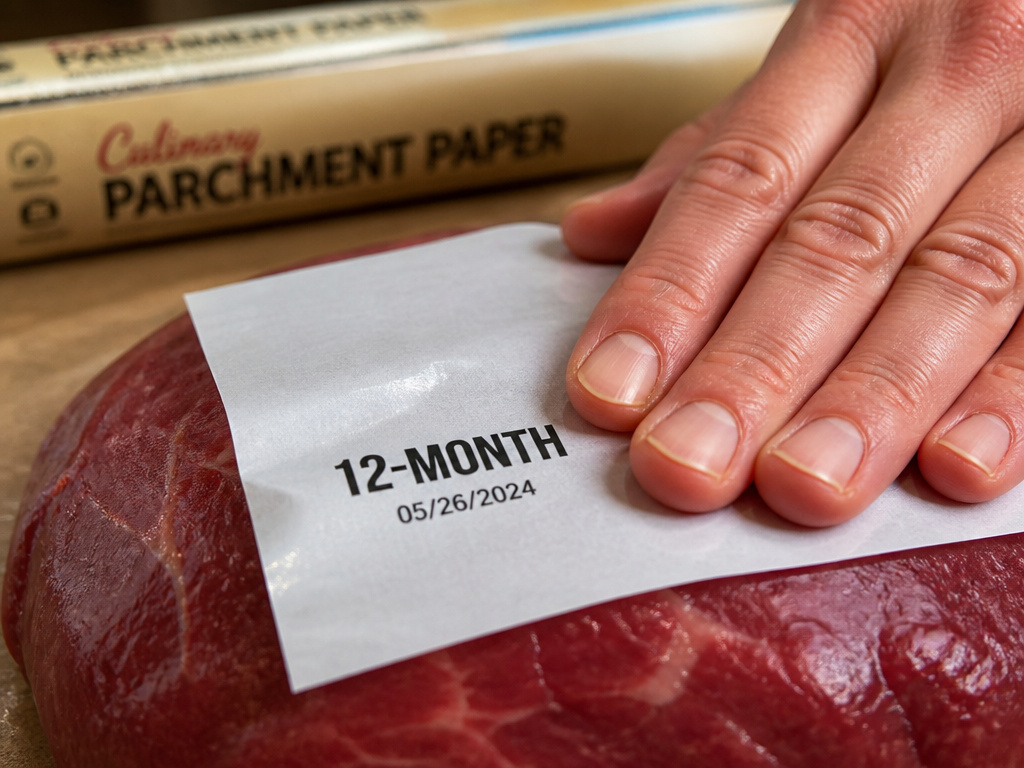 Freezer paper isn’t just “paper for the freezer.” It’s a engineered barrier product with specific performance ratings.
Manufacturers don’t just sell “freezer paper.” They sell 3-month, 6-9 month, and 12-15 month paper. Graphic Packaging International’s product brochure lists these tiers explicitly. The difference is in the basis weight and coating thickness. A heavier sheet like Norpak’s 40-pound (65 GSM) bleached kraft with 5 pounds (8 GSM) of laminated polyethylene is rated for up to one year of protection against freezer burn.
| Grade | Typical Protection Window | Best For | Risk If Skipped |
|---|---|---|---|
| Economy (3-6 month) | Short-term storage (< 6 months) | Leftovers, pre-portioned meals, bread | Freezer burn within 3-4 months on lean meats |
| Standard (6-9 month) | Mid-term storage (6-12 months) | Bulk meat purchases, seasonal fruit | Texture loss and ice crystals on poultry after 8 months |
| Premium (12-15 month) | Long-term storage (1 year+) | Whole cuts of beef, lamb, game meat | Surface dehydration and oxidation, even with proper wrapping |
The goal is to prevent the three culprits of freezer burn causes: air exposure, temperature fluctuation, and moisture loss. The plastic coating directly blocks two of them. For the best protection, especially for fatty or irregularly shaped items, combine freezer paper with an airtight storage method.
How do you use it correctly?
- Place your food on the plastic-coated (shiny) side.
- Wrap tightly, pressing the plastic layer directly onto the food’s surface to push out air pockets.
- Fold the paper over itself, creating a tight seal. Use tape if necessary.
- Label with contents and date on the paper (dull) side.
The plastic-to-food contact is what creates the seal. Wrapping with the paper side inward does nothing.
Parchment Paper’s Domain: Non-Stick Baking & Beyond
 Parchment paper exists to survive the oven and release food cleanly. Its silicone coating provides a near-frictionless surface.
That’s why it’s the default liner for baking sheets, cake pans, and soufflé dishes. It also enables cooking techniques like en papillote (steaming in a parchment pouch). The Wikipedia parchment paper entry notes its grease resistance and humidity resistance are secondary benefits to its primary heat tolerance.
Where this goes sideways: Assuming all parchment paper is the same. Some cheaper brands use a thinner silicone coat or a weaker base sheet that can tear when wet batter is poured on it or curl at the edges in a hot oven, exposing your pan.
For most home baking, a standard roll is fine. For professional or high-volume use, look for reinforced edges or a higher basis weight. The non-stick property is so effective that it has spilled over into non-culinary uses, like as a surface for crafting with glue or paint. But its heart is in the heat.
A quick comparison table clarifies their roles:
| Aspect | Freezer Paper | Parchment Paper |
|---|---|---|
| Primary Coating | Polyethylene (plastic) | Silicone or Quilon |
| Key Property | Moisture & Air Barrier | Heat Resistance & Non-Stick |
| Max Safe Temperature | 110-120°C (230-248°F) | 220-230°C (425-450°F) |
| Surface Feel | One side glossy (plastic), one side matte (paper) | Both sides feel the same, slightly slick |
| Primary Use | Wrapping food for freezer storage | Lining bakeware, cooking en papillote |
| Misuse Consequence | Melts, smokes, contaminates food | Ineffective moisture barrier, food dehydrates |
The Craft World’s Secret: Freezer Paper Beyond the Kitchen
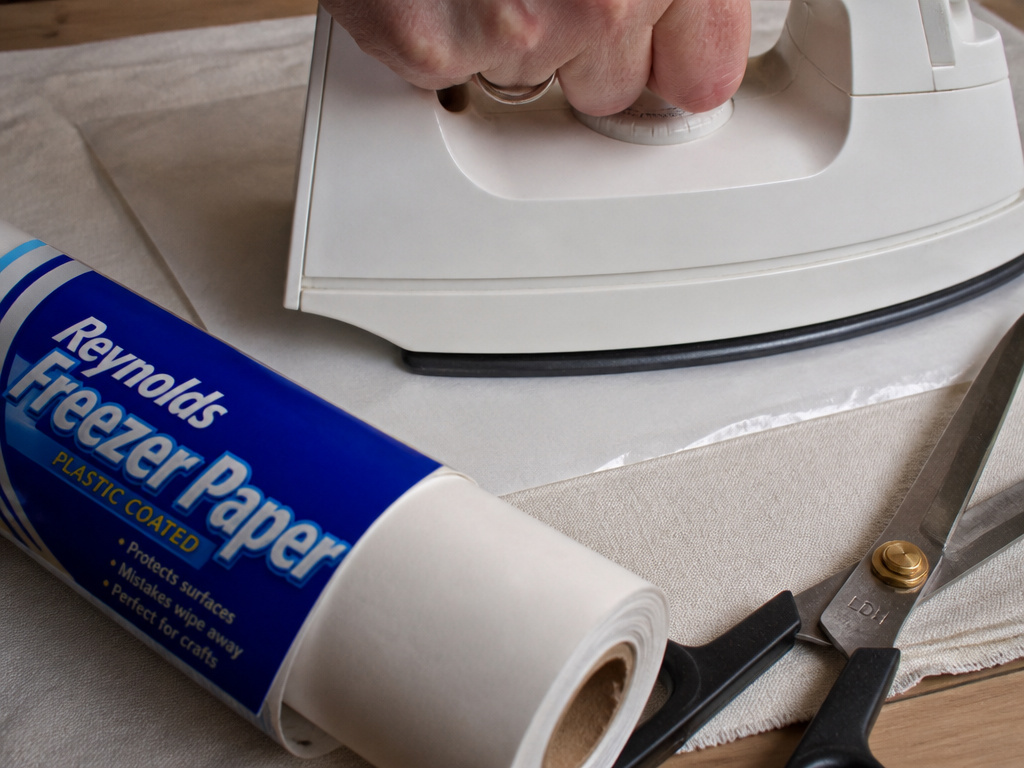 Quilters, sewists, and crafters have co-opted freezer paper for a completely different purpose: as a temporary fabric stabilizer.
The plastic coating temporarily adheres to fabric when pressed with a hot, dry iron. This creates a stable, writable, cuttable surface for precise appliqué work, pattern tracing, or even running fabric through an inkjet printer. The CAMEO materials wiki page from the Museum of Fine Arts, Boston, documents this use for stabilizing fabric before printing. It peels off cleanly and can be reused multiple times.
This is a non-food use that leverages the paper’s physical properties perfectly. The heat from the iron is well below the plastic’s melting point, and the bond is temporary and residue-free. It’s a brilliant hack that highlights the material’s versatility. For quilters, a roll of Reynolds Freezer Paper is a staple tool, often more valuable in the sewing room than in the kitchen.
Wax Paper: The Third Player (And Why It’s Neither)
Wax paper is the most commonly confused product. It’s paper coated on both sides with a thin layer of paraffin or soybean wax.
The wax gives it moisture resistance, making it great for wrapping sandwiches or lining countertops for messy tasks. However, wax has a low melting point. It will smoke and burn in a standard oven, just like freezer paper. It also lacks the sturdy barrier of polyethylene, so it’s useless for long-term freezer storage. For a full breakdown, see our guide on the key differences between freezer and wax paper.
The simple rule: Wax paper is for cold, damp, or room-temperature tasks only. It belongs nowhere near an oven or a long-term freezer storage project.
How to Choose and What to Buy
Your choice comes down to a single question: cold storage or heat application?
For freezer storage, especially of meat, fish, or cheese, you need real freezer paper. Don’t buy the generic house brand if you’re storing something for more than a month. Look for the manufacturer’s stated protection window on the box. For bulk meat wrapping, Graphic Packaging International’s commercial-grade rolls or Norpak Freezer Wrap are industry standards for a reason—their specified basis weight and coating thickness match their claimed protection time.
For baking, any reputable parchment paper will do. If you bake frequently, pre-cut sheets save time. For crafts, a standard roll of Reynolds from the grocery store is perfect and economical.
The part nobody mentions: Butcher paper is a different beast entirely. It’s typically uncoated and breathable, designed for wrapping fresh meat for short-term fridge storage or for barbecue, where you want some smoke penetration. It offers zero freezer burn protection. Our article on butcher paper differences covers this in detail.
If you only buy one, make it parchment paper. Its oven safety covers more daily kitchen tasks. But for anyone who buys meat in bulk or preserves garden harvests, a roll of heavy-duty freezer paper is a separate, essential investment.
Frequently Asked Questions
Can you put freezer paper in the microwave?
No. The polyethylene coating can melt from the concentrated heat of microwaved food, especially fatty items. It can also cause arcing (sparks). Use microwave-safe containers or parchment paper (which is generally microwave-safe) instead.
Which side of freezer paper touches the food?
The shiny, plastic-coated side should always touch the food. This creates the necessary moisture barrier. The dull paper side faces out.
Is parchment paper compostable?
Yes, typically. Since it’s made from cellulose fibers and silicone (an inert sand-derived polymer), most parchment paper is compostable in industrial facilities and often at home. Check the brand’s packaging for certification. Freezer paper, with its plastic layer, is not compostable.
Can you write on freezer paper?
Yes, and this is a major advantage. You can write directly on the dull paper side with a permanent marker to label your frozen packages with contents and date. This won’t affect the plastic barrier on the other side.
What’s the best way to wrap meat with freezer paper?
Use the “drugstore wrap”: Place meat on the shiny side, bring the paper up and over, fold the ends in tightly like wrapping a present, and secure with tape. The goal is plastic-to-meat contact with minimal air pockets. For ultimate protection, place this wrapped package inside a freezer-safe bag.
Why does my freezer paper not stick to fabric for quilting?
You need a hot, dry iron (no steam). Press firmly for 10-15 seconds. If it’s still not adhering, your iron may not be hot enough, or the plastic coating on that particular brand might be thinner. Name-brand Reynolds or quilting-specific sheets are the most reliable.
Before You Go
Freezer paper and parchment paper solve different problems with different chemistry. One uses plastic to lock cold in, the other uses silicone to keep heat out. Mistaking them ruins food and makes a mess.
For your freezer, choose a heavy-grade paper with a stated protection window. Press the shiny side directly onto the food. For your oven, use parchment. Keep a roll of each on hand, and you’ll never have to guess which one to reach for again.
