
How to Store Cheese: The 40°F Rule & Avoiding Plastic Wrap
This post contains affiliate links. As an Amazon Associate, we earn from qualifying purchases.
Store cheese between 35°F and 40°F, wrapped in cheese paper or inside a vented glass container, and never in the plastic wrap it came home in. Hard cheeses like cheddar or Parmesan can have surface mold cut away; soft cheeses like Brie or ricotta must be thrown out at the first sign of foreign mold.
That temperature band isn’t a suggestion. It’s the line between cheese that ages and cheese that spoils. At 45°F, bacterial growth doubles. By 50°F, a block of mozzarella turns slick in three days.
What follows: the three factors that decide shelf life, the container showdown that replaced plastic wrap, and the mold rules that keep you safe. You’ll leave knowing why your fridge’s cheese drawer exists and how to use it.
Key Takeaways
- Your refrigerator must run at 40°F or below. A block of Swiss cheese lasts 3-6 months at 40°F but spoils in weeks at 45°F.
- Never store cheese long-term in the plastic wrap from the grocer. It traps moisture and ammonia, creating a sour smell within days.
- Cut mold off hard cheese only if you remove at least one inch around the spot. Discard any soft, crumbled, or sliced cheese with mold.
- For firm cheeses, a vacuum sealer or a lidded glass container beats any wrap. For daily use, cheese paper or parchment paper works.
- Freezing changes texture, making cheese crumbly. If you must freeze, grate it first.
The Three Storage Factors You Can’t Ignore
Cheese spoilage isn’t random. It follows three physical rules: temperature, humidity, and air flow. Get one wrong and the timeline shortens.
Cheese storage requires maintaining a temperature between 4°C and 12°C (39°F to 54°F) during transport and retail, according to the Rwanda FDA. For home storage, university extensions narrow that to 35°F to 40°F. This band slows microbial growth while preserving texture. Humidity should be high enough to prevent drying but not so high that surface moisture collects. Air exchange prevents the buildup of metabolic gases like ammonia.
Temperature is the non-negotiable. The Clemson University cheese handling guide states all cheese should be refrigerated between 35°F and 40°F. Your fridge’s main compartment fluctuates with the door. The cheese or vegetable drawer is the most stable zone. Use a standalone thermometer to check. If the dial reads above 40°F, adjust the fridge’s thermostat.
At 45°F, psychrotrophic bacteria, the kind that grow in cold, double their reproduction rate. A block of Gouda that would last two months at 40°F might develop off-flavors in one month.
Humidity is a balance. Too dry and the cheese cracks. Too damp and surface mold spores germinate. The ideal relative humidity for cheese is about 80-85%. Your fridge’s crisper drawer, with its higher humidity setting, mimics this. For cheeses stored elsewhere, the wrapper provides the micro-climate.
Air flow is what plastic wrap kills. Cheese is alive; its cultures respire. Trapping all gases leads to a buildup of ammonia, a natural byproduct of protein breakdown. In a sealed plastic tomb, that ammonia concentrates against the rind. Unwrap a plastic-wrapped Camembert after five days and you’ll smell a sharp, chemical scent. That’s the ammonia. It hasn’t spoiled the cheese yet, but it’s ruined the flavor.
The principles here apply to all general food storage. Consistent cold, controlled moisture, and breathability keep most foods better, longer.
The Container Showdown: What Actually Works
Forget the grocery store wrap. Your long-term storage choice decides whether you eat cheese or throw it away.
| Storage Method | Best For | Why It Works (or Fails) |
|---|---|---|
| Plastic Wrap (PVC) | Transport only, 1-2 days | Traps moisture and ammonia; creates off-flavors within a week. |
| Cheese Paper | Daily-use hard & soft cheeses | Two-layer design: inner waxed paper retains moisture, outer porous paper breathes. |
| Parchment + Bag | Short-term fridge storage (under 2 weeks) | Parchment breathes; outer plastic bag buffers humidity changes. Replace parchment each use. |
| Vented Glass Container | Most household cheese, multiple types | Glass is inert, lid vent allows gas exchange, visible contents prevent neglect. |
| Vacuum Sealer | Long-term storage of hard cheeses (months) | Removes oxygen, prevents mold growth and drying. Texture remains intact. |
The YouTube experiment with a Parmesan wheel is telling. After six months, the vacuum-sealed chunk was still usable. The piece left naked in the fridge, the “raw dog option”, dried into a rock in weeks. Glass containers held quality for about five months. Plastic wrap lasted one to two months before the cheese picked up a taste.
Common mistake: Moving cheese from store plastic wrap to a generic plastic bag. Both suffocate the cheese. If you must use a bag, pair it with a breathable inner wrap like parchment.
For most people, the move is to a lidded glass container. The University of California safe food storage guide recommends airtight containers for moisture control. Use one with a vent, or simply don’t snap the lid completely shut. This setup gives you stable humidity with gas escape. It’s also the best way to isolate strong cheeses like Limburger.
For larger blocks you won’t finish quickly, a vacuum sealer is the storage champion. It’s the only method that reliably stops mold spores from germinating by removing their oxygen.
Need a dedicated solution? We’ve tested the best cheese containers for the fridge. Look for ones with adjustable humidity vents.
Mold Rules: Cut or Toss?
The sight of blue fuzz doesn’t always mean the trash can. The rule depends on cheese density and moisture.
Hard and semi-hard cheeses (Cheddar, Gouda, Swiss, Parmesan): You can cut the mold away. The USDA and university extensions agree: cut at least one inch around and below the mold spot. The mold’s roots, called hyphae, can penetrate softer cheeses but cannot travel far through dense, aged protein. Use a clean knife and don’t drag the mold through the good cheese.
Soft cheeses (Brie, Camembert, fresh goat cheese, ricotta, cottage cheese): Discard the entire container. These cheeses have high moisture and loose structure. Mold hyphae spread throughout unseen. This includes any cheese that is already crumbled, sliced, or shredded, the increased surface area makes contamination inevitable.
Blue cheeses: This is an edge case. A blue cheese like Gorgonzola is already inoculated with Penicillium roqueforti. If other colored molds (black, pink, green) appear, trim them off. The native blue mold will eventually consume the entire block if left long enough, intensifying the flavor beyond most palates.
When in doubt, apply the smell test after trimming. If the cheese smells of ammonia, yeast, or anything unpleasant beyond its natural aroma, toss it. The risk isn’t worth the reward.
This strict separation is why proper storage matters from day one. It’s also why many choose to freeze shredded cheese for long-term projects, freezing stops mold, though it changes texture.
Cheese Types and Their Timelines
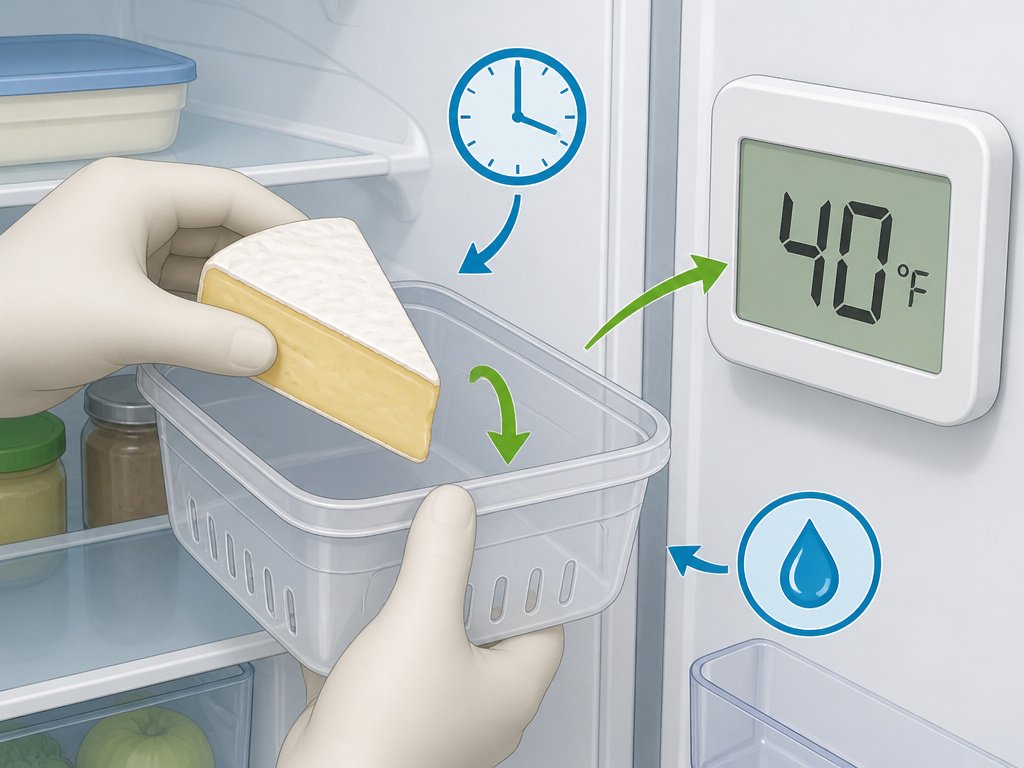 Not all cheeses age at the same speed. Moisture content is the clock.
| Cheese Type | Unopened (at 40°F) | Opened & Properly Stored | Key Storage Note |
|---|---|---|---|
| Hard (Parmesan, Romano) | 10 months | 2-4 months | Low moisture. Store in glass container or vacuum seal. |
| Semi-Hard (Cheddar, Swiss, Gouda) | 3-6 months | 2 months | “Sweats” more. Re-wrap in fresh paper after each use. |
| Soft (Brie, Camembert) | 1-2 weeks | 1 week (eat quickly) | Keep in original paper or vented container. Discard if left out >2 hrs. |
| Fresh (Ricotta, Cottage, Cream) | 5-15 days | Use within 3-5 days of opening | Highly perishable. Keep in sealed original container. |
| Process Cheese Products | 3-4 weeks | 2-3 weeks | Often contains preservatives. Still needs airtight wrap after opening. |
These timelines assume a constant 40°F. Let a soft cheese sit on the counter during a party for four hours and its safety clock has run out. The official storage practices for cheese from regulators state that any cheese left at room temperature for more than two hours (one hour if above 90°F) should be discarded.
Fresh cheeses like ricotta have the shortest life. Treat them like condensed milk after opening, seal tightly, keep cold, and use within days.
When Freezing Is the Wrong Answer
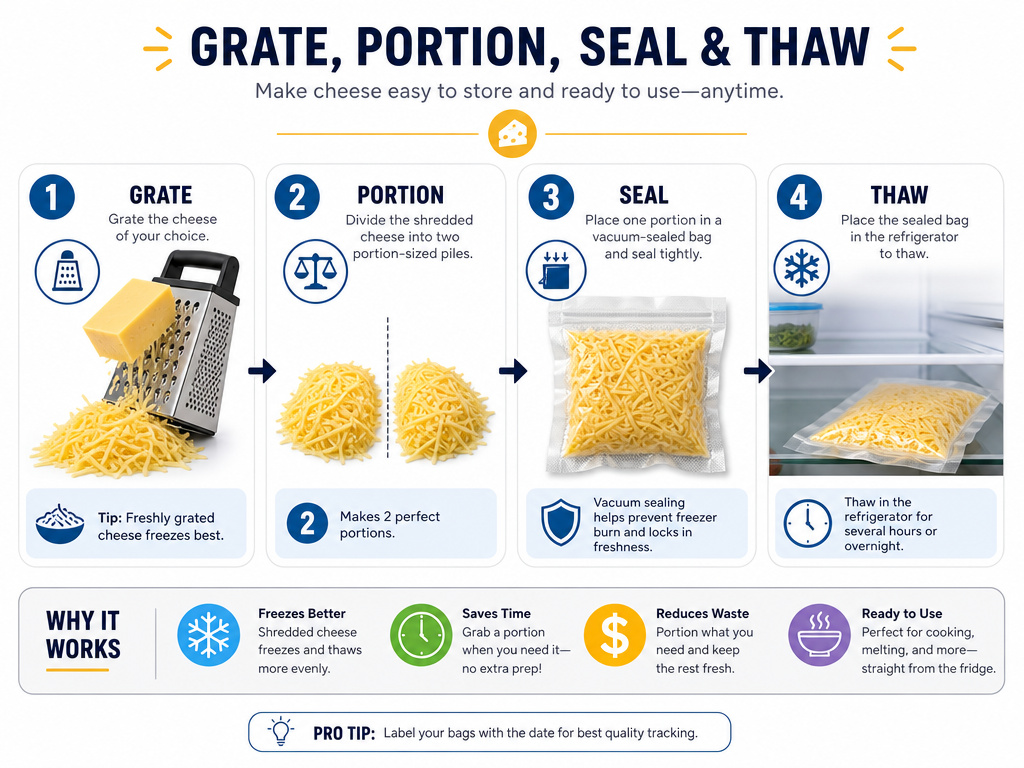 The freezer seems like a salvation for extra cheese. It is a last resort.
Every expert source, from cheesemongers to the Texas A&M extension, notes freezing makes cheese crumbly. Ice crystals form within the protein matrix, shredding its structure. Thawed frozen cheese works only for cooking, it will never slice or melt smoothly again.
If you must freeze, follow these steps to minimize damage: 1. Grate it first. Small pieces freeze and thaw more evenly. This is the only reliable way to freeze cheese for later use as a topping. 2. Portion immediately. Freeze in amounts you’ll use at once to avoid refreezing. 3. Use a vacuum sealer or heavy-duty freezer bag. Remove as much air as possible to prevent freezer burn. 4. Thaw in the refrigerator overnight. Never thaw at room temperature.
A frozen block of cheddar becomes spongy and weepy. Frozen cream cheese separates and becomes grainy. The texture loss is permanent.
For long-term storage of a prized hard cheese, vacuum sealing and refrigerating is always superior to freezing. It preserves both safety and texture.
Containers That Actually Work
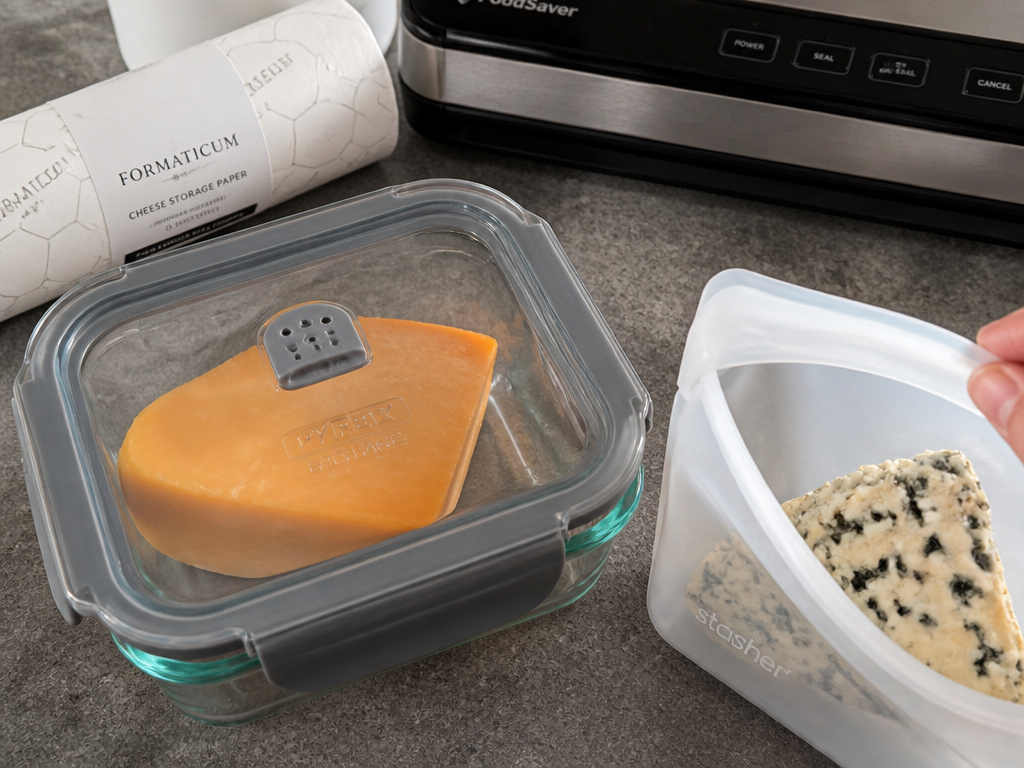 You need a barrier that manages moisture and gas. Here’s what to buy, not just what to avoid.
For the cheese drawer:
- Glasslock or Pyrex containers with vented lids. The glass doesn’t absorb odors, and the vent allows breathing. They stack neatly.
- Stasher silicone bags (half-open). Reusable, non-porous, and you can leave the seal slightly open for airflow.
For countertop serving (short-term):
- A cheese dome or cloche. It’s not necessary, but it protects cheese from dust and pets while looking nice.
- A marble or slate board. For serving only, not storage. The cold stone keeps cheese cool for an hour or two.
For the dedicated enthusiast:
- Formaticum cheese paper. The professional standard. Buy it online if you go through a lot of cheese.
- A vacuum sealer like a FoodSaver. The upfront cost pays off if you buy cheese in bulk.
Your choice here is as important as your choice for storing sourdough bread or keeping potatoes fresh. The right container reduces waste by extending the edible window.
Frequently Asked Questions
Can you store cheese at room temperature?
Hard, aged cheeses like Parmesan can sit out for a day or two in a cool spot (below 60°F) without safety risk, but they will dry out. All soft and fresh cheeses must be refrigerated for safety. Never leave any cheese out for more than two hours if the room is warm.
Why does my cheese smell like ammonia?
That’s trapped gas from respiration. Plastic wrap is the usual culprit. Unwrap the cheese, let it sit on a plate for an hour, and the smell should dissipate. If the ammonia scent remains strong after airing, the cheese is over-ripe and should be discarded.
How can I tell if cheese has gone bad?
Look, smell, and feel. Discard cheese with: * Unnatural mold (black, pink, orange) on soft cheese. * A sour, ammonia, or yeast smell that doesn’t fade with airing. * An overly slimy or sticky surface (except for washed-rind cheeses). * An acidic or bitter taste that isn’t characteristic of the variety.
Does the “best by” date matter?
For hard cheeses, it’s a quality guideline, not a safety expiration. A block of cheddar a week past its date is fine if stored properly. For fresh cheeses like ricotta or cottage cheese, treat the date as a firm use-by deadline.
How do I store cheese for camping?
Take firm, low-moisture cheeses like aged cheddar, Gouda, or Manchego. Wrap them in parchment paper, then in a foil layer, and keep them in the coolest part of your pack. They’ll survive a weekend trip without refrigeration.
The Bottom Line
Store cheese cold, let it breathe, and never trust plastic wrap. Your fridge must hold 40°F. Use a glass container with a vent or proper cheese paper.
For hard cheese, cut mold away deeply. For soft cheese, toss the whole thing at the first sign of fuzz. Freezing is for grating, not for preserving texture.
That’s it. Follow those rules and your cheese will last as long as its nature allows. You’ll waste less and taste more.
