How to Store Cut Onions Properly to Prevent Odor and Spoilage
This post contains affiliate links. As an Amazon Associate, we earn from qualifying purchases.
Store cut onions in a clean, airtight container on the middle shelf of your refrigerator at 5°C (41°F). Diced onions last 12 days before rot; sliced onions last 15 days. Never leave them at room temperature, in loosely covered bowls, or wrapped in foil, these practices increase spoilage by 300-580%.
That temperature target is the pivot point. It comes from a peer-reviewed study that tested diced and sliced onions at 0, 5, 10, and 15 degrees Celsius. The 5°C recommendation isn’t a guess. It’s the balance between maximum shelf life and the practical reality of a shared refrigerator. Your milk, cheese, and lettuce can’t live at 0°C, but your cut onions can thrive at 5.
What follows: the exact shelf life numbers by cut, the two container mistakes that slash that time in half, and the single storage rule for spring onions that breaks all the others.
Key Takeaways
- Temperature is everything. Store at 5°C (41°F). At 15°C (59°F), rot starts in 3 days.
- Cut type decides shelf life. Diced onions spoil faster than sliced ones due to greater physical stress.
- Use a rigid, airtight container. Zip-top bags and plastic wrap allow too much oxygen exchange and create anaerobic pockets.
- Spring onions are different. High-moisture varieties like Vidalia need refrigeration immediately and have a much shorter shelf life.
- Never store near potatoes. Potatoes release moisture that softens onion skins and accelerates spoilage.
The Science of Spoilage: Why Cut Onions Go Bad
A whole onion is a fortress. Its dry, papery skin and low water activity create an environment most bacteria and molds find inhospitable. Cutting breaches that defense.
The moment you slice into an onion, you cause mechanical injury. You expose interior cells to oxygen, which triggers enzymatic browning and the release of sulfur compounds. More critically, you dramatically increase the water activity at the cut surface. This creates a perfect breeding ground for spoilage organisms.
A study published in Redalyc.org found that diced onions undergo more intense physical stress and physiological changes faster than sliced onions, leading to a shorter shelf life at the same storage temperature.
The research quantified this. Onions were cut with an automatic cutter (Robot Coupe CL50E) into dices (10 mm edges) and slices (3-5 mm thick). They were then stored in polypropylene containers at four temperatures. The results aren’t vague.
| Storage Temperature | Diced Onion – Rot Appears | Sliced Onion – Rot Appears |
|---|---|---|
| 15°C (59°F) | Day 3 | Day 3 |
| II 10°C (50°F) | Day 9 | Day 9 |
| 5°C (41°F) | Day 12 | Day 15 |
| 0°C (32°F) | Day 18 | Day 21 |
The numbers are stark. Room temperature is a death sentence. The difference between a dice and a slice buys you three extra days at 5°C. This is why your best way to store a cut onion isn’t just “in the fridge.” It’s in the fridge at a specific temperature, in a specific container.
The FDA’s Bacteriological Analytical Manual (BAM) Chapter 10 tested 217 onion samples. It confirmed that loose storage at room temperature increases aerobic spoilage by 300-580%. Your kitchen isn’t a lab. Your counter is 15°C or higher most of the day.
Your Storage Toolkit: Containers, Locations, and What to Avoid
The right container does two jobs: it minimizes oxygen exchange and prevents odor migration. The wrong container does the opposite.
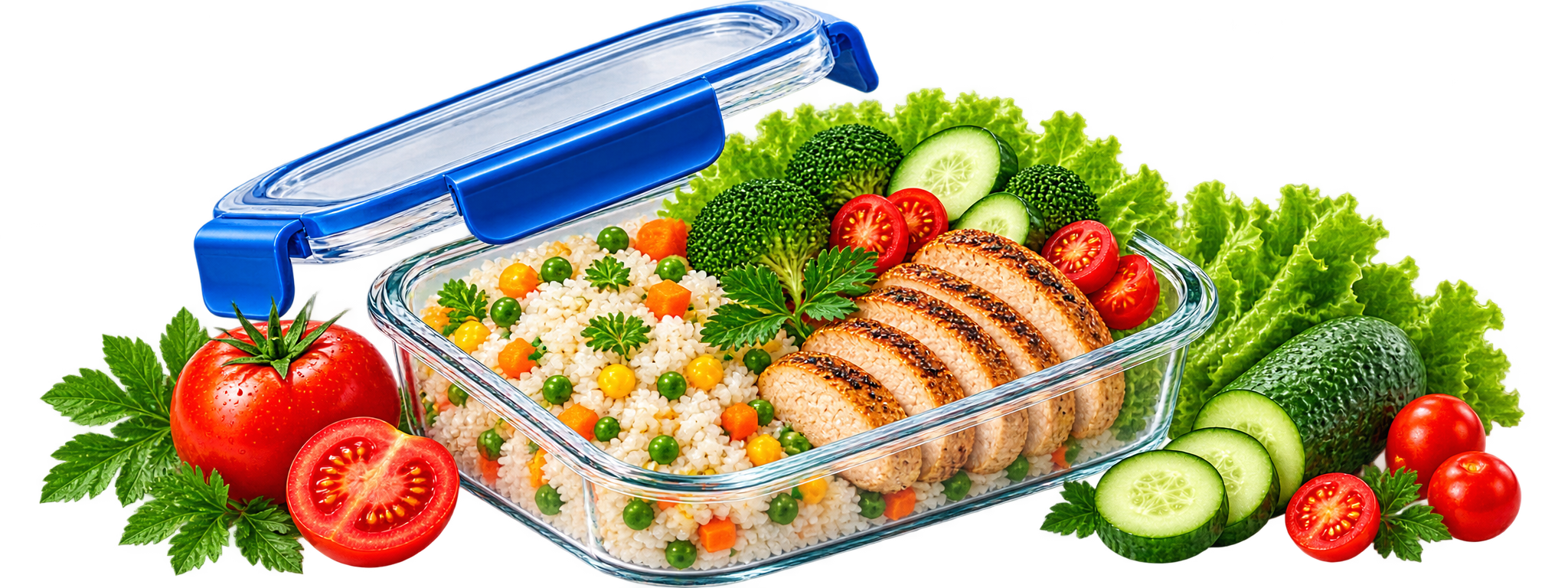
A rigid, airtight container is non-negotiable. Glass or BPA-free plastic like Pyrex or Rubbermaid Brilliance. The seal should be solid, not a flimsy clip. This geometry minimizes headspace, the air gap above the food, which reduces the rate of oxygen exposure per gram of onion.
Zip-top bags fail. Standard LDPE bags allow 12 times more oxygen transmission than rigid containers. They also lack structure, leading to compression damage and the creation of anaerobic micro-pockets. Plastic wrap is worse. It traps ethylene gas and condensation, accelerating enzymatic browning and creating the very conditions it claims to prevent.
Where you place that container in the fridge matters even more.
The middle shelf is the coldest, most stable zone (typically 36-38°F). The door shelves experience temperature fluctuations of ±8°F every time you open it, which can shorten shelf life by over two days. The crisper drawer is often more humid, which is good for whole vegetables but can encourage sliminess in already-cut produce.
Common mistake: Storing cut onions next to dairy. Onions emit volatile organic compounds that absorb into dairy fats. Your butter or cheese can taste like onion in as little as 48 hours.
Keep at least four inches of space between your onion container and any dairy products. This is a direct extension of the same logic behind storing garlic properly, strong aromas need isolation.
Step-by-Step Storage: From Cut to Container
This isn’t complicated. Speed and cleanliness are the only variables you control between the cutting board and the fridge.
- Cut only what you need. If your recipe calls for half an onion, cut the half. Store the remaining whole half, not pre-diced scraps. The less surface area you create, the longer the remaining piece lasts.
- Transfer immediately. Get the cut onions off the board and into your container within two hours. This is the FDA’s “2-hour rule” for Time/Temperature Control for Safety foods.
- Use the right container. A shallow, wide bowl is worse than a tall, narrow one. Aim for a container that holds your onions with less than an inch of headspace. A 4-inch diameter, 3.5-inch tall container is ideal for up to 120 grams of diced onion.
- Seal it tight. Press the lid until you hear the click or feel the resistance of the silicone gasket. If you’re using a half onion, you can wrap it tightly in plastic wrap as a short-term solution, but it must go inside a container or zip-top bag as a secondary barrier.
- Label and date it. Use a piece of masking tape and a marker. Write “Onions” and today’s date. At 5°C, you have 12 days for dice, 15 for slices. The date is your reminder, not your memory.
Where this goes sideways: Washing cut onions before storage. Introducing extra water skyrockets the water activity at the surface. If you must rinse them, pat them bone-dry with paper towels first. Any residual moisture will pool at the bottom of the container and turn slimy within a day.
If you follow these steps, you’re applying the food safety organization’s storage tips directly. You’re treating cut onions with the same care you’d use for preserving peeled garlic, as a vulnerable, processed ingredient.
Spring Onions vs. Storage Onions: The Critical Difference
 Not all onions are created equal, and treating them the same is how you end up with a moldy mess.
Storage onions are your typical yellow, white, and red onions harvested in the fall. They have lower water content and a drier, tighter skin. They are bred for long-term storage. You can keep them in a cool, dark, well-ventilated pantry for months. Once cut, they follow the rules above.
Spring/Summer onions are varieties like Vidalia, Walla Walla, and Texas Sweet. Harvested in late spring, they have a higher water content, sweeter flavor, and are more fragile. The National Onion Association storage tips for these are completely different.
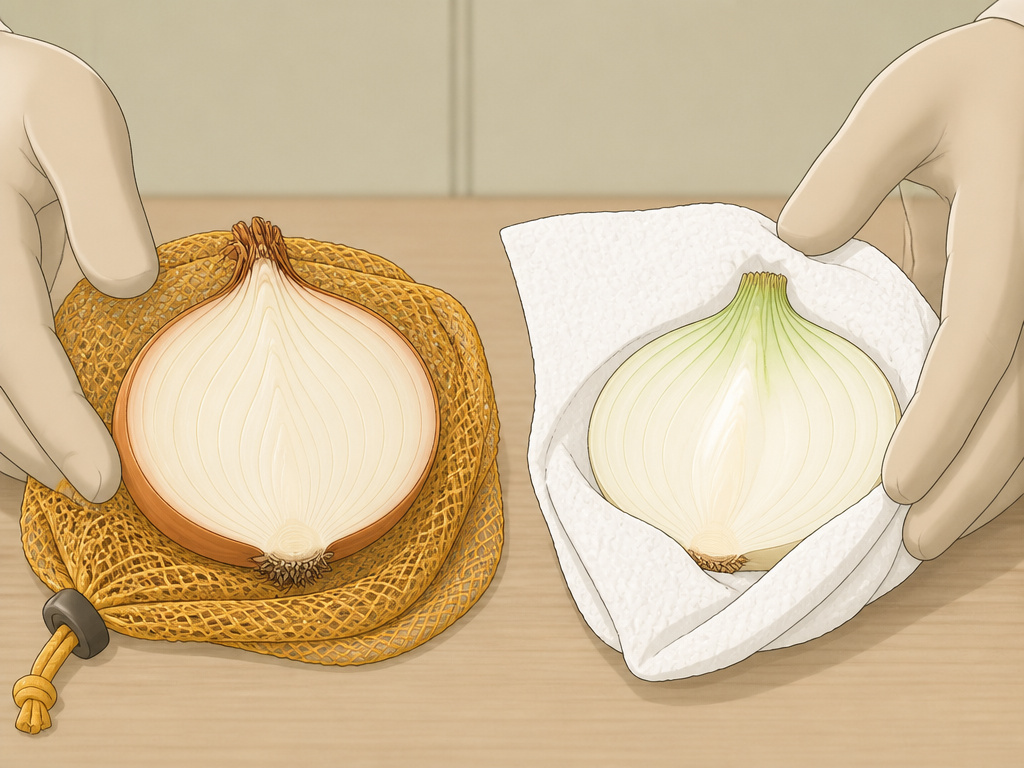
These onions bruise easily. They should be refrigerated immediately, even whole. The industry group recommends wrapping each whole onion in a paper towel to absorb excess moisture before placing it in the crisper. Their shelf life, whole or cut, is measured in weeks, not months. A cut spring onion will decline faster than a cut storage onion, expect to use it within 5-7 days even under ideal refrigeration.
This distinction is why a generic “how to store onions” guide can lead you astray. Knowing your onion type is the first step in maximizing onion shelf life.
Freezing Cut Onions: When It Works and When It Doesn’t
 Freezing is a tool, not a magic solution. It will change texture and flavor irrevocably.
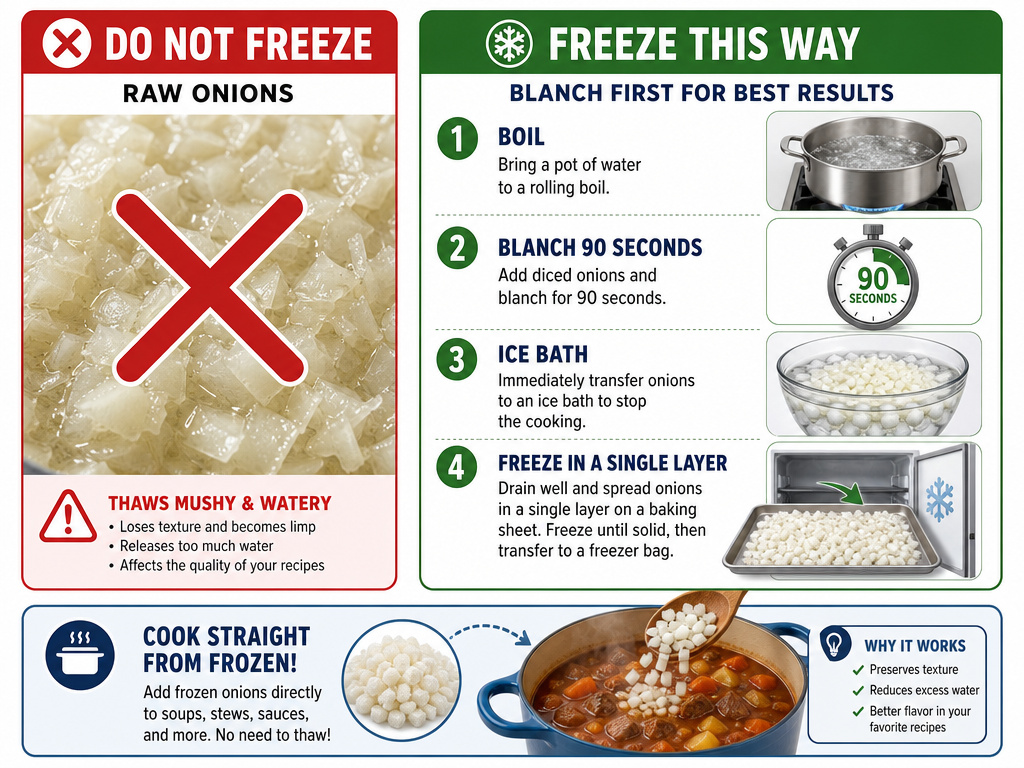
Do not freeze raw cut onions. Ice crystal formation ruptures cell vacuoles. Upon thawing, you get mush and a surge of sulfurous off-odors. It’s unpleasant and useless for any application where texture matters.
If you must freeze, you must blanch. 1. Bring a pot of water to a rolling boil. 2. Add diced or sliced onions for 90 seconds. 3. Immediately plunge them into an ice bath to stop the cooking. 4. Drain thoroughly and pat dry. 5. Spread in a single layer on a baking sheet to freeze solid (flash-freezing), then transfer to an airtight freezer bag or container.
Blanched, frozen onions are acceptable for cooked dishes where they will be softened anyway, soups, stews, sauces, casseroles. Use them within 3 months for best flavor. This process is similar to the methods for preserving onions at home used for bulk harvests.
Frequently Asked Questions
Can I store cut onions at room temperature?
No. The peer-reviewed data shows rot appears in 3 days at 15°C (59°F). The FDA BAM data shows spoilage rates increase by 300-580% at room temperature. The “plastic wrap on the counter” hack violates core food safety principles of temperature control and oxygen modulation.
How long do cut onions last in the fridge?
It depends on the cut and your fridge’s actual temperature. At a stable 5°C (41°F): diced onions last 12 days, sliced onions last 15 days. At a warmer 10°C (50°F), that drops to 9 days for both. Always use your eyes and nose, discard if slimy, discolored, or sour-smelling.
What’s the best container for cut onions?
Rigid, airtight glass or BPA-free plastic container. Pyrex and Rubbermaid Brilliance are reliable brands. The seal must be positive. Avoid zip-top bags and plastic wrap as primary storage, they allow too much gas exchange.
Do red onions spoil faster than yellow onions?
Yes, generally. Red onions tend to lose color vibrancy faster and can have a slightly shorter shelf life than yellow storage onions. However, the primary factors are always cut type and temperature, not color.
Can I store cut onions with other vegetables?
You can, but be strategic. Do not store them with potatoes, as potato moisture accelerates onion spoilage. They can share a container with peppers or celery for a mixed sofrito, but seal it well to prevent odor transfer. Treat cut onions like fresh herbs in terms of needing isolation from strong scents.
Before You Go
The goal isn’t just safety. It’s preserving flavor and reducing waste. A cut onion stored correctly at 5°C retains its pungency and texture for the duration of its shelf life. Stored wrong, it becomes a source of odor, a contaminant for other foods, and a direct route to the compost bin.
The rules are specific because the science is specific. Temperature: 5°C. Container: rigid and airtight. Timeline: 12-15 days. Ignore any hack that omits one of those three pillars. Your fridge light is the best kitchen tool you have, use it to find the middle shelf, seal the container, and mark the date. That’s the whole game.
