How to Store a Cut Onion to Keep It Fresh and Avoid Illness
This post contains affiliate links. As an Amazon Associate, we earn from qualifying purchases.
Store a cut onion in an airtight container or tightly wrapped in plastic in the refrigerator at 40°F or below. Use it within 3-5 days for safety. For longer storage, freeze diced or sliced onions flat on a baking sheet, then transfer to a freezer bag; they’ll keep for 8-12 months but will be too soft for raw use.
That timeline is the line between safe and risky. The 3-5 day rule comes from university extension food safety publications, not guesswork. After five days, bacterial growth on the exposed, moist surface accelerates, and the onion’s own sulfur compounds start to break down into less pleasant flavors.
What follows: the exact fridge and freezer steps that prevent odor and spoilage, the specific foodborne illness tied to a 2023 onion recall, and why freezing changes everything about how you can use that onion later.
Key Takeaways
- The official, sourced shelf life for a refrigerated cut onion is 3-5 days, not the commonly cited week.
- Freezing extends storage to 8-12 months but turns onions mushy, limiting them to cooked dishes like soups and sauces.
- The 2023 Salmonella outbreak linked to recalled diced onions makes proper storage a genuine food safety issue, not just a freshness one.
- Whole onions and cut onions have opposite storage needs: whole ones need a cool, dry pantry; cut ones demand a cold, sealed fridge.
- An airtight container is non-negotiable. It locks in moisture and locks out odors that will flavor everything else in your fridge.
Why the Clock Starts Ticking Once You Cut
A whole onion is a self-contained ecosystem. Its dry, papery outer layers seal moisture in and contaminants out. The moment your knife breaks that seal, you introduce oxygen and expose the moist inner flesh. Two things happen immediately.
First, enzymatic browning and oxidation begin, which slowly dulls flavor and color. More critically, you’ve created a perfect environment for microbes. The onion’s high water content and nutrients on a now-open surface are what bacteria and molds need. This is why the storage protocol shifts from passive to active.
The UC Master Food Preserver onion guide states cut onions must be refrigerated at 40°F or below. Room temperature storage is a direct path to accelerated spoilage.
Refrigeration at 40°F slows microbial growth to a crawl. But it doesn’t stop it. This is where the 3-5 day shelf life comes from, it’s the safe window before slow-growing pathogens like Listeria or the Salmonella implicated in the 2023 outbreak can reach dangerous levels, even in the cold.
The Step-by-Step Fridge Method
This isn’t just tossing a half-onion on a plate. The goal is to minimize exposed surface area and air contact.
- Wrap or Container Immediately. If you have a half or quarter onion, press plastic wrap directly onto the cut surface, squeezing out air pockets. For diced or sliced onions, transfer them to a glass or plastic airtight container. The container is superior, it prevents odor transfer.
- Label and Date. Write the date on a piece of tape. Your memory is not reliable after three days.
- Place in the Coldest Part of the Fridge. This is usually the back of a shelf, not the door. Consistency of temperature matters.
- Resist Peeking. Every time you open the container, you introduce new air and potential contaminants.
Skipping the airtight seal is the most common mistake. Onion aroma molecules are volatile. They will permeate butter, dairy, and even baked goods left nearby. I learned this the hard way when a leftover onion half loosely wrapped in foil made an entire batch of homemade yogurt taste faintly of onion.
| Storage Method | Max Shelf Life (Fridge) | Best For | Texture After Storage |
|---|---|---|---|
| Airtight Container | 3-5 days | Any use, raw or cooked | Near-fresh, slightly softened edges |
| Plastic Wrap (pressed on cut surface) | 3-5 days | Half/quarter onions | Dried cut surface, firmer interior |
| Loose in a bowl or bag | 1-2 days | Immediate use only | Dried out, slimy patches likely |
TL;DR: A sealed container in the back of the fridge buys you five days. An open bowl buys you one.
Freezing Cut Onions: The Long Game with a Trade-Off
Freezing is your best option for long-term onion storage. It pauses microbial growth entirely. However, it physically alters the onion’s cell structure. Water inside the cells expands as it freezes, rupturing cell walls. The result is a texture that’s fine for cooking but unacceptable for a fresh salad or garnish.
Freezing changes the texture of an onion, making it unsuitable for raw usage. This is the consistent warning from both the UC Master Food Preserver program and the Kansas State University refrigerator guidelines.
The process, however, is straightforward and prevents a frozen block you have to hack apart.
The “Flat-Freeze” Method
- Prep and Dry. Dice or slice your onions. Spread them on a clean kitchen towel and pat gently to remove excess surface moisture. This minimizes ice crystal formation.
- Tray Freeze. Spread the pieces in a single layer on a parchment-lined baking sheet. Do not let them touch. Place the sheet flat in your freezer for 2-3 hours, or until the onions are solid.
- Bag and Seal. Transfer the frozen onion pieces into a freezer bag. Squeeze out all the air, seal, and label with the date and contents.
- Store at 0°F. Return the bag to the freezer. They will stay separate, allowing you to pour out a half-cup for soup without thawing the whole bag.
This method is perfect for preserving cut onions you know you’ll use in cooked applications over the next year. The flavor mellows, which can actually be a benefit in stews or caramelized onion preparations.
How to Tell If a Cut Onion Has Gone Bad
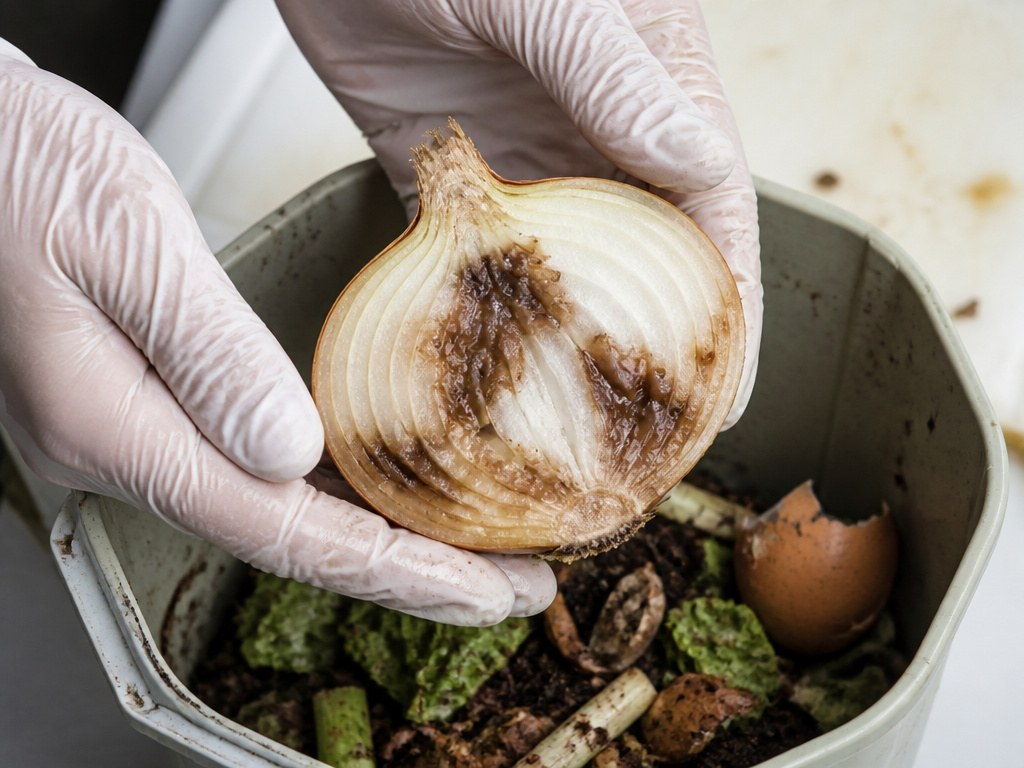 Trust your senses. The signs of spoilage are not subtle.
- Slimy Texture: This is the most common and definitive sign. A moist, slippery film on the cut surface indicates bacterial growth. Toss it.
- Off or Fermented Smell: It should smell like a sharp onion, not sour, sweet, or alcoholic. A foul odor means it’s gone over.
- Dark Discoloration: Deep brown or black patches, especially if mushy, signal decay. Some natural pinkish oxidation on red onions is fine, but deep darkening is not.
- Mold: Any visible fuzz, whether white, green, or black, means the entire container is contaminated. Do not scrape it off.
Common mistake: Thinking a bad spot can be cut off. Mold roots run deep into soft, moist foods. If you see spoilage on part of a cut onion, discard all of it.
If you see any one of these signs, the safe choice is to compost the onions. The risk of a foodborne illness like the Salmonella seen in the 2023 outbreak is not worth saving fifty cents worth of produce.
Cut Onions vs. Whole Onions: Storage Needs Are Opposites
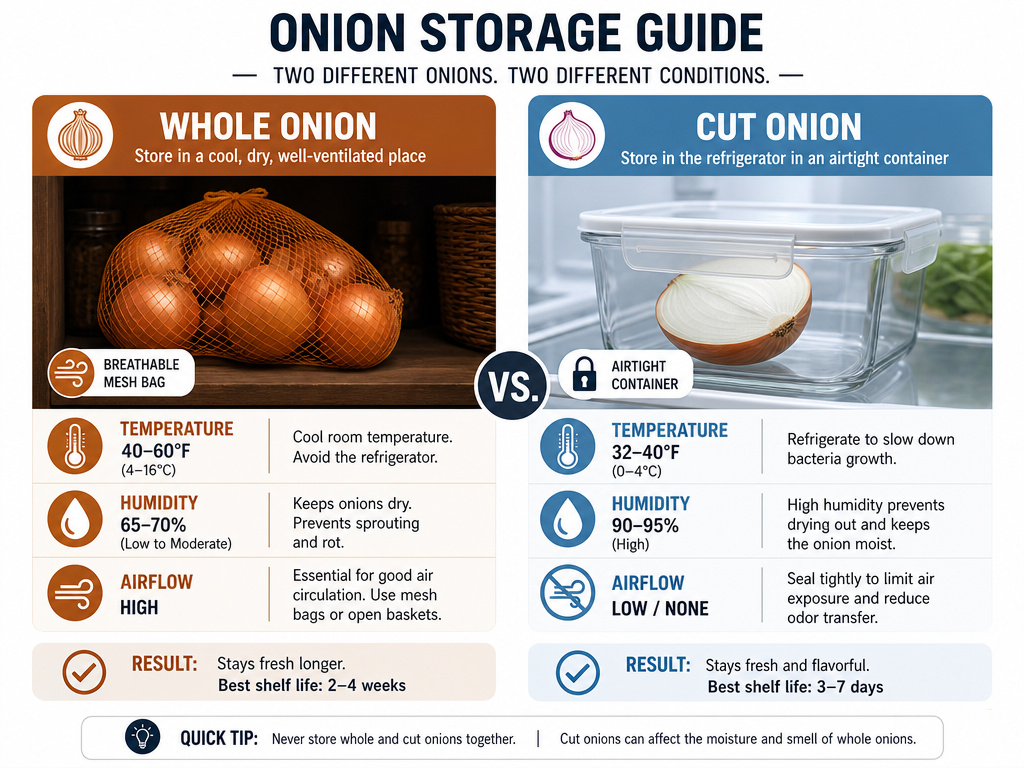 This is where confusion sets in. The rules for a cut onion and a whole onion are inverses of each other.
| Aspect | Whole Onion | Cut Onion |
|---|---|---|
| Temperature | Cool (45-55°F) | Cold (≤40°F) |
| Humidity | Dry (65-70% RH) | Sealed (High) |
| Airflow | Well-ventilated | Airtight |
| Light | Dark | Dark (in fridge) |
| Shelf Life | 1-8 months | 3-5 days |
Whole onions need the conditions of a pantry or cellar, cool, dry, and dark with air circulation. Storing them in a plastic bag or in the fridge’s humidity causes them to soften and sprout quickly. This is a key principle of how to store onions properly.
Cut onions need the exact opposite: a cold, humid, and sealed environment. The fridge provides the cold, and an airtight container provides the sealed humidity. Never store them together, the gases from one can affect the other. This same principle applies to proper garlic storage; keep them separate in the pantry.
Frequently Asked Questions
Can you store a cut onion at room temperature?
No. The Michigan State University food storage factsheet and other safety guides are clear: cut onions must be refrigerated. At room temperature, bacterial growth is rapid, and the onion will deteriorate in texture and flavor within hours. The two-hour rule applies: get it into the fridge within two hours of cutting.
Do red, white, and yellow onions store differently once cut?
The storage method and shelf life are identical. The only minor difference is that red onions may bleed their pigment slightly, turning the liquid in the container pinkish. This is a harmless oxidation and does not affect safety. For all types, the 3-5 day fridge rule stands.
Why do frozen onions get mushy?
Freezing forms ice crystals inside the onion’s cells. When these crystals expand, they puncture the cell walls. Upon thawing, the water leaks out and the structural integrity is gone, resulting in a soft, watery texture. This is why they are only recommended for dishes where texture is broken down by cooking, like in a pureed soup or sauce.
Can you freeze a whole onion?
You can, but it’s not recommended by extension services like Michigan State for preserving whole onions. The freezing and thawing process will turn the entire onion into a soft, unusable mess. It’s far more effective to chop it first and use the flat-freeze method for long-term onion storage.
How does this compare to storing other cut root vegetables?
The airtight, refrigerated principle is similar, but timelines vary. For example, store cut sweet potatoes in water for a few days, while storing peeled garlic in oil requires extra caution due to botulism risk. Always consult specific guidelines.
Before You Go
The right way to store a cut onion isn’t complicated, but it is specific. Grab an airtight container, a glass one with a locking lid is ideal. Get it into the fridge fast, and mark the date. If you won’t use it within five days, spread it on a tray and freeze it.
That’s the whole system. It prevents waste, guards against illness, and keeps your fridge from smelling like a deli counter. For the broader picture of keeping your kitchen organized, these are the same foundational best practices for storing food that apply to everything from keeping green onions fresh to storing potatoes correctly.
